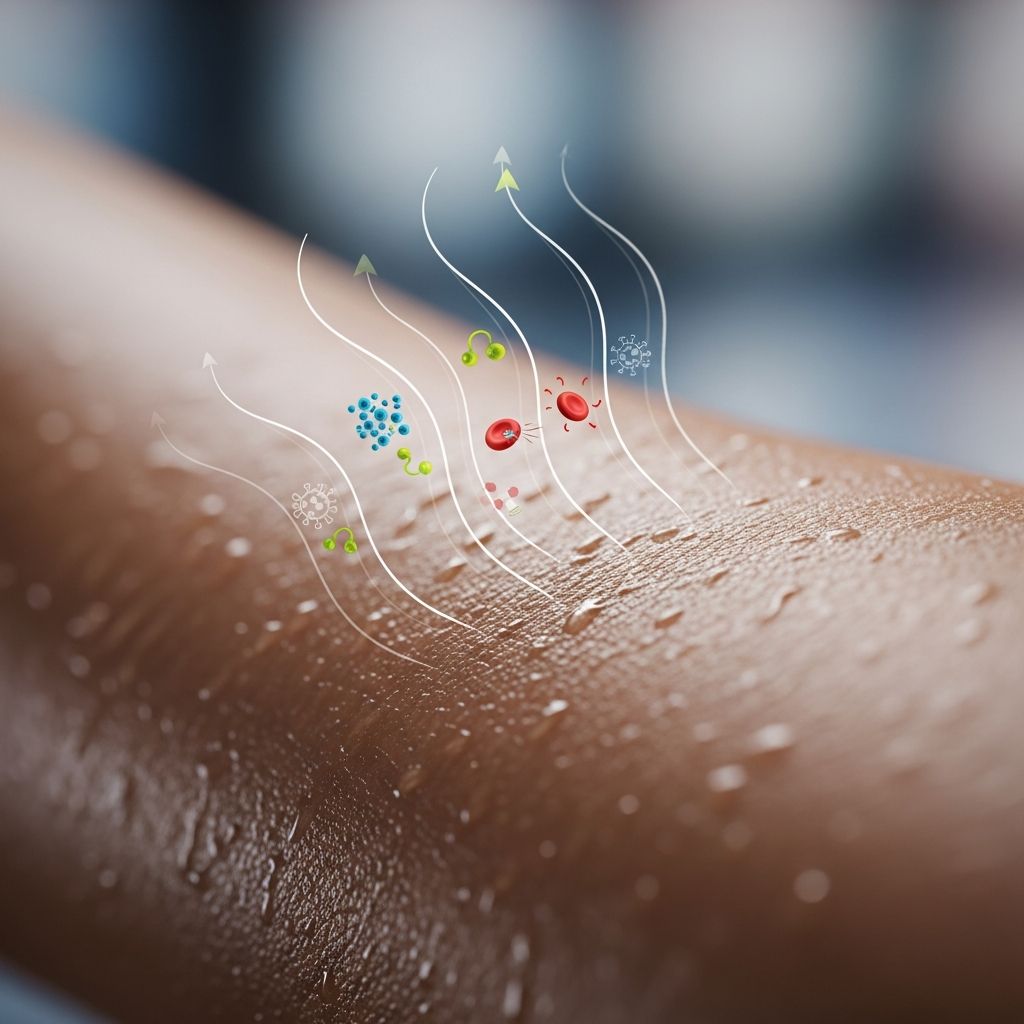
Human scent carries more information than we often realize. When illness strikes, subtle chemical shifts in sweat, breath, and skin emissions can produce distinctive odors that signal underlying health problems. This phenomenon, rooted in volatile organic compounds (VOCs), allows both medical professionals and everyday people to subconsciously detect sickness. Scientific studies confirm that these olfactory cues evolved as a survival mechanism, helping avoid contagion.
The Science of Scent and Sickness
Body odor arises primarily from bacteria breaking down sweat on the skin, but diseases alter this process by changing the body’s metabolic output. VOCs—small, evaporative molecules—are released through breath, urine, sweat, and saliva when pathogens or organ dysfunction disrupt normal chemistry. Historical accounts from Hippocrates note physicians using smell for diagnosis, a practice validated by modern gas chromatography/mass spectrometry (GC/MS), which identifies disease-specific VOC patterns.
Research shows humans can detect these cues slightly better than chance. In one study, participants identified axillary odors from individuals with acute respiratory infections, linking detection accuracy to body temperature changes rather than symptom severity. This suggests fever-induced metabolic shifts amplify perceptible differences in scent profiles.
Respiratory Infections and Subtle Odor Shifts
Common colds, flu, or other respiratory illnesses trigger immune responses that modify VOC emissions. Donors with symptoms like cough, sore throat, or fever produced underarm odors rated as distinct from healthy controls. Detection was marginally above random guessing, improving with even small temperature elevations (under 1°C), hinting at evolutionarily conserved sickness cues.
- Cough and coryza: Associated with viral replication altering lung and blood VOCs.
- Fever link: Higher temperatures correlate with stronger odor differentiation, possibly mimicking exercise-induced scents.
- Implications: Subconscious avoidance of infected individuals via smell may reduce transmission.
These findings extend prior work on experimentally induced inflammation, where lipopolysaccharide (LPS) injections created aversive odors in sweat and urine. Natural infections produce similar, if subtler, signals.
Metabolic Disorders: Diabetes and Fruity Breath
Diabetes, particularly uncontrolled type 1 or advanced type 2, leads to ketoacidosis—a state where the body burns fat for fuel, producing ketones like acetone. This imparts a sweet, fruity odor to breath and sweat, often described as overripe fruit or nail polish remover.
| Condition | Odor Profile | Key Compounds |
|---|---|---|
| Diabetic Ketoacidosis | Fruity, sweet | Acetone, ketones |
| Hyperthyroidism | Strong sweat-based | Increased apocrine secretions |
Sudden onset of this scent demands immediate medical attention, as ketoacidosis can progress to coma. Stress or fasting can mimic mild versions, but persistent fruity smells signal blood sugar crises.
Organ Failure Odors: Liver and Kidney Clues
Liver disease impairs detoxification, causing buildup of bilirubin, mercaptans, and dimethyl disulfide. This results in foetor hepaticus—a musty, sweet, garlic-like breath or urine odor resembling rotten eggs or metal.
Kidney dysfunction leads to uremia, where urea converts to ammonia. Breath turns fishy or urine-like, and sweat may smell bleachy as toxins exit via skin. Both conditions alter multiple emission sites:
- Breath: Primary for ammonia (kidney) or mercaptans (liver).
- Sweat: Carries blood-transported compounds, amplifying underarm and groin scents.
- Urine: Concentrated ammonia or sulfur notes.
Early detection via odor changes can prompt life-saving interventions, as these diseases often progress silently.
Infections Beyond the Lungs: Bacterial and Skin Culprits
Bacterial overgrowth or resistant infections like MRSA produce foul, decaying odors from wounds or skin. Normal skin flora maintains balance, but pathogens shift VOCs toward putrid sulfur compounds.
Trimethylaminuria (fish odor syndrome), a genetic disorder, causes perpetual fishy smells due to unmetabolized trimethylamine. Infections exacerbate this by increasing bacterial breakdown.
Why We Can Smell Sickness: Evolutionary and Behavioral Insights
Our olfactory system is wired for threat detection. Studies show people instinctively avoid ‘sick’ odors, pulling away faster in social settings. This behavioral response likely evolved to limit pathogen spread, with women often outperforming men in detection accuracy.
Animals exhibit similar disgust responses, underscoring a conserved trait. In humans, dry mouth from illness fosters sulfurous breath bacteria, compounding the effect.
Modern Diagnostics: From Noses to Machines
While human noses offer crude detection, ‘electronic noses’ mimic this by analyzing VOC patterns. GC/MS distinguishes tuberculosis (foul breath) from controls with high precision. Breathalyzers for cancer or diabetes are in development, potentially revolutionizing non-invasive screening.
Challenges include individual variability in diet, hygiene, and microbiome, which mask signals. Still, odor profiling holds promise for early disease spotting.
When to Worry: Red Flags in Body Odor
Not all smells indicate illness—diet (garlic, asparagus), hormones, or stress suffice. But sudden, persistent changes warrant checks:
- Sudden fruity breath + fatigue: Diabetes risk.
- Ammonia sweat/breath: Kidney function test.
- Musty garlic odor: Liver panel.
- Unexplained foulness with fever: Infection evaluation.
Consult a doctor; self-diagnosis via smell is preliminary.
Frequently Asked Questions (FAQs)
Can anyone smell when someone is sick?
Yes, studies show humans detect respiratory sickness odors slightly better than chance, especially with fever.
Does liver disease always smell bad?
Advanced stages produce distinctive musty breath (foetor hepaticus), but early disease may not.
Is fruity breath always diabetes?
No, but in context of thirst/fatigue, it’s a ketoacidosis red flag.
Can stress change body odor?
Yes, via sweat glands releasing compounds, mimicking illness scents.
Are electronic noses replacing doctors?
Not yet, but they analyze VOCs for precise disease detection.
Preventing and Managing Odor-Related Health Signals
Hygiene mitigates normal odors, but illness scents persist until treatment. Hydration, balanced diet, and prompt care address roots. For chronic issues, probiotics or medications target microbiome imbalances.
Public health benefits from awareness: Avoiding sick-smelling contacts curbs outbreaks. Future wearables sniffing VOCs could alert users to brewing illness.
In summary, our bodies broadcast health via scent, a subtle alarm system blending ancient biology with cutting-edge science. Heeding these signals saves lives.
References
- Humans can detect axillary odor cues of an acute respiratory infection — PMC/NCBI. 2023-07-05. https://pmc.ncbi.nlm.nih.gov/articles/PMC10324639/
- Can You Smell Diseases? The Link Between Odor and Sickness — Mya Care. 2023. https://myacare.com/blog/can-you-smell-a-disease-exploring-the-link-between-odor-and-sickness
- Are smelly armpits a sign of illness? — Harley Health Centre. 2023. https://www.harleyhealthcentre.com/blog/general-health/general-healthsmelly-armpits-sign-serious-illness-see-doctor
- Smelling Sickness — NIH News in Health. 2018-09. https://newsinhealth.nih.gov/2018/09/smelling-sickness
- Body Odor: Causes, Changes, Underlying Diseases & Treatment — Cleveland Clinic. 2023. https://my.clevelandclinic.org/health/symptoms/17865-body-odor
- Microbial Origins of Body Odor — American Society for Microbiology. 2021-12. https://asm.org/articles/2021/december/microbial-origins-of-body-odor
- How the smell of disease can affect healthy people — Medical News Today. 2023. https://www.medicalnewstoday.com/articles/323151