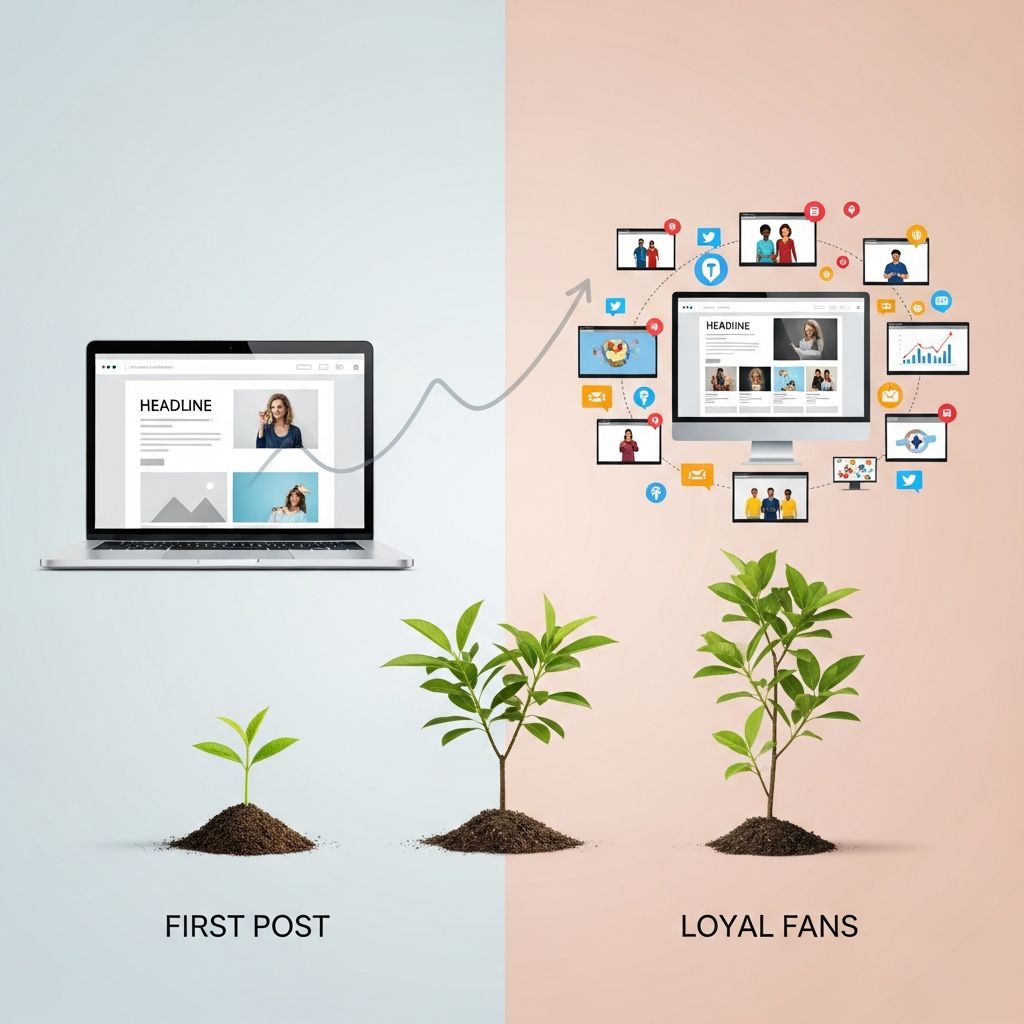
Starting a blog today is easier than ever, yet building one that people genuinely care about still takes intention, strategy, and persistence. The good news is that you do not need to be a tech expert, a professional writer, or a marketing guru to create something meaningful—you only need clarity, consistency, and a smart plan.
This guide walks through the full journey: from defining your blog’s purpose to attracting your first readers and turning casual visitors into an engaged community. Use it as a roadmap you can revisit as your blog grows.
1. Decide What Your Blog Really Stands For
Before you think about themes or tools, you need to know what your blog exists to do. A clear purpose becomes the filter for every decision: what you write, who you write for, and how you present it.
Clarify your core purpose
Ask yourself why you want to blog in the first place. Is it to teach, to document a journey, to support a business, or to build a personal brand? The more specific you can be, the easier it becomes to stay focused instead of chasing every new idea.
- “I want to help beginners learn X in a practical, non-technical way.”
- “I want to share honest stories about Y so people feel less alone.”
- “I want to attract potential clients for my Z services.”
Identify your ideal reader
Your blog will not appeal to everyone—and it should not try to. Imagine one person who would benefit most from your content and describe them in detail. This mental picture keeps your writing grounded and relatable.
- Basics: age range, life stage, profession, and interests.
- Frustrations: what they struggle with that your blog can help solve.
- Goals: what they want to achieve and how your content can move them forward.
2. Choose a Focus Without Boxing Yourself In
A blog with no clear focus is hard to follow, but a blog that feels too narrow can be suffocating for the creator. The aim is to pick a central theme with enough room to grow.
Pick a central theme and supporting topics
Think of your blog as a tree: one strong trunk (your main topic) with several branches (supporting topics) that all connect logically. This balance gives readers a sense of what to expect while leaving you space to explore.
- Main theme examples: beginner fitness, remote work life, budget travel, plant-based cooking, creative parenting.
- Supporting topics: how-to guides, personal stories, product reviews, mindset pieces, resource round-ups.
Test your focus with three simple questions
Before committing, pressure-test your idea:
- Can you easily list 30+ post ideas in 20 minutes?
- Are there people already interested in this topic (forums, social groups, existing blogs)?
- Can you bring a unique angle or voice, even in a crowded space?
3. Name Your Blog and Shape Its Identity
Your blog’s name and visual style are not everything, but they do help people remember and trust you. Aim for simple, memorable, and aligned with what you plan to publish.
Guidelines for a memorable name
You do not need a genius name; you need a usable one. Overthinking this step can delay your launch for weeks.
- Keep it short and easy to spell.
- Avoid complex wordplay that’s hard to say out loud.
- Check that a matching domain and social handles (or close variants) are available.
Craft a simple brand identity
Brand identity is more than a logo. It is the overall feeling your blog creates whenever someone visits or sees your content in a feed.
- Pick 2–3 brand colors and stick to them across your site and graphics.
- Choose one main font for headings and one for body text for consistency.
- Decide on a tone of voice: friendly, professional, playful, bold, or calm.
4. Set Up the Tech Without Getting Overwhelmed
Technical decisions feel intimidating, but you only need a basic setup to begin. You can always upgrade, redesign, or move platforms later once you know what you truly need.
Key technical pieces to sort out
Regardless of which tools you choose, most blogs rely on a few foundational elements.
- Domain name: the address where readers find you.
- Platform: a content management system or blogging service.
- Hosting: where your site’s files and content live (for self-hosted setups).
Minimize decision fatigue with a starter setup
Instead of endlessly comparing options, pick a reasonable setup and commit to learning it. Most modern blogging platforms can carry you far beyond the beginner stage.
- Choose a reputable platform that supports basic SEO, categories, and media uploads.
- Start with a clean, mobile-friendly theme rather than a heavily designed one.
- Install only a few essential add-ons (such as spam protection and analytics) instead of dozens of plugins.
5. Design a Reader-Friendly Home Base
Readers judge a blog in seconds. A clean, intuitive layout encourages them to explore; a cluttered, confusing design sends them away. You do not need advanced design skills—just a few clear priorities.
Essential pages and elements
Even the simplest blog benefits from a few core pages that build trust and help people navigate.
- Homepage: a welcome area, a brief explanation of what your blog is about, and links to your best or latest posts.
- About page: a short, reader-focused story about who you are and why your blog exists.
- Contact page: a simple form or email address so people can reach you.
Usability first, decoration second
Pretty design means little if people cannot find what they need. Put clarity and readability ahead of visual flourishes.
- Use clear navigation labels instead of clever but vague names.
- Make text large enough to read comfortably on mobile screens.
- Limit distractions like auto-playing media and aggressive pop-ups.
6. Build a Simple, Sustainable Content Strategy
A blog lives or dies by the quality and consistency of its content. Instead of publishing randomly, treat your posts like part of a larger narrative and plan ahead.
Plan content around problems and journeys
Great posts often do one of two things: solve a problem or walk readers through a journey. When you combine both, you build loyalty.
- Create tutorials and how-to guides that answer common questions.
- Share personal experiences or case studies that show what works in real life.
- Offer checklists, templates, or summaries that make implementation easier.
Create a lightweight editorial calendar
You do not need a complicated system; a simple calendar you can actually follow is far more powerful. Aim for a rhythm you can sustain for months, not days.
- Decide how often you will publish: weekly, bi-weekly, or monthly.
- Assign post ideas to specific dates so you are never staring at a blank screen.
- Batch tasks: brainstorm one day, outline another, write and edit in focused blocks.
7. Write Posts That Hold Attention
On the internet, attention is scarce. Your posts need to be readable, skimmable, and genuinely useful. Small improvements in structure can significantly increase how long people stay on your pages.
Use a clear structure for every post
Think of each post as a guided journey. Your job is to keep readers moving from the first line to the last without getting lost or bored.
- Start with a short introduction that explains who the post is for and what it will deliver.
- Break the body into sections with descriptive subheadings.
- End with a takeaway or next step so readers know what to do with the information.
Format for online reading
Even strong ideas can be lost in dense paragraphs. Simple formatting choices make your content easier to digest.
- Use short paragraphs and plenty of white space.
- Highlight key ideas with bullet points, numbered steps, and bold text.
- Include images, diagrams, or simple tables when they genuinely clarify a point.
8. Think About Search Engines Without Obsessing
Search engines can become a major traffic source over time, but chasing algorithms at the expense of humans is a losing strategy. Instead, combine basic optimization with genuinely helpful content.
SEO basics for bloggers
Search engine optimization does not have to be mysterious. A few consistent practices will put you ahead of many beginners.
- Focus each post on one main topic and naturally related terms.
- Use descriptive, human-friendly titles and headings.
- Write meta descriptions that clearly explain why someone should click.
Answer real questions thoroughly
Many people reach blogs because they typed a specific question into a search bar. If your posts provide straightforward, detailed answers, you are already on the right path.
- Include sections that directly address common questions in your niche.
- Use FAQ blocks at the end of key posts to cover related queries.
- Link to other relevant posts on your site to help readers go deeper.
9. Share Your Work Where Your Readers Already Hang Out
Publishing a post is only half the job. To attract readers, you need to bring your content to places where your ideal audience already spends time—in a way that feels helpful rather than spammy.
Choose a few promotion channels to focus on
Trying to be everywhere usually leads to burnout. Pick one or two platforms that match your strengths and your audience’s habits.
- Visual topics may do well on image-driven platforms.
- Professional or technical topics might thrive on networking or Q&A sites.
- Community-oriented topics can benefit from niche forums or groups.
Promote with value, not noise
The best promotion does not feel like promotion. It feels like you are showing up to answer questions, share useful resources, and join conversations.
- Turn key insights from your posts into short tips or threads.
- Join discussions and link to your content only when it genuinely adds context.
- Collect email subscribers so you are not fully dependent on external algorithms.
10. Turn One-Time Visitors into a Community
Traffic spikes are fun, but sustainable growth comes from people who return, interact, and share your work. Treat your blog less like a billboard and more like a home for an ongoing conversation.
Encourage interaction
Readers are more likely to stick around when they feel seen and heard. Small gestures can create a sense of connection.
- Ask specific questions at the end of posts to invite comments.
- Reply thoughtfully to comments and emails whenever possible.
- Consider occasional surveys to understand what people want more of.
Offer reasons to come back
Loyalty grows when readers know your blog regularly delivers something valuable. Aim to be part of their routine, not a one-time discovery.
- Publish recurring series (for example, monthly round-ups or themed posts).
- Share behind-the-scenes updates or progress reports they can follow over time.
- Give subscribers exclusive resources, early access, or deeper dives.
11. Measure What Matters and Adjust
Guessing what works is inefficient. Basic analytics can show you which topics resonate, where readers come from, and how they behave on your site—so you can double down on what is effective.
Key metrics for new bloggers
You do not need to track everything. Start with a small dashboard that answers practical questions.
| Metric | What it tells you | How to use it |
|---|---|---|
| Page views | How often your pages are loaded. | Spot overall growth trends and seasonal patterns. |
| Traffic sources | Where visitors find your blog (search, social, referrals). | Focus effort on the channels that send engaged readers. |
| Time on page | How long people stay on a specific article. | Identify posts that keep attention and learn from their structure. |
| Subscribers or sign-ups | How many people join your email list or community spaces. | Gauge long-term interest, not just one-time clicks. |
Iterate like a creator, not a perfectionist
Perfectionism kills more blogs than poor tools do. See every post as an experiment: publish, learn, and tweak your approach rather than endlessly editing drafts that never see the light of day.
- Update older posts with new insights instead of starting from scratch.
- Test different headlines or introductions to see what resonates.
- Revisit your content plan every few months to realign with your readers’ responses.
12. Think Long-Term: From Hobby to Asset
Whether or not you plan to monetize, your blog is an asset: a body of work that reflects your ideas, skills, and experiences. Approaching it with a long-term mindset changes how you invest your energy.
Possible paths for growth and income
Monetization should come after you have built trust and delivered consistent value, not before. When the time is right, there are many directions you can explore.
- Offer services related to your topic, such as coaching, consulting, or freelancing.
- Create digital products like guides, templates, or courses built from your best content.
- Partner with relevant brands through sponsorships or carefully chosen affiliate programs.
Protect your energy and creativity
Burnout is common among bloggers who try to do everything at once. Protecting your enthusiasm is just as important as optimizing your headlines.
- Set boundaries for how much time you spend creating versus checking stats.
- Allow yourself seasons of experimentation instead of demanding constant growth.
- Reconnect regularly with the original reason you started blogging.
Frequently Asked Questions About Starting a Blog
How often should a new blogger post?
There is no universal rule, but consistency matters more than frequency. A realistic schedule—such as one strong post per week or every two weeks—is better than an ambitious plan that quickly collapses. Choose a rhythm that fits your life and stick to it long enough to see results.
Do I need to be an expert to start a blog?
You do not need to know everything about your topic. You can be a guide, a curator, or a fellow learner sharing what you discover along the way. As long as you are honest about your experience level and committed to accuracy, readers will value your perspective.
How long should blog posts be?
The right length depends on your topic and audience, but depth usually beats word count. Write enough to answer the question or cover the problem thoroughly, then stop. Some posts may be quick wins; others may be more detailed guides—both have their place.
Is it too late to start a blog now?
Blogging has changed, but it is far from dead. While there is more competition, there are also more people online looking for specific, helpful, trustworthy voices. If you bring clarity, consistency, and your own perspective, you can still carve out a meaningful space.
How long does it take to see results?
Most blogs do not take off overnight. It often takes several months of consistent publishing and thoughtful promotion to see steady growth. Treat your first year as an apprenticeship: focus on learning the craft, improving your systems, and understanding your readers.
Launching a blog is not about instant perfection; it is about starting small, learning in public, and building something that reflects your voice and values. Begin with the basics in this guide, keep publishing, and let each new post make the next one better.