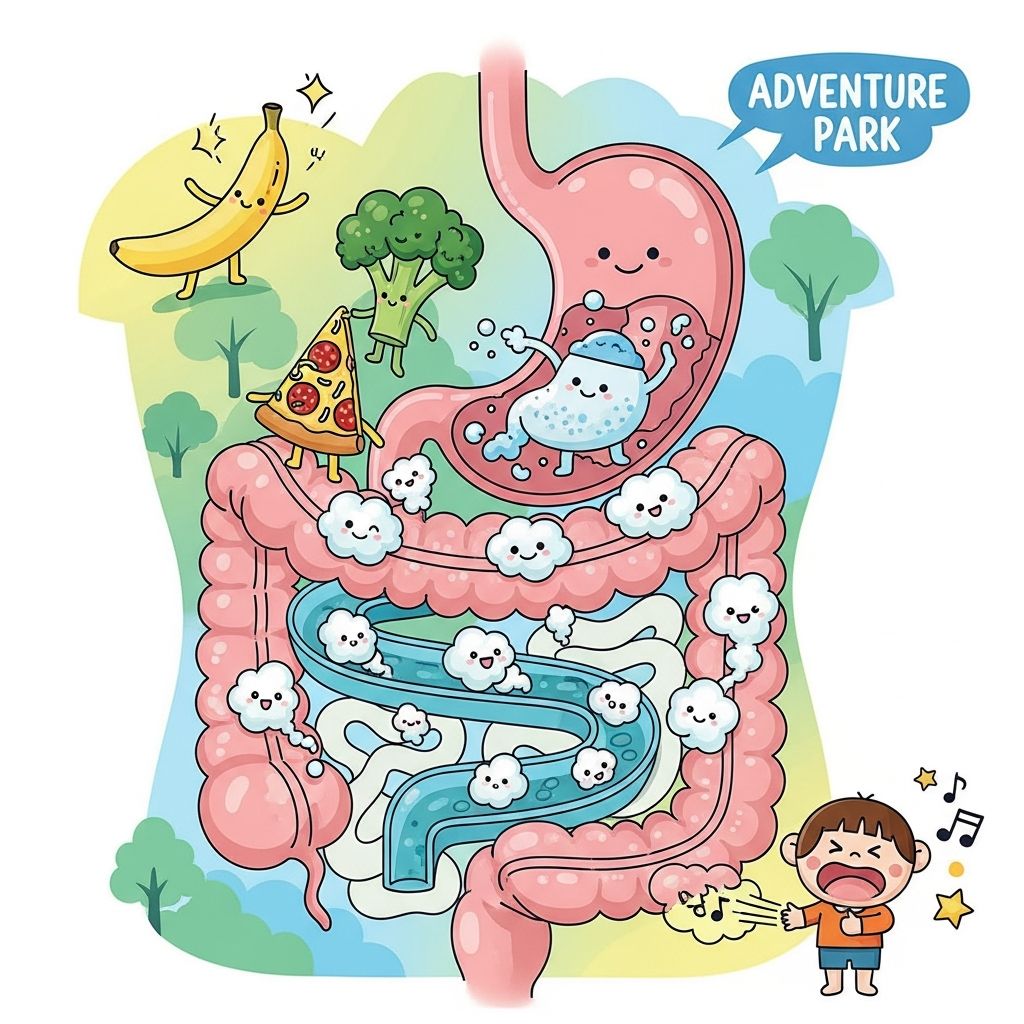
Everyone with a tummy passes gas, from tiny babies to grandparents. Farts might sound silly, but they are actually a normal part of how the body works.
What Exactly Is a Fart?
A fart is simply gas leaving your body through your bottom. This gas builds up inside your intestines, the long tube that carries food after you swallow it.
The gas is made from a mix of different gases that form as food is digested and as you swallow air while eating, drinking, laughing, or talking.
- Gas can come from swallowed air.
- Gas can come from bacteria breaking down food in your intestines.
- Gas leaves your body by burping or farting.
How Food Travels Through Your Body
To understand farts, it helps to know what happens to food after you eat it. Your body has a long, twisty path called the digestive tract that turns food into energy and waste.
- Mouth: You chew food and mix it with spit, which starts breaking it down.
- Stomach: Food gets churned and mixed with juices to turn into a mushy liquid.
- Small intestine: Your body absorbs most vitamins, minerals, and energy here.
- Large intestine (colon): Bacteria work on what is left and pull out water, forming poop and gas.
Gas is a natural side product of this whole process, especially in the large intestine where friendly bacteria live.
Where Does the Gas Come From?
Gas shows up in your belly for a couple of main reasons. Some of it comes from the way you eat, and some comes from the way your body and bacteria break down food.
Swallowed Air
Every time you gulp down food or drinks, a bit of air goes along for the ride. This air can build up in your stomach and intestines.
- Drinking from straws can make you swallow more air.
- Eating very quickly can trap extra air in your tummy.
- Chewing gum or sucking on hard candy can add more swallowed air.
Helpful Bacteria in Your Gut
Your intestines are home to trillions of tiny living things called bacteria. Many of them are helpful and make gas as they break down parts of your food that you cannot digest on your own.
This happens especially when you eat certain types of carbohydrates, like fibers and sugars, that reach the large intestine without being fully digested in the small intestine.
Foods That Can Make You Extra Gassy
Some foods are famous for causing more gas because they contain fibers or sugars that bacteria love to snack on. That does not make them bad foods; it just means your belly might feel gassy after eating them.
| Food Type | Examples | Why They Cause Gas |
|---|---|---|
| Beans and lentils | Kidney beans, black beans, chickpeas, lentils | Contain special carbohydrates that bacteria break down into gas. |
| Vegetables | Broccoli, cabbage, cauliflower, Brussels sprouts | Rich in fibers and natural plant sugars that can be gassy. |
| Fruits | Apples, pears, peaches, prunes | Have natural sugars and fiber that can reach the large intestine. |
| Dairy | Milk, ice cream, cheese | Contain lactose, a sugar that some people cannot digest well. |
| Drinks | Soda, fizzy water, carbonated juice | Hold bubbles of gas that can collect in your tummy. |
| Whole grains | Whole-wheat bread, bran cereal, brown rice | High in fiber that can create gas as it is broken down. |
Even though these foods can cause gas, many of them are very healthy and help your body grow strong. Often it is better to adjust how much you eat at once instead of avoiding them completely, unless a doctor says otherwise.
Why Farts Smell and Make Noise
Not every fart smells the same. Some are barely noticeable, while others can clear a room. The smell comes from tiny amounts of sulfur-containing gases made when bacteria break down certain foods.
The sound of a fart depends on how quickly the gas comes out and the way your bottom muscles are positioned. A fast blast of gas usually makes a louder, higher sound, while a slower release can be softer.
How Often Do People Fart?
People pass gas many times a day, often without even noticing. Some farts slip out quietly while you are walking, sleeping, or sitting at school.
The number of times a person farts can change from day to day, depending on what they eat, how quickly they eat, and how their body digests food.
- Some days you might hardly notice any gas.
- Other days, especially after certain foods, you might feel extra gassy.
- It is normal for kids and adults to fart multiple times a day.
Is Farting Healthy or a Problem?
Most of the time, farting is a sign that your digestive system is doing its job. Your body is moving food along, using what it needs, and getting rid of the rest.
However, gas can sometimes come with discomfort or other symptoms. When that happens, it may be a clue that something else is going on in your belly.
When Gas Is Just Normal
- You feel a bit of pressure or rumbling before the gas comes out.
- You do not have strong or long-lasting pain.
- You are eating regular meals and going to the bathroom normally.
When Gas Might Need a Checkup
Sometimes, frequent or painful gas can be a sign of a food intolerance or another digestive issue. If you notice certain patterns, it is smart to tell a parent, caregiver, or another trusted adult.
- Strong stomach pain that does not go away.
- Gas along with diarrhea, constipation, or very hard poop.
- Feeling sick, losing weight, or not wanting to eat.
- Gas and tummy problems every time you drink milk or eat cheese.
Only a health professional can figure out the exact cause and suggest what to do next.