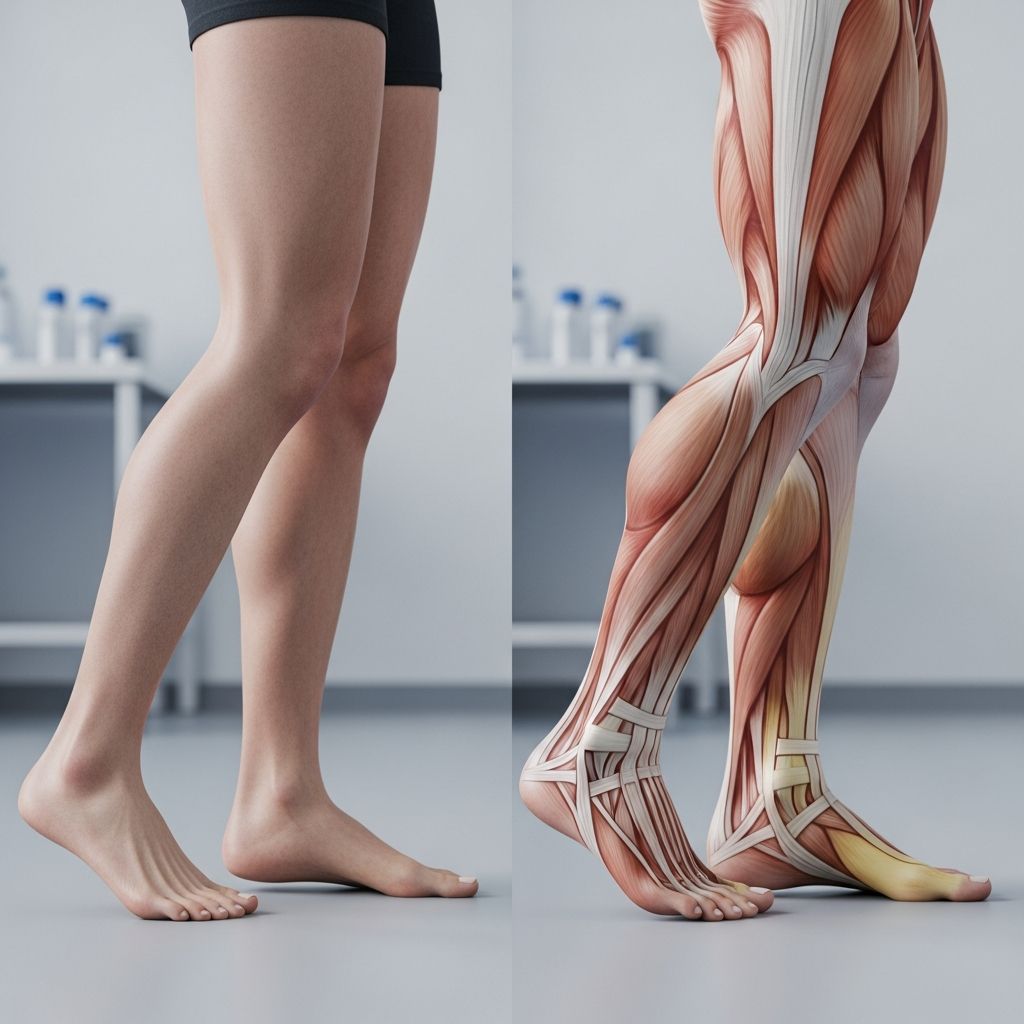
Calves are often treated as a purely aesthetic concern, but research suggests that the size of your lower legs can offer meaningful clues about your overall health. Rather than obsessing over appearance, understanding what calf circumference means biologically can help you spot potential risks and protect long-term function.
Why Calf Size Matters More Than You Think
Calf circumference reflects the combined volume of muscle, fat, and sometimes fluid in the lower leg. Because it is easy to measure and strongly related to muscle mass, many clinicians and researchers use calf size as a quick proxy for nutritional status, strength, and frailty, especially in older adults.
In several studies, calf size has been linked to:
- Skeletal muscle mass across the body
- Physical performance and mobility in daily life
- Cardio-metabolic risk, including fat distribution and artery health
- Frailty and sarcopenia (age-related loss of muscle)
This does not mean that a specific calf measurement guarantees good or bad health. Instead, calf size adds another data point that, combined with weight, activity level, and medical history, can help outline your risk profile.
Genetics vs. Training: What Really Shapes Your Calves?
Many men blame “bad genetics” for slim calves, and heredity does play a major role in how much muscle you naturally carry in your lower legs. Factors influencing calf size include:
- Genetics: Muscle fiber distribution, tendon length, and limb proportions are largely inherited and can limit how large or defined your calves can become.
- Overall muscle mass: Studies show that calf circumference is closely correlated with appendicular skeletal muscle mass (muscle in arms and legs), meaning bigger calves often accompany greater total muscle.
- Body fat and fluid: Larger calves can reflect both muscle and subcutaneous fat, and in some medical conditions, swelling (edema).
- Training habits: Regular resistance and impact exercise (walking, running, climbing, loaded squats) can increase muscle size and strength over time.
In other words, you cannot fully override your genetic blueprint, but your lifestyle strongly shapes how much muscle you retain and how functional your lower body remains as you age.
How Calf Size Relates to Muscle Mass and Frailty
One of the most important medical uses of calf circumference is as a screening tool for low muscle mass and sarcopenia in older adults.
Research in Asian and Latin American populations has found that:
- Calf circumference correlates strongly with appendicular skeletal muscle mass when measured by more advanced tools such as DXA scans.
- Thresholds around 34 cm for men and 33 cm for women are recommended in some guidelines to help identify individuals at risk of low muscle mass and sarcopenia.
- Both very low and very high calf circumference may signal underlying nutrition or body composition issues, such as malnutrition or obesity with fat infiltration of muscle.
Low calf circumference tends to be associated with:
- Reduced strength and walking speed
- Higher risk of falls and fractures
- Greater likelihood of functional limitations such as difficulty climbing stairs or rising from a chair
Because calf measurement is inexpensive, quick, and non-invasive, it is increasingly used in geriatric and community health settings as part of frailty assessments.
Big Calves: Potential Advantages and Hidden Downsides
For younger men, bigger calves are often a badge of honor. Studies do point to some advantages of having more lower-leg mass, but the picture is not entirely straightforward.
Potential health advantages of larger calves
- More total muscle: Larger calves usually accompany higher overall limb muscle mass, which supports balance, power, and metabolic health.
- Improved physical performance: In population-based studies, greater calf circumference is generally associated with better physical performance scores, faster gait speed, and greater leg strength—up to a point.
- Alternative fat storage site: Some research suggests that storing more fat in the lower body, including calves, may be metabolically less harmful than central (abdominal) fat, possibly lowering certain vascular risks.
When bigger might not be better
On the other hand, very large calf circumferences can reflect excess fat, edema, or a combination of muscle and unhealthy tissue. A study in older adults found that those with the highest calf-circumference category (above about 38–39 cm) had an increased risk of developing future mobility disability, even after accounting for other factors.
Possible explanations include:
- Sarcopenic obesity: A mix of low muscle quality and high fat infiltration in the muscles, which can impair function despite large limb girth.
- Chronic inflammation: Greater subcutaneous fat and fatty muscle infiltration are linked to low-grade inflammation, which can harm muscles and joints.
- Edema and systemic illness: In some individuals, unusually thick lower legs may be partly due to fluid retention from heart, kidney, or venous problems, rather than healthy tissue.
This means that “big calves” are not inherently good or bad. Their significance depends on your overall weight, fitness, and medical situation.
Small Calves, Heart Rate, and Cardiovascular Health
The original article that inspired this piece highlights research suggesting men with smaller calves may have a higher resting heart rate. Independent of fitness level, a persistently elevated resting heart rate (generally above 100 beats per minute) is associated with higher risks of cardiovascular events and all-cause mortality.
Several mechanisms could link smaller calves to higher cardiovascular risk:
- Lower muscle mass: Less skeletal muscle means a smaller reservoir for glucose uptake and fatty acid storage, which can worsen insulin resistance and lipid profiles.
- Reduced venous return: Calf muscles act as a “second heart,” pumping blood back up the legs with each contraction. Weak calves may impair this pump, potentially stressing the cardiovascular system during activity.
- Overall deconditioning: Small calves may reflect limited physical activity, which itself is tied to higher resting heart rate and poorer vascular health.
Calf circumference should never be used alone to diagnose cardiovascular disease. But paired with blood pressure, cholesterol levels, and lifestyle factors, it can offer one more hint about whether you are building or losing protective muscle tissue.
Calf Size and Aging: Sarcopenia, Mobility, and Independence
One of the most consistent findings across studies is that calf size tends to shrink with age as people lose muscle mass—a process called sarcopenia. This loss usually accelerates after midlife.
Key age-related trends include:
- Declining muscle mass: Without strength training, adults can lose 1–2% of muscle mass per year after the age of 50, often starting in the lower limbs.
- Reduced gait speed and balance: Lower leg strength is crucial for stabilizing the body while walking or changing direction. Smaller, weaker calves are associated with slower walking speed and more difficulty with daily tasks.
- Higher risk of falls and disability: Studies in older adults show that both very low and very high calf circumference are associated with future mobility limitations, though low circumference more consistently signals reduced functional reserve.
Because of this, some geriatric guidelines recommend using calf measurements along with handgrip strength and walking tests to identify people at risk of sarcopenia and intervene early.
How to Measure Your Calf Circumference Correctly
If you want to track your own calf size over time, it is important to measure it consistently. Here is a simple step-by-step guide commonly used in research and clinical practice:
- Choose the right position: Either stand with weight evenly distributed on both feet, or sit with knees at 90 degrees and feet flat on the floor.
- Locate the widest point: Look at your lower leg and identify the thickest part of your calf between your ankle and knee.
- Use a flexible tape: Wrap a non-stretch measuring tape around that widest point, ensuring it is snug but not compressing the skin.
- Keep tape level: Check that the tape is horizontal all the way around, not angled up or down.
- Measure to the nearest 0.1 cm: Record the value, and repeat on the other leg. You can use the average of both calves or track each side separately.
Try to measure at roughly the same time of day and under similar conditions (for example, before heavy exercise and after using the bathroom) to reduce the impact of temporary swelling or fluid shifts.
Interpreting Calf Size: A Simplified View
No single table can definitively label a calf measurement as “healthy” or “unhealthy” for every man, because age, ethnicity, height, weight, and training all matter. However, research-based thresholds can help you discuss results with a health professional.
| Approximate calf circumference (men) | What it may suggest (context-dependent) |
|---|---|
| Below ~34 cm | May indicate low muscle mass or undernutrition in older adults; associated with higher risk of sarcopenia and reduced physical performance. |
| ~34–38 cm | Often compatible with adequate muscle mass in many men, depending on height, ethnicity, and body weight; needs to be interpreted with overall health indicators. |
| Above ~38–39 cm | In some older adult studies, linked with greater risk of mobility disability, possibly reflecting obesity, fat infiltration, or edema rather than purely muscle. |
These ranges are not diagnostic. They are starting points for conversation with a clinician about diet, training, and potential screening for sarcopenia or cardio-metabolic disease.
Healthy Ways to Build and Protect Calf Muscle
If your calves are on the smaller side—or if you are noticing a steady decline with age—the goal is not cosmetic perfection but building strength, function, and metabolic health. Evidence-based strategies include:
- Resistance training: Two to three weekly sessions focusing on lower-body exercises such as squats, lunges, step-ups, calf raises, and leg presses can stimulate muscle growth and maintenance.
- Impact and endurance activities: Brisk walking, hiking, stair climbing, and jogging naturally load the calves and improve vascular function and endurance.
- Adequate protein intake: For most healthy adults, aiming for around 1.0–1.2 g of protein per kilogram of body weight per day (and sometimes higher in older or very active individuals) supports muscle repair and growth; specific targets should be individualized by a dietitian.
- Weight management: Avoiding excessive weight gain can reduce fat infiltration in the calf and preserve mobility while still allowing for muscle growth.
- Medical evaluation when needed: Sudden changes in calf size, one-sided swelling, pain, or visible veins warrant urgent medical attention to rule out conditions such as deep vein thrombosis or heart failure.
It is also important not to chase extreme calf size through implants or unsafe supplementation. These approaches may alter appearance without improving muscle quality, strength, or long-term health.
Frequently Asked Questions (FAQs)
Is there such a thing as an ideal calf size for men?
There is no universal “ideal” calf size. Research-based cut-off values (such as 34 cm in men for screening low muscle mass) are mainly intended for older or at-risk populations, not as aesthetic goals. What matters most is whether your calves support good strength, balance, and cardiovascular health relative to your body size and age.
Can skinny calves be improved with exercise, or is it all genetics?A: Genetics strongly influence calf shape and potential size, but most people can increase strength and modestly increase circumference through progressive resistance training and weight-bearing activity. The gains may be smaller for some individuals, but even modest improvements in strength can benefit joint health and balance.
Q: Are big calves always a sign of good health?
Not necessarily. While larger calves often indicate higher muscle mass, very large circumferences—especially in people with obesity or significant swelling—may reflect fat accumulation or edema rather than purely healthy muscle. Context, including body composition, fitness, and blood markers, is critical.
How often should I measure my calf circumference?
For most healthy adults, there is no need for routine measurement. If you are older, recovering from illness, or working on strength and weight goals, measuring every few months can help track trends. Rapid changes, especially if accompanied by pain or shortness of breath, should be evaluated by a clinician.
Does calf size affect my risk of falls as I age?
Lower calf circumference and low muscle mass are associated with poorer physical performance and greater fall risk in older adults, particularly when combined with slow gait speed and weak handgrip. Strength training, balance work, and adequate protein intake are key strategies to reduce that risk.
References
- What Men’s Big Calves Say About Their Health, According to Science — Fatherly. 2019-08-01. https://www.fatherly.com/health/what-average-men-calf-size-means-health
- Calf circumference predicts mobility disability: A secondary analysis of the Mexican Health and Aging Study — Gonzalez-Arroyo M, et al., BMC Geriatrics. 2016-09-13. https://pmc.ncbi.nlm.nih.gov/articles/PMC5028111/
- Calf circumference as a screening tool for low skeletal muscle mass in Thai older adults — Phu S, et al., BMC Geriatrics. 2023-01-02. https://pmc.ncbi.nlm.nih.gov/articles/PMC10709895/
- Calf circumference has a positive correlation with physical performance and negative correlation with metabolic syndrome in older adults — Frontiers in Public Health. 2022-11-16. https://www.frontiersin.org/articles/10.3389/fpubh.2022.1038491/full
- Calf Circumference — Abbott ProConnect (UK). 2021-05-01. https://www.proconnect.abbott/uk/en/home/adult/resources/public/sfl-ways-to-screen-v2/calf-circumference.html