On the outside, your skin covers and protects you like a tough jacket. Inside your body, there is another protective layer that most people never notice: the mucous membranes, also called the mucosa. These thin, moist linings help you breathe, eat, talk, and even use the bathroom safely every day.
This guide explains what mucous membranes are, where they are found, what they do, and why the slimy mucus they make is actually a hero for your health.
What Exactly Is a Mucous Membrane?
A mucous membrane is a soft, moist lining that covers the inside of certain body parts and tubes that connect to the outside world, such as the nose, mouth, lungs, stomach, and bladder.
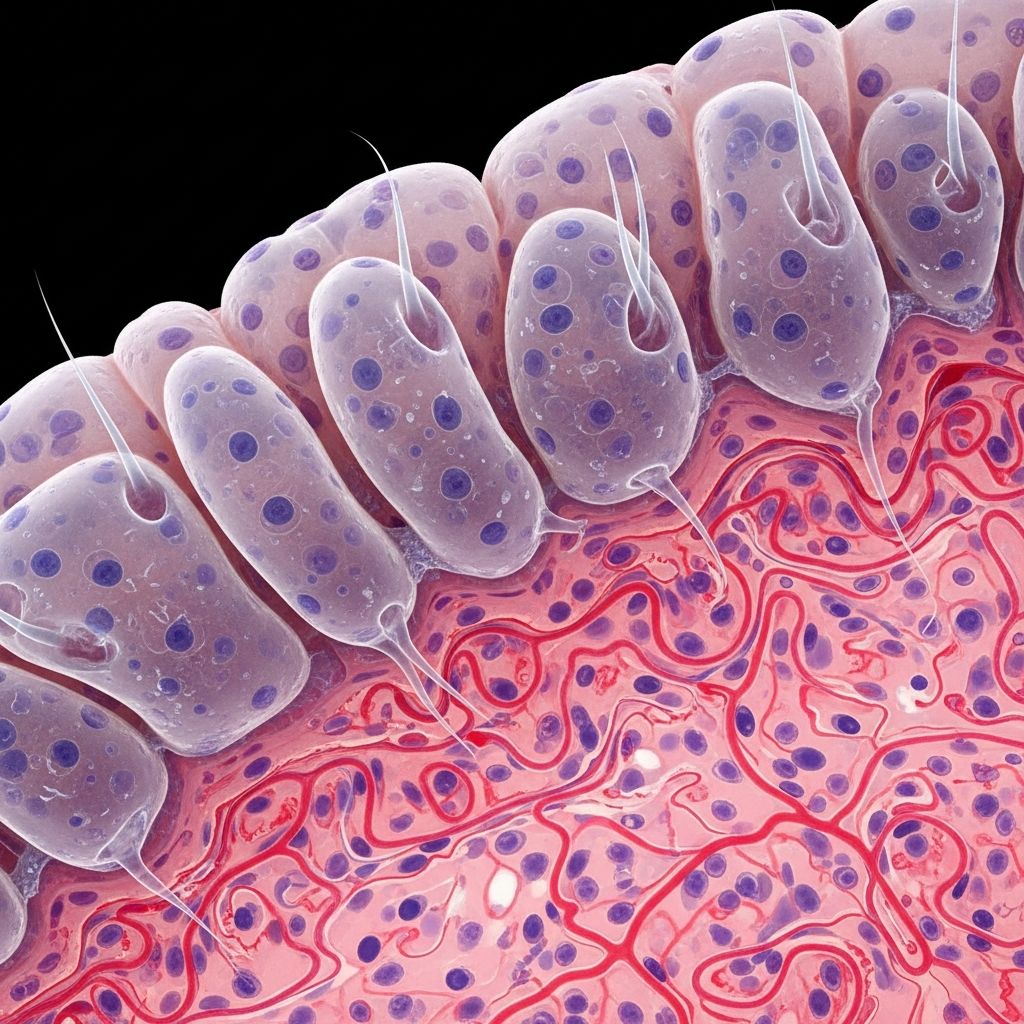
Under a microscope, a mucous membrane usually has:
- Surface cells (epithelial cells) that form the first barrier against germs and dirt
- A soft layer of connective tissue (called the lamina propria) that gives support and brings blood and nutrients
- Special cells and tiny glands that can make mucus, a slippery, sticky fluid
Not every mucous membrane makes a lot of mucus all the time, but they are all designed to stay moist and to help protect the tissues underneath.
Where Are Mucous Membranes Found?
Mucous membranes line many parts of the body that are open to the outside or connect to the outside through a tube.
| Body Area | Example Locations | What the Mucous Membrane Helps With |
|---|---|---|
| Head and Face | Nose, mouth, tongue, cheeks, gums, eyelids | Smelling, tasting, chewing, talking, blinking |
| Breathing System | Throat, trachea (windpipe), bronchi, lungs | Warming, cleaning, and moistening the air you breathe |
| Digestive System | Esophagus, stomach, intestines | Moving food, absorbing nutrients, protecting from strong stomach acid |
| Urinary System | Ureters, bladder, urethra | Protecting the lining from urine and germs |
| Reproductive Area | Genital and reproductive tracts | Protection, moisture, and support for special functions |
Wherever your body meets the outside world on the inside, there is almost always a mucous membrane there to help.
What Is Mucus and Why Is It So Slimy?
Mucus is a thick, sticky fluid made by glands in the mucous membranes. It might look gross when you blow your nose, but it does important jobs for your health.
Mucus is made mostly of:
- Water – keeps the lining slippery and moist
- Mucins – special proteins that make mucus stretchy and sticky
- Salts and sugars
- Immune molecules (like antibodies) that help fight germs
Because it is both slippery and sticky, mucus can trap dust and germs and help move them away while also allowing food and air to glide along smoothly.
What Do Mucous Membranes Do?
Mucous membranes have several key jobs that keep you safe and healthy.
1. Protection From Germs and Dirt
Just like a shield, mucous membranes help stop harmful things from getting deeper into your body.
- Germs and dust get trapped in sticky mucus instead of entering the lungs or blood
- Tiny hairs (called cilia) in your airways move mucus upward so you can cough or swallow it
- Immune cells in the mucosa help recognize and attack invaders
2. Keeping Tissues Moist
Many parts of your body would dry out and crack if they were not kept wet. Mucous membranes:
- Prevent dehydration of delicate tissues in the nose, mouth, eyes, and other areas
- Help you swallow and talk more comfortably
- Allow gas exchange in the lungs by keeping surfaces smooth and moist
3. Helping With Eating and Digestion
In the digestive tract, mucous membranes do far more than just sit there.
- Mouth mucosa helps with chewing and tasting
- Esophagus mucosa lets food slide down safely
- Stomach mucosa forms a barrier that protects the stomach wall from strong acid and enzymes
- Intestinal mucosa absorbs nutrients like sugars, fats, vitamins, and minerals into the bloodstream
4. Lubrication and Comfort
Because mucous membranes are constantly moist, they provide natural lubrication.
- They make it easier to blink and move the eyes without scratching them
- They make it possible to move food through the digestive system smoothly
- They reduce friction in the urinary and reproductive tracts
5. Sensing the World
Some mucous membranes are packed with special sense cells that help you detect what is happening around you.
- Mucosa in the nose contains smell receptors
- Mucosa on the tongue holds taste buds
- Other areas can sense touch, pain, temperature, and irritation
These signals help your body react properly – for example, by making you sneeze or cough to clear something irritating.
Examples of Mucous Membranes at Work
Mucous Membranes in Your Nose
Inside your nose, mucous membranes form a soft, warm, and damp surface.
- They warm and moisten the air before it reaches your lungs
- They make mucus that traps dust, pollen, and germs
- Tiny hairs help move the mucus toward your throat, where you swallow it
Mucous Membranes in Your Lungs
From your throat down to the smallest airways, the breathing tubes are lined with mucous membranes.
- Mucus catches harmful particles before they can reach the deep lungs
- Cilia sweep mucus upward to keep the airways clear
- The moist lining helps gases like oxygen and carbon dioxide move in and out of your blood
Mucous Membranes in the Stomach and Intestines
The inside of your stomach is covered by a thick mucous membrane that is especially important.
- A protective mucus layer shields the stomach from its own acid and digestive enzymes
- If this layer is damaged, it can lead to irritation or ulcers
In the intestines, mucous membranes are folded and have tiny finger-like bumps to increase the surface area for absorbing food nutrients.
Mucous Membranes in the Urinary Tract
The inside of the bladder, ureters, and urethra is also lined by mucous membranes.
- They protect the lining from the chemical effects of urine
- They act as a barrier to many germs that could cause infection
How Do Mucous Membranes Work With the Immune System?
Scientists think of mucous membranes as a huge part of the body’s first line of defense against infection.
- The mucosa in the mouth, nose, gut, and lungs covers a very large surface area that constantly meets the outside environment
- Special immune structures in the mucosa help recognize germs, including viruses and bacteria, very quickly
- Some immune cells in mucous membranes can remember germs they have seen before and respond faster next time
This is one reason why staying hydrated and keeping mucous membranes healthy is important for your overall immune health.
Keeping Your Mucous Membranes Healthy
Mucous membranes repair themselves often, but they can still be harmed by dryness, infection, or irritants like smoke. You can help protect them with simple daily habits.
- Drink enough water so your body can make proper mucus and keep tissues moist
- Wash your hands regularly to reduce germs that might reach your eyes, nose, or mouth
- Avoid smoke and harsh chemical fumes that irritate lung mucosa
- Use a humidifier in very dry air if a doctor or adult suggests it
- Brush and floss your teeth to keep mouth mucosa and gums healthy
- Eat foods rich in vitamins A and niacin, which support healthy mucous membranes, as part of a balanced diet
When Mucous Membranes Get Irritated or Infected
Sometimes mucous membranes can become swollen, red, or sore. This can happen for many reasons, including infections, allergies, or injuries.
- Runny nose: the nasal mucosa makes extra mucus when you have a cold or allergies
- Sore throat: the mucosa in the throat can become inflamed
- Red, itchy eyes: the thin mucous membrane covering the eye and eyelids (the conjunctiva) can get irritated or infected
- Stomach pain or heartburn: the stomach mucosa can be irritated by acid or certain medicines
- Urinary burning: the bladder and urethral mucosa can hurt when there is an infection
If you notice these problems, especially if they last more than a few days or are very painful, it is important to tell a trusted adult and see a healthcare professional.
Fun Facts About Mucous Membranes
- The total surface area of mucous membranes in an adult is much larger than the surface area of the skin, stretching over many square meters inside the body.
- Not every mucous membrane produces visible mucus all the time; some mainly act as a barrier and only make more mucus when needed.
- Mucous membranes are continuous with the skin at openings like the lips, nostrils, and eyelids, forming one long protective covering from outside to inside.
Frequently Asked Questions (FAQs)
Q1: Is a mucous membrane the same thing as skin?
A mucous membrane is similar to skin because both protect the body, but they are not the same. Skin is dry and tough and covers the outside of the body, while mucous membranes are soft and moist and line the inside of certain body cavities and tubes.
Q2: Why do I make more mucus when I am sick?
When you have a cold or allergy, your mucous membranes react by making extra mucus to trap more germs, dust, and allergens. This can lead to a runny or stuffy nose, but it is part of how your body tries to protect itself.
Q3: Is mucus always a bad sign?
No. Your body makes mucus all the time, even when you feel fine. Normal mucus keeps your tissues moist, helps move food and air, and traps germs. It only becomes a problem if there is too much, if it changes color or smell, or if it is linked to pain or trouble breathing.
Q4: Can I run out of mucus if I blow my nose a lot?
You cannot completely run out of mucus because your mucous membranes keep making more. However, if you blow your nose very often or rub it too much, the skin and mucosa can become sore and dry. Using soft tissues and being gentle can help.
Q5: When should I see a doctor about my mucous membranes?
You should see a doctor or tell an adult if you have strong pain, trouble breathing, blood in mucus, burning when you pee, or if redness and swelling in your eyes, mouth, or nose do not improve after a few days. These can be signs that the mucous membranes are badly irritated or infected and need medical care.
References
- Mucous membrane — Wikipedia Editors. 2024-01-10. https://en.wikipedia.org/wiki/Mucous_membrane
- What is a Mucous membrane? — BYJU’S Biology. 2022-06-01. https://byjus.com/biology/what-is-a-mucous-membrane/
- Mucous membrane | Function, Examples, Locations, & Facts — Encyclopaedia Britannica. 2023-05-18. https://www.britannica.com/science/mucous-membrane
- Tissue Membranes: Mucous Membranes — Boundless Anatomy and Physiology, Lumen Learning. 2016-09-01. https://university.pressbooks.pub/test456/chapter/tissue-membranes/
- Definition of mucous membrane — NCI Dictionary of Cancer Terms, National Cancer Institute. 2011-07-06. https://www.cancer.gov/publications/dictionaries/cancer-terms/def/mucous-membrane