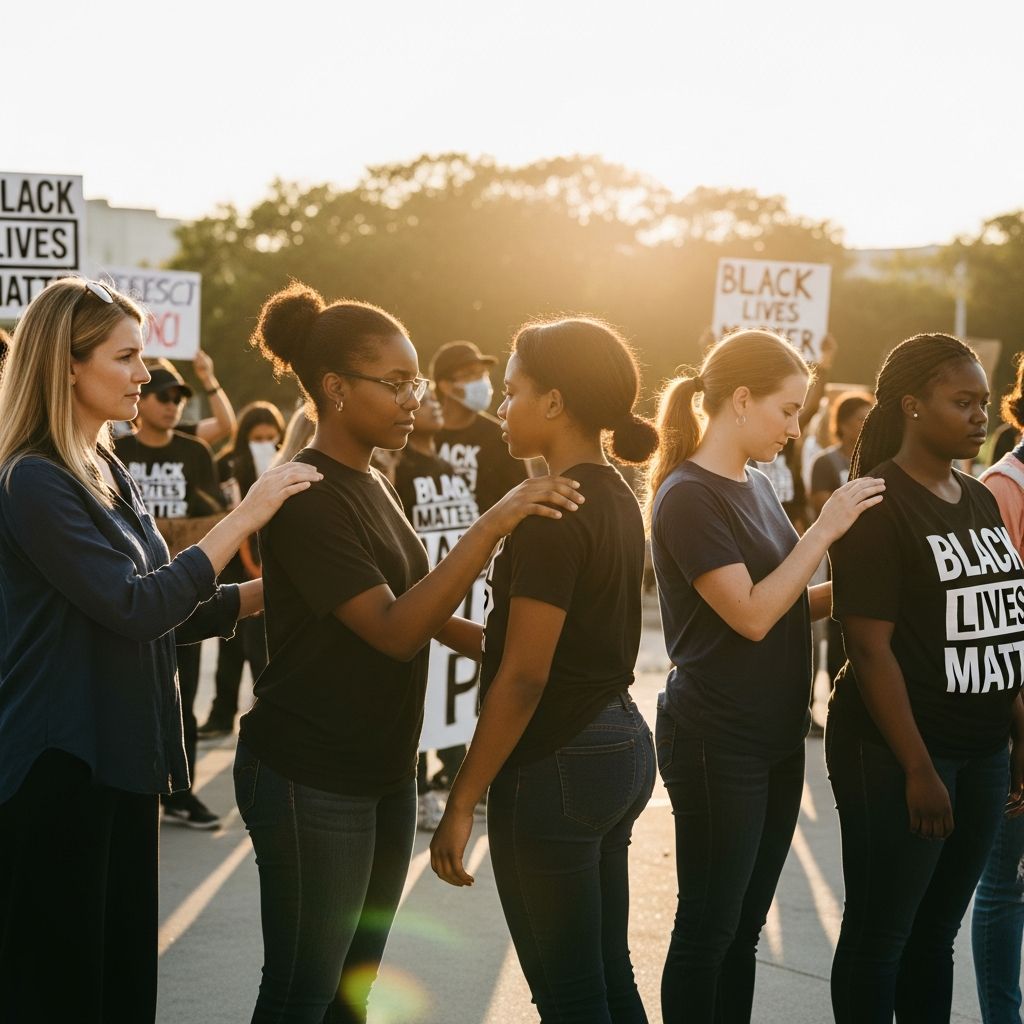
White mothers hold unique positions of influence in addressing racial inequities, particularly when nurturing children of color or guiding their own into anti-racist mindsets. By moving beyond passive sympathy to active advocacy, they can help dismantle systemic barriers that threaten Black lives daily.
Navigating Interracial Family Dynamics in a Racial Reckoning
In rural Minnesota, Marcy Ugstad, a white mother who adopted her Black son Jesse as a newborn, faced raw tensions during the 2020 summer of protests following George Floyd’s death. Living in a predominantly white lake country area, Marcy initially marched alone with signs reading “America repent” and “I can’t breathe,” pulling a wagon symbolizing humility. Jesse captured the moment on video, which went viral, yet he pushed her to do more, highlighting the gap between symbolic gestures and deeper change.
This story underscores a common challenge: white parents often feel they’ve tried hard—attending protests, hanging diverse artwork—but Black children in these homes experience the world’s racism unfiltered. Marcy reflected on meager adoption guidance, like merely displaying paintings of Black people, which proved insufficient against real-world biases. Jesse, furloughed from census work, urged action over prayer vigils, revealing generational and racial divides even within loving families bound by faith.
The Emotional Toll on White Moms of Children of Color
White mothers raising biracial or Black children grapple with profound emotions—guilt, anger, shame, and fear. One such mother expressed guilt over her ‘privilege’ potentially blinding her son to dangers she doesn’t face daily, questioning if she’s empowered him enough to survive encounters with law enforcement.
Anger simmers at persistent police brutality, from cases like Michael Brown and Tamir Rice to more recent incidents, forcing ‘the talk’ about compliance and excellence beyond white peers just to stay alive. Shame targets white communities’ excuses and backhanded compliments like calling her child a ‘good one,’ implying others aren’t. Fear looms largest: protests might escalate violence, yet stopping them risks stagnation, all while hate surfaces in familiar places like Pittsburgh neighborhoods.
- Guilt: Wondering if protection efforts suffice against systemic threats.
- Anger: At ongoing violence and denial within white circles.
- Shame: Over community complicity and lack of outrage on social media.
- Fear: For her child’s future mistakes leading to death, unlike white peers.
These feelings propel a commitment: cooking dinner tonight while grieving another mother’s loss, vowing never to quit fighting for her brown child and all marginalized youth.
Raising White Children as Anti-Racist Agents
Even white mothers of white children bear responsibility. Madaline Edison and Stacy Moore, executive directors in education nonprofits, pledged to raise their sons consciously anti-racist. Acknowledging privileges awarded at Black expense, they refuse to let boys absorb anti-Blackness indoctrination.
Their approach mandates teaching Black Lives Matter not as slogan but action: relentless conversations starting young, exposing Black excellence stories, and pushing sons to challenge peers and family. Modeling advocacy ensures equal educational access for all kids, spending down privilege to dismantle oppression.
| Parenting Strategy | Goal | Impact on Child |
|---|---|---|
| Tough, age-appropriate talks on race | Build empathy early | Prevents passive racism |
| Highlight Black leaders and achievements | Counter stereotypes | Fosters admiration |
| Encourage peer confrontations | Spend privilege actively | Creates lifelong allies |
| Model community involvement | Equalize opportunities | Inspires leadership |
This framework transforms homes into justice incubators, where white boys learn their advantages aren’t inherent superiority but tools for equity.
Beyond ‘All Lives Matter’: Why Specificity Matters
Responses like ‘All Lives Matter’ often stem from inclusivity intentions but miss the point. A suburban white mom countered this by affirming Black Lives Matter specifies lives under threat—police violence, disparities—not exclusivity. Unaware deflection ignores targeted pain, diluting urgency.
She urged white women, with influence as moms and business owners, to amplify Black voices, paving better worlds for all children regardless of color. Pew Research in 2023 noted 51% adult support for BLM, yet white moms of biracial kids felt sidelined, fearing for children seen as Black despite their whiteness.
Practical Steps for White Moms to Act Now
Transitioning from awareness to allyship requires concrete actions:
- Educate Yourself: Read works by Black authors like Ibram X. Kendi on anti-racism, avoiding savior narratives.
- Listen Actively: Amplify Black mothers’ stories without centering your discomfort.
- Challenge Your Circle: Call out microaggressions in family chats, like ‘colorblind’ claims ignoring lived realities.
- Support Policies: Advocate for police reform, equitable education via votes and donations.
- Parent Intentionally: Use media to discuss bias, ensure diverse friendships.
In the Ugstad home, these steps bridged divides: Marcy conceded race conversations are essential, admitting ‘Nothing will change if white people don’t talk about race.’ Jesse affirmed their shared humanity while insisting on racial specificity.
Overcoming Common Pushback and Fatigue
Marcy tired after weeks of immersion—terms like white privilege, microaggressions overwhelming her rural Army-veteran background. Jesse felt her efforts ‘too little’ against church friends’ inaction or ‘All Lives Matter’ deflections.
Solutions include pacing: start small with local actions, seek affinity groups for white moms processing guilt without burdening POC. Persistence matters; one viral march sparked thousands of retweets, validating Jesse’s plea: ‘She’s doing this for me’.
Frequently Asked Questions (FAQs)
What should white moms say instead of ‘All Lives Matter’?
A: Affirm ‘Black Lives Matter’ to address specific injustices; it doesn’t negate others but highlights urgent threats.
How young is too young for race talks with kids?
A: No age is too young—toddlers notice differences; frame positively with Black excellence stories.
Can a single protest make a difference?
A: Yes, as Marcy’s went viral, inspiring dialogue, though sustained action amplifies impact.
How to handle family denial of racism?
A: Share personal stories, data on disparities, and model boundary-setting without escalating fights.
What resources for white moms of Black kids?
A: Books like ‘Raising Antiracist Children,’ BLM parent guides, and therapy for interracial dynamics.
Building Lasting Family Bonds Across Racial Lines
Despite clashes, Marcy and Jesse’s bond endures through Bible studies and grace. Jesse sometimes softens, viewing her rural limits; Marcy grows, rejecting colorblind ideals for anti-racist reality. Similarly, committed moms model for sons: fight not despite whiteness, but leveraging it.
White mothers’ roles extend societally—protests, votes, conversations shift norms. As one noted, carrying another mother’s pain propels unyielding fight. Pew’s 51% BLM support signals momentum; white moms can tip scales.
Ultimately, allyship means ongoing work: listening more, centering less, acting boldly. For Black children in white homes, it’s survival; for white kids, moral growth; for society, justice.
References
- A white mom and Black son in a summer of racial reckoning — Los Angeles Times. 2020-09-03. https://www.latimes.com/world-nation/story/2020-09-03/black-lives-matter-ottertail-minnesota
- Black Lives Matter to This White Mom — Single Mom Defined. N/A. https://singlemomdefined.com/personal-essays/black-lives-matter-to-white-moms/
- Two White Mothers’ Commitment to Anti-Racism — Educators for Excellence. 2020-06-04. https://e4e.org/blog-news/blog/two-white-mothers-commitment-to-anti-racism/
- White Mothers of Black or Biracial Children: Parenting in the Shadow — YouTube (Pew Research referenced). 2023. https://www.youtube.com/watch?v=eHiRZJ9NozI
- Black Lives Matter and How White Women Can Speak Up — The Mama Ladder. N/A. https://themamaladder.com/new-blog/blacklivesmatter
- A White Suburban Mom’s Response to “All Lives Matter” — Parent.com. 2017. https://www.parent.com/blogs/conversations/2017-a-white-suburban-moms-response-to-all-lives-matter