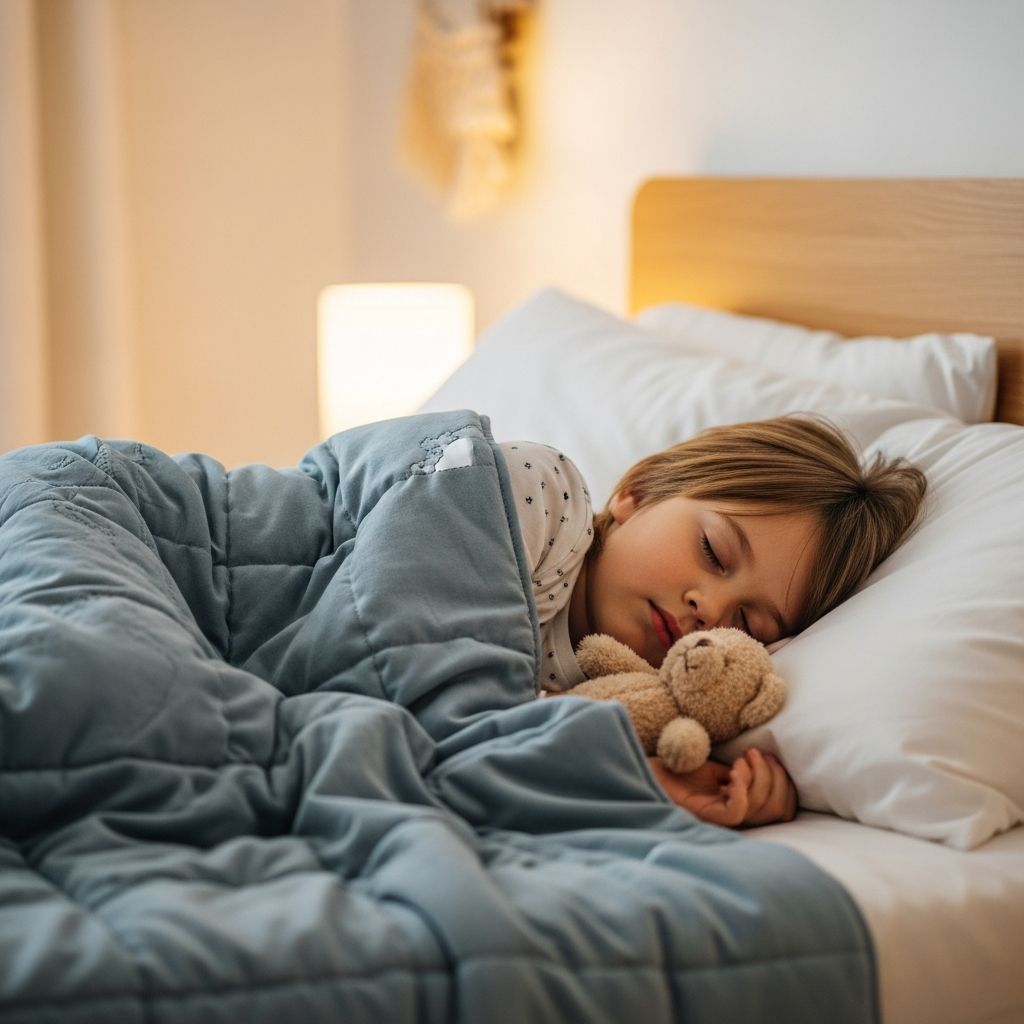
Weighted blankets offer children a gentle, hug-like pressure that promotes relaxation and better sleep by mimicking deep touch stimulation, which calms the nervous system and boosts feel-good hormones.
Understanding Deep Pressure and Its Calming Effects
Deep pressure stimulation from weighted blankets applies even, firm pressure across the body, similar to a comforting embrace. This technique helps lower cortisol levels—the stress hormone—while increasing serotonin for mood elevation and melatonin to regulate sleep cycles. For children facing high stimulation from school or activities, this pressure signals the body to shift into rest mode, slowing heart rate and steadying breathing.
Research indicates this method activates the parasympathetic nervous system, countering the fight-or-flight response. Children often report feeling more secure, reducing bedtime resistance and nighttime awakenings. Unlike light covers, the distributed weight—typically from non-toxic glass beads or pellets—adapts to body contours without restricting movement.
Key Advantages for Young Sleepers
Parents notice significant improvements in children’s rest when introducing weighted blankets thoughtfully. Here’s how they transform bedtime:
- Faster Sleep Onset: The calming hug effect quiets racing minds, helping kids drift off quicker after busy days.
- Fewer Night Wakings: Continuous gentle pressure soothes subconscious stirrings, promoting longer sleep stretches.
- Enhanced Morning Alertness: Better rest leads to improved focus, less irritability, and higher energy for school and play.
- Bedtime Routine Boost: Kids anticipate the cozy weight, turning sleep into an exciting ritual rather than a battle.
These benefits extend beyond typical sleep challenges, offering tools for children with specific needs.
Supporting Children with Special Sensory Needs
Anxiety and Restlessness Relief
For kids prone to worry or hyperactivity, weighted blankets provide a portable sense of security. The pressure distracts from overwhelming stimuli, fostering calm during transitions like bedtime or stressful events. Studies link this to natural serotonin boosts, easing emotional ups and downs.
ADHD Management Through Better Sleep
Children with ADHD often struggle with bedtime due to persistent thoughts. Weighted blankets promote relaxation by elevating serotonin and melatonin, shortening time to sleep and improving duration. Parents report calmer evenings and sharper daytime focus.
Autism Spectrum Disorder Comfort
In ASD, sensory overload disrupts rest. Deep pressure helps by redirecting focus to the blanket’s soothing input, aiding relaxation and reducing night wakings. One study noted children with autism slept longer and felt more rested.
| Condition | Primary Benefit | Supporting Mechanism |
|---|---|---|
| ADHD | Quicker sleep onset | Serotonin/melatonin increase |
| Autism (ASD) | Reduced sensory overload | Deep pressure distraction |
| General Anxiety | Cortisol reduction | Parasympathetic activation |
Selecting the Right Weighted Blanket for Your Child
Proper fit is crucial for safety and efficacy. Follow the 10% rule: the blanket should weigh about 10% of the child’s body weight, plus 1-2 pounds for optimal pressure without overwhelm. For a 40-pound child, aim for 5-6 pounds.
- Materials: Choose breathable fabrics like cotton with hypoallergenic glass beads for even distribution and washability.
- Size: Should cover the torso only, leaving limbs free—typically smaller than adult versions.
- Age Guidelines: Not for infants or toddlers under 20-30 pounds due to suffocation risks; best for ages 2+ with pediatrician approval.
Test during supervised daytime use first to ensure comfort. Machine-washable options simplify care for inevitable spills.
Safety Protocols Every Parent Must Follow
While beneficial, weighted blankets require precautions to avoid hazards:
- Never use on infants or unsupervised young toddlers.
- Ensure the child can easily remove it independently.
- Avoid if child has respiratory issues, sleep apnea, or low blood pressure, as chest pressure could impede breathing.
- Monitor for overheating; opt for cooling fabrics in warm climates.
- Consult a doctor for children with medical conditions.
Evidence shows mixed results on sleep improvements, with high satisfaction but limited large-scale studies. User preference is strong, yet professional guidance ensures safe integration.
Practical Tips for Introducing Weighted Blankets
Start slow: Use during story time or quiet play to build positive associations. Pair with consistent routines like dim lights and no screens. Track sleep patterns pre- and post-use to measure impact—many see changes within a week.
For travel, compact weighted blankets maintain routine benefits away from home. Combine with white noise or familiar scents for amplified effects.
Real-World Outcomes and Limitations
Families report holistic gains: better school performance, fewer meltdowns, and improved family dynamics from shared rest. However, they’re not a cure-all. If sleep issues persist, explore underlying causes with specialists. Weighted blankets shine as part of a broader wellness approach.
Recent pediatric insights emphasize individualized use, noting appeal surged post-pandemic amid heightened stress.
Frequently Asked Questions About Weighted Blankets for Kids
Are weighted blankets safe for all children?
No, avoid for infants under 2 years, those with breathing issues, or without doctor approval. They must be removable and torso-only.
How heavy should a child’s weighted blanket be?
About 10% of body weight (e.g., 5 lbs for 50 lbs child). Start light and adjust.
Can they help with my child’s ADHD-related sleep problems?
Yes, by boosting calming hormones and reducing restlessness, per studies.
Do weighted blankets get hot?
Breathable models prevent overheating; choose cotton or bamboo blends.
How do I clean a weighted blanket?
Most are machine-washable; air-dry to preserve beads.
Will my child outgrow the need for one?
Many continue using into teens for stress relief, but reassess periodically.
References
- 5 Ways a Weighted Blanket Can Help Your Child Sleep Better — YNM. 2023. https://ynmhome.com/blogs/news/5-ways-a-weighted-blanket-can-help-your-child-sleep-better
- What you should know about weighted blankets for kids — Akron Children’s Hospital. 2025-12-10. https://www.akronchildrens.org/inside/2025/12/10/weighted-blankets-for-kids/
- Benefits of Weighted Blankets – Better Sleep for Kids and Adults — Halo Sleep. 2024. https://www.halosleep.com/blogs/aden/benefits-of-weighted-blankets-better-sleep-for-kids-and-adults
- Weighted Blanket Benefits — Sleep Foundation. 2025. https://www.sleepfoundation.org/best-weighted-blankets/weighted-blanket-benefits
- The Benefits of a Weighted Blanket — Brown University Health. 2023. https://www.brownhealth.org/be-well/benefits-weighted-blanket