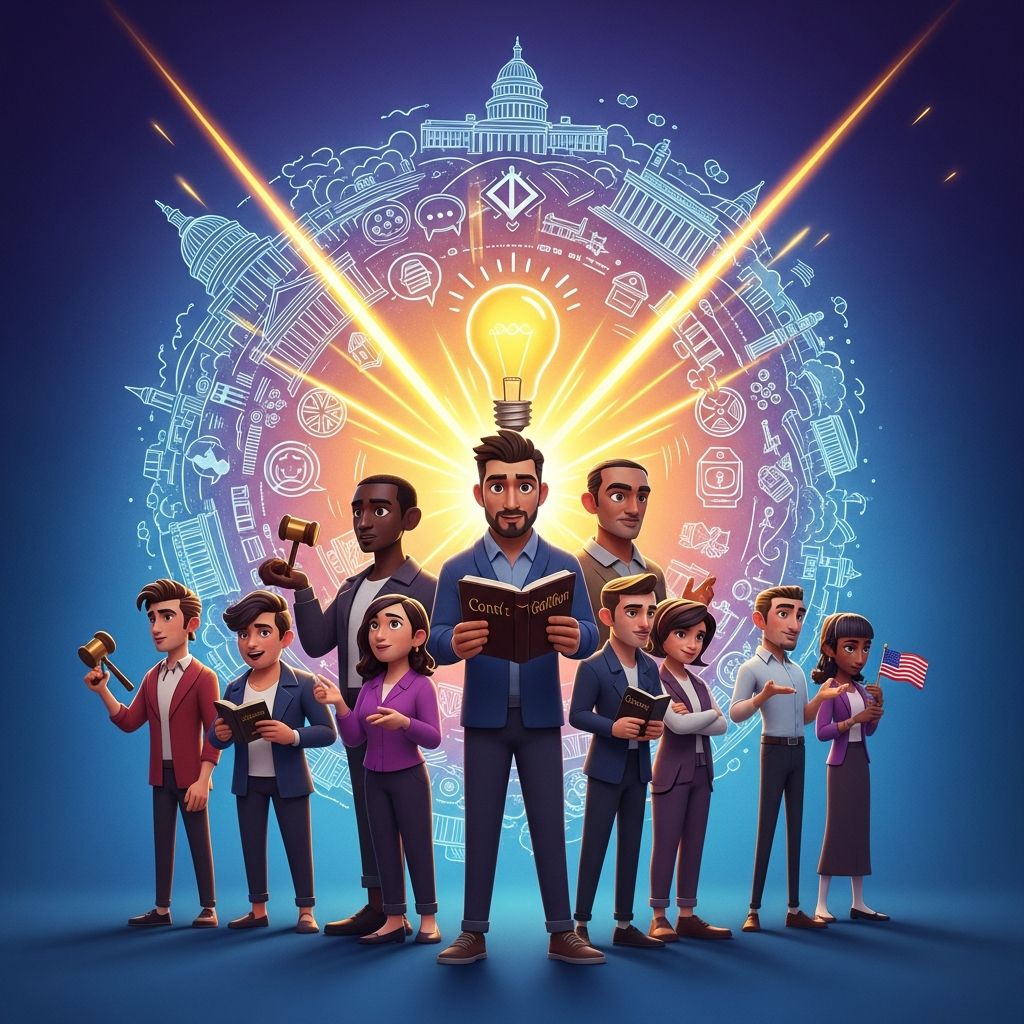
Netflix’s We the People stands out as a vibrant animated series designed to demystify American civics for younger audiences. Launched in 2021, this collection of ten short music videos transforms complex topics like voting rights, free speech, and taxation into memorable, energetic experiences through original songs and diverse animation styles. Executive produced by Barack and Michelle Obama alongside Kenya Barris and created by Chris Nee, the series draws inspiration from classics like Schoolhouse Rock but updates the formula for today’s digital natives.
Origins and Creative Vision Behind the Series
The genesis of We the People reflects a deliberate effort to bridge generational gaps in civic understanding. In an era where misinformation spreads rapidly, creators sought to equip children with foundational knowledge about democracy. Chris Nee, known for family-friendly hits, assembled a dream team of animators including Michael Rianda, Sonya Bacon, and others to ensure each episode bursts with unique visual flair. The Obamas’ involvement underscores a commitment to public education, emphasizing citizenship as a shared responsibility.
Released around Independence Day, the series arrived as a timely reminder of democratic principles amid national conversations on voting access and civic participation. By blending education with entertainment, it aims to foster informed future voters who view government not as distant bureaucracy but as a participatory system.
Episode Breakdown: Key Civics Lessons Explored
Each of the ten episodes tackles a distinct pillar of U.S. civics, lasting just a few minutes yet packing profound insights. Here’s a structured overview:
- Voting Power: Highlights the importance of the ballot, portraying elections as empowering community voices.
- Free Speech: Examines First Amendment protections, balancing expression with responsibility.
- Taxes and Public Good: Demystifies funding for roads, schools, and services, showing collective benefits.
- Immigration Stories: Explores pathways to citizenship and the nation’s immigrant roots.
- Right to Assemble: Celebrates protests and gatherings as democratic tools.
- Jury Duty: Illustrates the role of ordinary citizens in justice systems.
- Environmental Stewardship: Connects civic duty to planetary health through policy action.
- Supreme Court Basics: Simplifies judicial review and landmark decisions.
- Local Government: Spotlights mayors, councils, and community-level impact.
- Bill of Rights Overview: Weaves foundational freedoms into everyday scenarios.
These segments avoid dry lectures, instead using rhythmic narratives that encourage repetition and retention.
Star-Studded Soundtrack: Music That Sticks
Music serves as the heartbeat of We the People, with performances from A-list artists like Lin-Manuel Miranda, Janelle Monáe, H.E.R., Brandi Carlile, Daveed Diggs, Amanda Gorman, Adam Lambert, Andra Day, Brittany Howard, and Bebe Rexha. Each track is custom-composed to match its theme, featuring catchy hooks that make abstract concepts relatable. For instance, Miranda’s flair infuses history with theatrical energy, while Gorman’s poetic delivery adds lyrical depth to rights discussions.
Reviewers praise the soundtrack for its production quality, noting how it mirrors modern pop while embedding educational lyrics. Parents report children humming tunes about taxes long after viewing, proving the memorability factor.
Diverse Animation Styles: A Visual Feast
No two episodes look alike, thanks to a rotating roster of animators. This variety keeps viewers engaged: one might feature bold 2D graphics, another sleek 3D renders, or even mixed-media experiments. Studios and talents like those behind Star vs. the Forces of Evil or Big Hero 6 contribute, ensuring high production values.
| Episode Theme | Animation Style | Key Visual Highlight |
|---|---|---|
| Voting | Pop-art vibrant | Ballots transforming into superheroes |
| Free Speech | Hand-drawn expressive | Words literally taking flight |
| Taxes | Minimalist infographic | Coins building community structures |
| Immigration | Collage multicultural | Portraits blending into American flag |
| Assembly | Dynamic motion graphics | Crowds forming protest waves |
This approach not only entertains but also mirrors America’s diversity, making every child see themselves in the stories.
Educational Impact: Engaging Young Minds
We the People excels in making civics accessible without dumbing it down. Educators value it as a classroom supplement, sparking discussions on real-world applications. Studies on similar media, like Schoolhouse Rock, show such formats boost retention by 30-50% through multisensory learning—visuals, audio, and rhythm combining for deeper encoding.
Parents appreciate its non-partisan tone, focusing on facts over ideology. One review calls it a ‘fantastic way to learn US history and laws,’ ideal for ages 4-12, though adults glean fresh perspectives too.
Cultural Relevance in a Divided Era
Aired during heightened political tensions, the series gently nudges viewers toward empathy and action. It reframes citizenship as inclusive, countering apathy among youth. By 2026, with ongoing debates on voting laws, its messages remain urgent, encouraging families to discuss democracy at home.
The Obamas’ vision shines through: Michelle Obama has long championed education, and Barack’s constitutional background ensures accuracy. This blend elevates the series beyond entertainment into a civic tool.
Critical Reception and Viewer Feedback
Aggregators like Rotten Tomatoes and Metacritic reflect polarized yet passionate responses. Fans laud its innovation—’entertaining songs connecting with kids’—while critics debate interpretive choices, some finding it overly simplistic.
- Positive: 80% audience score for fun learning.
- Mixed: Concerns over modern spins on classics like the Bill of Rights.
- Universal Praise: Animation and music quality.
Why Watch We the People Today?
In 2026, with elections looming and civic literacy declining, We the People offers timeless value. Stream it on Netflix for quick, impactful sessions—perfect for family nights or school projects. Its call to ‘rethink civics’ resonates, urging viewers to engage actively in democracy.
Frequently Asked Questions (FAQs)
What age group is We the People best for?
Primarily kids aged 6-12, but suitable for families; younger viewers enjoy visuals, older ones grasp nuances.
Who produced We the People?
Executive producers include Barack Obama, Michelle Obama, and Kenya Barris; created by Chris Nee.
How many episodes are there?
Ten standalone music videos, each 3-5 minutes long.
Is it based on Schoolhouse Rock?
Inspired by it, but modernized with diverse artists and animations for Gen Z.
Can teachers use it in class?
Yes, ideal for civics units; non-partisan and engaging.
Where to watch?
Exclusively on Netflix.
References
- We The People (2021) Netflix Series Review — Movies And Munchies (YouTube). 2021-07-05. https://www.youtube.com/watch?v=Cj_9Vgl-gCY
- We the People: Season 1 — Rotten Tomatoes. 2021-06-30. https://www.rottentomatoes.com/tv/we_the_people/s01
- Netflix’s We The People uses animation to teach kids important civics lessons — It’s Nice That. 2021-07-05. https://www.itsnicethat.com/news/netflix-we-the-people-animation-050721
- We The People Reviews — Metacritic. 2021-06-30. https://www.metacritic.com/tv/we-the-people/