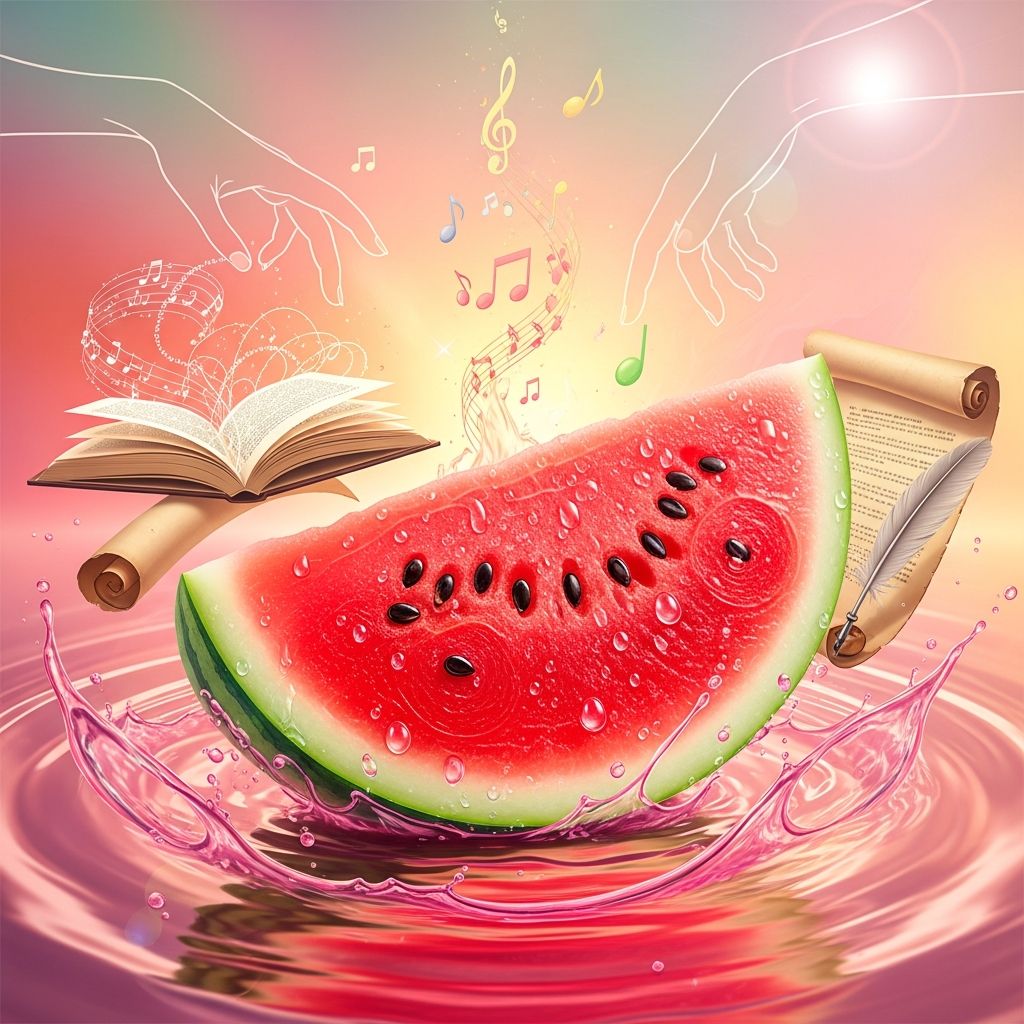
“Watermelon Sugar” began as a bright, irresistible pop single by Harry Styles, but the phrase itself carries a stranger, older history that reaches back to a cult novel of the late 1960s.
Looking at the song, its music video, and the eerie literary world that once shared its name reveals how a few simple words can hold layers of pleasure, nostalgia, and fantasy that go far beyond a catchy chorus.
The Many Lives of “Watermelon Sugar”
For most listeners, “Watermelon Sugar” is shorthand for summer: fruit on a warm night, the rush of infatuation, and a chorus that feels engineered for crowded beaches and road trips.
Yet fans quickly realized that under the surface, the song plays with double meanings, using sweetness as a metaphor for physical intimacy, which Harry Styles has since openly acknowledged in a playful way at live shows.
From Chart Hit to Cultural Touchstone
- The track appeared on Styles’ album “Fine Line” and went on to become one of his defining hits, especially in the summer months following its release.
- Its blend of retro pop, funk-leaning guitars, and unashamed sensuality made it a staple of playlists and a frequent topic in fan discussions about coded lyrics.
As its popularity grew, listeners and critics began connecting its title to Richard Brautigan’s novel “In Watermelon Sugar,” even though the song never directly references the book’s story or characters.
A Strange Literary Echo: Richard Brautigan’s “In Watermelon Sugar”
Decades before the song existed, Richard Brautigan used the phrase “watermelon sugar” as the name of an otherworldly material in his short, dreamlike novel “In Watermelon Sugar.”
The book follows an unnamed narrator living in a place where buildings, bridges, and even light can be made of watermelon sugar, turning sweetness into a structural part of reality rather than just a flavor.
How the Novel Treats Sweetness
- “Watermelon sugar” in the book is not a snack but a fabric of life, a recurring substance that defines the community’s daily existence and rituals.
- This surreal setting gives the phrase a calm yet unsettling quality, as if something gentle and sweet is hiding deeper tensions and unspoken histories.
That odd mixture of comfort and unease is very different from the playful sensuality of Harry Styles’ song, even though both works lean heavily on the same disarmingly simple words.
Song vs. Novel: Two Worlds Built on the Same Phrase
The song “Watermelon Sugar” and Brautigan’s “In Watermelon Sugar” share a title motif but create almost opposite moods: one is sun-drenched and bodily, the other quiet and off-kilter.
Exploring them side by side illustrates how a phrase can drift across art forms, collecting different meanings depending on context, generation, and medium.
Different Visions of Sweetness
| Aspect | Harry Styles’ Song | Brautigan’s Novel |
|---|---|---|
| Core mood | Joyful, sensual, summery; focused on physical pleasure and connection. | Quiet, uncanny, and contemplative; sweetness blends with melancholy. |
| Meaning of “watermelon sugar” | Metaphor for desire, touch, and the heightened feeling of intimacy. | Literal material and atmosphere of a strange commune-like world. |
| Experience for the audience | Immediate, catchy, built for singing along and collective joy. | Slowly absorbing, reflective, with unresolved questions and gaps. |
Because the phrase floats between these two works, fans and readers often wonder whether the song intentionally references the book, or whether it simply stumbled into the same sweet-sounding combination of words.
Regardless of authorial intent, the crossover has become part of the way online culture talks about both, blending literary trivia with pop fandom.
Desire, Taste, and the Language of Pop
Pop music has long used food and flavor as stand-ins for desire, and “Watermelon Sugar” fits squarely in that tradition while updating it for a new generation.
By tying bodily attraction to something as simple as fruit on a summer evening, the song makes intimacy feel both everyday and elevated, accessible but still electric.
Why Food Metaphors Work So Well
- They connect physical senses—taste, smell, touch—into a single, vivid image that audiences can easily imagine.
- They offer a playful way to talk about sex and longing without clinical language, which can make candid themes feel light instead of heavy.
- They make emotional experiences feel tangible by comparing them to something everyone has physically felt, like biting into ripe fruit.
When Styles later joked onstage that the track is “also” about the female orgasm, he confirmed what many listeners already suspected while preserving the song’s teasing, half-spoken tone.
That balance between explicit meaning and coy delivery has helped the track linger in conversation long after its first chart peak.
The Music Video: Touch, Absence, and Longing
The official music video for “Watermelon Sugar” turns the song’s flirtatious lyrics into a full visual fantasy of touch and togetherness on a crowded, fruit-filled beach.
Released in the early months of the global pandemic, its dedication “to touching” before the video begins gave the imagery extra weight at a time when many people were physically distant from friends, partners, and communities.
Key Images and Their Impact
- Styles begins at a solitary table with a single slice of watermelon, setting up a quiet moment before the flood of people and color arrives.
- As the song progresses, the scene swells into a chaotic, joyful crowd sharing fruit, laughter, and touch in a way that felt almost utopian during a period of isolation.
- The collective feasting and physical closeness transform the metaphor of sweetness into something communal, suggesting that pleasure is not only personal but social.
Where the song alone might be heard as a private confession, the video reframes “Watermelon Sugar” as a public, shared celebration of bodies and contact.
For many viewers, this made the track feel less like a solitary fantasy and more like an invitation to imagine a future reunion with others.
Brautigan’s World: Sweetness with a Shadow
In contrast, Brautigan’s novel treats watermelon sugar as an ambient property of a strange settlement, rather than as a symbol of physical desire.
The narrator describes a community marked by rituals, loss, and an uneasy calm, where sweetness and fragility coexist in every structure and object.
Subtle Darkness Beneath the Surface
- Even though the setting sounds whimsical, the story hints at violence, death, and shifting power within the community, making the sweetness feel fragile.
- The text’s sparse, almost childlike style contrasts with the adult anxieties and grief that slowly emerge, creating a dissonance between tone and content.
Readers often come away with the sense that the book uses its sugary imagery to question whether any idealized community can truly escape the messiness and pain of human relationships.
That thematic concern with hidden complexity makes an intriguing counterpoint to the pop song’s more direct, celebratory embrace of pleasure.
Shared Title, Different Generations
The overlap in titles has prompted fans to debate whether the song knowingly nods to Brautigan’s book or simply echoes it accidentally, given that the phrase is distinctive but not trademarked.
Regardless of intent, the collision of a 1960s cult favorite and a 21st-century stadium anthem shows how cultural memory can fold in on itself, with each work reframing the other in hindsight.
How Audiences Remix Meanings
- Music listeners encounter the phrase through the song first, then discover the novel via online discussions, recommendations, or curiosity-driven searches.
- Literature fans who already knew the book find new pleasure—or dissonance—in hearing its title echoed at parties, on the radio, and across social media.
- In both directions, the association invites people to draw connections that the original creators may never have planned, demonstrating how audiences co-create cultural meaning.
This kind of unplanned intertextuality is increasingly common in an online era where any shared phrase can be traced, compared, and reframed with just a few searches.
What begins as a simple title can end up functioning as a bridge between eras, genres, and communities.
Online Fan Culture and the Pleasure of Over-Reading
Part of the charm of “Watermelon Sugar” lies in how eagerly fans discuss it, share theories, and stack interpretations on top of each other in playful ways.
Some listeners focus on the sensual references, others on its summery nostalgia, and others on possible literary roots, turning the song into a mini-ecosystem of meaning.
Why Fans Love Decoding Pop
- Analyzing lyrics and visual motifs offers a sense of participation, as if listeners are collaborators in revealing what a song “really” says.
- The open-ended nature of metaphors encourages multiple readings, which can coexist rather than compete, especially in communities used to ambiguity and coded language.
- Connecting songs to books, films, and earlier works adds depth and prestige, allowing fans to situate pop tracks within larger artistic traditions.
Styles’ decision to gently confirm the sexual dimension of the song without stripping it of its playful ambiguity only intensified this participatory reading culture.
In that sense, the phrase “watermelon sugar” becomes less a puzzle with a single answer and more a shared playground for imagination.
Sensuality, Consent, and Joy in Mainstream Pop
One reason “Watermelon Sugar” has resonated so widely is that it frames intimacy not as conquest or drama but as mutual delight, an exchange grounded in pleasure and warmth.
The lyrics and performance style imply an admiration for a partner’s experience, especially given Styles’ explicit acknowledgment that the track celebrates female pleasure.
Soft Masculinity and Pop Desire
- Harry Styles’ public persona frequently embraces softness, fluid fashion, and emotional openness, which recontextualizes the song’s sensual themes as tender rather than aggressive.
- That approach aligns with contemporary conversations about consent, gender expression, and positive depictions of sexuality in mainstream media.
- Listeners who see themselves reflected in this softer image of masculinity often describe the song as both liberating and reassuring.
The track’s popularity suggests an appetite for pop narratives in which sexual content can be explicit in subtext yet still framed with care, humor, and joy.
This stands in stark contrast to Brautigan’s more opaque, sometimes unsettling exploration of community and memory, which offers complexity but not necessarily comfort.
Sweetness as Escape and Reflection
Both the song and the novel invite audiences into distinct worlds where sweetness does more than simply taste good; it shapes how people relate to desire, loss, and each other.
In one, fruit and touch become a shared fantasy of connection during a time of distance; in the other, watermelon sugar is the fragile material of a community that cannot outrun its own shadows.
What “Watermelon Sugar” Ultimately Offers
- As a song, it offers a brief, ecstatic escape into warmth, bodies, and sensory overdrive, particularly powerful in a moment when touch felt scarce.
- As a phrase, it carries the ghost of an earlier, stranger text, reminding listeners that even the lightest pop artifact can echo deeper cultural histories.
- As a shared obsession, it shows how fans, readers, and viewers continually reinvent stories by knitting them together across time.
Whether encountered through a blasting speaker, a dog-eared paperback, or a late-night online discussion, “watermelon sugar” has become more than just two words—it is now a small but vivid example of how art, desire, and memory can rhyme across decades without ever saying exactly the same thing.
FAQs
Is Harry Styles’ “Watermelon Sugar” directly based on Richard Brautigan’s novel?
There is no public statement from Styles confirming that the song is formally adapted from or directly based on Brautigan’s “In Watermelon Sugar,” and the lyrics do not reference the book’s plot or characters.
However, the shared phrase has led many fans and writers to draw comparisons, treating the connection as an intriguing cultural coincidence or an unspoken nod rather than an official adaptation.
What did Harry Styles say the song is about?
During a concert in Nashville, Styles jokingly explained that the track is about “the sweetness of life” before adding that it is also about the female orgasm, confirming the sensual subtext many listeners had already inferred.
This playful admission did not replace other interpretations but instead highlighted how the song layers sexual meaning on top of images of fruit, summer, and longing.
Why do people connect food imagery with intimacy in pop music?
Food metaphors work well because they translate abstract emotions and bodily experiences into sensory images—taste, smell, and texture—that audiences can immediately recognize.
They also allow artists to discuss desire in a suggestive, often humorous way that feels more inviting than clinical or explicit language.
Is “In Watermelon Sugar” similar in tone to the song?
No, the novel has a more subdued and sometimes eerie atmosphere, using its sweet-sounding setting to explore themes of memory, community, and loss rather than overt sensuality.
Readers often describe it as dreamlike and unsettling, which stands in contrast to the song’s exuberant, summery energy.
How has the music video influenced interpretations of the song?
The video’s emphasis on touch, shared fruit, and crowded togetherness—especially with its dedication “to touching”—encouraged audiences to read the song as a celebration of physical connection at a time when such contact was rare.
That context deepened the track’s impact, transforming it from a purely sensual anthem into a symbol of the human need for closeness and community.