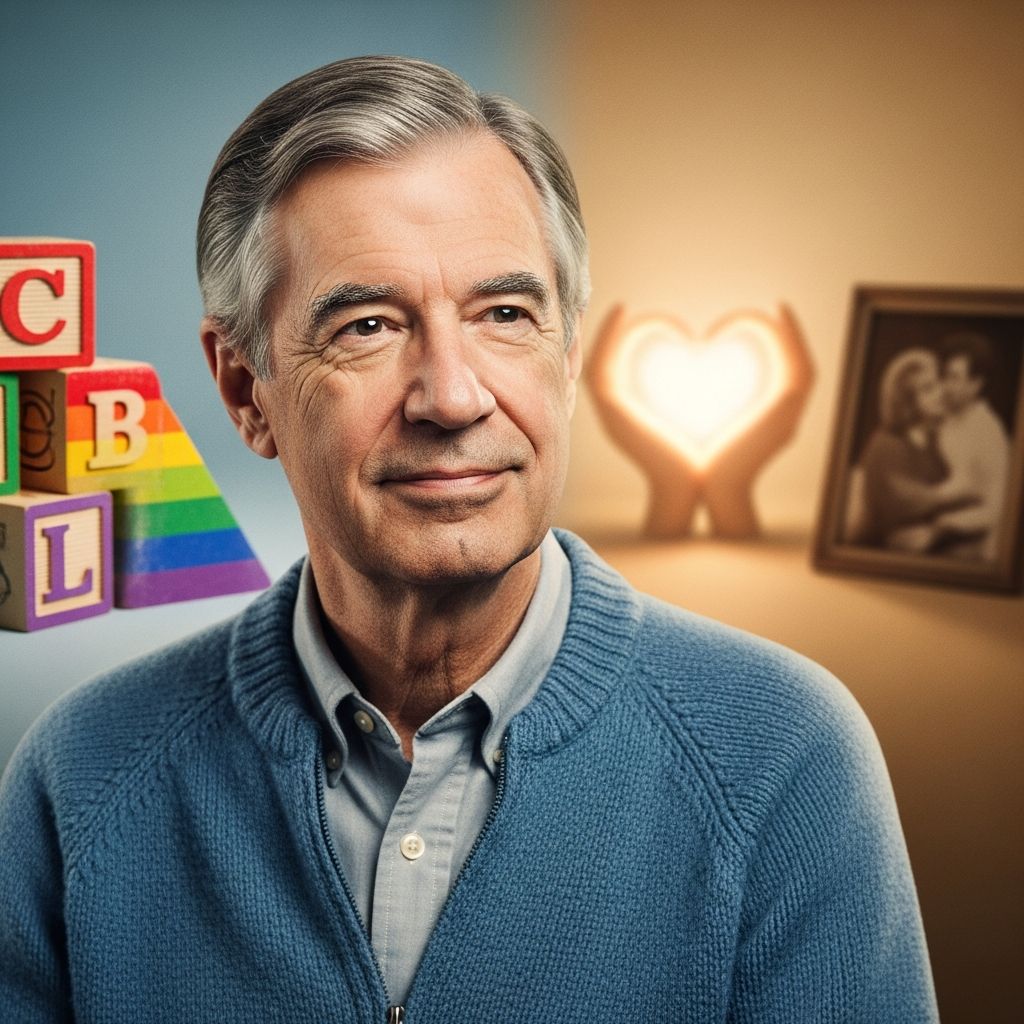
For generations of children, Fred Rogers was the soft-spoken neighbor who sat down, changed his shoes, and made big feelings feel safe. His television presence seemed almost outside of time, but the questions people now ask about him are unmistakably modern: Could Mister Rogers have been bisexual? What did he really believe about love, attraction, and identity?
This article does not attempt to pin a definitive label on Rogers. Instead, it explores why the question of his sexuality matters, what his own words and relationships suggest, and how his philosophy of love can shape healthier, more thoughtful conversations about identity today.
A Different Kind Of Public Figure
Most celebrities craft an image designed for attention. Fred Rogers crafted a presence designed for trust. On television and in private, people describe the same qualities: steadiness, gentle curiosity, and a consistent commitment to seeing the best in others.
That consistency is part of why later reflections on his life take seriously even his offhand comments about attraction or love. When someone who chose words carefully speaks about desire or identity, those remarks naturally invite reflection and interpretation.
- Rogers lived his adult life within a long, devoted marriage.
- He became a cultural symbol of kindness and emotional safety.
- His public and private values emphasized honesty about feelings, including complex ones.
Why People Ask If Mister Rogers Was Bisexual
The question about Fred Rogers’ sexuality did not arise in a vacuum. It has roots in comments he reportedly made about his own attractions, in the memories of people who knew him well, and in a cultural climate that now has language for identities that might have gone unnamed in his own time.
Today, when someone acknowledges feeling attraction beyond a single gender, many people immediately think of bisexuality or related identities. Applied retrospectively, that instinct leads some to wonder whether a beloved public figure like Rogers might fit under that umbrella, at least loosely.
The Limits Of Labeling The Past
One challenge in asking whether Fred Rogers was bisexual is that identity labels are historically specific. Bisexual, pansexual, queer, and other terms were far less widely used during much of his adult life, especially within his religious and professional circles.
Even if his private reflections could be read as compatible with such a label, it does not follow that he would have claimed it. Interpreting his life through modern categories can be useful for discussion, but it always risks flattening the context in which he actually lived.
| Aspect | Modern Perspective | Rogers’ Era Context |
|---|---|---|
| Language for sexuality | Rich vocabulary: bisexual, pansexual, queer, fluid, etc. | Public discourse more binary and moralized; fewer nuanced labels. |
| Religious environment | Broader range of affirming and non-affirming traditions. | Stronger pressure toward silence and conformity on LGBTQ+ issues. |
| Media treatment | Celebrity sexuality openly debated, sometimes by the celebrities themselves. | Non-heterosexual identities often unspeakable or heavily stigmatized. |
| Self-disclosure norms | Expectation that public figures “come out” or clearly label themselves. | Expectation that such matters remain private, especially for children’s hosts. |
What Attraction Meant To Fred Rogers
Accounts from people who worked closely with Rogers emphasize that he was unusually honest about interior life. He treated emotions, doubts, and desires as material for reflection rather than shame. Within that framework, attraction was another human reality to notice, acknowledge, and then integrate thoughtfully into life.
What stands out is not a detailed taxonomy of his desires but his conviction that feeling drawn to someone did not override commitments, values, or responsibilities. In that sense, his approach to attraction was less about identity and more about character.
- Attraction, for Rogers, was part of being human, not something to deny or dramatize.
- Honesty about feelings could coexist with fidelity to his marriage vows.
- He viewed self-knowledge as a tool for compassion rather than self-indulgence.
Marriage, Devotion, And Public Perception
Fred Rogers’ long marriage to Joanne Rogers is central to how people understand him. Their relationship is frequently described as warm, intellectually lively, and mutually supportive, with room for both serious conversation and playful humor.
For many observers, that visible devotion leads to an assumption of uncomplicated heterosexuality. But human experience is not always that simple. Attraction to more than one gender can exist alongside a deep, exclusive, and lifelong partnership.
Can Someone Be Bisexual And Monogamous?
One misconception that appears in discussions around Rogers is the idea that calling someone bisexual diminishes a long, faithful marriage. The assumption is that being attracted to more than one gender must imply infidelity or constant turmoil.
In reality, orientation and behavior are not the same thing. A person can experience a spectrum of attraction while choosing a single partner and living that commitment fully. If Rogers did experience attraction beyond his marriage, nothing in his life story suggests he allowed it to displace his promises.
What Makes The Question Emotionally Charged
People do not discuss possible bisexuality in a generic historical figure; they are asking about Mister Rogers, an almost symbolic embodiment of childhood safety. For some, connecting him with queer identities feels jarring because they have unconsciously linked queerness with danger or controversy.
For others, particularly LGBTQ+ adults who grew up watching the show, imagining Rogers as possibly bisexual or queer-adjacent is comforting. It suggests that someone who taught them they were worthy of love may have understood complexity in his own heart, too.
Lessons For Parents Talking To Kids
Regardless of how anyone labels Fred Rogers, the conversations about his sexuality offer useful guidance for parents navigating their children’s questions today. Children are perceptive; they notice discussions about public figures, hear terms like bisexual or non-binary, and often want help making sense of them.
Rogers’ own style suggests several principles for responding with both honesty and care.
- Answer the question actually asked instead of rushing ahead to adult-level detail.
- Affirm that all people deserve respect, no matter who they love or how they identify.
- Make it clear that feelings and questions about identity are not reasons for shame.
- Emphasize that family love is not conditional on labels.
How Mister Rogers’ Values Align With LGBTQ+ Inclusion
Although interpretations of his private views differ, much of Fred Rogers’ public philosophy aligns naturally with affirming LGBTQ+ people. He insisted that each person has intrinsic worth and repeatedly told children that there was no one else in the world exactly like them.
Applied consistently, that message sits comfortably alongside respecting queer and bisexual identities. The invitation is not to force labels on anyone, living or dead, but to extend the same gentleness he offered children to people whose identities may be unfamiliar or challenging.
Faith, Morality, And Sexuality
Rogers’ religious commitments are part of what makes this conversation complex. Many religious communities in his era took strongly negative stances toward LGBTQ+ people. Yet accounts of his personal interactions emphasize empathy rather than condemnation.
He seemed to hold together two convictions that often get pulled apart: that people’s lives, including their sexuality, matter deeply, and that judgment should begin, if anywhere, with one’s own heart rather than with others’ labels.
Why Some Prefer Not To Label Him
There is a serious argument for declining to answer the question of whether Fred Rogers was bisexual. He did not publicly claim such an identity, he is not here to offer his own framing, and retroactively assigning labels can feel like a violation of privacy, even to the deceased.
From this perspective, focusing too narrowly on his possible orientation risks missing the broader gift of his life: a long, consistent witness to patience, thoughtful communication, and emotional literacy.
Why The Question Still Matters
At the same time, the persistence of the question reveals something true about culture. People are hungry for examples of goodness that also make space for queer or non-straight experience. The possibility that someone as gentle and widely trusted as Mister Rogers might have experienced attraction in ways that do not fit a strict heterosexual mold offers a powerful counter-narrative to shame-based messages.
Even if the details remain unknowable, the conversation invites families and communities to ask: How can we create environments where children and adults alike can acknowledge the full truth of who they are without fear?
Practical Takeaways For Modern Neighbors
Translating the spirit of Rogers’ approach into concrete practice can help families, educators, and communities hold better conversations about sexuality and identity today. The goal is not to turn every discussion into a biography lesson but to let his example inform our tone and priorities.
- Lead with dignity. Talk about people, whether public figures or family members, in ways that make it clear their worth is never up for debate.
- Stay curious, not accusatory. When a child asks if someone is bisexual or gay, treat it as a chance to explore, not a problem to shut down.
- Normalize complexity. Make room for the idea that people’s feelings and histories may not fit neat categories, and that this is okay.
- Protect privacy. Teach that some questions about others’ lives are personal, even as you affirm that no identity is shameful.
Questions And Respect: A Simple Framework
One way to keep discussions about sexuality grounded is to use a simple framework around three themes: curiosity, consent, and care. Children and adults alike benefit from having clear language for when a question is thoughtful versus intrusive.
| Value | Guiding Question | Example In Conversation |
|---|---|---|
| Curiosity | Am I asking this to understand, or to judge? | “Some people love men, some love women, and some love more than one gender. Do you want to know what those words mean?” |
| Consent | Does this person want to talk about this with me? | “It’s okay if you don’t feel like sharing more about your feelings right now. You can always talk when you’re ready.” |
| Care | Will my words help this person feel safer and more seen? | “No matter who you end up loving, you belong in this family.” |
Frequently Asked Questions About Mister Rogers And Sexuality
Was Mister Rogers openly bisexual?
No. Fred Rogers did not publicly identify as bisexual or use that label for himself. Modern speculation typically arises from interpretations of his private comments and the way contemporary language might map onto his experiences.
Does it change his legacy if he was attracted to men as well as women?
For many people, it would not diminish his legacy at all. If anything, it could strengthen the sense that his message of unconditional worth included parts of himself that might have been difficult to talk about in his era.
Is it fair to speculate about the sexuality of someone who has died?
Reasonable people disagree. Some view it as a way of understanding history more honestly and offering representation to marginalized groups. Others worry it crosses boundaries of privacy. Holding that tension with humility is important.
What can parents say if kids ask about his sexuality?
Parents can acknowledge that some people wonder about that question while emphasizing that everyone, including Mister Rogers, deserves respect. It can also be a doorway into simple explanations of what words like bisexual mean and why no identity makes someone less worthy of kindness.
Why do LGBTQ+ adults care so much about this question?
Many queer and bisexual adults grew up with few positive role models. The possibility that someone as gentle and influential as Mister Rogers might have experienced attraction beyond a rigid norm can feel validating, even if the exact truth remains unknowable.
Holding Mystery And Meaning Together
Whether Fred Rogers would have embraced the word bisexual, rejected it, or simply shrugged and returned to playing the piano is something the world will likely never know. What is clear is that he took the inner lives of children and adults seriously and treated feelings, including complicated ones, as worthy of attention rather than contempt.
In a culture quick to argue over labels, there is something quietly radical in that posture. Perhaps the most faithful way to approach the question of Mister Rogers’ sexuality is not to solve it but to let it challenge prevailing habits: to talk about identity without cruelty, to take both love and promises seriously, and to remember that each person’s story is larger than any single word.