Warts can be annoying, embarrassing, or even painful, but they are extremely common in teens and usually harmless. This guide explains what warts are, why they appear, how they spread, and what you can do about them without losing confidence in your skin.
What Exactly Is a Wart?
A wart is a small, extra bit of skin that grows when certain types of human papillomavirus (HPV) infect the top layer of your skin. The virus makes those skin cells multiply faster than usual, which creates a rough bump or patch.
Even though the word “virus” sounds scary, the types of HPV that cause most skin warts are not the same ones linked to cancer and are usually considered harmless. Many warts disappear on their own once your immune system learns how to fight the virus.
- Warts are noncancerous growths caused by HPV affecting the outer skin layer.
- They can be lighter, darker, or the same color as the surrounding skin.
- Warts are especially common in children and teenagers because their immune systems are still learning to recognize these viruses.
Why Teens Get Warts More Often
Teens often pick up warts more easily because of everyday activities such as sports, shared locker rooms, and minor cuts from shaving or nail-biting. These tiny openings in the skin give HPV a chance to slip in and start multiplying.
Not everyone who touches the virus will get a wart. Each person’s immune system reacts differently, which is why one friend might have several warts while another never seems to get any.
- Frequent exposure to shared surfaces, like gym floors and locker rooms.
- Habits such as biting nails, picking at hangnails, or shaving over irritated skin.
- Weaker or stressed immune systems make it harder for the body to control HPV.
Common Types of Warts in Teens
Not all warts look or feel the same. Understanding the main types helps you describe them clearly if you talk with a doctor or pharmacist about treatment options.
The table below highlights the most common wart types seen in teens and where they usually show up.
| Type of wart | Typical location | What it usually looks/feels like |
|---|---|---|
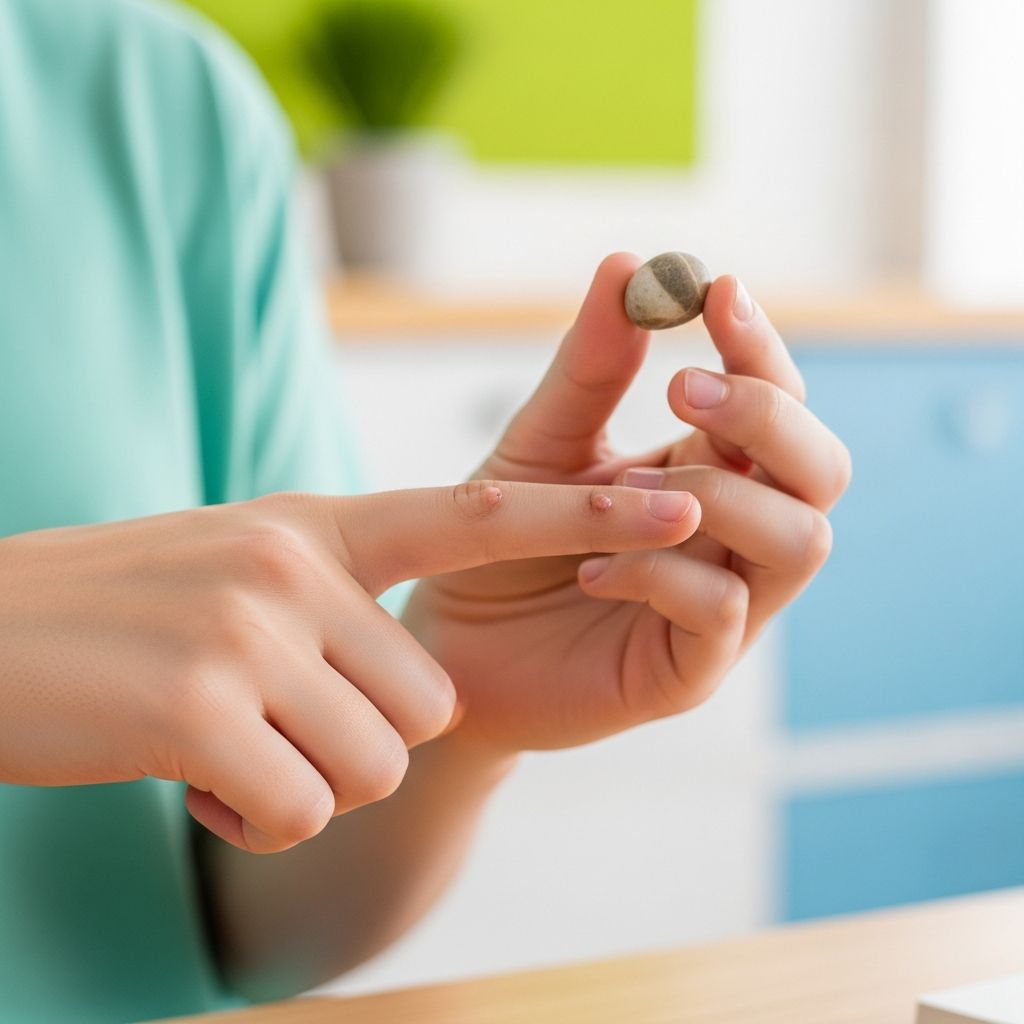
| Common wart | Fingers, hands, around nails, knees | Rough, raised bump that may have tiny dark dots inside; often skin-colored or slightly lighter or darker |
| Plantar wart | Bottom of the feet, especially heels or weight-bearing areas | Flat or slightly sunken area that may feel like stepping on a pebble; often painful when walking or running |
| Flat wart | Face, neck, hands, or legs | Small, smooth, flat-topped spots that may appear in groups or lines |
| Filiform wart | Near mouth, eyes, or nose | Thin, finger-like projections that stick out from the skin |
| Genital wart | Genital and anal area | Soft bumps that may be small or clustered; these require medical care and are sexually transmitted |
How Warts Spread from Place to Place
Warts spread when HPV is moved from one area of skin to another. This can happen through direct skin-to-skin contact or by touching objects that have virus particles on them, like shared towels or shower floors.
Once the virus lands on your skin, it usually needs a small cut, scratch, or soft, damp area to get inside. The wart may not appear for weeks or even months after exposure, which makes it hard to know exactly where it came from.
- Direct contact: touching someone’s wart or your own wart and then another area of your body.
- Indirect contact: walking barefoot in public showers or sharing items like razors, nail clippers, or pumice stones.
- Self-spread: picking at or shaving over a wart, which can create new warts nearby.
What Warts Feel Like and When to Be Concerned
Many warts do not hurt at all and are only noticed because of how they look. Others, especially plantar warts on the feet, can be uncomfortable when you stand, run, or play sports.
Most warts are harmless, but there are times when you should definitely get them checked by a healthcare professional.
- The wart changes color quickly, bleeds a lot, or has an unusual shape.
- You are not sure if a bump is a wart, mole, blister, or something else.
- Warts appear on your face, genitals, or around your nails, or you have many warts at once.
- You have diabetes, a condition that affects circulation, or a weakened immune system.
Everyday Habits That Help Prevent Warts
Completely avoiding HPV is almost impossible, but smart habits can lower your risk of catching or spreading warts. Prevention is especially important if you already have a wart, because it can easily move to other parts of your body.
These simple steps can help protect your skin and reduce the spread of the virus in shared spaces like locker rooms, pools, and bathrooms.
- Wear flip-flops or shower shoes on pool decks and in public showers.
- Avoid sharing personal items such as towels, socks, shoes, razors, nail clippers, and pumice stones.
- Cover warts with a bandage or athletic tape during sports or swimming.
- Stop biting nails or picking at hangnails, and do not pick or scratch at existing warts.
- Wash hands regularly, especially after touching a wart or high-touch surfaces.
- Keep feet dry by changing socks daily and airing out shoes after workouts.
Can Warts Go Away on Their Own?
Yes. Many warts eventually disappear without any treatment once your immune system recognizes the virus and starts targeting infected skin cells. This process can take several months or even a couple of years.
Waiting and watching can be a reasonable option for small, painless warts that are not bothering you or causing embarrassment. However, if the wart hurts, spreads, or affects your confidence, earlier treatment may be a better choice.
Safe At-Home Wart Treatments
Over-the-counter (OTC) treatments are often the first step teens try when dealing with common or plantar warts. These products are usually found in the foot care or first-aid aisle and are designed to slowly remove the thickened skin.
Always follow package directions carefully. If you are unsure, ask a parent, pharmacist, or healthcare provider for help before starting.
Salicylic acid products
Salicylic acid is a peeling agent that gradually dissolves the thick, dead skin that forms a wart. It comes as liquids, gels, pads, and plasters. With consistent use, the wart tissue thins and eventually falls away.
- Soak the wart in warm water first to soften the skin.
- Gently file the top layer with an emery board or pumice (never share these tools).
- Apply the product only to the wart, protecting nearby healthy skin.
- Use it daily or as directed for several weeks; stopping early often means the wart returns.
OTC freezing sprays
Some products use a very cold liquid to freeze the wart. This is weaker than the liquid nitrogen used in a medical office but can still help with certain small, recent warts.
- Read the instructions carefully; misusing these sprays can burn or blister healthy skin.
- Do not use them on the face, genitals, or large areas without medical advice.
If an at-home product causes severe pain, swelling, or discoloration, stop using it and seek medical advice.
When to See a Doctor About Warts
Medical treatment is a good option when warts are painful, keep coming back, or affect your confidence. It is also important to see a healthcare professional if you are not sure that a spot is actually a wart.
Doctors and dermatologists have several tools for treating stubborn or sensitive warts that are not safe to try at home.
- Stronger freezing (cryotherapy) with liquid nitrogen, which destroys wart tissue more deeply than OTC products.
- Prescription-strength peeling medications or creams that boost the immune response in the area.
- Minor procedures such as cutting, scraping, or using special energy sources to remove wart tissue, usually done with local numbing.
Some treatments may sting or cause temporary blisters or discoloration, but they aim to remove or shrink the wart while encouraging your immune system to clear the virus.
Genital Warts: A Special Case
Warts that appear in the genital or anal area are usually caused by HPV types that spread through sexual contact. These are different from the strains that usually cause hand or foot warts.
If you notice any bumps in your genital area, do not try to treat them yourself with over-the-counter wart products. Genital warts require medical evaluation and specific care, and your provider can also talk with you about testing for other sexually transmitted infections and vaccination options.
Protecting Your Confidence While Your Skin Heals
Having visible warts can feel embarrassing, especially on your hands or face, but they say nothing about your hygiene, worth, or attractiveness. Warts are about exposure to a very common virus and how your immune system responds, not how clean you are.
There are practical ways to manage the way warts affect your day-to-day life while you wait for them to shrink or disappear.
- Use skin-safe concealer or bandages to cover warts in visible areas if they make you self-conscious.
- Focus conversations with friends and family on what you can do (treatment and prevention), not on how the wart looks.
- Remind yourself that most people have had or will have warts at some point; it is a normal part of life.
- If you feel very anxious or down about your appearance, talk with a trusted adult, counselor, or healthcare provider.
Quick Wart Facts for Teens
- Most warts are harmless and eventually go away as your immune system learns to fight the virus.
- Picking, biting, or shaving over warts makes them more likely to spread.
- Over-the-counter treatments work best when used consistently over several weeks.
- See a doctor for warts on the face, genitals, or if you have many or painful warts.
- Having warts does not mean you are dirty; it means you have met a very common virus.
FAQs About Warts in Teens
1. Are warts contagious?
Yes. Warts can spread from one person to another and from one part of your body to another. Touching a wart, then touching other skin, or sharing items like towels and nail clippers can move the virus. Good hygiene and covering warts reduce the risk of spreading them.
2. How long does it take for a wart to show up after I catch the virus?
The virus grows slowly in the skin, so a wart may take several weeks or even months to become noticeable. This delay makes it hard to know exactly when or where you picked it up.
3. If a wart disappears, can it come back?
Sometimes. When a wart goes away, it usually means your immune system has gained better control over that virus type, but HPV can still be present in nearby skin cells. New warts can appear again in the future, especially in areas that get a lot of friction or small injuries.
4. Do home remedies like duct tape really work?
Some people use duct tape as a way to irritate the wart and encourage the immune system to react. Results are mixed, and this method is not right for everyone. If you want to try it, talk with a healthcare professional first and stop if it causes pain, rash, or skin damage.
5. Can I cut off a wart myself?
No. Trying to cut, burn, or dig out a wart at home can cause bleeding, infection, scars, and spreading of the virus. Only trained professionals should remove warts using sterile tools and proper techniques.
6. Will a wart leave a scar?
Many warts disappear with little or no scarring, especially when treated gently. More aggressive treatments or picking at a wart can increase the chance of a visible mark. Following medical advice and avoiding picking gives your skin the best chance to heal smoothly.
7. Do vaccines protect against all warts?
HPV vaccines are designed mainly to prevent certain genital HPV infections linked to cancer and genital warts. They do not protect against every HPV type that can cause common skin warts on hands and feet, but they are still an important part of sexual health protection.
If you are unsure whether a skin bump is a wart or you feel worried about how it looks or feels, reach out to a healthcare professional. Getting accurate information and support is one of the best ways to feel in control of your health and confident in your own skin.