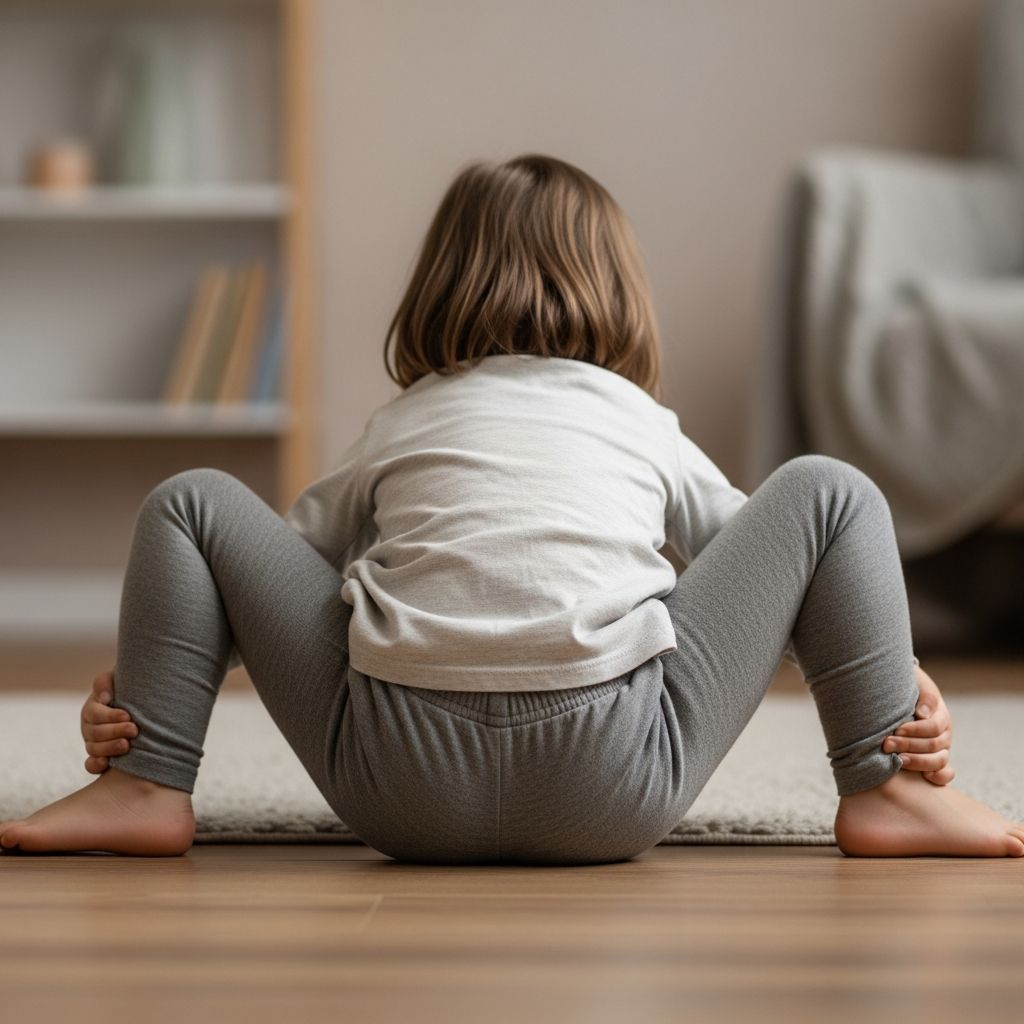
Many parents notice their toddlers and young children folding their legs into a ‘W’ shape while sitting on the floor during playtime. This position, where the child’s bottom sits between bent knees with feet tucked outward behind the hips, offers immediate stability but raises questions about long-term effects on physical development. While occasional use is common and typically harmless, frequent reliance on W-sitting can influence muscle balance, joint alignment, and motor skills. This article delves into the mechanics of W-sitting, potential concerns backed by pediatric insights, and actionable steps for fostering healthier habits.
What Exactly Is W-Sitting and Why Do Children Choose It?
W-sitting occurs when a child positions their legs in a way that forms a ‘W’ from above: knees forward, shins parallel to the body, and feet flared out to the sides behind the hips. This setup creates a wide base of support, minimizing the need for active core engagement to stay upright. Youngsters, especially those between 1 and 4 years old, gravitate toward it because it feels secure, allowing them to focus on toys without toppling over.
Developmentally, children experiment with various sitting postures as they build strength and coordination. W-sitting demands little from the abdominal or back muscles, making it appealing for kids with emerging motor skills or lower muscle tone. However, as children grow, overdependence on this posture can limit opportunities to develop essential trunk control and rotational movements vital for activities like crawling, walking, and later sports.
Potential Developmental Impacts of Frequent W-Sitting
Pediatric therapists highlight several areas where habitual W-sitting might hinder progress. Primarily, it restricts trunk rotation and side-to-side weight shifting, which are crucial for bilateral coordination—the ability to use both sides of the body together. Without these movements, children may struggle with tasks requiring crossing the body’s midline, such as reaching across to grab an object or later, writing fluidly.
Muscle imbalances represent another key concern. In W-sitting, the hamstrings, inner thigh muscles (adductors), and hip internal rotators remain in a shortened state, potentially leading to tightness over time. Conversely, outer hip muscles and extensors get underused. This asymmetry can manifest in gait irregularities, like pigeon-toed walking or knees knocking together, and may contribute to flat feet or underdeveloped arches.
| Affected Area | Potential Issue | Long-Term Risk |
|---|---|---|
| Hips | Internal rotation stress | Hip dislocation risk, especially with dysplasia history |
| Knees/Legs | Adductor shortening | Knock-knees, instability |
| Trunk/Core | Limited rotation | Weak balance, poor posture |
| Feet/Ankles | Heel cord tightness | Pigeon-toeing, flat arches |
Beyond musculoskeletal effects, W-sitting can signal or exacerbate underlying issues. For children with hypotonia (low muscle tone), it provides false stability, delaying true postural strengthening. Those with hypertonia (high tone) or conditions like cerebral palsy may find it reinforces spastic patterns, making other positions uncomfortable.
Who Is Most at Risk from W-Sitting Habits?
Not all children face the same dangers from W-sitting; certain groups warrant closer monitoring. Kids with a family history or diagnosis of hip dysplasia should avoid it entirely, as the extreme internal hip rotation can strain unstable joints and increase dislocation odds.
- Children with motor delays: They often default to W-sitting for stability, but this perpetuates weakness in core and leg muscles needed for milestones like standing or running.
- Those prone to tightness: Pre-existing hamstring or calf restrictions worsen in this posture, potentially leading to contractures.
- Orthopedic histories: Past issues like torticollis or plagiocephaly correlate with preferential W-sitting, compounding alignment problems.
By around 15-18 months, most children naturally shift away from W-sitting as core strength improves. Persistent use beyond age 2-3 often indicates a need for intervention.
Debating the Evidence: Is W-Sitting Truly Harmful?
Opinions vary among experts. Traditional pediatric views, echoed by physical therapists, caution against it due to observed links with orthopedic and motor issues. However, recent perspectives from institutions like Children’s Hospital Los Angeles (CHLA) and the International Hip Dysplasia Institute assert that W-sitting does not cause hip dysplasia or major deformities in typically developing children. Studies show no direct causation, positioning it as a normal variant rather than a pathology.
WebMD notes that while earlier concerns about long-term joint damage were common, current evidence tempers these fears for occasional use. The consensus: moderation is key. Discourage habitual reliance to promote varied movements, but no panic for sporadic episodes.
Practical Strategies to Discourage W-Sitting
Parents play a pivotal role in guiding posture without frustration. Start by modeling and providing alternatives during play.
- Offer stable options: Use cross-legged (tailor sit), side-sitting, or kneeling positions. Place toys slightly out of reach to encourage shifting.
- Set boundaries gently: Say, “Let’s try sitting with legs in front!” and physically assist transitions if needed.
- Incorporate movement breaks: Schedule floor time with activities promoting rotation, like tossing balls side-to-side or playing ‘Simon Says’ with twists.
- Furniture aids: Low stools, therapy balls, or cushions build core engagement without full W reliance.
Consistency matters. Most children adapt quickly when alternatives feel equally stable and fun. Track progress over weeks; if W-sitting persists, note accompanying signs like frequent falls or asymmetry.
When to Consult a Professional
Seek a pediatrician or therapist if W-sitting dominates play after age 2, or alongside red flags:
- Delayed milestones (e.g., not walking by 18 months).
- Persistent inward toes, limping, or one-sided preference.
- Difficulty transitioning positions or clumsiness.
- Family history of hip issues or diagnosed tone abnormalities.
Early therapy, such as physical or occupational, can address root causes like weakness or tightness through targeted exercises. Organizations like the American Physical Therapy Association endorse proactive monitoring for optimal outcomes.
Building Lifelong Healthy Posture Habits
Beyond W-sitting, emphasize daily routines supporting gross motor development: tummy time for infants, varied play surfaces, and outdoor activities challenging balance. Nutrition rich in vitamin D and calcium aids bone health, while adequate sleep supports muscle recovery.
By nurturing diverse movement patterns early, parents equip children for confident physicality. W-sitting serves as a cue to enrich play environments, ensuring kids develop robust, flexible bodies ready for life’s adventures.
Frequently Asked Questions (FAQs)
Is occasional W-sitting okay for my toddler?
Yes, brief instances during play are normal and not concerning. Issues arise only with prolonged, habitual use.
Can W-sitting cause hip dysplasia?
No, it does not cause hip dysplasia, per studies from hip institutes. However, avoid if already diagnosed.
How do I get my child to stop W-sitting?
Gently redirect to alternatives like criss-cross or side-sit, using fun cues and props for stability.
At what age should W-sitting stop?
Most children outgrow it by 15-24 months as strength builds. Monitor beyond age 3.
Does W-sitting affect learning or handwriting?
Potentially, via reduced midline crossing impacting fine motor skills like writing.
References
- Why W-sitting might be a cause for concern — Arnold Palmer Hospital. 2023. https://www.arnoldpalmerhospital.com/content-hub/why-w-sitting-might-be-a-cause-for-concern/
- Should Your Child be W-Sitting? — Pediatric Therapies. 2023. https://pediatrictherapies.com/should-your-child-be-w-sitting/
- Is W Sitting Harming Your Child? — Ochsner Health. 2023. https://blog.ochsner.org/articles/can-w-sitting-harm-your-child/
- W Sitting in Children: What It Is and When to Be Concerned — Southwest Pediatric Therapies. 2024. https://swpedi.com/w-sitting-in-children/
- The Long Term Dangers of W-sitting — Arizona Orthopedic Physical Therapy. 2023. https://azopt.net/the-long-term-dangers-of-w-sitting/
- W-Sitting: Is It Really a Problem? — Healthline. 2024-01-16. https://www.healthline.com/health/baby/w-sitting