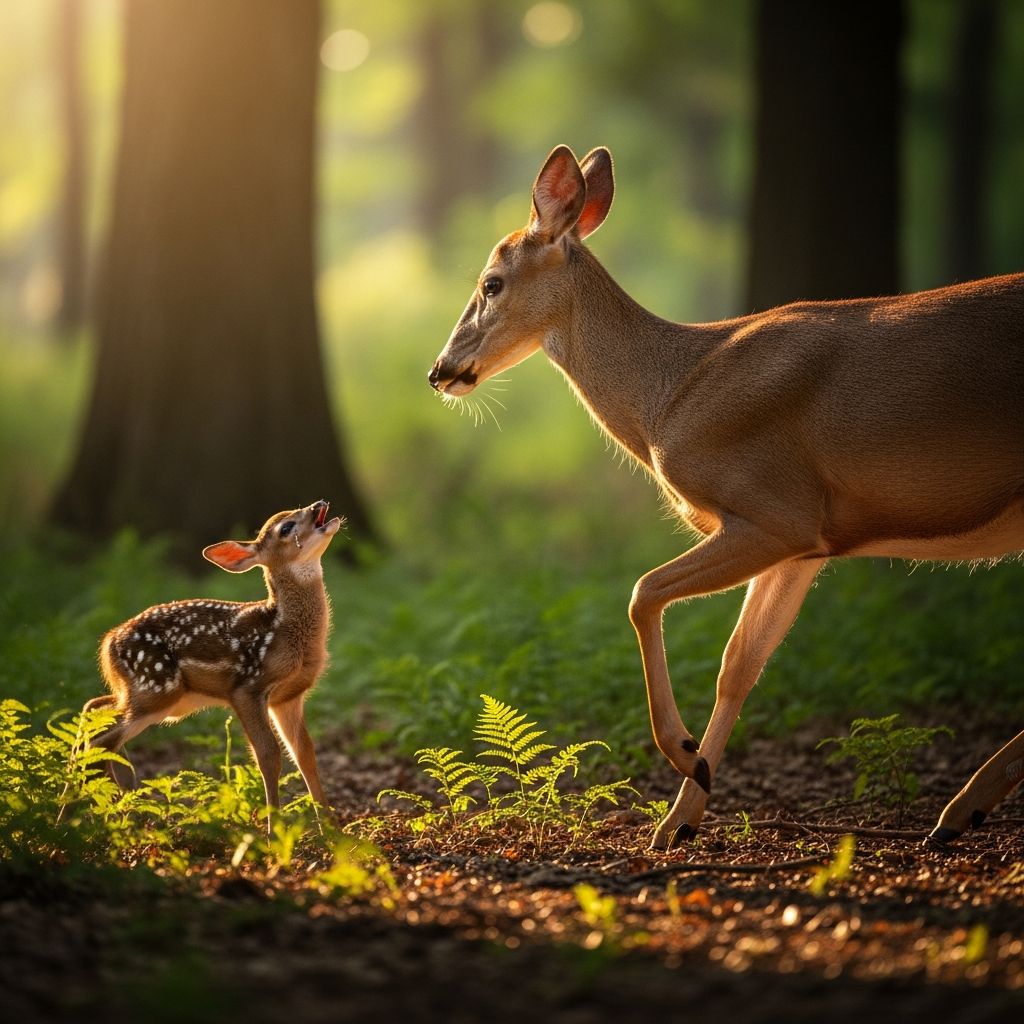
This enchanting TikTok video has taken the internet by storm, showing a wild mother deer sprinting across a backyard toward the sound of a human newborn’s cries. Believing the infant’s wails to be those of her own fawn, the doe approaches with urgent concern, creating a rare glimpse into the power of maternal instincts that transcend species boundaries. Captured by a quick-thinking mom, the clip highlights the raw, universal drive to protect the vulnerable, resonating deeply with viewers worldwide.
The Unforgettable Moment Unfolds
Picture a peaceful backyard scene: a newborn baby, dressed in a cozy camouflage onesie, lies tummy-time style on a blanket spread across an outdoor porch. The infant’s cries pierce the air, a common sound for any new parent. But on this day, those cries summon an unexpected visitor. From the edge of the lawn, a graceful doe emerges, ears perked and eyes wide, charging forward with purpose. Her movements are swift and determined, as if drawn by an invisible thread to the source of distress.
The human mother, sensing the deer’s approach, swiftly scoops up her child, wrapping him protectively in her arms. In a moment blending humor and tenderness, she addresses the deer directly: reassuring it that the baby is hers while gently shushing her little one. The deer pauses, assessing the situation, before lingering nearby. The video captures this interlude of curiosity and calm, ending with the doe peacefully retreating as the baby’s cries subside. This brief encounter, lasting mere seconds, has amassed millions of views, igniting discussions on animal behavior and parenting parallels.
Why Did the Deer Respond This Way?
At the heart of this viral phenomenon lies a fascinating question: why would a wild deer rush to a human baby’s cries? Experts in wildlife biology point to the striking acoustic similarities between newborn human infants and fawn distress calls. Both produce high-pitched, urgent bleats or wails designed to elicit immediate parental response. Fawns, especially in their first days, use these sounds to signal hunger, cold, or separation from their mother, prompting the doe to locate and nurture them swiftly.
Deer maternal instincts are finely tuned for survival in the wild. A doe’s heightened senses—particularly her acute hearing—allow her to detect fawn calls from distances up to several hundred yards. This evolutionary adaptation ensures quick reunions in predator-filled environments. When the human baby’s cry mimicked this pattern, it triggered the deer’s hardwired response, overriding typical wariness of humans. Such cross-species confusions aren’t unheard of; similar incidents have been documented with other animals mistaking human sounds for their young.
Deer Parenting: A Lesson in Wild Nurturing
Mother deer exemplify dedication in the animal kingdom. After giving birth, often to twins in springtime, a doe will hide her spotted fawns in tall grass or underbrush, visiting them multiple times a day to nurse and groom. This ‘hide and seek’ strategy minimizes scent trails that could attract predators. Fawns remain nearly motionless and scentless for the first few weeks, relying on camouflage and maternal vigilance.
- Key Doe Behaviors: Does lick fawns clean immediately after birth to remove amniotic scents, reducing predator detection.
- Nursing Schedule: Brief, 5-10 minute sessions 2-4 times daily, providing nutrient-rich colostrum initially.
- Protection Tactics: Does may feign injury to lure threats away or stomp aggressively to ward off intruders.
- Weaning Process: Begins around 2-3 months, with fawns fully independent by fall.
These instincts mirror human parenting in their intensity, though adapted to wilderness challenges. The viral video underscores how such drives can bridge species gaps, evoking empathy from audiences who recognize their own protective urges.
Cross-Species Empathy: Nature’s Hidden Connections
Beyond deer specifics, this clip taps into broader themes of interspecies empathy. Research from wildlife organizations like the National Wildlife Federation notes instances where animals respond to human infant cries—birds chirping protectively, dogs whining in concern, or even primates investigating. This may stem from shared mammalian neural pathways for parental care, centered in the brain’s limbic system, which processes emotional cues universally.
In urban-wildlife interfaces, like suburban backyards, such encounters are increasingly common. Human expansion fragments habitats, bringing wildlife closer to homes. While heartwarming, they remind us to maintain safe distances; deer can carry diseases like Lyme via ticks and may become defensive if perceiving threats to actual fawns.
| Human Baby Cries vs. Fawn Bleats | Similarities | Differences |
|---|---|---|
| Pitch & Frequency | High-pitched (2-4 kHz), urgent rhythm | Fawns add nasal quality; babies vary by age |
| Duration | Short bursts, repetitive | Fawns quieter post-first week |
| Response Trigger | Instinctual maternal rush | Humans soothe vocally/tactilely |
This table illustrates acoustic overlaps that fooled the doe, blending science with the video’s magic.
Social Media’s Role in Wildlife Wonders
TikTok’s algorithm propelled this video to stardom, with comments flooding in: ‘Proof moms are moms everywhere!’ and ‘Nature’s lullaby gone wrong.’ The platform’s short-form format perfects sharing serendipitous moments, educating viewers on wildlife while entertaining. Similar viral hits—like raccoons ‘adopting’ kittens or elephants comforting distressed humans—highlight social media’s power to foster appreciation for animal intelligence.
For parents, the clip offers comic relief amid sleep-deprived nights, validating the primal pull of cries. It also sparks safety talks: secure outdoor baby time away from wildlife paths, use baby monitors for alerts, and teach kids animal respect.
Lessons for New Parents from the Wild
This doe-human interaction imparts timeless wisdom. Just as the deer acted on instinct without hesitation, new parents navigate uncertainty through innate bonds. Responsive caregiving—picking up at cries, offering comfort—builds secure attachments, much like a doe’s reunions strengthen fawn survival.
- Trust your gut: Animals and humans alike rely on intuition for protection.
- Observe cues: Cries convey needs; decoding them hones parental skills.
- Community matters: The doe sought her ‘young’; lean on family, friends for support.
- Balance vigilance with joy: Cherish surprise moments amid routine.
Experts from the American Academy of Pediatrics emphasize responsive parenting’s role in development, echoing wildlife patterns.
Protecting Wildlife Encounters
While delightful, backyard wildlife visits warrant caution. The U.S. Fish and Wildlife Service advises:
- Never feed wild animals; it alters natural behaviors.
- Maintain 50+ yard distance from deer, more with fawns.
- Secure trash to avoid attracting them.
- Report aggressive wildlife to local authorities.
These steps ensure harmonious coexistence, preserving moments like this for future virality.
Frequently Asked Questions
Is it safe for babies to be outside near deer?
Generally yes, if supervised and distanced. Deer are timid but can kick if cornered. Use screened porches for tummy time.
Do deer often mistake human babies for fawns?
Rarely, but cry similarities make it plausible during fawning season (May-June). Urban deer are more habituated.
What should you do if a deer approaches your child?
Calmly retrieve your baby, speak softly, and back away slowly. Avoid running, which may trigger chase instincts.
Can I share similar wildlife videos?
Yes! Tag responsibly, add context on animal behavior to educate viewers and promote conservation.
How has this video impacted deer awareness?
It’s boosted interest in local wildlife, encouraging habitat protection and ethical viewing practices.
References
- Mama deer runs toward crying newborn in viral TikTok — Motherly. 2024. https://www.mother.ly/life/tiktok-viral-mama-deer-newborn/
- Mama Deer Thinks Mom’s Crying Newborn Infant Is Her Fawn — Distractify. 2024. https://www.distractify.com/p/mama-deer-thinks-newborn-is-fawn
- Deer mistakes woman’s crying baby for her fawn in viral TikTok — Dexerto. 2024. https://www.dexerto.com/tiktok/deer-mistakes-womans-crying-baby-for-her-fawn-in-viral-tiktok-2875357/