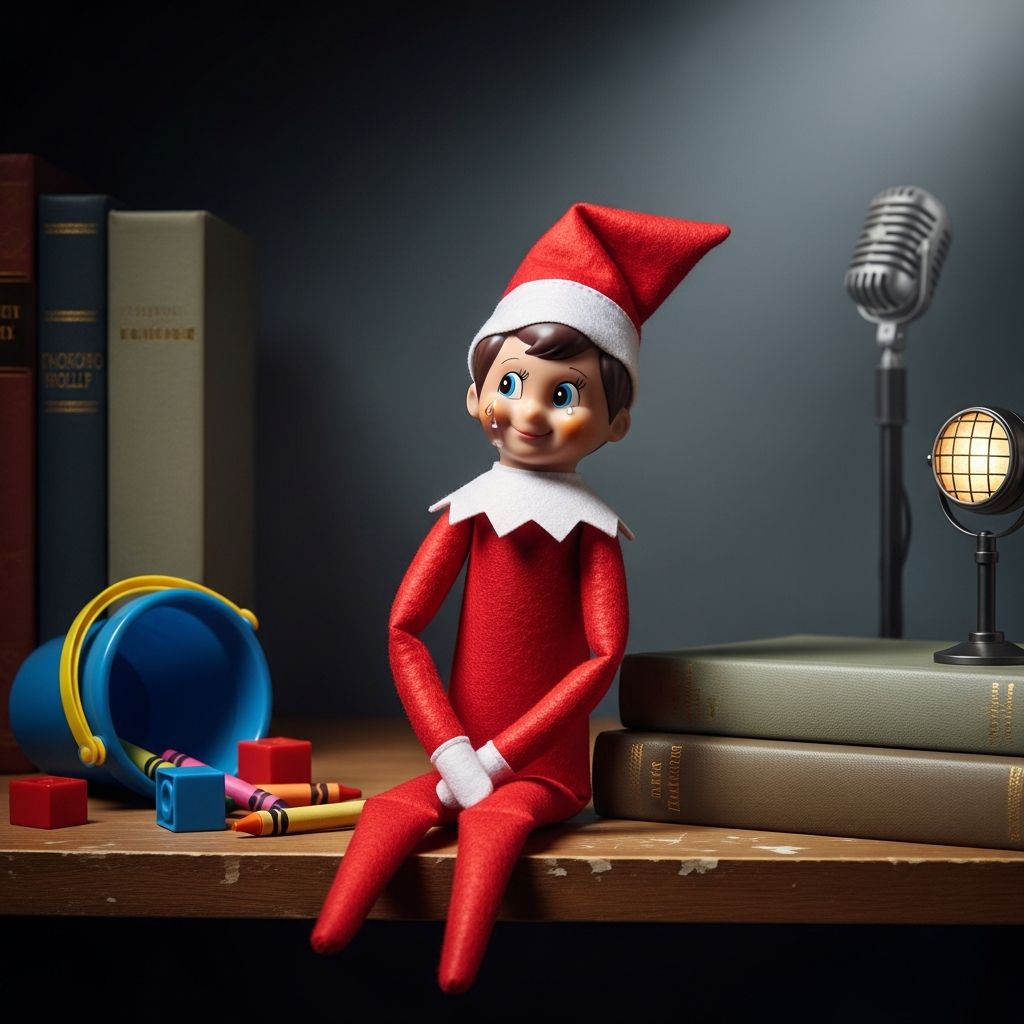
Every December, millions of families wake up to find a painted-on smile staring back at them from bookshelves, ceiling fans, and flour “snow angels.” That tiny plastic visitor, the Elf on the Shelf, has become both a cherished ritual and an exhausting burden — which is exactly why a raunchy late-night sketch about the elf landed so hard with parents already on the edge of holiday burnout.
Instead of just rehashing the joke, this article explores why the concept of a naughty little spy resonates so deeply, how edgy comedy taps into parents’ mixed feelings, and how families can reclaim the tradition in a healthier, less creepy, and far more fun way.
The Elf Parents Love, Hate, and Secretly Fear
The genius of the Elf on the Shelf is that it bundles together magic, behavior management, and social pressure in one smiling figurine. Parents get a ready-made story about a scout elf reporting to Santa, kids get a sense of being watched, and social media gets an endless stream of elaborate elf scenarios.
- For some families, the elf is pure fun — a low-stakes excuse for silly setups and imaginative play.
- For others, the elf becomes a nightly obligation layered on top of shopping, cooking, work, and school events.
- Many parents feel torn: they dislike the surveillance vibe but don’t want their child to be the only one without an elf.
That conflict — between delight and dread, between magic and manipulation — is exactly the tension that late-night comedians love to expose and exaggerate.
Why a Raunchy Sketch Hits So Close to Home
When a high-profile comedy show decides to build a sketch around Elf on the Shelf, it is not targeting kids. It is speaking directly to sleep-deprived adults who have crawled out of bed at midnight because they forgot to move the elf again. The humor works because it takes the core idea — a toy that constantly watches — and pushes it into absurd, adult territory, including private habits, awkward secrets, and the slightly unsettling thought that nothing is truly unseen.
The result is a kind of comic relief for parents. By watching the elf behave badly, blow past the usual G-rated boundaries, or comment on things no child should hear about, adults get permission to laugh at the parts of the tradition that have always made them uneasy. It becomes a shared wink: everyone understands that the whole premise is a little bit creepy, and that is precisely why the joke lands.
From Wholesome Mascot to Walking Surveillance Camera
The surface story of Elf on the Shelf is simple: the elf watches during the day and reports to Santa at night, then returns in a new spot. But underneath that story is a full-blown lesson in being monitored. Children learn to behave because they are being watched, not because they internalize a sense of right and wrong. In other words, the elf trains them to be good when observed.
Recent conversations about kids, technology, and privacy make this dynamic especially striking. Parents are increasingly uncomfortable with the idea that every action is tracked — whether by apps, cameras, or a grinning holiday doll — yet holiday tradition asks them to lean into that message in the name of fun. Comedy sketches that exaggerate the elf’s voyeurism are not just being gross for shock value; they are drawing attention to how normalized constant watching has become.
How Late-Night Comedy Turns the Elf Upside Down
On television, taking a children’s character and putting it into an unapologetically adult environment is a tried-and-true formula. When the elf appears in a late-night sketch, the writers are doing three things at once: skewering commercial holiday trends, poking fun at the idea of magical surveillance, and giving exhausted parents a chance to laugh at their own participation in the ritual.
To do that, the elf has to break the rules. Instead of quietly perching on a shelf, the on-screen elf might loudly narrate everything it has seen, wander into private spaces, or react in outrageously inappropriate ways. The humor comes from the distance between what the elf is supposed to represent — innocence, obedience, childhood wonder — and the messy, complicated reality of adult life it secretly witnesses.
Parents’ Mixed Reactions: Relieved, Offended, or Both
The response from parents to edgy elf sketches tends to fall on a spectrum. Some viewers feel a wave of relief: someone has finally said out loud what they were thinking, that this whole tradition is bizarre and a little unsettling. Others are uncomfortable with sexual jokes or crude language attached to something their kids adore.
Both reactions are valid, and both say something important about how modern families navigate culture. On one hand, comedy gives parents a place to process the stress, contradictions, and even resentment that can build around holiday rituals. On the other hand, it reminds them that once a symbol becomes part of the broader entertainment machine, they can no longer fully control how it is portrayed — or how their children might eventually encounter those edgier versions.
When the Elf Becomes a Mirror for Parenting Anxiety
Beyond the jokes, Elf on the Shelf often reflects deep worries parents have about whether they are doing enough, being creative enough, or giving their children a magical childhood. Social media streams filled with elaborate elf scenes can make a simple tradition feel like another competition, complete with homemade costumes, fake snow, and miniature props.
Comedy that dramatizes a wild, inappropriate, or oversharing elf serves as a kind of mirror. It shows how out of hand the expectations have become. Parents suddenly see themselves as the butt of the joke: the adults who willingly invite a surveillance doll into their home and then bend over backward to stage nightly performances for an audience of small, unpredictable critics.
Healthy Elf, Healthier Kids: Rethinking the Rules
The fact that an adult sketch can so easily twist the elf into something unsettling is a clue that the original rules might be worth revisiting. Parents who feel uneasy about teaching their kids that someone is always watching can tweak or rewrite the backstory in ways that prioritize curiosity and connection over control.
Here are some alternative approaches families have adopted:
- The storyteller elf: Instead of reporting on behavior, the elf “collects” kids’ stories, drawings, and ideas to share with the North Pole as inspiration.
- The helper elf: The elf models kindness by doing small acts of service around the house, like leaving encouraging notes or helping set the table.
- The clumsy elf: The elf is bad at spying and good at slapstick, turning every appearance into a lighthearted mess rather than a moral lesson.
Comparing Elf Storylines: Fear vs. Fun
To understand how big a difference these tweaks can make, it helps to look at how different elf storylines send very different signals to kids. The table below contrasts a traditional surveillance-style elf with a more playful, growth-oriented version.
| Elf Style | Core Message | How Kids Might Feel | Likely Parent Experience |
|---|---|---|---|
| Watchdog Elf | “Someone is always monitoring your behavior.” | Worried about being caught, eager to please when watched. | Short-term obedience, long-term discomfort with the lesson. |
| Playful Elf | “The holidays are a time for imagination and shared jokes.” | Curious, excited, less anxious about making mistakes. | Less pressure to police behavior, more room for creativity and connection. |
| Helper Elf | “Small acts of kindness matter more than perfection.” | Inspired to help, proud of thoughtful actions. | More authentic teachable moments and less guilt-based motivation. |
Keeping Adult Comedy in the Adults-Only Zone
Because late-night sketches often push boundaries with language and sexual humor, they are not designed with young viewers in mind. Parents who enjoy a raunchy take on Elf on the Shelf can still protect their child’s sense of wonder by clearly separating “grown-up jokes” from kid-friendly traditions.
- Watch edgy content after bedtime or on personal devices, not in shared family spaces.
- If an older child stumbles across a clip, be ready to explain that comedians use exaggeration and inappropriate behavior to make adults laugh, not to set rules for kids.
- Reassure younger children that their elf’s story in your home is the one that matters, not the version they might eventually see in a comedy sketch.
Reclaiming the Elf as Your Own Story
One of the most empowering realizations for parents is that no television show, meme, or viral post can define what the elf means in their house. The official story is only a starting point. Families can blend cultural references, personal humor, and long-standing traditions into something that feels genuine rather than obligatory.
Some parents even find that referencing an over-the-top sketch in private, adult conversations gives them the emotional distance to take the elf less seriously with their kids. When the elf becomes an in-joke between grown-ups instead of a sacred rulebook, there is more room to scale back, skip nights, or retire the elf completely without feeling like a failure.
Practical Tips for a Low-Stress Elf Season
For families who want to keep the elf without the anxiety, a few intentional choices can dramatically reduce the nightly scramble. The goal is to preserve delight while minimizing late-night regrets and unrealistic expectations.
- Plan a simple rotation: Brainstorm a short list of easy locations and repeat them. Kids remember the magic, not the Pinterest-quality variety.
- Set a time limit: Decide that the elf only visits for a specific window, such as the two weeks leading up to Christmas, to avoid burnout.
- Share the load: If there are two caregivers, alternate nights or set reminder alarms so no one person carries the entire mental load.
- Normalize imperfection: When the elf “forgets” to move, turn it into part of the story — maybe the elf overslept, got stuck, or really liked yesterday’s spot.
Frequently Asked Questions
Is Elf on the Shelf bad for kids because it encourages surveillance?
It depends how the story is framed. If the elf is mainly used as a threat — “the elf is watching, so you’d better behave” — children may associate good behavior with being monitored instead of learning intrinsic motivation. If, however, the elf is treated as a playful character, a bringer of jokes, or a model for kindness, the focus shifts from spying to shared joy.
Should I be worried if my child eventually sees a raunchy elf sketch?
Context and age matter. Younger children may simply be confused by adult themes, while older kids and teens can usually understand that late-night comedy is exaggerated and not meant as a guide to real life. A calm, honest conversation about how comedians stretch ideas to make grown-ups laugh can turn an awkward moment into a teaching opportunity about media literacy.
Can I stop doing the elf without ruining the holidays?
Yes. Traditions are most meaningful when they serve the family, not the other way around. Many parents retire the elf when it stops feeling fun or sustainable, sometimes transferring the magic into a new ritual like a special breakfast, a nightly story, or a kindness calendar. Children remember the overall feeling of warmth and connection more than any single prop.
How do I respond if my child hears jokes about the elf at school?
Ask what they heard and how they feel about it, then gently clarify the story your family uses. You can explain that other people sometimes make silly or even rude jokes about things from children’s stories, but that does not change the way your family chooses to celebrate. Validating their feelings and restating your own tradition helps steady their sense of security.
Is it okay if I actually enjoy the dark humor?
Plenty of loving parents appreciate edgy jokes in private while still providing a warm, age-appropriate version of the holiday at home. Enjoying adult humor does not make you less caring; it can even release some of the pressure building up around the season. The important thing is keeping a clear boundary between what belongs in grown-up spaces and what you share with your children.
Elf on the Shelf, Reimagined
In the end, an outrageous TV sketch about a mischievous elf does more than chase easy laughs. It shines a spotlight on the complicated mix of love, pressure, nostalgia, and surveillance that now surrounds a holiday toy. By noticing what makes parents laugh nervously or cringe, families can make more conscious choices about what to keep, what to discard, and what to reinvent.
Whether your elf remains a gentle observer, becomes a bumbling comedian, or exits the stage entirely, what matters most is that the tradition reflects your values, respects your child’s well-being, and leaves room for the kind of joy that no camera — magical or otherwise — can manufacture.