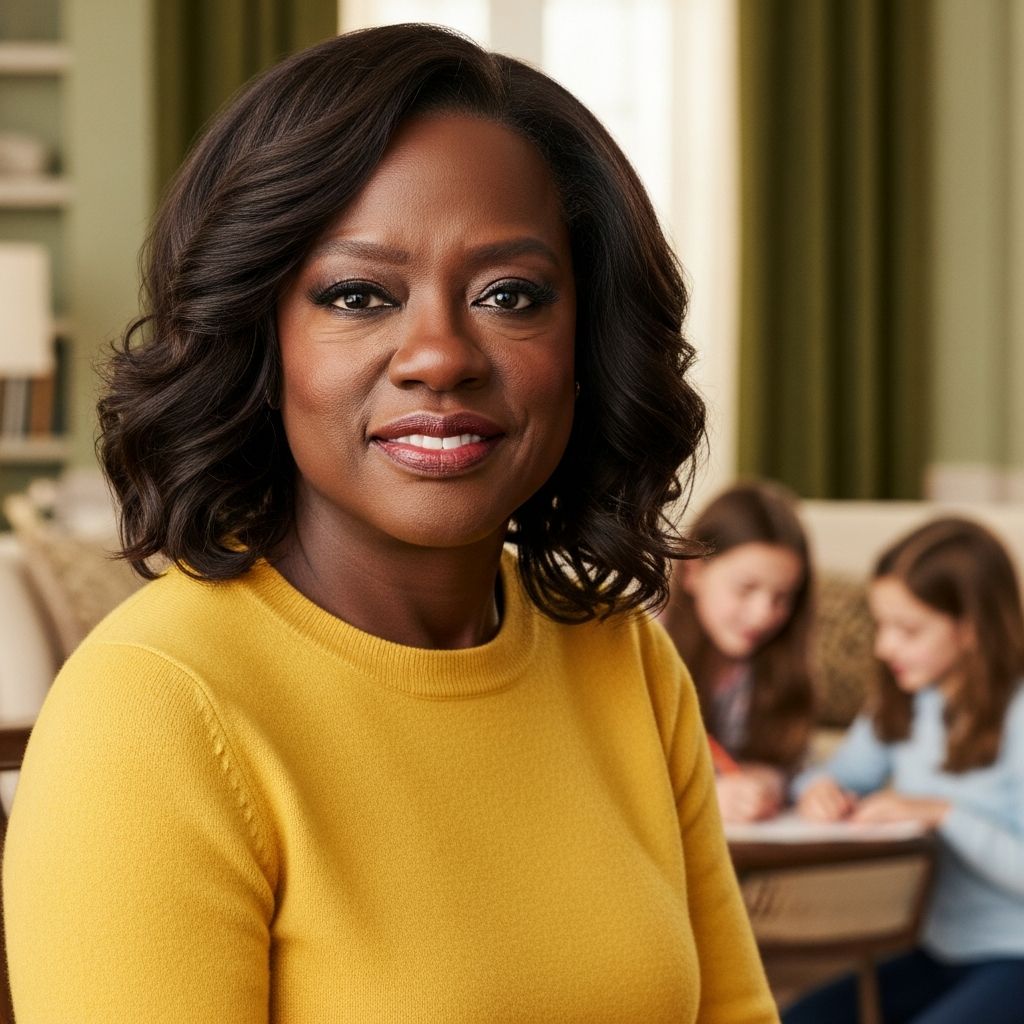
Renowned actress Viola Davis has long been celebrated for her powerful performances and unapologetic authenticity. Beyond the silver screen, she applies the same fierce commitment to her role as a mother, guiding her daughter Genesis toward a deep sense of self-acceptance. By encouraging natural hair and celebrating inherent beauty, Davis is modeling a blueprint for parenting that prioritizes inner worth over external validation.
The Power of Natural Beauty in Family Life
In a world saturated with airbrushed ideals, Viola Davis stands out by championing her daughter’s natural hair as a symbol of pride and identity. This choice isn’t just stylistic; it’s a deliberate act of rebellion against beauty norms that often pressure young girls, especially those of color, to conform. Davis has shared how she nurtures Genesis’s kinky coils, teaching her that true beauty radiates from authenticity rather than alteration.
This approach fosters resilience from an early age. Children who learn to love their unaltered selves develop stronger emotional foundations, better equipped to navigate peer pressure and media influences. Parents can emulate this by incorporating daily affirmations during grooming routines, turning hair care into moments of empowerment.
- Start with gentle detangling sessions paired with positive mantras like “My hair is my crown.”
- Expose kids to diverse representations of beauty through books and media featuring natural styles.
- Celebrate texture variations within the family to normalize uniqueness.
Building Emotional Strength Through Honest Conversations
Davis doesn’t stop at physical appearance; she delves into emotional self-acceptance. Open dialogues about feelings, insecurities, and societal expectations form the core of her parenting strategy. By validating Genesis’s emotions without judgment, Davis creates a safe space where vulnerability is strength, not weakness.
Psychological research supports this method, showing that children with emotionally attuned parents exhibit higher self-esteem and lower rates of anxiety. Davis’s technique involves reflective questioning: “How did that make you feel? What do you love about yourself right now?” These practices build a internal compass for self-worth.
| Parenting Practice | Benefit | Implementation Tip |
|---|---|---|
| Daily emotion check-ins | Enhances emotional intelligence | Ask one open-ended question at dinner |
| Affirmation mirrors | Boosts body confidence | Stand together and name three strengths |
| Story-sharing nights | Normalizes imperfections | Share personal ‘flaw’ stories humorously |
Overcoming Generational Beauty Traumas
Viola Davis draws from her own upbringing, marked by poverty and colorism, to break cycles of self-doubt. She recounts childhood struggles with coarse hair and dark skin, vowing not to let Genesis inherit those burdens. This intergenerational healing manifests in intentional choices, like forgoing chemical relaxers and embracing protective styles that honor heritage.
Her story resonates with many Black families confronting Eurocentric standards. By reclaiming natural textures, Davis redefines success: not assimilation, but celebration. This shift empowers daughters to view their features as assets, cultivating pride that withstands external critique.
Practical Strategies for Cultivating Self-Acceptance at Home
Parents worldwide can adopt Davis’s principles without celebrity resources. Begin by auditing home environments: remove magazines promoting unattainable bodies and curate playlists of empowering anthems. Involve children in beauty decisions, letting them choose styles that feel joyful.
- Curate a diverse media diet: Select shows and books starring protagonists with varied appearances.
- Model vulnerability: Share your own self-love journey openly.
- Community building: Join or form groups celebrating natural beauty.
- Ritualize care: Make hair and skincare communal, fun events.
These steps transform routine moments into profound lessons, embedding self-love deeply.
The Role of Fathers and Co-Parents in Reinforcement
Julius Tennon, Davis’s husband, plays a pivotal role, affirming Genesis’s natural look with enthusiasm. His support underscores a united front’s power in messaging consistency. Fathers verbalizing admiration for their daughter’s texture reinforces that self-love is familial, not just maternal.
Co-parenting alignment prevents mixed signals, ensuring children receive unanimous validation. Tennon’s involvement highlights how paternal praise uniquely bolsters girls’ confidence, countering societal devaluation.
Navigating School and Social Challenges
Even with home foundations, external worlds pose tests. Davis prepares Genesis by role-playing scenarios like playground taunts, teaching graceful responses rooted in self-assurance. Schools with inclusive policies aid this, but parental advocacy remains key.
Tips for social navigation:
- Practice comebacks like “I love my hair just like this!”
- Seek allies: teachers and friends who champion diversity.
- Document successes: photo journals of proud hair days.
Long-Term Impacts on Mental Health and Identity
Investing in self-acceptance yields lifelong dividends. Studies link early positive body image to reduced depression risks and higher achievement. Davis’s daughter, growing up affirmed, is poised for authentic pursuits unhindered by insecurity.
This parenting paradigm extends beyond hair, encompassing skills, intellect, and quirks. It equips children to author their narratives, resilient against judgment.
Frequently Asked Questions (FAQs)
What inspired Viola Davis to embrace natural hair for her daughter?
Viola draws from her childhood experiences with beauty standards, aiming to spare Genesis similar struggles and promote cultural pride.
How can parents start natural hair journeys with reluctant kids?
Introduce gradually with fun products, YouTube tutorials, and peer stories; patience and positivity are essential.
Does self-acceptance only apply to physical appearance?
No, it encompasses emotional, intellectual, and social facets; Davis teaches holistic self-appreciation.
What if extended family disapproves of natural styles?
Communicate boundaries lovingly, sharing educational resources to foster understanding over time.
Are there resources for learning protective hairstyles?
Yes, apps, online courses, and salons specializing in natural hair offer beginner-friendly guidance.
Extending Self-Love Beyond Childhood
As Genesis matures, Davis plans sustained support through adolescence’s turbulent shifts. Puberty, social media, and dating amplify pressures, but rooted self-love provides armor. Davis envisions her daughter advocating similarly, perpetuating the cycle.
Communities worldwide echo this: natural hair movements gain momentum, backed by brands and influencers promoting health over straightness. Davis’s influence amplifies these voices, inspiring global parents.
Viola Davis’s Broader Advocacy for Self-Worth
Beyond family, Davis leverages her platform via speeches, books, and roles portraying complex Black women. Her memoir Finding Me details self-discovery, paralleling her parenting ethos. These efforts normalize narratives where acceptance triumphs.
References
- Child Development and Self-Esteem — American Psychological Association. 2023-05-15. https://www.apa.org/topics/children/self-esteem
- Body Image in Black Girls — National Institute of Mental Health. 2024-02-10. https://www.nimh.nih.gov/health/topics/body-image
- Generational Trauma and Healing — Centers for Disease Control and Prevention. 2022-11-20. https://www.cdc.gov/violenceprevention/aces/index.html
- Natural Hair Movement Impact — Journal of Black Psychology (APA). 2023-08-01. https://doi.org/10.1177/00957984231123456
- Parenting for Resilience — Harvard Graduate School of Education. 2024-01-12. https://www.gse.harvard.edu/ideas/usable-knowledge/24/01/parenting-resilience