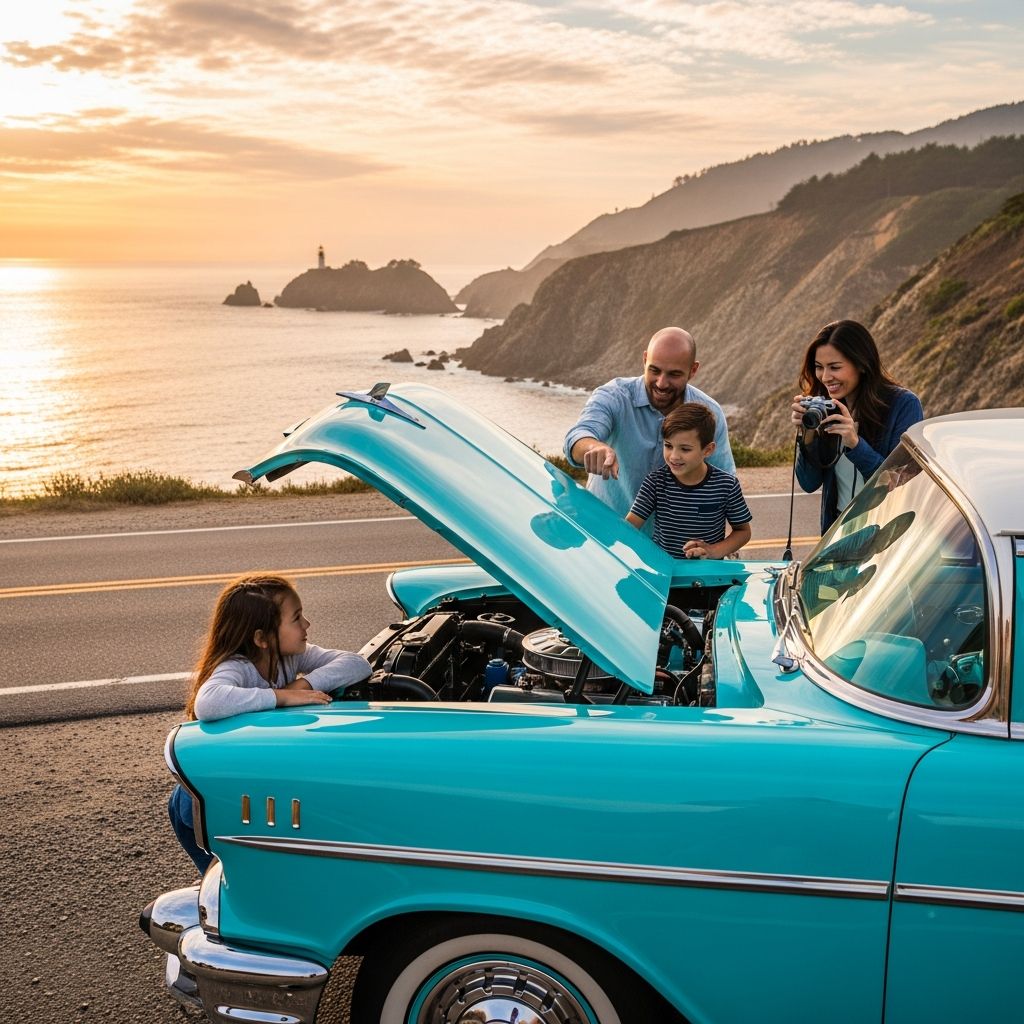
Vintage family cars are more than quirky old machines; they are rolling time capsules that blend design, history, and shared experiences into every mile. For families who want more than a generic crossover, a classic car can transform ordinary errands and road trips into stories that children will remember for decades.
Choosing the right old-school family hauler, however, takes more thought than simply falling in love with chrome and tailfins. This guide walks through why vintage family cars are special, how to pick one that actually works with kids and cargo, and what to expect when maintaining and using a classic as a real family vehicle rather than just a garage queen.
Why Vintage Cars Speak to Families
The appeal of vintage vehicles goes beyond nostalgia; they showcase craftsmanship, bold styling, and the cultural values of the eras in which they were built. Many older family cars have become icons precisely because they were woven into everyday life, from school runs to cross-country vacations.
- Distinctive design details, such as long rooflines, chrome accents, and generous glass areas, make classics stand out in today’s parking lots.
- Driving an older car often encourages slower, more intentional travel, which pairs naturally with family time and conversation.
- Working on or cleaning the car can become a shared project across generations, turning the vehicle into a hands-on teaching tool.
From Sedans to Wagons: The Evolution of the Family Car
The concept of a “family car” has shifted over the decades. Early family vehicles were often modest sedans or boxy wagons optimized for durability and cargo space, long before SUVs and minivans ruled the road. As suburbs grew and road networks expanded, manufacturers experimented with new shapes and layouts to better carry people, luggage, and sometimes the family dog.
By the mid-20th century, the family car had become a symbol of upward mobility, blending comfort with practicality. Long-roof wagons, roomy four-door sedans, and later people-movers all tried to solve the same problem: how to move a household in a single vehicle without sacrificing comfort or style. Today, those same cars attract enthusiasts who appreciate their honest engineering and period-correct details.
Key Traits of Great Vintage Family Cars
Not every classic makes a good family car. Some icons are cramped, thirsty, or difficult to maintain. The best family-friendly classics share a few crucial traits that make school runs, errands, and weekend adventures more manageable.
- Interior space: Adults and kids should have enough legroom and headroom to ride in comfort, even with child seats installed.
- Cargo capacity: Strollers, sports gear, and grocery bags need a generous trunk or wagon area.
- Reasonable reliability: Simple mechanical systems and widely available parts keep breakdowns less likely and repairs less stressful.
- Calm driving manners: Predictable steering, good visibility, and relaxed gearing are more important than outright speed in a family setting.
- Parts and club support: Popular models with active enthusiast communities are easier to keep on the road.
Popular Types of Vintage Family Cars
Different families will gravitate toward different body styles and eras. Some want the long-roof drama of a classic wagon, while others prefer understated sedans or early people-movers with flexible seating.
| Type | Typical Era | Family Advantages | Potential Drawbacks |
|---|---|---|---|
| Full-size sedan | 1950s–1980s | Roomy interiors, comfortable ride, simple mechanicals. | Large exterior size for city parking; fuel economy can be poor. |
| Station wagon | 1960s–1990s | Huge cargo area, kid-friendly tailgate, classic long-roof look. | Some models suffer from tailgate rust; thirsty engines are common. |
| Compact family car | 1960s–1980s | Easier to park, better fuel economy, often cheaper to buy. | Less space for rear-facing seats and bulky luggage. |
| Early MPV / people-mover | 1980s–1990s | Flexible seating, sliding doors, strong family practicality. | Some lack classic “cool factor”; rust and interior wear can be serious. |
| Luxury saloon | 1970s–1990s | High comfort, refined cabins, good long-distance ability. | More complex electronics; maintenance costs can be higher. |
Matching a Classic to Your Family Lifestyle
Before browsing classifieds, it helps to picture how the car will actually be used. The best vintage family car for weekend ice cream runs may not be ideal for daily commuting or towing a camper. Being realistic about your lifestyle will narrow the field and keep expectations grounded.
- Urban families: Compact sedans and smaller wagons are easier to maneuver and park, while still offering enough space for a small family.
- Suburban commuters: Mid-size sedans or wagons often strike a balance between comfort, storage, and highway stability.
- Road-trip enthusiasts: Large wagons or comfortable saloons make long journeys more relaxing for both driver and passengers.
- Hands-on hobbyists: Simpler cars with carbureted engines and limited electronics are easier for DIY maintenance and weekend tinkering.
Safety Realities: Old Charm, New Standards
Vintage cars were designed to the safety standards of their own eras, which means they usually lack many modern protections. This does not make them unusable for families, but it does mean safety planning should be part of the decision, especially if children will ride frequently.
- Many older cars did not originally come with three-point belts in every seating position, which can complicate child seat installation.
- Side-impact protection, crumple zones, and airbag coverage are generally far less advanced than in new vehicles.
- Brake performance and lighting can sometimes be improved with respected aftermarket upgrades that preserve the car’s character.
Smart Upgrades for a Family-Friendly Classic
Thoughtful modifications can make a vintage car more usable without stripping away its period charm. Many owners aim for reversible changes that improve safety, drivability, and comfort while keeping the underlying car authentically old-school.
- Brakes: Refreshed hydraulics, quality pads or shoes, and, where appropriate, a disc-brake conversion can boost confidence.
- Seat belts: Adding three-point belts in the rear seats, where structurally possible, simplifies fitting child restraints.
- Lighting: Brighter headlamps and well-adjusted brake lights help the car fit better into modern traffic conditions.
- Cooling and charging: A healthy radiator, fan, and alternator make summer trips and accessory use more worry-free.
- Subtle comfort tweaks: Discreet sound deadening, upgraded seat foam, or a hidden Bluetooth audio setup can keep the interior family-friendly.
Budgeting: Purchase Price vs. Ongoing Costs
Many families are surprised to find that entry-level classic cars are often cheaper to buy than new vehicles. The catch is that older cars can require more frequent attention and occasional bursts of spending on repairs or preservation. Thinking in terms of total ownership cost, not just purchase price, will prevent disappointment later.
- Set aside a separate repair and maintenance fund, especially for the first year of ownership while you uncover hidden issues.
- Consider tools, storage, and insurance in your budget; specialty policies for classics can be affordable but may have mileage or storage conditions.
- Factor in fuel consumption, as many vintage family cars were built before efficiency became a top priority.
Checklist for Evaluating a Vintage Family Car
Buying a classic is both emotional and practical. A structured checklist keeps excitement in check and reduces the chance of taking on more project than your family wants. When viewing a car, it helps to bring another adult, a flashlight, and a notepad or checklist on paper.
- Body and rust: Look carefully around wheel arches, sills, windscreen surrounds, and tailgates. Structural corrosion can be expensive to fix.
- Interior condition: Torn seats, crumbling dashboards, and missing trim may be harder and costlier to replace than mechanical parts.
- Mechanical health: Listen for knocks, rattles, or excessive smoke. Check for smooth gear changes and consistent braking.
- Paperwork: History folders, old receipts, and service records offer clues about how the car was treated and maintained.
- Test drive: Observe how the car performs during cold start, warm running, and braking from higher speeds.
Making It a Family Project
One of the greatest strengths of a vintage family car is the way it invites everyone to participate. Even children who are too young to drive can help wash the car, choose picnic spots, or pick music for Sunday cruises. Over time, the car stops being an object and becomes a shared tradition.
- Involve kids in small, safe tasks such as checking tire pressures, organizing the trunk, or polishing chrome.
- Create recurring rituals, like an annual early-morning drive to a favorite bakery or a sunset beach visit in the summer.
- Record stories, photos, and even mileage milestones so the car’s adventures become part of family history.
Turning Road Trips into Rolling Time Travel
Road trips in a vintage car feel different from those in a modern SUV. The slower pace, the mechanical sounds, and the analog controls naturally encourage conversation and curiosity, especially from children who have grown up around touchscreens and driver assists. Planning routes and activities around the car enhances that sense of time travel.
- Choose scenic routes and smaller roads where the car’s relaxed nature feels at home and traffic speeds are moderate.
- Schedule more frequent stops than you would in a modern car, giving both the vehicle and younger passengers a chance to rest.
- Bring basic tools, fluids, and a breakdown plan so minor issues do not derail the adventure.
Environmental Considerations
Owning a vintage car raises questions about emissions and sustainability, especially for environmentally conscious families. While older cars are generally less efficient than new ones, they also extend the life of existing materials rather than requiring energy to build a new vehicle from scratch. For many households, the classic is a second or hobby car, used sparingly for special occasions rather than daily commuting.
- Regular maintenance, proper tuning, and good tires can reduce emissions and fuel consumption compared with a neglected classic.
- Using the vintage car mainly for occasional leisure trips and relying on a more efficient vehicle for everyday use balances enjoyment and environmental impact.
- Some owners explore modern fuels, lubricants, and gentle upgrades to optimize efficiency without transforming the character of the car.
FAQs About Vintage Family Cars
Are vintage cars safe enough for children?
Vintage cars rarely match the passive safety of new vehicles, but careful model selection and appropriate upgrades can make them reasonably safe for occasional family use. Ensuring proper seat belts, secure child seat installation, and well-maintained brakes and tires is essential before putting kids on board.
Can a classic car be a daily driver for a family?
Some families do daily-drive older cars, especially simpler models with strong parts availability and good fuel economy for their age. That said, many owners prefer to keep classics as secondary vehicles to reduce wear, control costs, and avoid the stress of relying on a decades-old machine for every school run and commute.
Do vintage family cars cost a lot to insure?
Specialist classic car policies can be surprisingly affordable, particularly if annual mileage is limited and the car is stored securely. However, these policies often come with conditions, so it is important to discuss intended family use, including school runs or long holidays, with the insurer upfront.
How much mechanical skill is needed to own a classic?
Basic familiarity with tools is helpful but not mandatory. Many owners start with only a simple toolkit and gradually learn tasks like oil changes and brake inspections, relying on trusted specialists for more involved work. Joining an owners’ club or online forum can provide guidance, recommended workshops, and moral support.
Will a vintage car hold its value?
No car is a guaranteed investment, but well-chosen classics that are maintained, used, and improved sensitively often depreciate more slowly than new family vehicles. The real return for most families, though, comes in the form of shared experiences, skills learned, and memories created rather than financial gain alone.
Bringing the Past into the Present
A vintage family car offers something that modern vehicles struggle to replicate: a sense of occasion every time the key is turned. By choosing the right model, respecting its limitations, and weaving it into family life thoughtfully, parents can give their children not only rides but stories, smells, sounds, and traditions that linger long after the engine cools.
For families willing to slow down, learn a little mechanical empathy, and embrace the quirks of an older machine, a classic car can be more than transportation. It can become a beloved character in the family story, a rolling heirloom that connects generations and turns even short drives into small adventures.