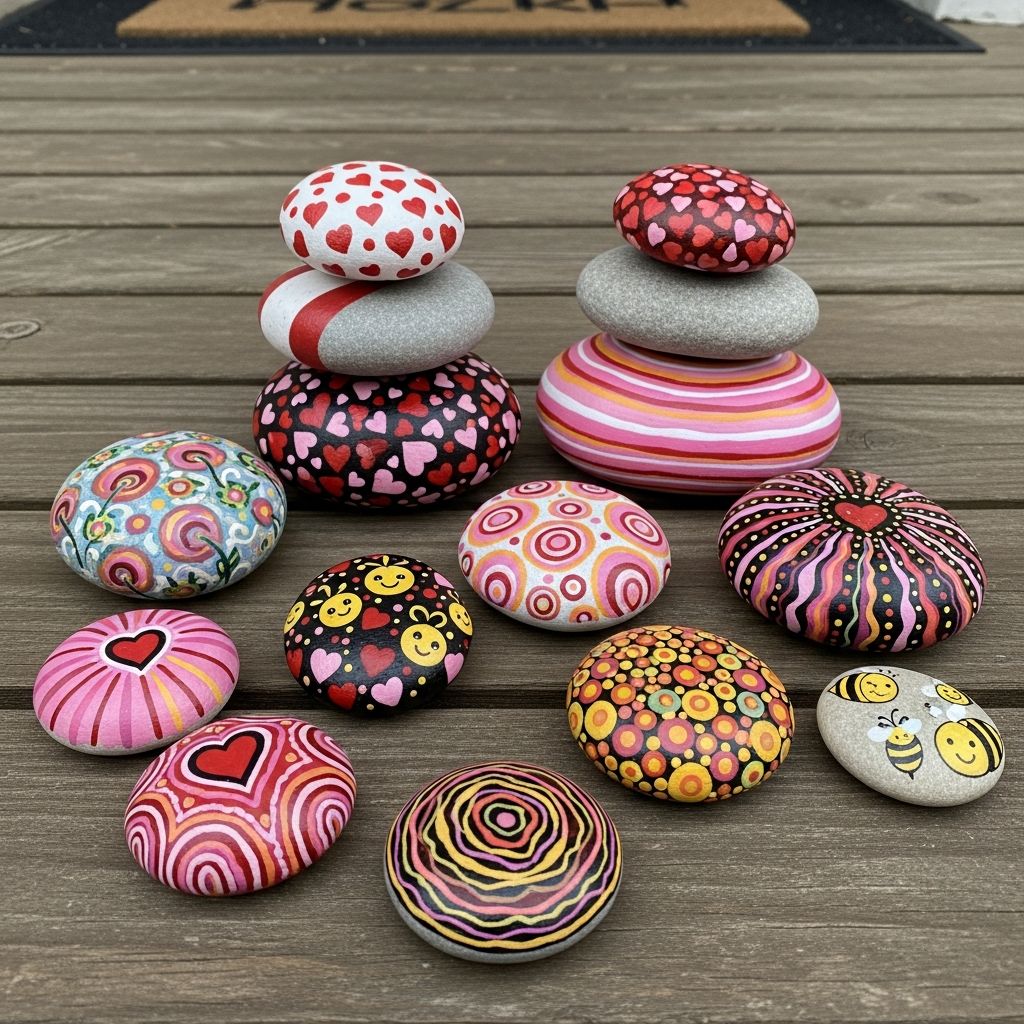
Valentine’s Day is often focused on romantic love, but it can also be a beautiful moment to celebrate community, friendship, and everyday kindness. One simple way to do that is by transforming ordinary rocks into tiny works of heart-filled art and placing them where they will surprise and delight your neighbors.
This guide walks you through an original approach to making Valentine kindness rocks, including planning, design ideas, safety and etiquette, and creative ways to share them across your block. Everything here is meant to be family-friendly, budget-conscious, and easy to adapt for different ages and abilities.
Why Valentine Rocks Make Great Neighbor Gifts
At first glance, a painted stone can seem like a small gesture, but its charm lies in being unexpected, handmade, and personal. Unlike store-bought candy or cards, each rock carries a story: someone spent their time to brighten another person’s day.
- They are inexpensive and accessible; a few rocks, paint, and a bit of imagination are all you need.
- They are clutter-free gifts; neighbors can keep them, re-hide them, or use them as garden or desk decor.
- They are a natural conversation starter that helps build a sense of belonging on your street.
Planning Your Valentine Rock Project
A little planning makes the whole project smoother and more fun, especially if you are crafting with children or a group. Think about how many rocks you want to create, who will help, and roughly where you will place your finished gifts.
- Decide your scale: Will you make rocks for just your closest neighbors or for everyone within walking distance?
- Choose your helpers: Children, friends, and extended family can each take ownership of a design, color scheme, or part of the process.
- Pick a time frame: Set a crafting date and a separate delivery day so paint has time to dry and cure.
Supplies You Will Need
You can keep this project very simple or add specialty materials for extra flair. Use what you already have at home whenever possible to keep costs and waste down.
| Item | Purpose | Tips |
|---|---|---|
| Smooth, clean rocks | Base for your art | Look for palm-sized stones with flat surfaces that are easy to paint. |
| Acrylic paints | Colorful designs | Choose non-toxic, water-based paints, especially if kids are involved. |
| Permanent markers | Outlining and lettering | Fine-tip markers help with small details and short messages. |
| Paintbrushes | Applying paint | Have at least one wide brush for base coats and a small one for details. |
| Clear sealer (spray or brush-on) | Weather protection | Use outdoors or in a well-ventilated area and let dry completely. |
| Scrap cardboard or old newspaper | Work surface protection | Prevents paint from staining tables or floors. |
| Gloves and smocks (optional) | Keep clothes and hands clean | Helpful for younger crafters or large group projects. |
Gathering and Preparing Your Rocks
Start by collecting rocks that are comfortable to hold and easy to paint. Avoid stones that are sharp, crumbly, or too heavy to move safely. If you do not have rocks in your yard, many garden centers or craft stores sell smooth stones in bags.
- Wash each rock with warm, soapy water and a brush to remove dirt and dust.
- Rinse thoroughly and let them dry completely before painting to prevent peeling.
- If the rock is very dark or spotted, consider a base coat of white paint so your Valentine colors pop.
Design Inspirations for Valentine Kindness Rocks
Your designs do not need to be intricate to be meaningful. Simple shapes and very short phrases are actually easier to read at a glance when your neighbor sees the rock near their doorstep or garden.
- Classic hearts: Solid hearts, heart outlines, or clusters of tiny hearts in different shades of red, pink, and purple.
- Short messages: Single words like “Joy,” “Peace,” “Hope,” or “Hello” painted in bold letters.
- Nature themes: Ladybugs with heart-shaped spots, bees with heart wings, or tiny flowers circling the rock.
- Abstract patterns: Stripes, dots, waves, and color blocks using a Valentine palette.
- Neighborhood motifs: Simple house shapes, street names, or local landmarks drawn in a playful, symbolic way.
Step-by-Step: Painting Your Valentine Rocks
Once your stones are washed and dry, set up a workspace where paint spills are easy to clean. Encourage experimentation: every rock can be unique, and imperfections add personality.
- Protect your surface. Lay out cardboard, newspaper, or an old tablecloth.
- Apply a base coat. Paint each rock in a solid color such as white, light pink, or soft gray and let it dry.
- Sketch your design. Lightly draw hearts, letters, or shapes with a pencil, especially if kids want guidance.
- Fill in the shapes. Use small brushes and bright colors to paint your hearts, patterns, and images.
- Add words or details. When the base colors are dry, use a fine brush or marker for outlines and lettering.
- Let everything dry completely. Give the rocks enough time to dry so colors do not smudge when sealed.
- Seal your artwork. Apply a thin layer of clear sealer on all painted surfaces to help protect from moisture and fading.
Creative Variations and Skill Levels
Tailor the project to match different ages, abilities, and time limits. The goal is connection, not perfection, so choose options that feel inviting and achievable for your household or group.
- For toddlers and preschoolers: Focus on simple finger-painted hearts or sponge-stamped shapes while adults add any words.
- For grade-school kids: Let them draft short, kind phrases and choose color schemes for their own “series” of rocks.
- For teens and adults: Try ombré backgrounds, hand-lettered scripts, or layered designs with metallic accents.
- For sensory-friendly crafting: Use soft brushes, larger stones, and avoid very strong-smelling sealers or glues.
Eco-Conscious and Accessible Options
Valentine rock gifts can be both heartfelt and environmentally thoughtful. With a few tweaks, the project can align with sustainable values and be accessible to more people.
- Use leftover paint from other projects instead of buying new bottles.
- Opt for non-toxic, low-VOC products whenever possible, especially if the rocks might be handled by children.
- Choose rocks already in your yard or ask permission before taking them from public spaces.
- If someone cannot lift heavier stones, provide smaller pebbles or flat tiles that are easier to move.
Where and How to Share Your Rocks
Thoughtful placement is as important as the art itself. The aim is to surprise neighbors in a positive way while respecting their property and privacy. Consider how you would feel discovering a small, anonymous gift and let that guide your choices.
- Place rocks beside a front step, near a mailbox post, or at the edge of a garden bed, not directly on walkways.
- Avoid blocking doors, gates, or paths where someone might trip over a stone.
- If your community has shared green spaces, agree in advance with any relevant neighbors or boards about placing rocks there.
- For apartment buildings, ask the property manager where small, non-intrusive decorations are allowed.
Adding Gentle Messages Without Overstepping
Short, encouraging phrases can brighten a day, but they should be inclusive and considerate of different beliefs and experiences. Aim for universally uplifting language that anyone on your street might appreciate.
- Keep messages very short: one to three words are usually enough.
- Choose phrases about kindness, courage, friendship, and hope.
- If you live in a multilingual neighborhood, consider including different languages on different rocks.
- Avoid personal or specific notes that might feel intrusive, such as references to private situations.
Turning It into a Family or Group Tradition
Valentine rock gifting can become an annual ritual that children and adults look forward to each year. Over time, neighbors may even start to anticipate the surprise, creating a small shared tradition that belongs to your block alone.
- Choose a particular weekend each year for making and delivering the rocks.
- Invite another family to join in and trade a few designs.
- Keep one rock from each year at home as a reminder of the evolving tradition.
- Photograph a few of your favorite designs before placing them around the neighborhood.
Optional Extras: Tags, Notes, and Social Sharing
Some neighbors may wonder where the rocks came from. You can decide whether to stay completely anonymous or to gently sign your work with a small symbol or message on the underside.
- Write a tiny heart and your street name under the rock, such as “From a friend on Oak Street.”
- Add a discreet note encouraging people to keep the rock or pass it on to someone else who needs a smile.
- If your community uses a private social media group, you can share a general post about the project to inspire others without identifying every rock.
Safety, Etiquette, and Inclusivity
Because you are placing objects on or near someone else’s property, it is important to think about safety and courtesy. Small details like where you place the stone and what you paint on it help ensure your gift lands as the kindness it is meant to be.
- Do not place rocks where small children might mistake them for food or in areas where maintenance crews need clear access.
- Avoid glitter or embellishments that easily flake off into soil or drains.
- Be mindful of inclusive imagery and language so all neighbors can feel welcome to enjoy the gift.
- If someone removes or discards a rock, respect that choice; not every gift will fit every home.
Sample Valentine Rock Themes by Age Group
| Age Group | Suggested Themes | Difficulty Level |
|---|---|---|
| Young children (3–6) | Simple hearts, dots, handprints, and bright color blocks | Very easy; focus on broad strokes and stamping shapes. |
| Kids (7–11) | Smiley faces, cartoon hearts, short words like “Hi” or “Love” | Easy; introduce lettering and simple characters. |
| Teens | Gradient backgrounds, doodle art, stylized lettering, mini scenes | Moderate; more detail and layered colors. |
| Adults | Floral wreaths, geometric patterns, minimalist designs, calligraphy | Moderate to advanced; time-consuming but striking results. |
Frequently Asked Questions (FAQ)
Do I need special paint for outdoor rocks?
Acrylic paint is usually sufficient for outdoor rock art when combined with a clear, weather-resistant sealer. If your climate is very wet or sunny, choose products labeled for exterior use and expect some natural fading over time.
Is it okay to leave rocks on public property?
Rules differ by city, park, and housing area. When in doubt, ask first or focus on your own property and the homes of neighbors who are comfortable receiving small decorations near their doors or gardens.
What if my neighbor does not like surprises?
If you know someone prefers fewer unexpected items at their home, you can skip their doorstep and instead offer a rock in person with a brief explanation, or leave it in a shared space where they can choose whether to take one.
Can I include my contact details on the rocks?
It is generally better to keep identifying information minimal for both privacy and aesthetics. A small symbol, initials, or a simple neighborhood reference is usually enough while still maintaining a bit of mystery and charm.
How many rocks should I make?
The ideal number depends on your time and materials. Start small with a handful of houses nearby; if you enjoy the process, you can always create more for future holidays or for a spring or summer kindness project.
Bringing More Love to Your Street
Valentine rock gifts are a gentle reminder that community is built one small act of kindness at a time. A single painted stone by a front step might spark a smile, a wave, or even a new friendship.
Whether you decorate a few rocks with quick hearts or spend an afternoon crafting intricate designs, the real gift you offer your neighbors is thoughtfulness. With paint, patience, and a little creativity, your block can become a gallery of love, one doorstep at a time.