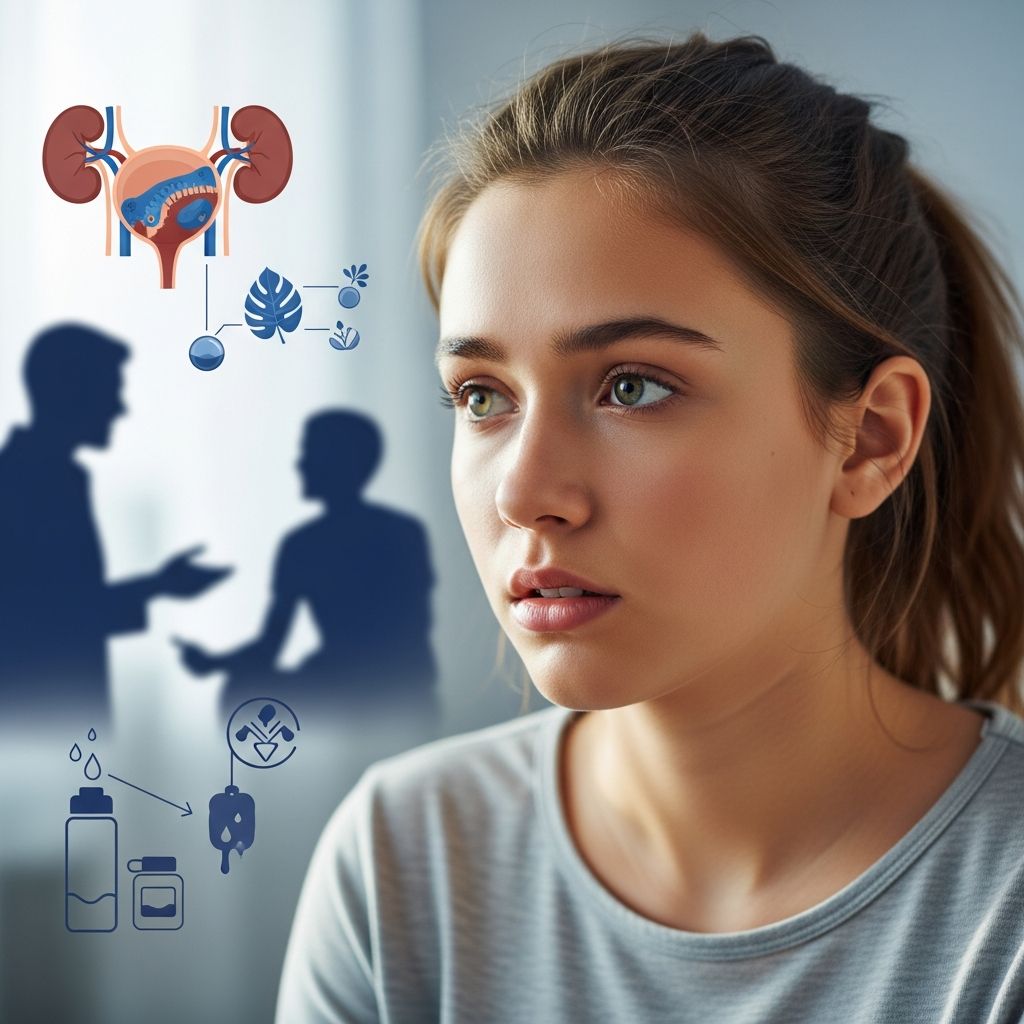
Urinary tract infections (UTIs) are one of the most common bacterial infections in teens, especially in girls, but they can affect anyone. They can be uncomfortable, embarrassing, and sometimes serious if left untreated, yet they are usually easy to treat when caught early.
This guide explains what UTIs are, how they affect teenagers, when to get help, and what you can do to lower your risk of getting one again.
What Exactly Is a UTI?
Your urinary tract is the system in your body that makes urine and carries it out. It includes:
- the kidneys – filter waste and extra water from your blood to make urine
- the ureters – the tubes that carry urine from the kidneys to the bladder
- the bladder – stores urine until you pee
- the urethra – the tube that lets urine leave your body
A urinary tract infection happens when germs, usually bacteria from outside the body, get into this system and start multiplying. Most infections in teens involve the bladder and urethra, but sometimes the infection can reach the kidneys, which is more serious.
| Part Affected | Medical Name | Typical Severity |
|---|---|---|
| Bladder | Cystitis | Common, usually mild if treated early |
| Urethra | Urethritis | Often occurs with bladder infection |
| Kidneys | Pyelonephritis | More serious; can cause high fever and side or back pain |
Why Do UTIs Happen?
Most UTIs are caused by bacteria from the digestive system, especially E. coli, that move from the skin around the anus to the urethra and then into the bladder. Girls have a shorter urethra than boys, so bacteria have a shorter distance to travel, which is part of why UTIs are more common in females.
Everyday Causes and Triggers
Many things in daily life can raise the chances of bacteria getting into the urinary tract or staying there long enough to cause an infection, such as:
- Not peeing often or holding urine for a long time
- Not drinking enough fluids, so urine becomes very concentrated
- Wiping back to front after using the toilet, which can move bacteria toward the urethra
- Constipation, which can press on the bladder and interfere with emptying
- Sexual activity, which can push bacteria toward the urethra in sexually active teens
- Using irritating products like scented bubble baths, perfumed soaps, or some spermicides
- Having a urinary tract abnormality or history of urinary surgery (less common but important)
Signs and Symptoms of a UTI
UTI symptoms can range from mild to intense. In many teens, the first hint is an uncomfortable feeling when they pee.
Common Bladder Infection Symptoms
A bladder infection usually causes symptoms like:
- Pain or burning when peeing
- Needing to pee more often than usual, even if only a little comes out
- A strong or urgent need to pee that is hard to delay
- Cloudy, strong-smelling, or dark pee
- Pee that looks pink, red, or brown (possible blood)
- Lower belly discomfort, pressure, or cramps
More Serious Kidney Infection Symptoms
If the infection reaches the kidneys, symptoms can be more severe and can come on quickly. Signs of a possible kidney infection include:
- Fever and chills
- Pain in the side or back, just below the ribs
- Nausea or vomiting
- Feeling generally very unwell or weak
Kidney infections need urgent medical care because, if ignored, they can damage the kidneys or lead to a more serious whole-body infection.
Subtle Symptoms in Children and Younger Teens
Younger teens and children do not always describe typical urinary symptoms clearly. They might show:
- Unexplained fever with no clear cause
- Irritability, tiredness, or seeming unusually sick
- Wet beds or daytime accidents in a child who was previously dry
- Poor appetite or vomiting
When Should a Teen See a Doctor?
Because UTIs can worsen if ignored, it is important to get help early rather than waiting for the infection to go away on its own.
Call a Doctor or Clinic Promptly If:
- You have pain or burning when you pee that lasts more than a day
- You need to pee more often and only small amounts come out
- Your urine looks cloudy, bloody, or very dark
- You notice a strong, unusual odor in your urine along with other symptoms
Seek Urgent or Emergency Care If:
- You have fever, chills, or shaking along with UTI symptoms
- You feel pain in your side or back under the ribs
- You are vomiting or cannot keep fluids or medicine down
- You feel very weak, confused, or extremely unwell
How Doctors Diagnose UTIs in Teens
A health professional cannot reliably diagnose a UTI based only on symptoms. They usually confirm it with urine tests.
Urine Sample
The most common test is a sample of urine you give at the clinic or lab. To get the best sample, you might be asked to:
- Wash or wipe the genital area first
- Start peeing into the toilet, then move the container into the stream (“midstream” sample)
The sample is then checked in two main ways:
- Dipstick or quick test: A strip is dipped into the urine to look for signs of infection such as white blood cells and nitrites.
- Urine culture: The urine is placed in special conditions to see if bacteria grow and which type they are, which helps choose the right antibiotic.
Additional Tests (Not Always Needed)
Some teens, especially those with repeated UTIs, unusual symptoms, or possible urinary tract abnormalities, may need further tests, such as:
- Ultrasound of the kidneys and bladder to look at their size and shape
- Other imaging or specialized studies if the doctor suspects a structural problem
Treatment: How UTIs Are Managed
Most UTIs in teens are treated successfully with antibiotics prescribed by a doctor. The type, dose, and length of treatment depend on the location of the infection, your age, and your health.
Antibiotics
For a simple bladder infection, teens are often given an oral antibiotic for several days. For more serious infections or kidney involvement, a longer course or hospital care with intravenous antibiotics may be needed.
To help the medicine work properly:
- Take every dose exactly as prescribed, even if you feel better after a couple of days
- Do not share your antibiotics or save them for later
- Let your doctor know if symptoms have not improved after 48 hours of treatment
Relieving Discomfort
While the antibiotic is fighting the bacteria, you can ease symptoms with simple steps:
- Drink extra fluids (unless your doctor gives different instructions)
- Avoid caffeine and carbonated drinks, which can irritate the bladder
- Use a warm, not hot, heating pad on the lower belly or back for cramps or soreness
- Ask a parent or doctor before using over-the-counter pain relievers
Possible Complications if a UTI Is Ignored
Leaving a UTI untreated is risky. Bacteria can move upward from the bladder into the kidneys, causing a kidney infection, and in rare cases spread into the bloodstream. Repeated or severe kidney infections can lead to kidney damage, especially in younger children and teens with underlying urinary problems.
Prompt treatment dramatically lowers the chance of these complications, which is why it is important not to wait and hope symptoms disappear on their own.
Preventing Future UTIs: Everyday Habits That Help
You cannot prevent every infection, but you can lower your risk by changing a few daily habits. Many of these tips are easy to work into a normal teen routine.
Bathroom and Hygiene Tips
- Do not hold your pee. Use the bathroom regularly instead of waiting for a long time.
- Empty your bladder fully each time you go; do not rush.
- After pooping, wipe from front to back to keep bacteria away from the urethra, especially important for girls.
- Avoid using perfumed sprays, scented soaps, or bubble baths on the genital area, which can irritate the urethra.
- Wear breathable, preferably cotton, underwear and change it daily.
Fluids and Food
- Stay hydrated. Drinking water helps flush bacteria from the urinary tract and keeps urine pale yellow.
- Limit drinks that irritate some people’s bladders, such as high-caffeine sodas or energy drinks.
- Prevent or treat constipation by eating fiber-rich foods and drinking enough fluids, since constipation can raise UTI risk.
Sexual Health Considerations for Sexually Active Teens
Sex can increase the risk of UTIs, particularly in people with female anatomy, because bacteria can be pushed toward the urethra during sexual activity. Strategies that may help include:
- Peeing soon after sex to flush out bacteria
- Gently washing the genital area with plain water before and after sex
- Talking with a health professional if you think certain birth control methods or spermicides are irritating your urinary tract
Teens who are sexually active should also know that some sexually transmitted infections (STIs) can mimic UTI symptoms. A medical check-up is important if symptoms are present.
Living With Recurrent UTIs
Some teens experience UTIs more than once. Recurrent infections can be frustrating and worrying, but they are usually manageable with medical guidance.
What Doctors May Look For
- Whether you are completing antibiotic courses as prescribed
- Signs of constipation, bladder emptying problems, or urinary reflux
- Underlying conditions such as anatomical differences in the urinary tract
- Patterns related to sexual activity or hygiene habits
In some cases, doctors may:
- Recommend lifestyle changes more strictly
- Suggest further imaging or specialist referral (for example, to a pediatric urologist)
- Consider preventive antibiotic strategies for a short time in selected patients
UTI Myths vs. Facts
Misunderstandings about UTIs are common among teens. Separating myths from facts can help you react calmly and make good decisions.
| Myth | Fact |
|---|---|
| “Only sexually active people get UTIs.” | Sex can raise risk, but many children and teens who are not sexually active also get UTIs. |
| “If the burning stops, I can stop my antibiotics.” | Stopping early can allow bacteria to survive and cause the infection to return or become harder to treat. |
| “UTIs are no big deal; they always go away on their own.” | Some may improve, but many require antibiotics, and ignoring symptoms can lead to kidney infections or complications. |
| “Boys and young men do not get UTIs.” | They are less common but still occur, especially in younger boys and in anyone with urinary tract problems. |
Frequently Asked Questions (FAQs)
Q1: Can I go to school if I have a UTI?
If your symptoms are mild and you have started antibiotics, you can usually attend school as long as you can drink fluids and use the bathroom when you need to. If you have a fever, severe pain, or feel very unwell, rest at home and follow your doctor’s advice.
Q2: Do UTIs spread from person to person?
UTIs themselves are not considered contagious like a cold or the flu. You do not “catch” a UTI from using the same toilet. However, some sexual activities can move bacteria into the urinary tract, increasing the chance of an infection.
Q3: Is it embarrassing to talk about UTI symptoms?
Many teens feel awkward talking about pee or genital symptoms, but health professionals hear about UTIs all the time. Being open with a doctor, nurse, or trusted adult helps you get treated quickly and avoid complications.
Q4: Do I always need tests if I have had UTIs before and know the feeling?
You should not start or reuse old antibiotics on your own. It is important for a health professional to evaluate your symptoms and, in most cases, test your urine. Some conditions, including STIs, can feel like a UTI but need different treatment.
Q5: Will having one UTI damage my kidneys permanently?
Most teens who have a single UTI that is treated promptly and completely do not have any long-term kidney damage. The risk is higher when UTIs involve the kidneys, are repeated, or are not treated early, especially in younger children.
References
- Urinary tract infection (UTI) in children and teenagers — Raising Children Network. 2023-05-15. https://raisingchildren.net.au/guides/a-z-health-reference/urinary-tract-infection
- Urinary Tract Infections in Teens and Adults — ColumbiaDoctors / Healthwise. 2023-06-26. https://www.columbiadoctors.org/health-library/condition/urinary-tract-infections-teens-adults/
- Urinary tract infections (UTIs) — NHS. 2024-01-19. https://www.nhs.uk/conditions/urinary-tract-infections-utis/
- Urinary Tract Infections in Children and Adolescents — JAMA Pediatrics. 2017-03-01. https://jamanetwork.com/journals/jamapediatrics/fullarticle/2551596
- Urinary Tract Infection (UTI) Basics — Centers for Disease Control and Prevention (CDC). 2024-02-15. https://www.cdc.gov/uti/about/index.html
- What Is a Urinary Tract Infection (UTI) in Kids? — Cleveland Clinic. 2023-08-10. https://my.clevelandclinic.org/health/diseases/12415-urinary-tract-infection-childrens
- Urinary Tract Infection in Female Teens: Care Instructions — MyHealth Alberta / Healthwise. 2022-03-09. https://myhealth.alberta.ca/Health/aftercareinformation/pages/conditions.aspx?hwid=av2910