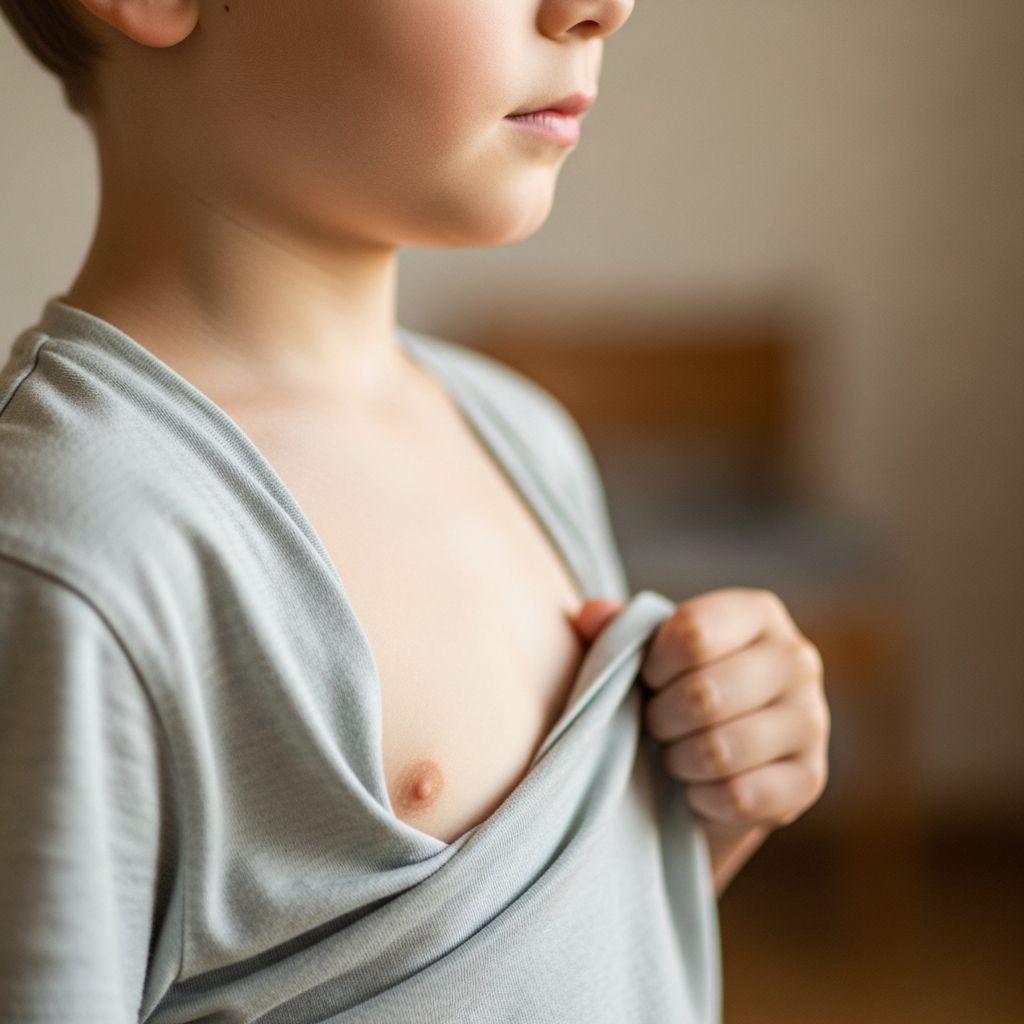
Poland syndrome is a congenital (present at birth) condition in which a child has missing or underdeveloped muscles on one side of the chest, often along with differences in the arm, hand, or fingers on the same side.
Although the physical changes can be very noticeable, many children with Poland syndrome grow up healthy, active, and able to do most of the same things as their peers.
What Exactly Is Poland Syndrome?
In Poland syndrome, part or all of the large chest muscle called the pectoralis major is absent or very small on one side of the body. This muscle normally helps bring the arm toward the body and move it across the chest. When it is missing or underdeveloped, the chest can look flat, sunken, or uneven on that side.
Doctors may also call the condition Poland anomaly, but both terms describe the same pattern of chest and hand differences.
| Area of the body | Possible differences |
|---|---|
| Chest | Missing or thin pectoralis major muscle, chest wall uneven or slightly sunken, breast or nipple smaller or absent on one side |
| Ribs | Short or missing ribs on the affected side, occasionally causing a deeper indentation of the chest |
| Shoulder/arm | Mild shortening of the arm, smaller shoulder or upper arm on the affected side |
| Hand | Short fingers, webbed or fused fingers, or fewer fingers on the same side as the chest changes |
How Common Is Poland Syndrome?
Poland syndrome is considered a rare condition. Estimates vary, but research suggests that it affects roughly 1 in 20,000 to 1 in 30,000 newborns. It:
- Usually affects only one side of the body (unilateral).
- More often involves the right side than the left.
- Appears more frequently in boys than in girls.
Because some children have only mild changes, the diagnosis may not be made until later in childhood or even at puberty, when the chest wall and breasts develop.
What Causes Poland Syndrome?
The exact cause is not fully understood, but most experts believe it is related to a problem with blood flow in early pregnancy. During weeks 5–7 of fetal development, small arteries near the collarbone supply blood to the developing chest wall and upper limb. If this blood supply is reduced or briefly blocked, the muscles, ribs, and hand structures on that side may not form completely.
Important points about causes:
- In most cases, Poland syndrome is not inherited and does not run in families.
- There is usually no action by the parents that causes the condition; nothing in ordinary diet, daily activities, or routine medications has been proven to be responsible.
- Rarely, there may be a genetic contribution in a small number of families, but no single gene explains most cases.
Some studies have explored links between Poland syndrome and certain pregnancy exposures, such as smoking or specific medications, but these associations are not fully confirmed and do not explain all cases.
Signs and Symptoms Parents May Notice
Poland syndrome can range from very mild to quite obvious. Some babies show clear chest differences at birth, while others are diagnosed later. Common signs include:
Chest and Breast Differences
- Flat or less developed chest on one side.
- Missing or thin chest muscle near the armpit or sternum.
- Breast or nipple that is smaller, higher, lower, or missing on the affected side.
- Less underarm hair on that side after puberty.
Rib and Chest Wall Changes
- Ribs that are shorter, misshapen, or absent on the affected side.
- Chest may look sunken or caved in, especially during growth spurts.
- Occasionally, these rib changes can contribute to breathing problems, especially if severe.
Arm, Hand, and Finger Differences
- Short fingers (brachydactyly) on the same side as the chest changes.
- Webbing or fusion between two or more fingers (syndactyly).
- Missing fingers or an overall smaller hand.
- Mild shortening of the forearm or differences in the bones of the radius or ulna.
Less Common Associated Problems
Most children with Poland syndrome are otherwise healthy. However, a small number may have:
- Heart or lung differences related to the chest wall shape.
- Kidney or urinary system abnormalities.
- Other limb or facial differences, sometimes overlapping with other rare syndromes.
How Is Poland Syndrome Diagnosed?
Diagnosis usually begins with a careful physical exam. A pediatrician, medical geneticist, or pediatric surgeon will look for the typical pattern of chest muscle absence and hand changes on the same side.
Depending on what they find, the care team may recommend:
- Imaging tests such as chest X-ray, ultrasound, or MRI to see the chest muscles, ribs, and internal organs more clearly.
- Hand X-rays to understand which bones and joints are involved before planning surgery.
- Heart and kidney evaluations (like echocardiogram or renal ultrasound) if there are concerns about internal organ differences.
Genetic testing is not always necessary, but may be considered if the child has additional features that suggest a broader genetic condition.
Does Poland Syndrome Affect Growth and Movement?
Many children with Poland syndrome have normal strength and movement in everyday life, especially when the hand is mildly affected. Other muscles around the shoulder and chest can often compensate for the missing pectoral muscle.
Possible effects include:
- Slightly reduced strength when pushing, pulling, or doing intense upper body sports on the affected side.
- Limited grip or fine motor skills if the hand has short or fused fingers.
- Differences in appearance that may bother the child more than any physical limitation, especially during adolescence.
Physical and occupational therapists can help children build strength, adapt activities, and develop fine motor skills to stay active and independent.
Treatment Options: When Is Surgery Helpful?
Treatment is tailored to the child’s specific needs. Many children do not need urgent treatment in infancy and are simply followed over time. Decisions about surgery are usually based on:
- How severe the chest and hand differences are.
- Whether breathing or heart function is affected.
- The child’s age, growth, and emotional readiness.
- The family’s goals regarding function and appearance.
Chest Wall and Breast Reconstruction
Chest reconstruction is often considered later in childhood or the teenage years, when the chest has grown more fully. Possible procedures include:
- Using a muscle flap from another area (such as the back muscle) to build up the chest contour.
- Placing custom implants or temporary tissue expanders to even out the chest wall.
- Breast reconstruction or augmentation on the affected side in girls, sometimes coordinated with care for the opposite side for better symmetry.
- Rib grafting or other techniques when there is a major chest wall defect impacting protection of the heart and lungs.
Hand and Finger Surgery
Hand surgery, if needed, is usually done earlier in childhood to support development of hand function. Procedures may include:
- Separating webbed or fused fingers (syndactyly release).
- Reconstructing joints or bones to improve grasp and pinch.
- Using tendon transfers or other techniques to optimize movement when muscles or tendons are missing.
A pediatric hand surgeon and occupational therapist often work closely together to plan surgery and guide recovery.
Non-Surgical Support
Some children and families choose not to pursue surgery or prefer to wait. Helpful non-surgical supports can include:
- Physical therapy to build strength, posture, and shoulder stability.
- Occupational therapy to improve fine motor skills and daily activities.
- Custom padding or prosthetic devices inside clothing or swimwear to reduce visible asymmetry.
- Counseling or support groups to address self-esteem, body image, and social worries.
Living Day-to-Day With Poland Syndrome
Most children with Poland syndrome can participate in school, sports, and hobbies with few restrictions. The main challenges are often social and emotional, particularly when chest or breast differences become more obvious during the teenage years.
Helping Your Child Cope Emotionally
- Use simple, honest language to explain the condition and reassure your child that it is not their fault.
- Focus on what their body can do rather than what looks different.
- Work with teachers, coaches, and school nurses so they understand your child’s needs and can provide support if teasing occurs.
- Consider connecting with other families who have children with Poland syndrome or similar chest wall differences.
Activity and Sports
Children are usually encouraged to be active. Depending on the severity of the condition:
- Most can safely join team sports, play instruments, and participate in physical education.
- Some may find certain activities (such as heavy weightlifting or high-level rock climbing) more challenging on the affected side, but many adapt very well.
- Before starting high-intensity sports, ask the child’s doctor if any extra evaluations are needed.
Follow-Up and Long-Term Outlook
The long-term outlook for children with Poland syndrome is generally very good. Lifespan is usually normal, and serious medical complications are uncommon, especially in milder cases.
Regular follow-up allows the care team to:
- Monitor growth and chest wall development.
- Reassess breathing, heart function, and posture as the child grows taller.
- Plan the timing of any surgical procedures, particularly during adolescence.
- Support mental health, body image, and social adjustment.
Because Poland syndrome can vary so widely, treatment plans are highly individualized. Centers that specialize in chest wall deformities or hand differences may offer coordinated care from surgeons, therapists, psychologists, and social workers.
Questions to Ask Your Child’s Care Team
Preparing questions ahead of appointments can help you feel more confident and informed. Consider asking:
- Which parts of my child’s chest and hand are affected?
- Are there any concerns about heart, lungs, or kidneys that we should check?
- What activities are safe now, and are any sports or exercises not recommended?
- What treatment options do you recommend now, and what might be considered later?
- How will surgery, if needed, affect my child’s growth and appearance?
- Can you refer us to physical/occupational therapy or counseling if we want it?
Frequently Asked Questions (FAQs)
Q: Is Poland syndrome dangerous or life-threatening?
A: For most children, Poland syndrome is not life-threatening and does not affect overall health or lifespan. Serious problems usually occur only when the rib and chest differences are very severe or when there are heart or lung issues as well.
Q: Can Poland syndrome be detected during pregnancy?
A: In some cases, detailed prenatal ultrasound or fetal MRI may pick up major chest wall or limb differences, but mild forms are often not visible before birth. Many families first learn about the condition after the baby is born.
Q: Will my other children have Poland syndrome too?
A: Poland syndrome is usually sporadic, meaning it occurs by chance and is not typically inherited. The chance of having another child with the condition is generally low, but a genetics professional can discuss this in more detail for your family.
Q: When is the best age for surgery?
A: Hand surgeries are often done in early childhood, before school age, to support function. Chest and breast reconstruction are more commonly planned in later childhood or adolescence, after much of the chest growth has occurred. The exact timing depends on your child’s individual situation.
Q: Can my child play sports or lift weights in the future?
A: Many people with Poland syndrome participate in a wide range of sports and physical activities. Your child may need some adaptation or training to build strength on the affected side, but with guidance from the care team, staying active is usually encouraged.
References
- Chest Wall Disorder: Poland Syndrome — Nemours KidsHealth. 2023-05-01. https://kidshealth.org/en/parents/poland-syndrome.html
- Poland Syndrome — Rare Awareness Rare Education (RARE Portal). 2022-11-15. https://www.rareportal.org.au/rare-disease/poland-syndrome/
- Poland Syndrome — StatPearls, NCBI Bookshelf. 2023-07-10. https://www.ncbi.nlm.nih.gov/books/NBK532259/
- Poland Syndrome — National Organization for Rare Disorders (NORD). 2022-03-01. https://rarediseases.org/rare-diseases/poland-syndrome/
- About Poland Anomaly — National Human Genome Research Institute (NHGRI). 2021-09-28. https://www.genome.gov/Genetic-Disorders/Poland-Anomaly