Netflix’s Unicorn Academy transports viewers to a dazzling realm where teenagers train alongside majestic unicorns to safeguard a floating magical island. Adapted from a beloved children’s book series, the show combines vibrant animation, heartfelt friendships, and epic battles against darkness, making it a must-watch for families seeking enchanting entertainment.
Entering the World of Unicorn Riders
The story centers on Sophia, a spirited girl with a passion for adventure, who discovers her invitation to Unicorn Academy is no ordinary school enrollment. This prestigious institution, perched on a mystical floating island, trains select students to bond with unicorns and protect the world’s magic from sinister forces. Sophia’s journey begins with wonder as she uncovers that unicorns are real and that her late father was a legendary rider who sacrificed himself to save the island five years earlier.
Upon arrival, Sophia bonds with Wildstar, the very unicorn her father once rode, forging an instant connection that propels her into the heart of the academy’s secrets. The Sapphire dorm becomes home to a tight-knit group of six riders, each paired with a unique unicorn possessing distinct magical abilities like fire, ice, weather control, and light manipulation. This setup creates a dynamic ensemble where personal growth and group harmony drive the narrative forward.
Core Characters and Their Unicorns
The protagonists shine through their relatable personalities and evolving relationships:
- Sophia and Wildstar: The newcomer overcomes her fear of deep connections, embracing her destined role with bravery and curiosity.
- Ava and Leaf: Ava’s intense loyalty to friendships mirrors traits seen in other animated heroines, leading to dramatic arcs centered on forgiveness and trust.
- Other Riders: The diverse group includes tech-savvy inventors, athletic competitors, and artistic dreamers, each contributing unique strengths during challenges.
These bonds extend beyond humans; the unicorns exhibit playful, intelligent behaviors that deepen emotional stakes. When riders sync with their partners, rainbow streaks appear in their hair, symbolizing unity and unlocking powerful magic—a visually striking motif that enhances the show’s appeal.
Plot Overview: Season 1 Highlights
Season 1 unfolds across a premiere movie and eight episodes, weaving a continuous storyline rather than standalone tales. The riders face Ravenzella, a vengeful witch defeated by Sophia’s father years ago. Her return unleashes ‘grim magic’—shadowy creatures, rock crocodiles, and destructive spells—threatening the academy’s safety.
Key conflicts include dorm rivalries, bonding trials, and high-stakes defenses of the island. Episodes explore themes like overcoming personal doubts, the value of teamwork, and listening to one’s inner calling. While perils arise, such as magical vines trapping foes or boulders diverted mid-air, resolutions emphasize clever magic over harm, keeping action family-friendly.
| Episode Arc | Main Challenge | Lesson Learned |
|---|---|---|
| Premiere | Initial bonding and Ravenzella’s first strike | Embracing destiny |
| Mid-Season | Friendship tests in Sapphire dorm | Forgiveness and communication |
| Finale | Ultimate island defense | Teamwork triumphs over evil |
Visual Spectacle and Animation Style
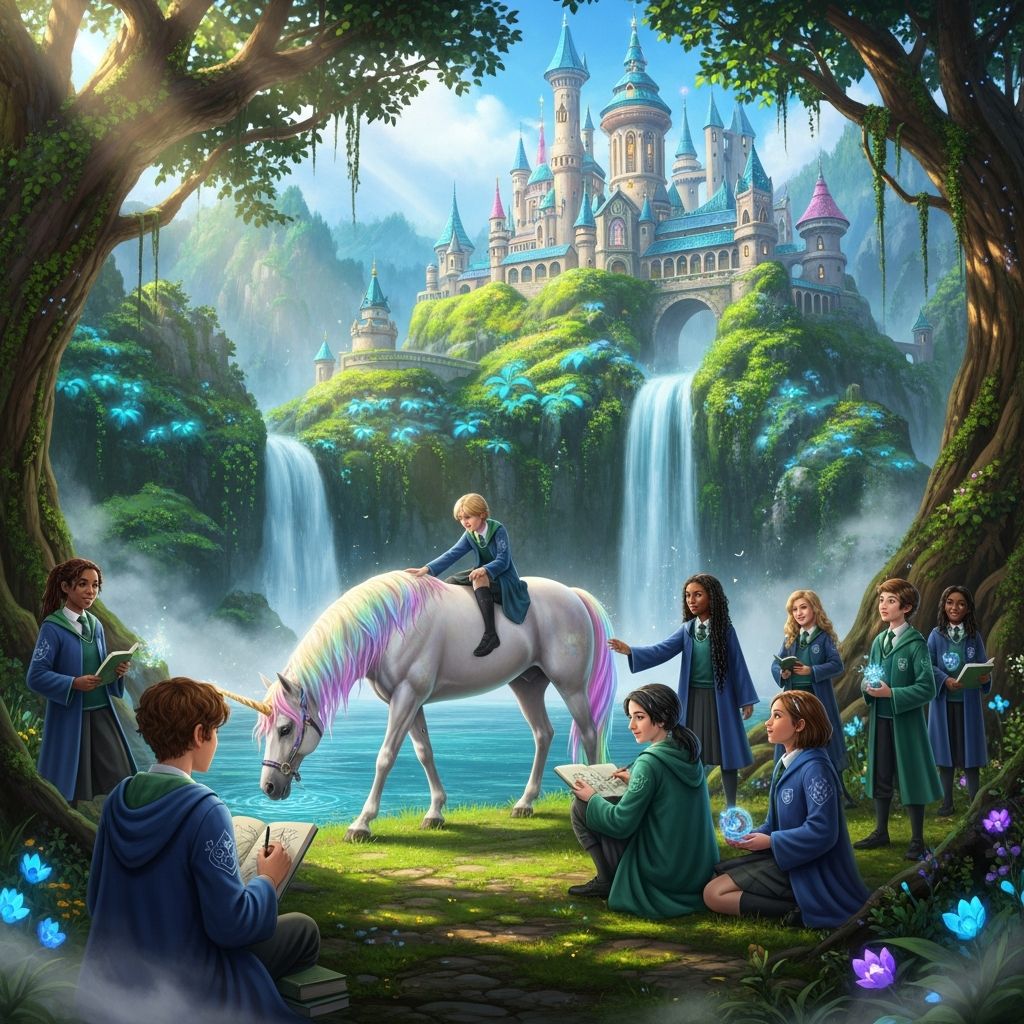
Unicorn Academy dazzles with its CGI animation, featuring a palette of bright pinks, blues, purples, and endless sparkles. The academy’s architecture—a grand castle on a levitating island—evokes wonder, complete with flying boats for transport and glowing portals. Unicorns’ rainbow magic beams light up battles, reminiscent of classic fantasy effects but polished for modern screens.
Though some prefer traditional 2D for fluidity, the 3D models allow intricate details like shimmering manes and dynamic flight sequences. Character designs promote diversity in appearance and background, with vibrant hair transformations adding a fun, magical flair that’s instantly recognizable. This aesthetic provides a psychedelic escape, perfect for igniting imaginations in young viewers.
Themes of Destiny, Friendship, and Rebellion
At its core, the series celebrates friendship and teamwork, showing how riders’ collaborations defeat threats that individuals cannot. Songs about ‘fate fairies’ and ‘trusting destiny’ underscore following one’s heart to bond with unicorns, blending whimsy with motivational messages.
However, themes of rebellion warrant note: Sophia frequently bends rules, sneaking out despite parental or teacher warnings, often rewarded for her boldness. Educators occasionally endorse breaking norms with phrases like ‘rules are meant to be broken,’ potentially modeling risky behavior. Positive elements include strong mother-daughter bonds and growth through vulnerability.
Occult undertones appear via magic systems, fate guidance, and witch battles, framed as good versus evil without graphic violence. No injuries occur, but eerie villains and shadows might unsettle sensitive children.
Strengths and Areas for Improvement
Strengths:
- Captivating world-building with a school full of potential (though focused on one dorm).
- Relatable teen drama balanced with magical highs.
- Empowering messages for girls on leadership and bonds.
Weaknesses:
- Ravenzella lacks depth, serving as a generic antagonist without clear motives, unlike more nuanced foes in similar shows.
- Conflicts often resolve via simple talks, underutilizing the rich setting.
- Limited background characters suggest budget constraints, narrowing the school vibe.
Who Should Watch Unicorn Academy?
Aimed at ages 8-12, it suits fans of magical girl series like Winx Club, offering nostalgia for parents and fresh thrills for kids. Elementary viewers may grasp basics, but older ones appreciate drama. Families praising adventure and morals will enjoy it, though previews help gauge scariness. Runtime per episode (around 25 minutes) fits quick family sessions.
Frequently Asked Questions (FAQs)
What age group is Unicorn Academy suitable for?
Best for children 8-12, with caution for younger ones due to mild peril and dark magic themes. Parental guidance recommended.
Is Unicorn Academy based on books?
Yes, it’s adapted from a children’s book series, expanding the lore into animated adventures.
Does the show have violence?
Light magical battles occur with no injuries; creatures are dispelled non-violently, but visuals may frighten toddlers.
Are there positive role models?
Characters promote friendship, bravery, and teamwork, though rebellion elements need discussion.
What’s the animation like?
CGI with vibrant, sparkly effects highlighting unicorns and magic in a floating island school.
Why Unicorn Academy Captivates Families
Beyond sparkles, the series fosters discussions on destiny versus choice, true friendship, and rule-following. Its blend of empowerment, visuals, and morals makes it enduring Netflix fare. Future seasons could expand the world, deepening villains and lore for even greater impact.
In a landscape of preschool fluff, Unicorn Academy bridges to tween stories with substance, proving magic endures when tied to heart.
References
- Review: Unicorn Academy (Netflix) — The Princess Blog. 2023-11-01. https://www.theprincessblog.org/2023/11/review-unicorn-academy-netflix.html
- Unicorn Academy – Plugged In — Plugged In. N/A. https://www.pluggedin.com/tv-reviews/unicorn-academy/
- THE UNICORN ACADEMY: Chapter 3: “Legendary Summer” — Movieguide. N/A. https://www.movieguide.org/reviews/the-unicorn-academy-chapter-3-legendary-summer.html