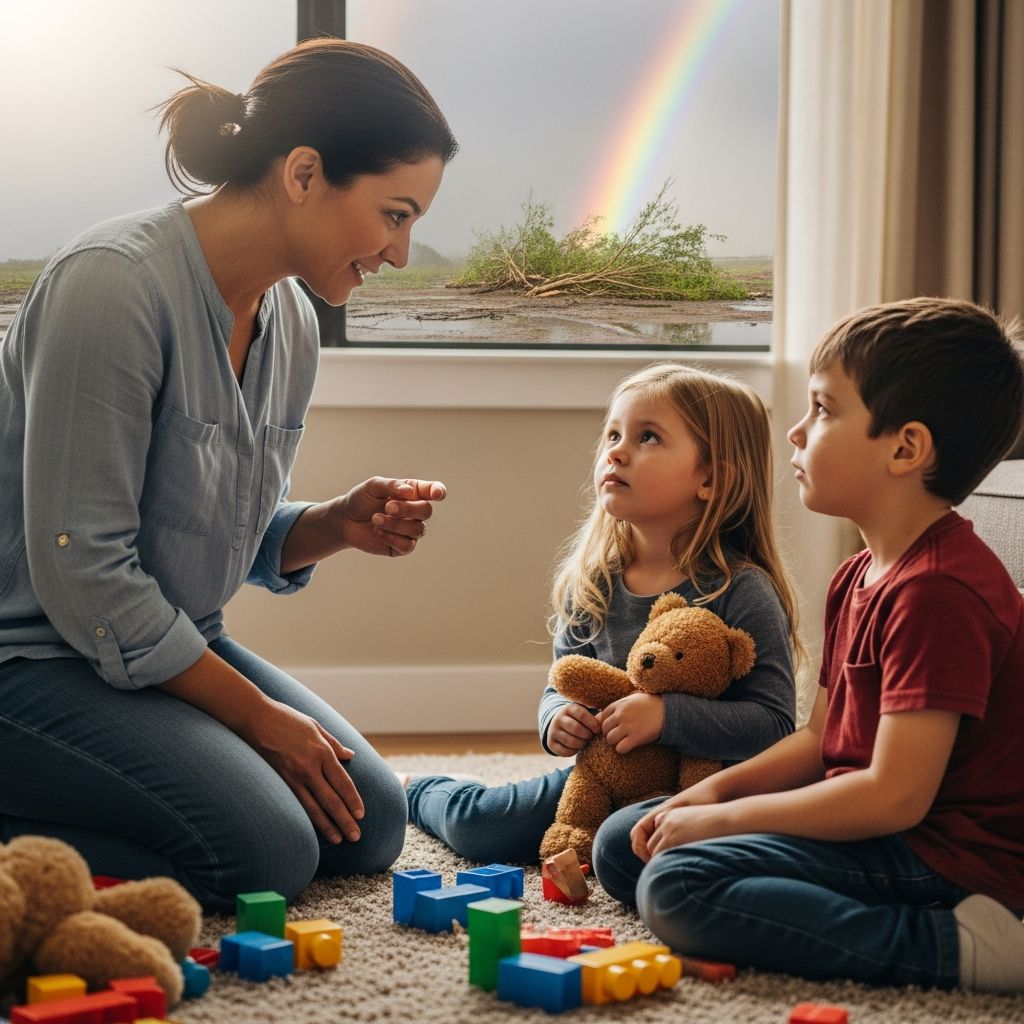
Every child arrives in the world needing to feel loved, not for what they do, but simply for who they are. Unconditional love is the steady message, “You are worth loving, even when your behavior needs to change.” This kind of love becomes a lifelong inner anchor that shapes how children see themselves, others, and the world.
Many parents want to be loving but get stuck when their child talks back, ignores rules, or melts down over small things. It is easy to slip into conditional messages: “If you do what I want, then I am warm; if not, I pull away.” The good news is that unconditional love is not a personality trait; it is a daily practice made up of small, repeatable choices.
What Unconditional Love Really Means
Unconditional love is the commitment to care for, protect, and value your child regardless of mood, mistakes, or performance. It does not mean ignoring misbehavior or pretending everything is fine. Instead, it separates the worth of the child from the quality of the behavior.
Parents often confuse unconditional love with indulgence. In reality, unconditional love becomes strongest when paired with clear boundaries: the child feels deeply accepted as a person, while still learning that actions have consequences.
Key Features of Unconditional Love
- Loving presence: Staying emotionally available, even when your child is upset or misbehaving.
- Stable message: Communicating “You are good” while still correcting “That choice is not okay.”
- No performance-based approval: Praising effort and growth instead of tying worth to grades, trophies, or behavior charts.
- Repair after conflict: Returning to warmth and connection once a problem is addressed, instead of holding grudges.
Why Children Crave Unconditional Love
Children are wired to look to their caregivers for emotional safety. When a parent’s love feels unpredictable—warm one moment, cold the next—kids often grow anxious, clingy, or defiant, because they are trying to secure that connection.
In contrast, when love feels steady, children are more able to explore, take age-appropriate risks, admit mistakes, and learn from them. They know that a bad day or poor choice does not erase their place in the family.
How Conditional Love Shows Up (Often Quietly)
- Withdrawing attention or affection when your child disappoints you.
- Using phrases like “good boy/girl” only when they please you.
- Comparing one child favorably to another to push for better performance.
- Allowing your mood to hinge on your child’s grades, manners, or achievements.
Most parents fall into these habits not out of cruelty, but out of stress, fear, or the way they were raised. Becoming aware of these patterns is the first step toward a healthier way of connecting.
Unconditional Love vs. Permissiveness
One of the biggest myths is that unconditional love means letting kids do whatever they want. In reality, children feel safest when they are loved consistently and guided firmly.
Think of unconditional love as the “climate” and boundaries as the “fence.” The climate is warm and nurturing; the fence is clear, predictable, and respectful.
| Style | Message the Child Hears | Likely Outcome Over Time |
|---|---|---|
| Authoritarian (strict, low warmth) | “You are acceptable only when you obey.” | Fear, hidden rebellion, shame, or people-pleasing. |
| Permissive (high warmth, few limits) | “You are loved, and your impulses run the show.” | Impulsivity, entitlement, difficulty handling frustration. |
| Detached (low warmth, low guidance) | “You are mostly on your own.” | Insecurity, emotional numbness, attention-seeking behavior. |
| Lovingly firm (high warmth, clear limits) | “You are loved no matter what, and I will guide you.” | Confidence, resilience, respect for others and self. |
Benefits of Unconditional Love for Children
Consistent, non-judgmental love is not a “soft” extra; it is a core ingredient of healthy development. Over time, it shapes the way children handle stress, relationships, and setbacks.
1. Stronger Sense of Self-Worth
Children who feel loved for who they are tend to talk to themselves more kindly and take more appropriate risks. They trust that a failure on a test or a rough game does not define them.
- They attempt challenging tasks instead of avoiding them.
- They bounce back faster after embarrassment or disappointment.
- They are less likely to seek approval through dangerous behavior.
2. Better Emotional Regulation
When a parent stays calm and connected during a child’s storm, the child gradually learns to calm themselves. The parent’s nervous system acts as a template: “This is what it feels like to be upset and still be okay.”
Over time, children who regularly experience this kind of co-regulation can:
- Put words to feelings instead of exploding or shutting down.
- Wait longer before acting on impulses.
- Apologize and repair relationships more easily.
3. Deeper Parent–Child Bond
A child who experiences unconditional love learns that home is a place of emotional refuge. This makes it more likely that they will turn to parents—not just peers—when facing bullying, peer pressure, or heartbreak.
- Conversations become more honest because the child expects empathy, not immediate judgment.
- Teenagers are more willing to share their mistakes when they trust that love will not be withdrawn.
4. Healthier Long-Term Relationships
The way a child is loved becomes the blueprint for how they will later treat partners, friends, and eventually their own children. Children raised with warm guidance are more likely to respect boundaries and express care directly.
By learning early that love and accountability can coexist, they do not confuse cruelty with passion or control with concern. They expect mutual respect and are more likely to give it in return.
Practicing Unconditional Love in Daily Life
Unconditional love does not depend on grand gestures. It is built in a hundred small micro-moments throughout the day that silently answer the question, “Am I still loved right now?”
Daily Habits That Communicate “You Matter”
- Intentional eye contact: Look up from your phone when your child talks. Even a brief moment of focused attention can make them feel valued.
- Warm greetings and goodbyes: Make a ritual of a hug, special handshake, or short phrase when leaving and returning.
- Daily check-ins: Ask open questions such as “What was the best and hardest part of your day?” and listen without rushing to fix.
- Affection on ordinary days: Offer hugs, back rubs, or a gentle hand on the shoulder even when nothing special has happened.
Separating the Child from the Behavior
One of the most powerful shifts a parent can make is to correct the behavior while affirming the child’s worth. This teaches children that mistakes are events, not identities.
Instead of saying, “You are so selfish,” try:
- “I see how badly you wanted that toy. It is not okay to hit to get it. Let’s find a different way.”
- “You are a kind person, and that comment was hurtful. How can you repair things with your sister?”
Using Limits as an Expression of Love
Clear limits are not the opposite of unconditional love; they are one of the ways that love shows up. A child may resist a boundary in the moment, but over time that structure communicates, “Your well-being matters so much that I will protect it, even when you are upset with me.”
Principles for Loving Limits
- Stay calm and firm: Speak in a steady tone, with few words, and repeat the limit as needed.
- Offer choices within the limit: “You may jump on the floor or outside, not on the couch. Which do you choose?”
- Connect first, then correct: Acknowledge the feeling before enforcing the rule: “You are furious that screen time is over. It is still time to turn it off.”
- Follow through consistently: Empty threats erode trust. Calm, predictable consequences build security.
Handling Big Feelings with Unconditional Love
Meltdowns, backtalk, and tears test every parent’s patience. These moments are also the most powerful opportunities to show that love is not fragile or easily withdrawn.
Step-by-Step Approach in Hard Moments
- Pause yourself first. Take one slow breath, unclench your jaw, and feel your feet on the floor before responding.
- Notice and name the feeling. “You look really frustrated,” or “You seem disappointed.” Naming emotion calms the brain.
- Offer physical or verbal comfort. “I am right here with you,” or “Can I give you a hug or sit nearby until you are ready to talk?”
- Revisit the limit after calming. Once emotions settle, briefly restate the rule and brainstorm better choices for next time.
- End with reconnection. Share a snack, a game, or a few minutes of one-on-one attention to signal that the relationship is intact.
Supporting Different Ages with Unconditional Love
The core need—to feel loved and accepted—does not change with age, but how you express that love must adapt. A toddler, school-aged child, and teenager all ask the same question in different ways: “Am I still loved as I grow and change?”
| Stage | What the Child Most Needs to Feel | Practical Ways to Show Love |
|---|---|---|
| Toddlers and preschoolers | “You are safe with me, even when you are upset.” | Hold them during tantrums, keep routines predictable, offer simple choices, and use gentle touch often. |
| School-aged children | “You are valued for who you are, not just for what you do.” | Notice their efforts, not just results; attend their events when possible; spend one-on-one time doing what they enjoy. |
| Preteens and teens | “You are respected as you become more independent.” | Listen more than you lecture, invite their opinions, set collaborative rules, and show affection in ways they are comfortable with. |
When You Lose Your Cool: Repairing with Love
No parent responds perfectly all the time. Yelling, slamming a door, or saying something harsh does not erase unconditional love, but failing to repair can make a child internalize blame.
Repair is one of the most powerful tools a parent has. Coming back to your child and naming what went wrong shows them how to take responsibility without drowning in shame.
Elements of a Meaningful Repair
- Own your part clearly: “I shouted earlier. That was not okay.”
- Validate their experience: “You looked startled and hurt when I raised my voice.”
- Reaffirm your love: “I love you so much, even when we argue.”
- Share a plan: “Next time I am getting too mad, I will take a break before talking. You can remind me if you need to.”
Practical Scripts for Everyday Situations
Having a few phrases ready can make it easier to respond with love under pressure. You can adapt these to your own voice and your child’s age.
- When your child makes a mistake: “Everyone messes up sometimes. Let’s figure out how to fix this together.”
- When they fail a test or lose a game: “This result is disappointing, but it does not change how much you are loved. What did you learn from this experience?”
- When they speak disrespectfully: “I care about what you are feeling, and I will listen when you can talk to me respectfully. Let’s try again in a few minutes.”
- When they break a rule: “The rule still stands, and there will be a consequence. We will work through it together. You are more important to me than this mistake.”
Frequently Asked Questions
Does unconditional love mean my child never experiences consequences?
No. Unconditional love changes the spirit in which consequences are delivered, not the existence of consequences. Instead of punishing out of anger or revenge, you calmly enforce limits while making it clear that your care for your child is unwavering.
What if my child takes advantage of my kindness?
If a child seems to exploit your patience, the issue is usually not “too much love” but too few clear, consistent boundaries. Strengthen routines, expectations, and follow-through while continuing to speak and act with respect.
How can two parents align on unconditional love if we have different styles?
Begin by discussing the kind of emotional climate you want your child to remember: words, tone, and overall feeling. From there, agree on a few shared principles—such as no name-calling, no threats, and consistent follow-through—and support each other in small changes.
Can older kids or teens still benefit if we are starting late?
Yes. While early experiences leave a strong imprint, the nervous system remains capable of change throughout life. Teenagers in particular are highly sensitive to shifts in tone, respect, and reliability, and many will respond over time to genuine, consistent efforts.
How do I show unconditional love when my child’s behavior is genuinely harmful?
In high-risk situations, unconditional love may include seeking outside help, setting firm safety boundaries, or limiting certain freedoms. The core remains the same: clearly communicate that the behavior must change while making it equally clear that your concern and love will not disappear.
Building a Home Where Love Is the Constant
Becoming a parent who loves unconditionally is an ongoing process, not a finish line. Each time you pause, breathe, and choose connection over contempt, you are reshaping the emotional culture of your home.
Children who grow up held by steady love and firm guidance carry that security into classrooms, friendships, workplaces, and eventually their own families. The effort you invest today in practicing unconditional love becomes a quiet legacy that can outlast any single conflict, phase, or milestone.