Roseola is a very common viral infection in babies and young children that causes a sudden high fever followed by a pinkish rash. It often looks dramatic and can be frightening, but in most healthy children it is mild and goes away on its own with simple home care.
Understanding Roseola
Roseola is a childhood illness caused by specific viruses that infect many children during their first few years of life. After an initial period of high temperature, most children suddenly improve and then develop a short-lived rash on the body.
Because the rash appears after the fever breaks, parents often think a new problem has started when, in reality, the illness is already moving toward recovery.
Who Usually Gets Roseola?
Roseola mainly affects babies and toddlers, especially between about 6 months and 3 years of age. Younger infants are less likely to get it because they still carry some protective antibodies passed from the mother during pregnancy.
By preschool age, many children have already been infected at least once, often with such mild symptoms that the illness was never clearly identified as roseola.
Viruses Behind Roseola
Roseola is typically caused by human herpesviruses commonly referred to as types 6 and 7. These viruses belong to the same family as the herpes viruses that cause cold sores, but they behave very differently.
The strains that cause roseola do not cause genital herpes or cold sores, and once children recover, the virus stays quietly in the body without usually causing further problems in healthy people.
How Roseola Spreads
The viruses that cause roseola spread mainly through respiratory droplets and saliva. This means that coughing, sneezing, sharing utensils, or close contact such as kissing can pass the virus from one person to another.
Children are often contagious before anyone realizes they are sick because mild cold-like symptoms or the first day of fever can seem nonspecific. This makes roseola difficult to prevent in group settings like daycare.
Typical Course of Illness
Although each child is different, roseola usually follows a recognizable pattern. Knowing this pattern helps parents feel more prepared and less alarmed as symptoms change.
Step-by-step pattern
- Exposure to the virus, often from another child or adult with mild or no symptoms.
- Several days later, a sudden high fever begins, sometimes higher than 39–40°C (102–104°F).
- During the fever, children may seem irritable, tired, or want to drink and eat less than usual.
- Just as parents begin to worry most about the fever, it often drops quickly—sometimes within a few hours.
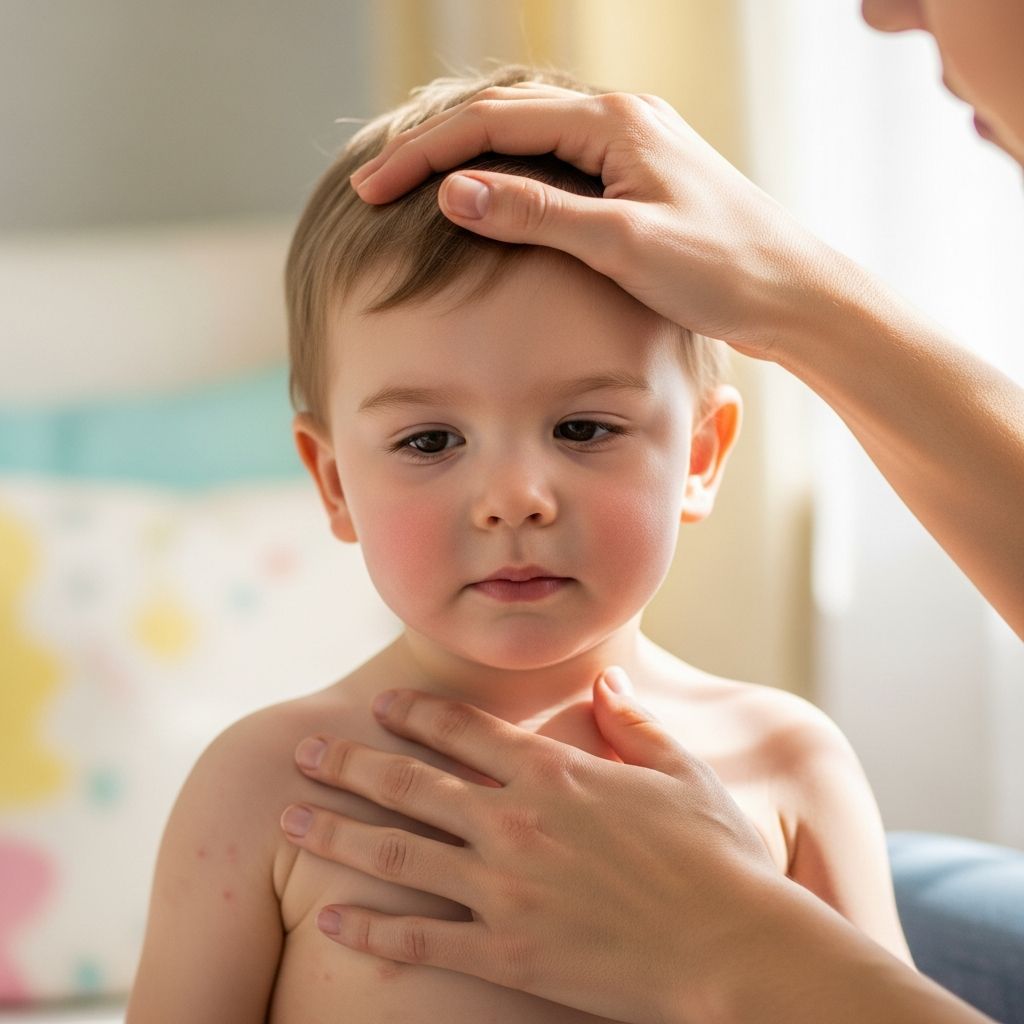
- Within about a day of the fever ending, a pink rash appears, first on the trunk and then spreading outward.
- The rash usually fades in one to three days while the child generally feels much better.
Symptoms: What Parents Will Notice
Roseola can look different from child to child, but some features are especially common. Because symptoms change over several days, it helps to think of them in two phases: the fever phase and the rash phase.
Fever phase
- Sudden onset of high temperature, often above 39°C (102°F).
- Fever usually lasts about 3–5 days.
- Mild cold-like symptoms such as runny nose, cough, or slight sore throat.
- Swollen glands in the neck or behind the ears.
- Decreased appetite and more fussiness or clinginess.
- Occasionally mild diarrhea or vomiting.
Rash phase
- Rash appears after the fever suddenly drops rather than while the temperature is high.
- Pink or red small spots or slightly raised bumps starting on the chest, belly, or back.
- Rash may spread to the neck, face, and arms, and less commonly to the legs.
- In children with darker skin tones, the rash may be more subtle and appear as faint red or purplish areas.
- Rash is usually not itchy and does not bother the child.
- Most children seem more comfortable and playful once the rash has appeared.
Quick Symptom Overview
| Stage | Main Features | How the Child Often Feels |
|---|---|---|
| Early infection | Possible runny nose, mild cough, or no obvious symptoms at all | Usually acts normal or slightly tired |
| Fever days | High fever for 3–5 days, sometimes with swollen neck glands and poor appetite | Can be fussy, sleepy, or irritable but may still play between fever spikes |
| Transition | Fever ends rather suddenly, child’s energy improves | Often seems much better, more active and interested in food and play |
| Rash days | Pink spots or fine bumps on trunk spreading outward, not usually itchy | Generally feels well or only mildly uncomfortable |
Febrile Seizures: A Scary but Often Short-Lived Complication
Because the fever in roseola can rise quickly and reach high numbers, some children experience a febrile seizure. This is a brief convulsion triggered by the rapid temperature increase rather than by a brain problem.
During a febrile seizure, a child may lose consciousness, stiffen, and have rhythmic jerking of the arms or legs for a few minutes. Although frightening to watch, most febrile seizures stop on their own and do not cause lasting harm.
What to do during a febrile seizure
- Lay the child gently on their side on a flat surface such as the floor or a firm bed.
- Remove any nearby hard or sharp objects to prevent injury.
- Do not place anything in the child’s mouth and do not try to hold the tongue.
- Look at a clock if you can and note how long the seizure lasts.
- Once the seizure stops, call your child’s healthcare provider or emergency services for guidance, especially if it is the first seizure or lasts more than a few minutes.
When to Call the Doctor or Seek Emergency Care
Many children with roseola recover at home without complications, but some signs mean the child needs urgent medical attention. Trust your instincts: if something feels seriously wrong, it is always appropriate to get help.
Call your child’s doctor soon (same day if possible) if:
- The fever lasts longer than 5 days.
- The child is drinking very little, has fewer wet diapers, or shows signs of dehydration such as a very dry mouth or no tears when crying.
- The rash looks unusual, causes pain or intense itching, or appears before the fever ends.
- Your child has another chronic medical condition or weakened immune system.
Seek emergency care immediately if:
- The child has trouble breathing, is breathing very fast, or you hear grunting with each breath.
- The lips, tongue, or face look bluish, very pale, or gray.
- The child is extremely sleepy, difficult to wake, confused, or not responding normally.
- A seizure lasts longer than about 5 minutes, repeats within 24 hours, or the child does not quickly recover alertness afterward.
- The rash does not fade when you press a clear glass against it, or you are worried about meningitis or another serious infection.
How Roseola Is Diagnosed
Healthcare providers typically diagnose roseola by listening to the illness history and examining the child. The combination of several days of high fever followed by rapid temperature improvement and a classic trunk-first rash strongly suggests roseola.
Blood tests or throat swabs are rarely needed in otherwise healthy children, unless the doctor suspects another cause for the fever or rash.
Treatment: What Really Helps
Because roseola is caused by a virus, antibiotics do not help and are not recommended. The main goals of treatment are to keep the child comfortable, prevent dehydration, and watch for any warning signs of complications.
Fever and discomfort relief
- Use age-appropriate fever reducers recommended by your child’s doctor, such as acetaminophen or ibuprofen, to lower temperature and ease aches.
- Dress the child in light clothing and keep the room comfortably cool—not cold—to avoid overheating.
- A lukewarm sponge bath can provide comfort, but avoid cold baths or alcohol rubs, which can cause shivering and discomfort.
Hydration and nutrition
- Offer frequent small sips of water, breast milk, formula, or oral rehydration solutions.
- Do not force food; it is normal for appetite to decrease during illness, as long as the child is drinking enough.
- Watch diaper counts or bathroom trips to be sure your child is urinating regularly.
Home Care Checklist for Parents
Having a simple plan can reduce stress while caring for a sick child. The checklist below can serve as a quick reminder during the illness.
- Monitor your child’s temperature several times a day during the fever phase.
- Write down when fever-reducing medicines are given to avoid double dosing.
- Encourage rest but allow quiet play if the child feels up to it.
- Keep your child home from childcare or school while fever is present.
- Check the skin gently once or twice a day so you will notice when the rash appears.
- Note any worrisome symptoms, such as breathing changes or prolonged lack of urine, and contact your child’s doctor if they occur.
Is Roseola Contagious and When Can Kids Return to School?
Roseola is contagious, especially in the days before and during the fever. Once the fever has been gone for at least 24 hours without fever-reducing medicines and the child feels well enough to participate in activities, most can safely return to childcare or school.
Because children often spread the virus before symptoms appear, keeping a child home after the rash begins rarely prevents transmission that has already occurred. However, it does protect the recovering child from being exposed to new infections while still tired.
Prevention Tips for Families
There is currently no routine vaccine specifically for roseola, so prevention focuses on reducing the spread of respiratory droplets and saliva. While it is impossible to prevent all exposure, a few habits can lower risk.
- Encourage frequent handwashing, especially after wiping noses, changing diapers, or helping a child blow their nose.
- Avoid sharing cups, utensils, toothbrushes, or pacifiers between children.
- Teach children to sneeze or cough into a tissue or their elbow rather than into their hands.
- Keep sick children home from group activities while they have a fever or feel unwell.
Long-Term Outlook
For most healthy children, roseola is a one-time illness that resolves completely. The body’s immune system learns to recognize the virus, making future infections with the same strain less likely or very mild.
Children with weakened immune systems may be at higher risk for more prolonged illness, so their caregivers should work closely with a healthcare provider if roseola is suspected.
Frequently Asked Questions About Roseola
1. Can my child get roseola more than once?
Most children develop some immunity after infection, so repeated episodes with the same virus are uncommon. However, because more than one virus can cause a roseola-like illness, a child may experience a similar pattern of fever and rash again from a different strain.
2. Is roseola the same as measles?
No. Measles and roseola are completely different infections, even though they both include fever and rash. Measles is generally more serious, spreads very easily through the air, and is preventable through routine vaccination, while roseola is usually milder and caused by different viruses.
3. Does the rash from roseola leave scars?
The roseola rash usually fades without peeling, scarring, or changes in skin color. If you notice blisters, open sores, or a rash that looks bruised, contact your child’s healthcare provider since that pattern may signal a different condition.
4. Should I give fever medicine as soon as the temperature rises?
Fever itself is a sign that the immune system is working, but high temperatures can make children miserable. Most healthcare providers recommend treating the fever if the child is uncomfortable, cannot sleep, or has a history of febrile seizures, using the medicine and dose appropriate for the child’s age and weight.
5. Can adults catch roseola from children?
Many adults were exposed to the viruses that cause roseola during childhood and now have immunity. While it is still possible for an adult who never encountered the virus to become infected, this is less common and often causes only mild, nonspecific symptoms.
6. How can I tell if the rash is roseola or something more serious?
The timing of the rash—appearing after several days of high fever that suddenly resolves—is a key clue for roseola. If the rash appears while the fever is still very high, causes significant pain, forms blisters, or does not fade at all when pressed, have the child examined promptly.
Key Takeaways for Parents
- Roseola is a common viral illness in babies and young children characterized by several days of high fever followed by a brief pink rash.
- Most children recover fully with rest, fluids, and comfort care at home, without the need for antibiotics.
- Parents should watch for warning signs such as breathing difficulty, prolonged fever, dehydration, or unusual behavior and seek medical help if these occur.