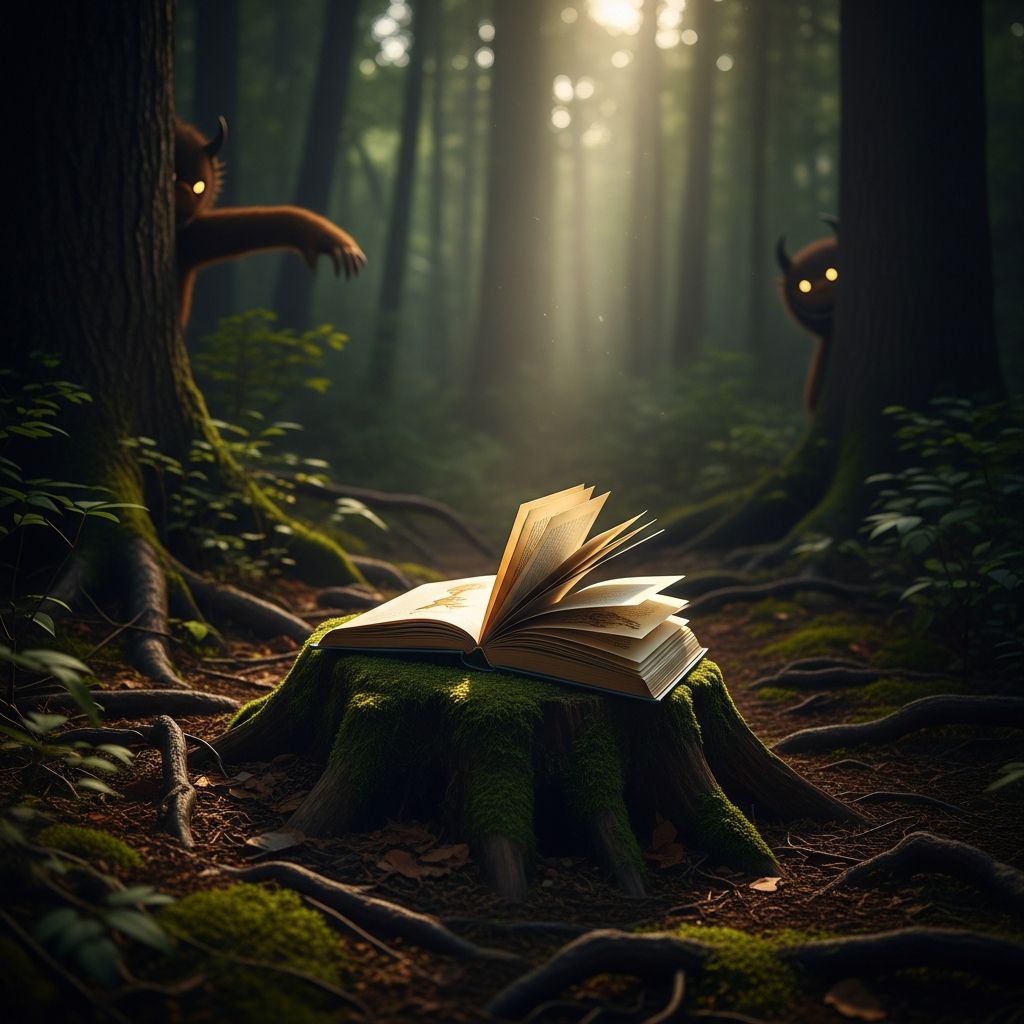
“Where the Wild Things Are” is one of those rare children’s books that adults never quite outgrow. It is short, spare, and deceptively simple, yet every page hints at questions the story never directly answers. Those gaps are precisely what keep readers returning to Max’s bedroom and to the land of the Wild Things, looking for clues about what is really happening and what it all means.
This article explores some of the most intriguing unanswered questions in the book—from the nature of Max’s journey to the status of the Wild Things themselves—and offers fresh interpretations for parents, educators, and anyone who still remembers what it feels like to be “wild.”
The Night Max Wore His Wolf Suit: What Starts the Storm?
The story opens with Max already mid-mischief, but the book never truly explains what came before. Is this an unusually bad night, or is Max often this out of control? That lack of backstory leaves readers wondering what kind of child Max really is: a chronically defiant troublemaker or a basically good kid having an overwhelming day.
For parents, this ambiguity mirrors real life. Many children go through phases where their behavior seems suddenly bigger, louder, and harder to contain. The book captures that sense of escalation without giving a neat cause. That missing explanation forces readers to confront an uncomfortable possibility: sometimes there is no single “why” behind a child’s meltdown, just a swirl of fatigue, frustration, and unnameable feeling.
- Max’s wolf suit may symbolize a mood or identity he steps into, rather than a one-time costume.
- The story leaves open whether Max’s home life is generally peaceful or often stormy.
- This uncertainty invites adults to reflect on how quickly they label a child as “good” or “bad.”
Is the Journey Real, Imagined, or Something In-Between?
One of the enduring puzzles is whether Max actually travels to another place or only journeys inward, in his mind. The bedroom forest that grows and the ocean that appears could be pure fantasy, a dream sequence, or a psychological metaphor for a child disappearing into his own emotional world.
The book never confirms any of these interpretations, and that silence is powerful. By refusing to declare the journey “just a dream,” the story grants Max’s inner life as much weight as any physical reality. For young readers, this quietly validates how huge feelings and imagination can feel—like sailing off to another world without ever leaving a small bedroom.
| Interpretation | What It Suggests | Implication for Parents |
|---|---|---|
| Literal adventure | Max physically travels to a magical land with monsters. | Children’s worlds may include realities adults cannot see or easily explain. |
| Dream or fantasy | The entire trip happens in Max’s imagination while he is alone in his room. | Solitude can become a safe space for processing anger and fear through play. |
| Emotional metaphor | The ocean and island represent the distance created by overwhelming feelings. | When children “check out,” they may be visiting an internal wilderness of emotion. |
Who (or What) Are the Wild Things?
The book never spells out exactly what the Wild Things are meant to represent. They are monstrous, affectionate, needy, and frightening all at once. They listen to Max, obey him, adore him, and then threaten to devour him the moment he tries to leave. This wild inconsistency is exactly what makes them so compelling.
Many readers interpret the Wild Things as personifications of Max’s feelings—especially his anger, desire for power, and fear of abandonment. Others see them as exaggerated versions of the grown-ups in his life, larger-than-life figures who can be both loving and terrifying depending on the moment. The text intentionally never chooses a single explanation, encouraging readers to project their own experience into these strange, shaggy creatures.
- The monsters may embody parts of Max’s personality he cannot express at home.
- Their size and noise echo how overwhelming emotions can feel from the inside.
- Their dependence on Max hints at the responsibility of managing one’s own inner world.
Why Do the Wild Things Make Max Their King So Quickly?
Another question the book never answers: why do the Wild Things immediately accept Max as their ruler? He appears out of nowhere, performs a brief gesture of courage, and is instantly crowned. The story skips the negotiation, the doubt, and the testing that would logically occur between a group of beasts and a new leader.
This sudden coronation may reflect how children experience power in fantasy. In a world where adults constantly set the rules, a child’s imagination is the only place where recognition and authority are instantaneous. The book leaves this dynamic unexplained, emphasizing how much Max craves not simply fun, but control—control over creatures who look bigger and scarier than he feels.
The Wild Rumpus: Celebration or Emotional Meltdown?
Readers often remember the wild rumpus as a joyful party, but the book offers almost no commentary on what it actually means. Is this sequence a healthy release of pent-up emotion, or a sign that Max is losing himself in chaos? The pictures suggest exhilaration, yet the wordless stretch can also feel strangely exhausting and a little sad.
Without dialogue or explanation, the book invites readers to project their own sense of wildness onto these images. For some, it is a fantasy of perfect freedom; for others, it resembles a tantrum drawn out too long. The unanswered question at the heart of the rumpus is whether it brings Max closer to peace—or simply delays the moment he has to face what he really feels.
What Makes Max Decide to Go Home?
Max’s decision to leave the Wild Things happens suddenly. One moment he is king, the next he is longing for “where someone loves him best of all.” The book gives no explicit trigger: no new conflict, no looming danger. That absence raises an important question: what quietly shifts inside Max that makes him trade unlimited power for a small bedroom and a single plate of food?
One possible answer is that Max discovers the limits of fantasy. Being king of chaos is intoxicating, but it does not offer comfort, security, or real relationship. The monsters obey him, but they cannot truly care for him. The book never spells this out, and that subtlety is what gives the moment its emotional force. Children and adults alike recognize the aching pull of home before they can fully explain why they want to go back.
- Max learns that being “the wildest of them all” can also feel lonely.
- His choice suggests a growing awareness that love matters more than control.
- The absence of a dramatic crisis underscores that small inner shifts can lead to big decisions.
Why Does His Supper Wait “Still Hot”?
One of the most quietly mysterious details is the supper waiting for Max in his room, still warm. The book leaves out everything that happened with his mother while he was gone—what she thought, how long he was in his room, whether she regretted sending him away. Instead, readers only see the result: a gesture of care that arrives without words, apology, or explanation.
That single image opens several questions the story never answers. Did Max’s mother calm down and decide to show compassion? Has she always responded like this after conflict, or is this a breakthrough moment? By leaving her entirely offstage, the book centers Max’s experience but also hints at the hidden emotional life of parents, who may be wrestling with their own storms in the next room.
Does Max Really Change?
The story ends before readers can see what Max does next. Does he eat his dinner in grateful silence, apologize, and go gently to bed? Or does he quickly slip back into mischief the next night, wolf suit and all? The book offers no reassurance that a single fantasy journey will permanently transform him.
This lack of a neat moral can be unsettling for adults used to stories where a character learns a clear lesson and changes accordingly. Yet it may be more honest to children’s reality. Growth is rarely linear. A child may understand something deeply one night and forget it in the heat of emotion the next. By not answering whether Max is now “good,” the book suggests that being loved does not depend on flawless behavior or immediate self-improvement.
- The open ending allows each reader to imagine their own future for Max.
- It shifts emphasis from moral instruction to emotional recognition.
- Parents are invited to focus less on permanent change and more on connection.
What Is the Book Saying About Childhood Anger?
Another question beneath the surface is how the book views children’s anger. Is Max’s behavior portrayed as simply bad, or as an understandable reaction to something unseen? The story never justifies his threats and defiance, but it also never shames him for having big feelings. Instead, it creates a space where those feelings can be visualized as large, noisy monsters that need to be faced, not erased.
By doing so, the book implies that anger is neither purely destructive nor purely empowering. It is wild, and wildness is complicated. The unanswered questions around punishment, forgiveness, and boundaries mirror the complexity most families feel when trying to set limits without crushing a child’s spirit.
Is the Parent–Child Relationship Healed?
At the end, readers see a hot meal but not a hug, a conversation, or even a shared glance. Does Max’s mother forgive him? Does he forgive her? Are they closer now, or simply back to the same uneasy balance as before?
The book’s refusal to show a tidy reconciliation challenges the expectation that every conflict must end in a clean emotional bow. In many families, healing after a blowup is subtle: a snack left on a table, a blanket tucked more carefully than usual, a softened tone. The story honors these quiet reparations without naming them, leaving parents and children to recognize their own patterns in the silence.
Why Do We Never Hear the Mother’s Voice Again?
After the opening clash, the mother disappears from the text entirely. Only her earlier words echo in Max’s mind, and her later actions are inferred from the supper she leaves behind. The story never allows her to explain herself, apologize, or lecture. She exists as a kind of offstage presence, powerful yet almost invisible.
This narrative choice leaves open many questions: What is she feeling during Max’s exile in his room? Is she angry, worried, guilty, or all of the above? By not answering, the book mirrors how children often experience adults—as unpredictable forces whose inner lives are largely mysterious. For parents, this can be a reminder that more of their emotional world is hidden from their children than they might realize.
The Role of Silence and Empty Spaces
One of the biggest “unanswered” elements in the book is not a plot point at all, but the way silence and visual space are used. Pages with little or no text invite the reader to linger and interpret, yet the book doesn’t explain how. Those gaps can feel like unanswered questions in themselves: What is Max thinking in those quiet panels? What are the monsters feeling as he stares them down?
The design of the story encourages children to fill in the blanks, giving them practice at making inferences and expressing what might be happening beneath the surface. For adults, those same gaps can feel like mirrors, reflecting back their own assumptions about childhood, authority, and emotional control.
How Parents Can Use These Unanswered Questions
Far from being a flaw, the story’s many loose ends can become powerful tools for conversation. Each unresolved detail is an invitation: to ask children what they think Max is feeling, what they imagine the mother is doing, or whether they believe the Wild Things are good, bad, or something in between.
Instead of treating the book as a moral lesson about behavior, adults can use it as a map of emotional landscapes. Talking about these mysteries together helps children build vocabulary for complex feelings, while also reassuring them that inner wildness does not cancel out love.
- Pause on the wordless pages and ask children what they see happening.
- Invite kids to imagine a scene where Max talks to his mother after he eats.
- Use the Wild Things as stand-ins for different emotions (anger, fear, excitement) and ask which one feels biggest right now.
FAQs About “Where the Wild Things Are” and Its Lingering Mysteries
Is “Where the Wild Things Are” meant to have a moral?
The book does not offer a straightforward moral in the traditional sense. Instead of a clear lesson like “be good and you will be rewarded,” it emphasizes emotional truth: that children can feel furious, powerful, and out of control yet still be loved and welcomed home.
Are the Wild Things supposed to be scary for kids?
The Wild Things are designed to be both frightening and lovable at the same time. Their big teeth and claws tap into common childhood fears, but their playful, needy behavior shows that they are not purely dangerous. This blend of fear and comfort allows children to explore scary ideas in a safe, contained way.
How can parents talk about Max’s bad behavior without shaming kids?
One effective approach is to separate Max’s actions from his worth. Adults can acknowledge that threatening to “eat someone up” is not okay while still emphasizing that feeling wild or angry is normal. Asking children what they might do differently—or what Max could say instead—turns the story into a problem-solving exercise rather than a lecture.
Why doesn’t the book show Max saying sorry?
The absence of an apology may feel surprising, but it shifts the focus from verbal resolution to relational repair. Instead of emphasizing the words “I’m sorry” as a magic fix, the ending suggests that reconnection can start quietly—through presence, shared space, and small acts of care. Families can still use the story to practice apologies while recognizing that real-life healing often begins before anyone speaks.
Is the book appropriate for very young children?
Many toddlers and preschoolers enjoy the pictures and rhythm of the story, even if they do not fully grasp its emotional complexity. For sensitive children, the monsters’ faces may be intense at first, so reading alongside a reassuring adult is helpful. The open-endedness of the tale makes it versatile; as children grow, they tend to find new layers of meaning in the same pages.