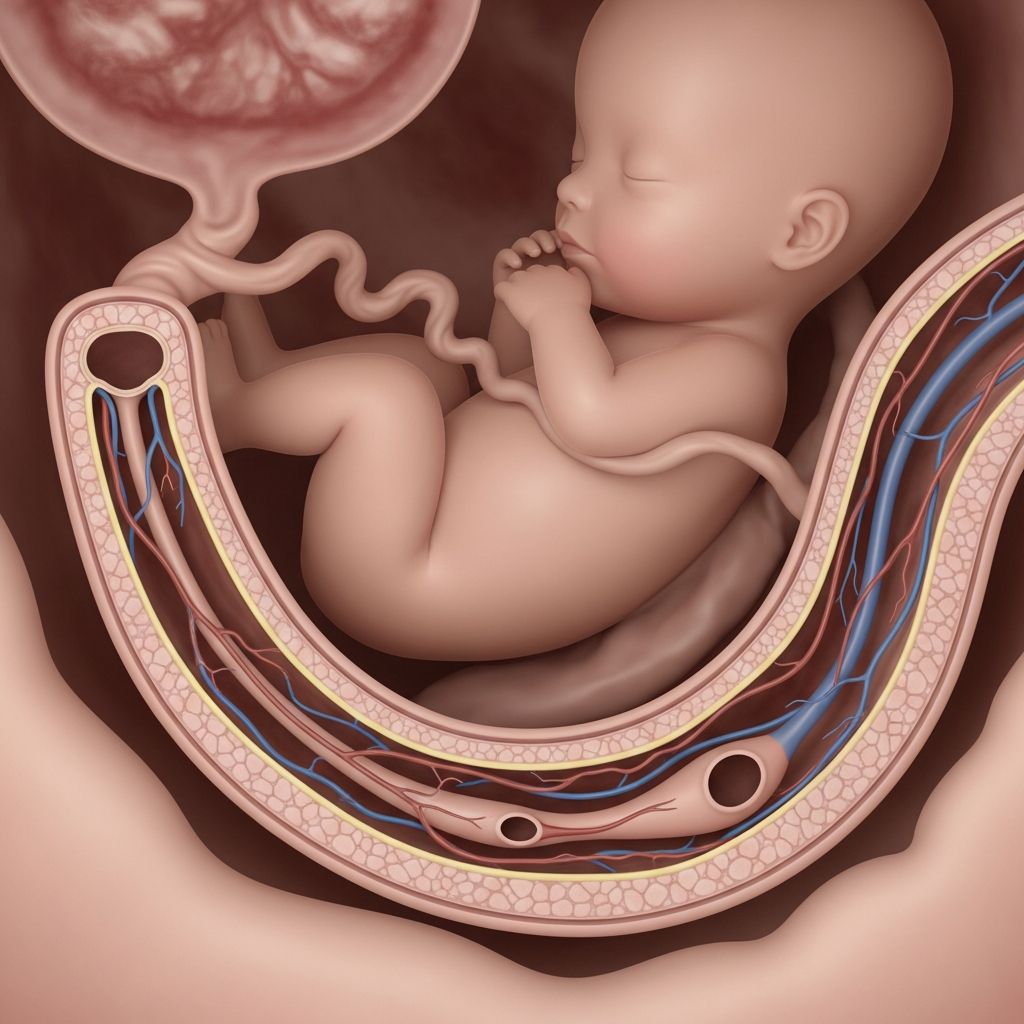
The umbilical cord serves as the essential lifeline connecting a developing fetus to the placenta, facilitating the transfer of oxygen, nutrients, and waste removal. In a typical pregnancy, this cord contains **three blood vessels**: two umbilical arteries and one umbilical vein. This configuration, known as the three-vessel cord, ensures efficient circulation and supports optimal fetal growth.
Anatomy and Function of the Normal Umbilical Cord
The umbilical cord forms early in pregnancy, around week 5, and grows to an average length of about 50-60 cm by term. It is protected by Wharton’s jelly, a gelatinous substance that shields the vessels from compression. The two arteries carry deoxygenated blood and waste from the fetus to the placenta, while the single vein returns oxygenated blood and nutrients to the fetus. This balanced vascular setup is crucial for preventing hypoxia and promoting steady development.
Ultrasound imaging during routine prenatal scans often reveals this three-vessel structure, confirming normal anatomy. Deviations, such as a reduction to two vessels, warrant closer monitoring due to potential implications for fetal health.
Common Variations: What is a Two-Vessel Umbilical Cord?
A two-vessel umbilical cord, or single umbilical artery (SUA), occurs when one artery is absent or underdeveloped. This affects approximately 0.5-1% of singleton pregnancies and up to 5% of twin gestations. The left umbilical artery is more commonly missing, though the exact reason remains unclear.
SUA can arise from several mechanisms:
- Failure of one artery to form during early embryogenesis.
- Regression or atrophy of an initially present artery later in development.
- Occlusion or blockage along the vessel’s length, often linked to circulatory disruptions.
While many cases of SUA result in healthy outcomes, it serves as a soft marker for potential fetal anomalies, prompting further evaluation.
Risk Factors Associated with Umbilical Cord Variations
Certain maternal and fetal factors elevate the likelihood of SUA or other cord anomalies. These include:
| Risk Factor | Description | Impact |
|---|---|---|
| Advanced maternal age (>40) | Women over 40 face higher chances. | Increased chromosomal risks. |
| Multiple pregnancies | Twins or more multiply the incidence 3-4 times. | Higher anomaly rates. |
| Maternal smoking or conditions | Diabetes, hypertension, smoking history. | Vascular development interference. |
| Female fetus | Slightly more common in girls. | Unknown precise mechanism. |
| Previous multiparity | History of multiple births. | Cumulative pregnancy effects. |
Even without these factors, SUA can occur spontaneously, underscoring the importance of routine screenings.
Potential Complications Linked to Single Umbilical Artery
Isolated SUA often leads to uncomplicated pregnancies, but it correlates with elevated risks in about 20-30% of cases. Associated issues may involve:
- Chromosomal abnormalities: Such as trisomy 18 (Edwards syndrome) or Down syndrome (trisomy 21).
- Structural defects: Cardiovascular (e.g., heart malformations), renal (kidney issues), gastrointestinal (e.g., esophageal atresia), or central nervous system anomalies.
- Growth concerns: Intrauterine growth restriction (IUGR), resulting in smaller-than-average babies.
- Maternal risks: Preeclampsia or preterm labor.
- Perinatal outcomes: Low Apgar scores or neonatal intensive care needs.
Regular monitoring mitigates these by enabling early intervention.
Diagnosing Umbilical Cord Anomalies During Pregnancy
Most detections happen via transabdominal ultrasound between 18-24 weeks, during the anatomy scan. Color Doppler imaging visualizes vessel count and flow patterns, distinguishing three-vessel from two-vessel cords.
Additional tests if SUA is found:
- Detailed anomaly scans for organ evaluation.
- Non-invasive prenatal testing (NIPT) for chromosomal screening.
- Amniocentesis or chorionic villus sampling (CVS) for definitive genetic analysis.
- Serial growth ultrasounds to track fetal development.
Early identification allows tailored care plans, improving outcomes.
Management Strategies for Pregnancies with Cord Variations
Upon confirming SUA, healthcare providers recommend:
- Enhanced surveillance: Biweekly ultrasounds from 28 weeks to monitor growth, amniotic fluid, and Doppler flows.
- Fetal echocardiography: Specialized heart ultrasound due to cardiac risks.
- Genetic counseling: To discuss testing options and implications.
- Lifestyle advice: Smoking cessation, blood pressure control, and balanced nutrition.
- Delivery planning: Possible induction at 37-39 weeks if growth lags, or closer monitoring in labor.
Multidisciplinary teams, including maternal-fetal medicine specialists, optimize care.
Other Notable Umbilical Cord Abnormalities
Beyond SUA, variations impact pregnancy:
- Velamentous cord insertion (VCI): Cord attaches to membranes rather than placenta, exposing vessels to rupture risk. Linked to IUGR, preterm birth, and stillbirth.
- Nuchal cord: Cord wraps around fetal neck, often benign but can cause variable decelerations in labor. Excess fluid or long cords increase odds.
- Vasa previa: Fetal vessels cross cervix, risking hemorrhage. Diagnosed via ultrasound; cesarean recommended.
- True knots: Cord loops tighten, potentially compromising flow. Associated with polyhydramnios.
Awareness aids proactive management.
Long-Term Prognosis and Outcomes
Over 75% of isolated SUA pregnancies end with healthy term babies. When anomalies coexist, prognosis varies by type and severity. Postnatal exams confirm vessel count and screen for issues. Most infants thrive with appropriate follow-up.
Parents report anxiety post-diagnosis, but education and monitoring alleviate concerns, fostering positive experiences.
Frequently Asked Questions About Umbilical Cord Structure
Is a two-vessel umbilical cord dangerous?
Not always; many babies are born healthy. It signals need for extra checks, but isolated cases often resolve well.
How common is single umbilical artery?
About 1% in singletons, higher in multiples (up to 5%).
Can lifestyle changes prevent SUA?
Not directly, but avoiding smoking, managing diabetes/hypertension, and prenatal care reduce risks.
What does a three-vessel cord indicate?
Normal anatomy, reassuring for fetal circulation and development.
Does SUA mean my baby will have birth defects?
No guarantee; about 70-80% are isolated with no issues. Testing clarifies risks.
When is delivery recommended for SUA pregnancies?
Often at term, but earlier if growth issues or other concerns arise.
This comprehensive guide empowers expectant parents with knowledge on umbilical cord health, promoting informed decisions and peace of mind throughout pregnancy.
References
- Single Umbilical Artery: Causes and Considerations During Pregnancy — Vinmec International Hospital. 2023. https://www.vinmec.com/eng/blog/single-artery-umbilical-cord-causes-and-considerations-in-pregnancy-en
- Single Umbilical Artery: Risks, Causes & Treatment — Apollo Cradle. 2023. https://www.apollocradle.com/blog/child-care/single-umbilical-artery-and-its-significance
- Anatomy, Abdomen and Pelvis: Umbilical Cord — StatPearls, NCBI Bookshelf. 2023-10-01. https://www.ncbi.nlm.nih.gov/books/NBK557389/
- What to Know About Umbilical Cord Problems — WebMD. 2023. https://www.webmd.com/baby/what-to-know-about-umbilical-cord-problems
- Umbilical Cord Conditions — March of Dimes. 2023. https://www.marchofdimes.org/find-support/topics/birth/umbilical-cord-conditions
- Velamentous Cord Insertion: Precautions, Outcomes & Risks — Cleveland Clinic. 2023. https://my.clevelandclinic.org/health/diseases/24111-velamentous-cord-insertion