Type 1 diabetes requires lifelong commitment to insulin administration, precise blood glucose monitoring, and healthy lifestyle choices to maintain stable levels and prevent serious health issues.
Understanding the Core of Type 1 Diabetes Care
In children diagnosed with type 1 diabetes, the pancreas no longer produces insulin, making external replacement vital for survival and well-being. Treatment revolves around mimicking the body’s natural insulin patterns through basal and bolus doses, alongside frequent glucose checks and carbohydrate management. Intensive control has proven to significantly lower risks of eye, kidney, and nerve damage, with benefits lasting decades as shown in long-term studies like the Diabetes Control and Complications Trial follow-up.
Parents play a pivotal role in coordinating care, often partnering with pediatric endocrinologists, dietitians, and educators to create personalized plans. Goals typically aim for pre-meal blood glucose between 80-130 mg/dL and under 180 mg/dL two hours post-meal, adjusting for age, activity, and illness.
Insulin: The Foundation of Daily Treatment
Insulin therapy forms the backbone, delivered via multiple daily injections (MDI) or continuous subcutaneous insulin infusion (CSII) through pumps. Basal insulin, such as glargine or degludec, provides steady coverage to suppress liver glucose output between meals and overnight, often once or twice daily. Bolus doses of rapid-acting insulins like lispro or aspart cover meals and correct highs.
Insulin pumps offer flexibility, delivering micro-doses continuously with manual boluses, reducing hypoglycemia risks compared to traditional methods. Newer analogs improve A1C levels and safety profiles over older human insulins. For children, pens simplify self-administration, fostering independence as they grow.
- Basal insulin: Long-acting, peakless, 20-24 hours duration.
- Bolus insulin: Fast-onset for meals, ultra-rapid options like Fiasp act within minutes.
- Mixing caution: Avoid combining certain types to preserve efficacy.
Advanced Glucose Monitoring Technologies
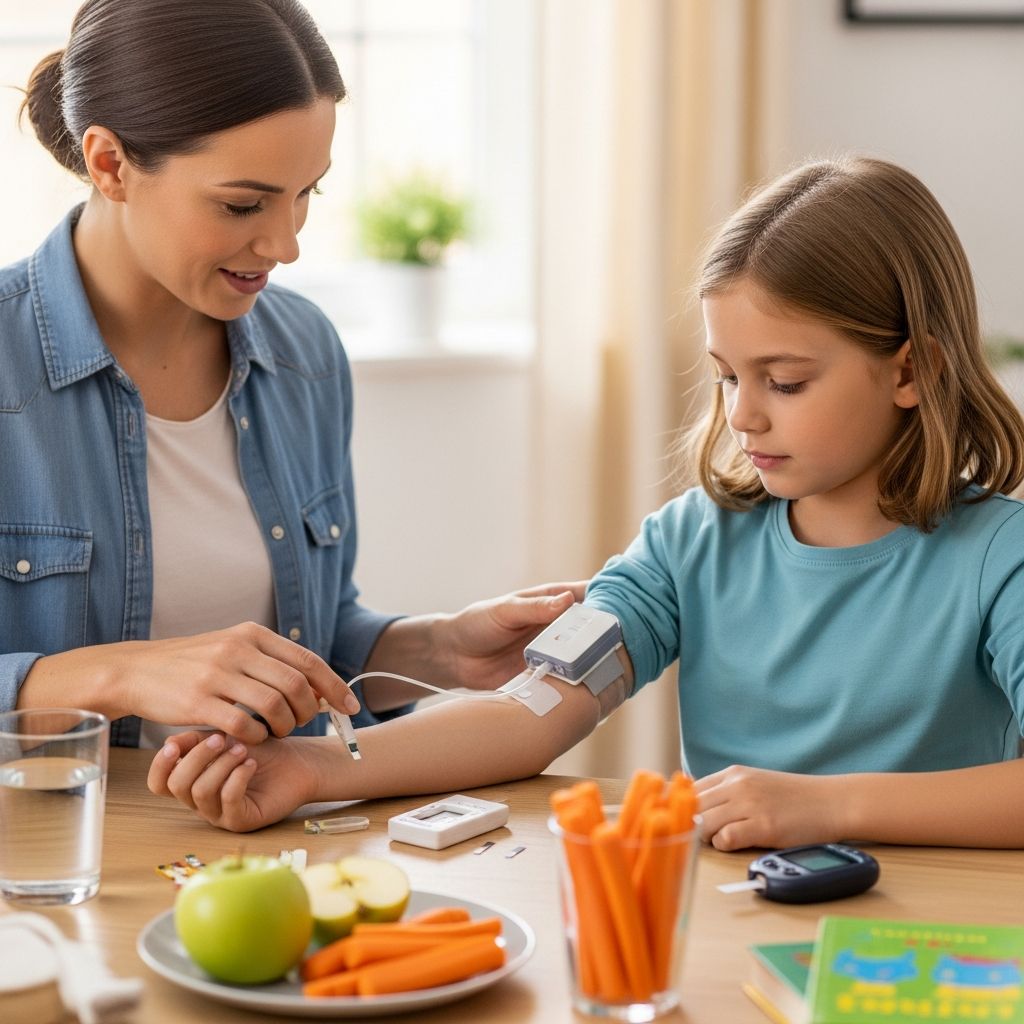
Regular blood glucose testing empowers families to make informed decisions. Traditional fingerstick meters remain accessible, but continuous glucose monitors (CGM) like Dexcom or Freestyle Libre provide real-time data every 5 minutes, alerting to highs/lows.
Sensor-augmented pumps integrate CGM with automated suspension features, pausing delivery if glucose drops critically. Hybrid closed-loop systems, or ‘artificial pancreas,’ use algorithms to adjust basal rates dynamically, easing management burdens. For kids, these reduce overnight lows and improve time-in-range, a key metric over A1C.
| Method | Frequency | Advantages | Considerations |
|---|---|---|---|
| Fingerstick SMBG | 4-10 times/day | Accurate, low cost | Painful, misses trends |
| CGM | Continuous | Trend arrows, alarms | Calibration needed, cost |
| Hybrid Loop | Automated | Reduces hypos | Requires oversight |
Nutrition Strategies for Stable Blood Sugar
Carbohydrate counting is essential, matching insulin to intake for predictable glucose responses. Families learn via education programs to estimate carbs in meals, using scales or apps initially. The plate method—half non-starchy veggies, quarter protein, quarter carbs—promotes balance.
Fiber-rich foods slow absorption, preventing spikes. Glycemic index guides choices: low-GI like oats over white bread. Hydration and portion control aid weight management, crucial as puberty alters insulin needs.
- Track carbs: 45-60g/meal typical for kids, individualized.
- Balance macros: Include healthy fats, proteins to stabilize.
- Snack smart: Pair carbs with protein to avoid crashes.
Physical Activity and Its Impact
Exercise enhances insulin sensitivity, but requires planning to avert lows. Check glucose before, during, and after activity; extra carbs or reduced insulin may be needed. Team sports demand CGM for safety. Aim for 60 minutes daily of moderate play, building endurance gradually.
Hypoglycemia risk peaks 4-12 hours post-exercise due to delayed effects. Educate schools on symptoms and glucagon use.
Handling Sick Days and Emergencies
Illness raises glucose via stress hormones; monitor hourly, test ketones if over 250 mg/dL. Adjust insulin upward, stay hydrated, follow ‘sick day rules’ from providers. Hypoglycemia unawareness needs urgent attention.
Glucagon nasal spray or injection reverses severe lows when child can’t swallow. All caregivers must be trained.
Preventing Long-Term Complications
Tight control slashes microvascular risks by up to 76%. Annual screenings: eyes (from age 10), kidneys (microalbumin), thyroid, celiac. Cardiovascular protection starts early—statins for adults over 40, BP meds if needed.
| Complication | Screening | Prevention |
|---|---|---|
| Retinopathy | Annual dilated exam | A1C <7% |
| Nephropathy | Urine albumin/creatinine | BP <130> |
| CVD | Lipids every 5 yrs | Statins if high risk |
Psychosocial Support and Family Dynamics
Diabetes burdens emotionally; burnout is common. Support groups, therapy, and camps build resilience. Teens face rebellion phases—gradual autonomy with safety nets.
Multidisciplinary teams address mental health, vital for adherence.
Emerging Therapies and Future Hope
Adjuncts like pramlintide slow gastric emptying, aiding post-meal control. SGLT inhibitors show promise off-label. Tzield delays onset in at-risk kids. Stem cell trials and immunotherapies aim for cures.
Frequently Asked Questions
What are ideal blood sugar targets for kids?
80-130 mg/dL pre-meal, <180 mg/dL post-meal; tighter for teens, looser for toddlers.
Can pumps replace all injections?
Yes for basal/bolus, but site changes every 2-3 days needed.
How to introduce carb counting?
Start with education, apps; aim for consistency.
What if my child has frequent lows?
Review patterns with CGM, adjust basal; consult provider.
Are there non-insulin options?
Adjuncts like pramlintide for select cases; research ongoing.
Empowering families with knowledge transforms type 1 diabetes from a challenge into a manageable aspect of childhood, fostering healthy, active lives.
References
- The Management of Type 1 Diabetes – Endotext — NCBI Bookshelf. 2023-10-24. https://www.ncbi.nlm.nih.gov/books/NBK279114/
- Type 1 Diabetes Treatment and Therapy — Breakthrough T1D. 2024-01-15. https://www.breakthrought1d.org/t1d-basics/treatments/
- Type 1 diabetes – Diagnosis and treatment — Mayo Clinic. 2025-05-10. https://www.mayoclinic.org/diseases-conditions/type-1-diabetes/diagnosis-treatment/drc-20353017
- Type 1 Diabetes: Management Strategies — AAFP. 2018-08-01. https://www.aafp.org/pubs/afp/issues/2018/0801/p154.html
- Type 1 Diabetes — Cleveland Clinic. 2024-11-20. https://my.clevelandclinic.org/health/diseases/21500-type-1-diabetes