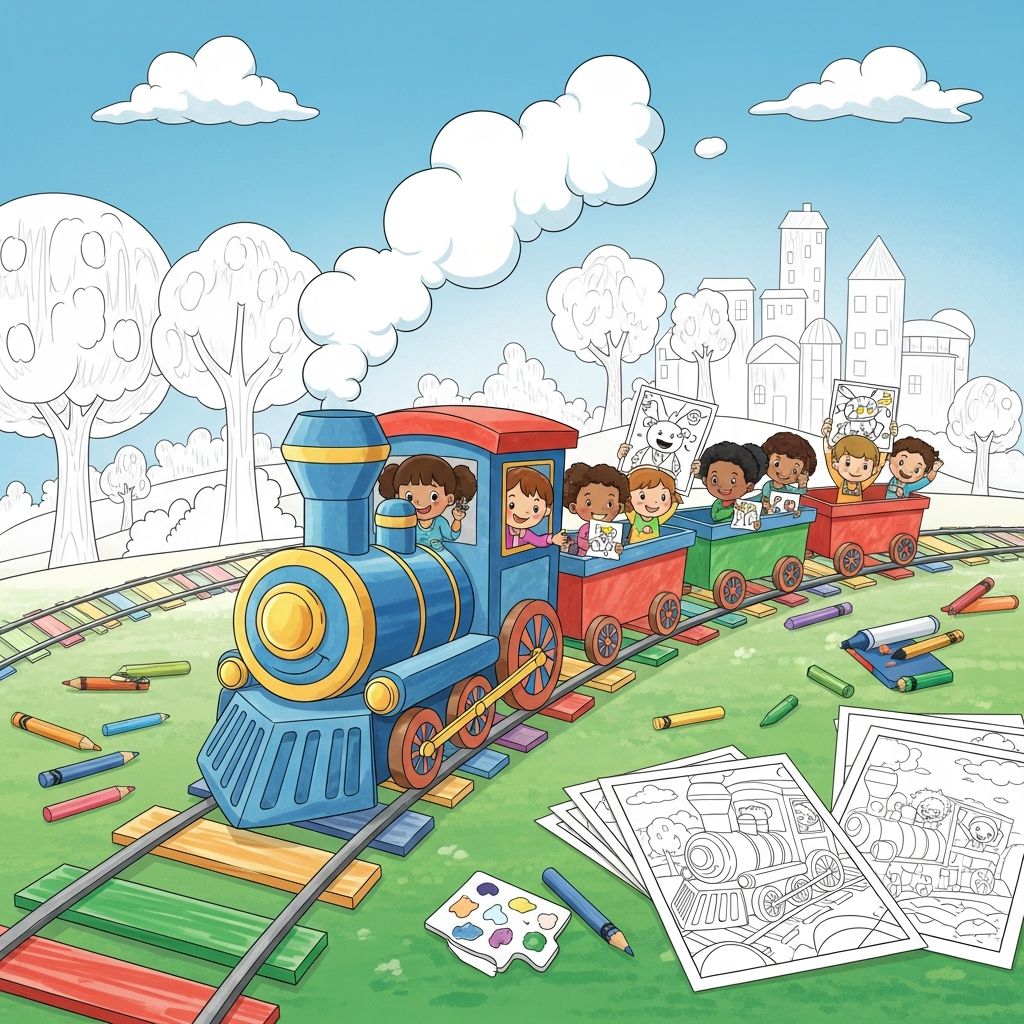
Train coloring pages are a simple activity with surprising benefits, turning a few crayons and a sheet of paper into a powerful tool for learning, calm, and creativity. Whether your child loves steam engines or speedy bullet trains, you can use that fascination to spark meaningful, screen-free play.
Why Kids Are Drawn to Trains
Trains combine movement, sound, and clear shapes, which naturally capture children’s attention and curiosity. The repeating lines of tracks, carriages, and wheels also give young artists an easy structure to color and decorate.
From a parent’s perspective, trains work beautifully as a theme because they can be adapted to almost any age, from chunky toddler engines to intricate city rail scenes for older kids. This flexibility makes train coloring pages a practical go-to activity for siblings and classrooms.
Hidden Benefits of Train Coloring Pages
Coloring trains is not only entertaining; it quietly supports several areas of development that will help your child at home and in school. The more regularly you offer coloring time, the more these skills build.
- Fine motor practice: Small hand and finger movements used to grip crayons, stay near the lines, and color tiny windows help prepare children for writing and self-care tasks like buttoning.
- Visual focus and patience: Completing a long train or detailed background encourages concentration, persistence, and satisfaction from finishing a task.
- Color recognition and planning: Choosing which color goes on each carriage or part of the track gives kids practice making decisions and remembering color names.
- Imagination and storytelling: A simple picture of a train can quickly become part of a larger story about where the train is headed, who is on board, and what happens along the way.
- Calm and emotional regulation: The steady back-and-forth motion of coloring can be soothing, offering a quiet break after busy or overwhelming moments.
Choosing the Right Train Coloring Pages by Age
Matching the complexity of a coloring page to your child’s age and skills keeps the activity fun instead of frustrating. Use the ideas below as a flexible guide rather than strict rules.
Toddlers (1–3 years)
Toddlers benefit most from very simple train shapes with wide open areas. At this stage, the goal is playful exploration, not staying in the lines or finishing the entire page.
- Look for one large engine or a short train with big windows and wheels.
- Offer thick crayons or washable markers that are easy to grip.
- Expect scribbles and color mixing; celebrate effort, not accuracy.
Preschoolers (3–5 years)
Preschoolers enjoy a little more detail and love to talk about what they are coloring. They are also ready for gentle challenges tied to early learning concepts.
- Choose trains with a few carriages, clear windows, and simple scenery like trees or a station.
- Introduce basic instructions such as “Can you color all the wheels the same color?”
- Add playful prompts like “Who is the driver?” to spark storytelling.
Early Elementary (5–8 years)
Children in this age group often enjoy more complex scenes and will stay engaged longer if the page includes interesting details or mini-challenges.
- Offer pages with long trains, tunnels, bridges, or city backgrounds.
- Encourage shading, patterns, and themed color schemes (for example, a winter train or a space train).
- Combine coloring with simple writing, such as giving the train a name and adding it to the page.
Types of Train Pages to Print
Different designs keep coloring sessions fresh and let you match the page to your child’s mood, interests, or an upcoming event. Rotating a few types of trains can make the activity feel new every time.
| Theme | What It Looks Like | Best For | Fun Extension Idea |
|---|---|---|---|
| Classic steam engine | Large engine, smokestack, puffs of smoke | Preschoolers and early elementary | Make cotton ball “steam” and glue it above the smokestack. |
| Modern passenger train | Sleek shape, many windows, straight tracks | Older kids who like cities and travel | Draw a map of the train’s route along the side of the page. |
| Cargo and freight train | Several boxcars, containers, open wagons | Kids who enjoy vehicles and building | Have your child label what each carriage is carrying. |
| Fantasy or holiday train | Decorations, snow, presents, or magical details | Seasonal crafts and parties | Turn finished pages into greeting cards or party decor. |
| Number or alphabet train | Each carriage shows a number, letter, or word | Early learning at home or in class | Ask your child to put the carriages in order or color vowels one color and consonants another. |
Turning Coloring Time into Learning Time
With a little intention, the same train picture can become a soft introduction to math, language, social skills, or even early science. You do not need worksheets or tests; simple questions and games are enough.
- Math ideas: Count carriages, wheels, or windows; compare which train is longer; or ask your child to draw “one more” carriage to practice addition.
- Language ideas: Name the parts of a train together, make up a destination, and encourage your child to tell the story of the passengers’ journey.
- Geography ideas: Talk about where trains might travel, such as mountains, countryside, or cities, and invite your child to add those landscapes to the background.
- Social-emotional ideas: Discuss who is riding the train and how they might feel, helping children explore empathy in a low-pressure way.
Creative Twists on Simple Train Pages
If your child says they are “bored” with coloring, a few creative twists can renew their interest. These variations also let you use the same pages in multiple ways.
- Color-and-build train: Print a engine and several separate carriages, let your child color them, then cut them out and tape them into a long train on the wall or fridge.
- Pattern carriages: Ask your child to fill each carriage with different patterns such as stripes, dots, stars, or zigzags.
- Ticket and schedule play: Have your child design and color pretend train tickets or a timetable to go with the coloring page.
- Mixed-media trains: Add craft supplies like stickers, foil, or bits of fabric to create shiny windows, textured tracks, or colorful cargo.
- Storybook pages: Combine several finished train pictures into a homemade book and ask your child to dictate or write a sentence under each page.
Printing and Organizing Your Train Pages
A small amount of planning makes it easier to offer coloring at the perfect moment—before dinner, on a rainy afternoon, or during quiet time. Building a simple “coloring station” can reduce stress for both kids and adults.
- Store printed pages in a folder or binder divided by age level or theme.
- Keep crayons, markers, and pencils in easy-to-open containers your child can access without help.
- Print duplicates of favorite pages so siblings can color the same train in different ways.
- Consider heavier paper if your child likes markers or wants to display finished artwork.
Using Train Coloring Pages in Groups
Train coloring sheets work especially well for playdates, parties, and classrooms because everyone can personalize the same basic theme. They also provide flexible structure when you want kids to settle but still interact.
- Stations in the classroom: Set up a “train art station” where children color and decorate pages, then add them to a bulletin-board train that grows over time.
- Birthday party activity: Offer a long banner of train carriages for guests to color, then hang the completed train as party decoration.
- Family project: Give each family member a carriage to color and connect them all to make a “family train” that showcases everyone’s style.
Encouraging Confidence, Not Perfection
Children sometimes worry about “messing up” a picture, especially when they see neat examples from adults or older siblings. Your response as a parent or teacher can shape how they feel about art and risk-taking for years to come.
- Focus on effort and ideas rather than staying inside every line.
- Ask open questions like “Tell me about your train” instead of pointing out supposed mistakes.
- Display finished pages at eye level so your child sees that their work matters.
- Remind children that every train can look different, and there is no single “right” way to color.
Frequently Asked Questions About Train Coloring Pages
How long should a coloring session last?
The ideal length depends on age and temperament, but many young children do well with 10–20 minutes at a time. Instead of aiming for a specific number of minutes, watch for signs of restlessness, such as fidgeting or wandering away, and end the session while your child is still mostly engaged.
What if my child only scribbles?
Scribbling is a healthy stage of art development and shows that your child is experimenting with motion and pressure. Offer a variety of colors, comment positively on their choices, and trust that more controlled coloring will come with time and repeated exposure.
Are digital coloring apps as good as paper pages?
Digital coloring can be fun, especially for travel, but paper pages give more direct practice with hand strength, coordination, and real-world messiness. Many families like to use both, saving traditional coloring pages for quieter moments at home when children can spread out their materials.
How can I reduce the mess from coloring?
Set clear boundaries from the start, such as “Crayons stay at the table” and “We color on paper, not on furniture.” A washable tablecloth, an easy-to-wipe tray, and a small bin for supplies can keep cleanup quick and manageable.
What should I do with finished train pages?
Finished pages can be displayed, turned into greeting cards, cut up for collages, or saved in a simple art folder. Letting your child choose a few favorites to keep while recycling the rest teaches both pride in their work and healthy decluttering habits.
With a basic printer, a handful of crayons, and a little imagination, train coloring pages can become a regular ritual that supports your child’s creativity, confidence, and love of learning. The key is not perfection, but connection—time spent side by side, watching colorful trains roll across the page.