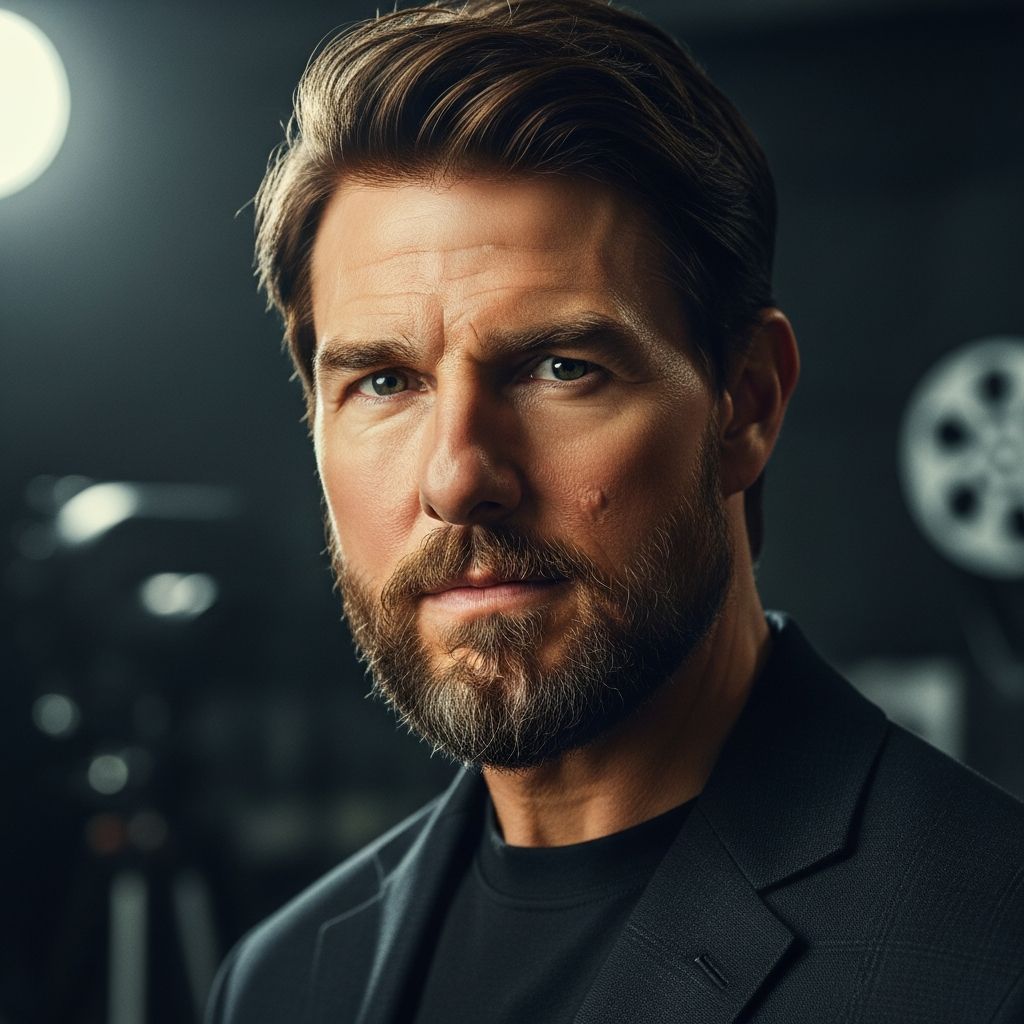
Tom Cruise is best known for a clean jawline, high-octane stunts, and a decades-long run as one of Hollywood’s most bankable stars. Yet scattered throughout his filmography are moments when he abandons the razor, and those beards do more than change how he looks – they change how his characters feel, move, and read on screen.
This article uses some of his most memorable facial-hair turns as inspiration to explore how a beard can redefine a character, what those styles signal, and how you can borrow elements of these looks in your own grooming routine.
Why Facial Hair Matters So Much on Screen
In movies, every visual choice is deliberate, including stubble. Costume designers, hair stylists, and directors use facial hair to communicate age, fatigue, status, morality, and even time period – often before a character utters a word. Facial hair can instantly signal:
- Life stage: a full beard can suggest maturity or a hard-lived past, while minimal stubble can feel youthful and impulsive.
- Social position: certain periods and cultures associated beards with wisdom, authority, or military rank.
- Psychological state: unkempt growth can imply crisis, captivity, or obsession; tailored lines suggest control and discipline.
- Genre and tone: stylized facial hair can push a character toward comedy, fantasy, or gritty realism.
Tom Cruise’s career conveniently offers a mini-history of modern screen beards: from Vietnam-era mustaches to stylized period war beards and unshaven spy-on-the-run looks.
From Baby-Faced Hero to Bearded Veteran
One of the most striking shifts in Cruise’s image comes when he steps away from his trademark clean-cut look and adopts fuller facial hair to inhabit men who have seen too much. In Vietnam-era drama and later war epics, the beard becomes a kind of emotional armor.
For example, when playing damaged veterans or disillusioned soldiers, the facial hair:
- Softens a famously boyish face, pushing him visually into a harsher adult world.
- Marks the passage of time – both within the story and across his real-life career.
- Signals disillusionment with institutions, contrasting with the polished faces of officers or officials.
This transformation reflects a broader cinematic tradition. War films often lean on beards and mustaches to distinguish front-line soldiers or veterans from civilians. The change in grooming helps audiences instantly recognize who has been to the battlefield and who has not.
Stubble, Scruff, and the Antihero Glow-Up
If a full beard can signal a life-altering journey, a shorter growth – the classic five o’clock shadow or controlled scruff – is the unofficial uniform of the modern antihero. Several Cruise characters use light facial hair as a visual shorthand for complexity: charming but dangerous, attractive but not entirely trustworthy.
| Facial Hair Level | Typical On-Screen Signal | Real-World Impression |
|---|---|---|
| Clean-shaven | Discipline, conventional heroism, conformity | Polished, professional, approachable |
| Five o’clock shadow | Edgy, impulsive, flirtatious, slightly reckless | Stylish, casual, low-effort cool |
| Medium scruff | Roguish, morally gray, streetwise | Confident, rugged, creative |
| Full beard | Experience, leadership, isolation, or crisis | Mature, assertive, potentially intense |
In sleek crime thrillers and darker dramas, Cruise’s stubble works in tandem with lighting and costume: muted colors, night exteriors, and urban backdrops all echo the ambiguity that the facial hair introduces.
Period Dramas and the Power of the Structured Beard
In historical epics, facial hair does double duty. It must feel authentic to the era while still flattering the actor and remaining consistent through months of shooting. When Cruise takes on roles set in nineteenth-century or early twentieth-century conflicts, his beard styles mirror period-accurate military and aristocratic grooming trends, such as structured mustache-and-beard combinations.
Costume and hair teams build these looks around three key constraints:
- Historical references: They draw from portraits, archival photographs, and military regulations from the era.
- Face shape: The beard must complement the actor’s bone structure and be readable in wide shots and close-ups.
- Stunt practicality: Hair must endure sweat, movement, and safety equipment without constant visible changes.
For Cruise’s more disciplined, battle-hardened characters in these settings, neatly trimmed full beards and defined mustaches lend a sense of earned authority – a contrast to the clean-shaven naivety often seen at the beginning of such stories.
Comedy, Prosthetics, and the Disguise Beard
Some of Cruise’s most surprising facial-hair moments come in pure comedy, where the beard is practically a costume piece in itself. Transformational roles have seen him buried under prosthetics, wild chest hair, and thick, sculpted beards that almost dare the audience to recognize him.
Behind these looks is serious technical work. In one notorious comedic role, makeup teams created full silicone appliances for head, neck, chest, and hands, then had artists painstakingly punch hairs in one at a time to build a convincing illusion of dense body hair. The result was a character almost unrecognizable from the usual Cruise persona.
These over-the-top appearances highlight another function of facial hair in film: it can act as a mask that lets familiar stars play against type – obnoxious, grotesque, or absurd – without fully collapsing their core screen identity.
Action Franchises and the Survival Beard
In long-running action franchises, a sudden beard or a patch of scruff often means only one thing: the hero has been off the grid. Cruise’s spy characters occasionally appear with rough, unshaven faces during sequences of imprisonment, hiding, or extended missions.
This kind of “survival beard” is usually:
- Medium length: long enough to show time has passed, short enough to keep continuity manageable.
- Uneven or patchy: to suggest lack of access to normal grooming tools.
- Strategically lit: to maintain the actor’s recognizability while still conveying hardship.
These transitional looks are so associated with danger and escape sequences that audiences instinctively understand the stakes the moment the hero’s face shows a week or two of growth.
What Tom Cruise’s Beards Reveal About Character
Across genres, Cruise’s facial hair choices track with clear story beats. If you map his characters’ journeys to their beard status, patterns emerge:
- Clean-shaven entry: Often marks the start of a journey, when the character is still aligned with institutions or ordinary life.
- Emerging stubble: Appears as the character encounters moral conflict, underground worlds, or psychological stress.
- Fully bearded phase: Signals transformation – captivity, exile, immersion in a new culture, or profound personal change.
- Return to clean-shaven (or tidier beard): Represents integration of new identity or a return to civilization on new terms.
This rhythm mirrors a well-known storytelling pattern – separation, initiation, and return – but visualized through grooming. Beard growth literally marks the time spent away from the old life.
Translating Movie Beards into Real-Life Styles
While few people need a battle-hardened samurai beard or an undercover-operative survival scruff, many men can borrow elements of Cruise’s screen looks to shape their own style. Dermatology and grooming research shows that with basic routine and products, most beards can be kept comfortable and healthy.
Step 1: Know Your Growth Pattern
Before choosing a look inspired by a favorite film, assess how your beard grows:
- Check where hair is dense vs. patchy on your cheeks, jaw, and neck.
- Note how long it takes to reach light stubble (usually 1–3 days) and medium scruff (about 7 days for many men).
- Decide whether your workplace or lifestyle can accommodate visible facial hair.
Patchy growth often works better with shorter scruff or a focus on mustache and chin, while dense coverage supports fuller, period-drama style beards.
Step 2: Match Style to Face Shape
Facial hair can visually rebalance your features.
- Round faces: Slightly longer hair on the chin and shorter on the cheeks can create the illusion of length.
- Long faces: Fuller cheeks and a less extended chin beard can prevent the face from looking even longer.
- Square jaws: Softer, slightly rounded beards can keep the overall impression from becoming too harsh.
Step 3: Basic Care Borrowed from the Pros
Film sets maintain continuity through regular trimming and targeted grooming. You can adapt a simpler version of that routine:
- Wash facial hair with a gentle cleanser or dedicated beard wash to avoid dryness.
- Use a light beard oil to reduce itch, soften hair, and improve shine.
- Comb or brush daily to train direction and prevent tangles.
- Trim edges around the neck and cheeks every few days to keep the shape deliberate.
According to dermatology guidance, moisturization and avoiding harsh soaps are key to preventing irritation beneath the beard.
Beards, Masculinity, and Cultural Shifts
The evolving facial hair of major male stars also reflects broader cultural attitudes about masculinity. In the 1980s and 1990s, the clean-shaven action hero dominated. Over time, film and television moved toward more varied portrayals of men: flawed, introspective, morally ambiguous. Beards and stubble visually reinforce that shift.
Academic analyses of war and historical films note that facial hair is often used to emphasize experience, authenticity, and distance from domestic life. Simultaneously, the resurgence of beard culture in the 2010s – from hipster barbershops to corporate-acceptable stubble – made rugged looks more mainstream off-screen, giving costume designers greater freedom to experiment without alienating audiences.
When Hair Continuity Becomes a Plot Point
Movie beards are not just thematic; they are a logistical challenge. Action films in particular may shoot out of sequence, over many months, and across multiple countries. Maintaining consistent beard length and density becomes a technical puzzle.
A famous example from another actor in the same franchise highlighted how beard growth can turn into a talking point when fans notice continuity changes during fast-paced scenes. Behind the scenes, performers and stylists sometimes resort to clip-on pieces, dyed stubble, or strategic shaving to match specific days of the story.
For actors like Cruise, whose roles often demand intense physicality and reshoots, facial-hair planning is part of pre-production: deciding when the character will be clean-shaven, how much time is implied to have passed between story beats, and how that will be reflected in their face.
Frequently Asked Questions
Why does Tom Cruise so often appear clean-shaven compared with some of his peers?
His longstanding screen persona is built around versatility, youthfulness, and recognizability. A clean-shaven look reads well in many genres and makes it easier to maintain continuity during complex action sequences. When he does grow facial hair, it usually serves a specific narrative purpose – indicating a time jump, cultural immersion, or a darker, more conflicted phase of the character.
Are movie beards usually real, or are they fake?
It depends on the role. For light stubble and practical medium beards, many actors grow their own facial hair and maintain it with on-set grooming. For extreme transformations – such as characters with radically different hairlines, chest hair, or unusual density – makeup teams often use prosthetics and individually applied hairs to achieve a controlled, repeatable look.
How long does it typically take to grow a beard like the ones seen in war or historical films?
Growth rates vary, but facial hair commonly grows about 1–1.25 centimeters per month. A medium-length, full beard suitable for a period-war look may require 6–8 weeks of growth, followed by careful shaping. Production schedules sometimes build in prep time specifically for this.
Can copying a movie beard really change how people perceive me?
Appearance research suggests that facial hair significantly influences how others rate traits like dominance, age, and attractiveness. A tidy beard can project maturity and confidence, whereas heavy stubble can feel more casual and rebellious. However, the impact also depends on context (workplace norms, culture) and how well the style suits your face and grooming habits.
Is heavy beard use in movies just a trend, or will it last?
While specific styles come and go, the underlying tool – using facial hair to signal personality and narrative shifts – is deeply embedded in visual storytelling and unlikely to disappear. As long as films explore complex, evolving male characters, beards and stubble will remain part of the cinematic toolkit.
References
- Tasker, Yvonne. “Soldiers’ Stories: Military Masculinity in Film.” — Duke University Press. 2011-01-01. https://www.dukeupress.edu/soldiers-stories
- Geraghty, Christine. “Re-examining Stardom: Questions of Texts, Bodies and Performance.” — Routledge. 2000-01-01. https://www.routledge.com/Re-examining-Stardom/Geraghty/p/book/9780415152898
- Trüeb, Ralph M. “Barbering and the biology of the beard.” — International Journal of Trichology. 2015-01-01. https://pubmed.ncbi.nlm.nih.gov/26903727/
- Harris, Bill. “The Making of Les Grossman: An Oral History.” — Grantland. 2013-07-30. https://grantland.com/features/the-making-of-les-grossman-an-oral-history/
- Dixson, Barnaby J. W., and Brooks, Robert C. “The role of facial hair in women’s perceptions of men’s attractiveness, health, masculinity and parenting abilities.” — Evolution & Human Behavior. 2013-09-01. https://doi.org/10.1016/j.evolhumbehav.2013.04.003