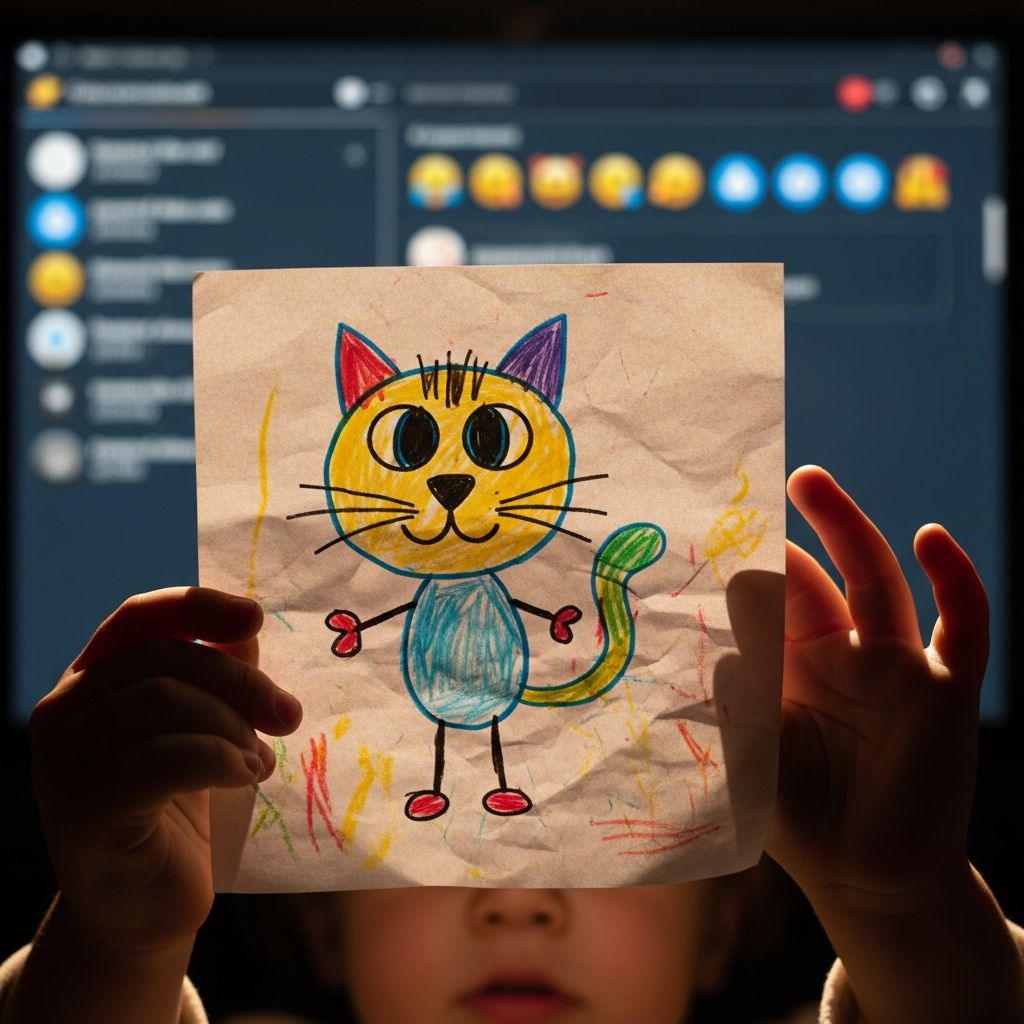
Every parent has at least one drawing on the fridge that is both completely unrecognizable and absolutely priceless. A toddler’s recent attempt at drawing a cat is the latest example, charming the internet not because it is perfect, but because it is so perfectly toddler.
The Viral Toddler Cat Drawing
In the now-viral moment, a young child proudly presented a drawing of a cat that looked more like a scribbly, wide-eyed creature from another planet than a graceful house pet. Yet the pride and confidence in the toddler’s work made the drawing instantly lovable.
Parents and viewers could immediately relate to that mix of effort, imagination, and chaos that defines early kid art. The drawing’s charm lies in how seriously the toddler took the task, even though the end result was hilariously off the mark.
- Exaggerated features like giant eyes or long stick legs made the drawing especially funny.
- The toddler’s earnest intention to draw a cat contrasted with the final image.
- Adults recognized their own kids’ artwork in the drawing’s wild proportions and unexpected shapes.
Why Imperfect Kid Art Feels ‘Spot-On’
Calling the drawing “spot-on” is part of the joke: it clearly does not look like a realistic cat, but it perfectly captures how toddlers see the world. At this age, children focus on what stands out most to them—maybe the tail, the ears, or the whiskers—while skipping details adults think are essential.
This gap between intention and outcome is exactly what makes the drawing feel so accurate to parents. It reflects the honest, unfiltered way young children process what they see, combining a few key details with a whole lot of imagination.
- Toddlers prioritize bold, simple shapes and lines instead of realistic anatomy.
- The drawing becomes a “spot-on” representation of a toddler’s perspective, not the animal itself.
- Parents often celebrate these quirky details as milestones of growth rather than artistic mistakes.
Parents’ Reactions and Relatable Humor
Once the drawing was shared online, parents flooded the comments with laughter, heart emojis, and their own stories of questionable masterpieces. Many felt seen, knowing they were not alone in pretending to “recognize” whatever their toddler had drawn.
This kind of shared humor builds a sense of community, reminding caregivers that early childhood is messy, funny, and far from picture-perfect. Instead of judging the quality of the drawing, viewers focused on the joy and pride behind it.
- Caregivers compared the drawing to creatures, cartoons, or abstract art.
- Some admitted they still have similar drawings saved from years ago.
- Others joked that the child might be an abstract artist in the making.
What Toddler Drawings Say About Development
While the cat drawing is hilarious, it also reflects important stages in early childhood development. By about two to four years old, children often create basic stick figures and symbolic shapes, using drawing as a way to test their motor skills and express what they know.
Even if the drawing looks nothing like a real cat, the act of trying to draw one involves planning, memory, and hand-eye coordination. Each attempt helps the child understand shapes, space, and cause and effect—vital building blocks for learning.
- Fine motor skills: Holding crayons or markers strengthens small muscles in the hands and fingers.
- Cognitive growth: Turning a mental image (a cat) into marks on paper supports symbolic thinking.
- Emotional expression: Children often put their feelings about pets and family into their drawings.
Cat Features Through a Toddler’s Eyes
Part of the humor in the toddler’s cat drawing is which features were exaggerated and which were forgotten. The child might have drawn a massive tail, huge circular eyes, or whiskers stretching far beyond the page, all while leaving out details like paws or a neck.
These ‘mistakes’ give clues about what stood out most when the child looked at a cat. If the family pet has striking eyes or a fluffy tail, those elements may become the whole focus of the artwork, overshadowing the rest of the body.
How Toddlers Break Down a Cat
| Cat Feature | Adult View | Toddler Drawing Style |
|---|---|---|
| Head | Proportional to body | Often huge circle with no neck |
| Eyes | Almond-shaped, moderate size | Round, oversized, sometimes filling most of the face |
| Whiskers | Thin, subtle lines | Long, straight lines shooting out from both sides |
| Tail | Curved, in proportion | Very long, stiff, or dramatically curved |
| Paws | Four distinct feet | Simple sticks or a single line for legs |
How to Respond When Your Child’s Drawing Is… Interesting
Many adults joke about how hard it is to guess what their toddler has drawn, but the way a parent responds matters. Children pay close attention to reactions, and excitement or encouragement can boost their confidence.
Even if the picture looks nothing like a cat (or any known living creature), simple, supportive comments help kids feel proud and eager to keep practicing. The goal is not to correct them, but to celebrate the effort and creativity.
- Ask open-ended questions like, “Tell me about your picture,” instead of guessing.
- Point out specific details you notice, such as colors, lines, or shapes.
- Display the artwork somewhere visible to show that it matters.
Turning Funny Art Into Family Memories
Moments like a hilariously off-model cat drawing quickly become part of family legend. Years later, parents may still have the picture saved in a keepsake box, scrapbook, or digital photo album, laughing about how “spot-on” it supposedly was.
These drawings capture a child’s personality in a way photos sometimes cannot. The strange shapes and bold lines preserve how the child saw the world at that exact age, making the art a time capsule of early imagination.
- Photograph or scan favorite drawings before the paper gets lost or damaged.
- Create a small gallery wall or rotating display in a hallway or playroom.
- Include captions with the age of the child and what they said the drawing was.
Why the Internet Loves Toddler Art
Part of the reason this cat drawing attracted so much attention is that it offered instant comic relief. In a feed full of polished photos and carefully staged posts, a wildly inaccurate but proudly presented cat sketch felt refreshingly real.
People enjoy seeing content that does not take itself too seriously, and toddler art fits perfectly into that space. It reminds adults that life with kids is not always tidy or filtered, but it is full of spontaneous joy.
- Funny kid drawings are easy to share and react to with friends and family.
- They balance out the pressure of perfection often seen on social media.
- They encourage parents to celebrate small, silly moments instead of chasing flawless images.
Supporting Your Child’s Artistic Curiosity
Stories like this one can inspire families to nurture their own children’s creativity. Providing simple materials and regular opportunities to draw or color sends the message that exploration and play are valued.
Even without formal lessons, toddlers who are free to experiment with lines, shapes, and colors gradually gain more control and confidence. The journey from unrecognizable cats to more detailed animals is a natural process that unfolds at each child’s pace.
- Offer crayons, washable markers, and large sheets of paper in a kid-friendly area.
- Resist the urge to correct or “fix” drawings; allow experimentation.
- Share in the excitement by drawing alongside your child occasionally.
Simple Activity: Drawing Your Own ‘Cat’ Together
Inspired by the viral cat drawing, families can create a playful drawing session at home. The idea is not to make perfect art, but to laugh together and see how differently each person imagines the same animal.
Parents can use this time to connect with their children, model a lighthearted attitude toward mistakes, and show that creativity is about having fun, not achieving flawless results.
- Gather paper and coloring supplies for everyone.
- Set a playful challenge: “Let’s all draw a cat!”
- Show the drawings at the end and talk about what you like in each one.
- Pick a favorite detail (like funny whiskers or a giant tail) to celebrate.
- Hang the drawings together as a mini cat gallery.
Frequently Asked Questions (FAQs)
1. Why do toddler drawings look so different from real animals?
Toddler drawings often look abstract because young children are still developing fine motor skills and spatial awareness. They choose this representation of a few standout features, leading to simplified or exaggerated images.
2. Should I correct my child when their drawing is “wrong”?
At this stage, it is usually more helpful to encourage rather than correct. Asking your child to explain their picture and praising specific details supports confidence and creativity, which matter more than accuracy.
3. How can I tell if my toddler’s drawing is age-appropriate?
Most toddlers begin with scribbles, then progress to basic shapes and stick figures. If your child is experimenting with lines, circles, and simple forms and seems engaged and curious, that is generally a positive developmental sign.
4. What is the best way to preserve funny or meaningful drawings?
You can store originals in folders, take photos, or scan the artwork to create digital albums. Some families also turn favorite pieces into printed books or framed wall art to keep those memories visible.
5. Why do people enjoy sharing toddler art online?
People enjoy sharing toddler art because it is genuine, funny, and highly relatable. These drawings capture the chaos and charm of early childhood, giving friends and strangers alike something lighthearted to smile about.
In the end, the toddler’s “spot-on” cat drawing is less about accuracy and more about joy, connection, and growth. It represents the magic of seeing the world through a child’s eyes—where even the wobbliest cat can become a cherished family masterpiece.