Most insect bites and stings in children are uncomfortable but not dangerous, and they can usually be treated at home with simple first-aid steps. However, some bites and stings can trigger serious allergic reactions or spread infections, so it is important for parents to know what to look for, how to treat symptoms safely, and when to call the doctor or emergency services.
Common Insects That Bite or Sting Kids
Different insects cause different types of reactions, but most fall into a few broad groups. Knowing what may have bitten or stung your child can help you decide what to do next.
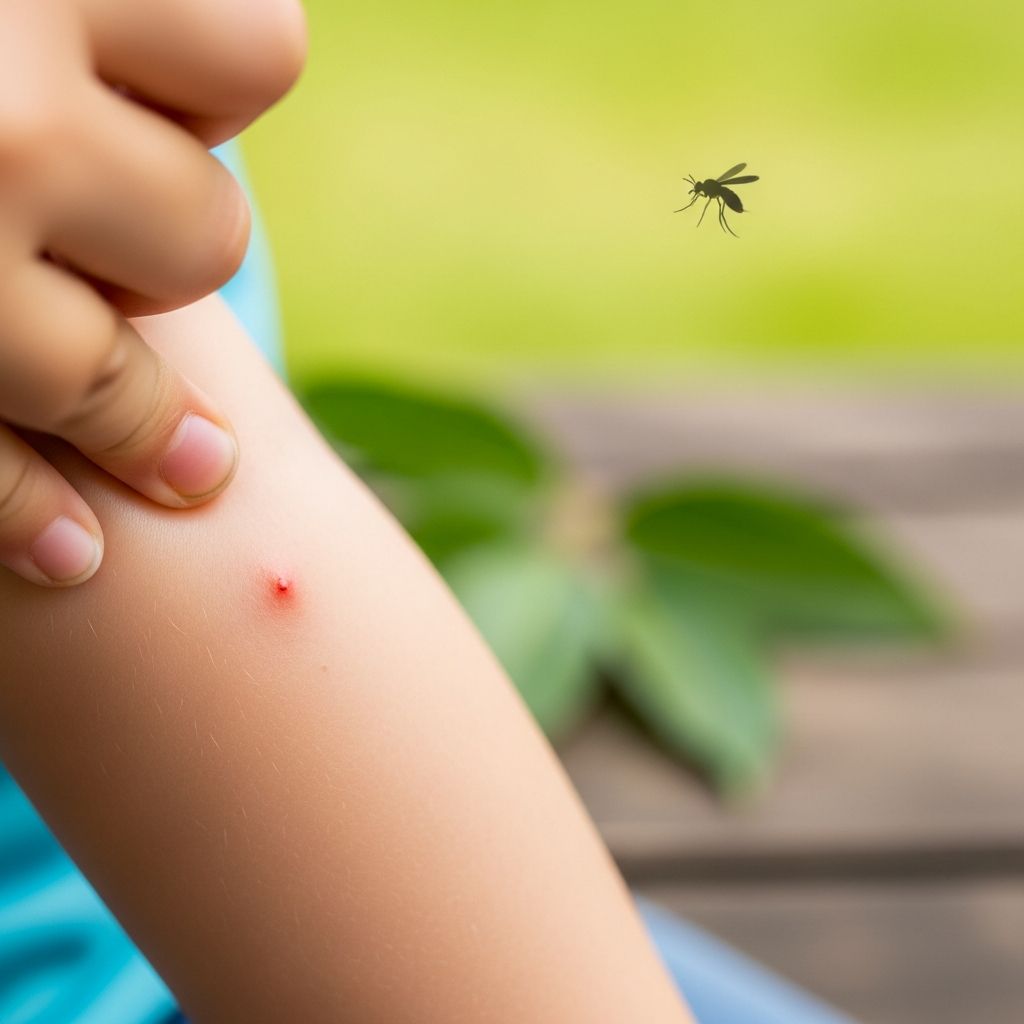
- Mosquitoes – Usually cause small, itchy, raised bumps that can appear minutes to hours after the bite. Clusters of bites are common on exposed skin such as arms and legs.
- Bees, wasps, and hornets – Often cause a sudden, painful sting, followed by redness and swelling in a small area. Honeybees may leave a stinger behind; wasps and hornets do not.
- Ants – Fire ants and some other ants can cause painful stings with small blisters or pustules. Multiple stings can happen quickly.
- Fleas – Produce groups of small, very itchy red bumps, often on ankles, legs, or areas covered by tight clothing.
- Flies – Bites may be painful with more noticeable swelling and redness than mosquito bites.
- Ticks – Attach to the skin and feed on blood. They may transmit illnesses such as Lyme disease or other infections, depending on the region.
Most reactions in children are local (around the bite or sting site), but a few children may develop more widespread symptoms or allergy.
Typical Reactions vs. Concerning Symptoms
Understanding what is normal and what is worrisome can prevent unnecessary panic while making sure serious problems are not missed.
Usual, Mild Reactions
Mild reactions generally improve over a day or two and can be cared for at home.
- Redness and slight swelling around the bite or sting
- Mild to moderate itching
- Small, firm bump or welt
- Brief pain or stinging sensation that quickly fades
Signs the Area Might Be Infected
Infection usually appears a day or more after the original bite or sting, often because of scratching with dirty fingers.
- Redness that spreads beyond the original area
- Increasing warmth, swelling, or tenderness
- Yellow crust, pus, or oozing at the site
- Fever, chills, or feeling generally unwell
Warning Signs of an Allergic Emergency
Some children can develop a serious allergic reaction called anaphylaxis, which needs emergency treatment right away.
- Difficulty breathing, wheezing, or noisy breathing
- Swelling of the tongue, lips, face, or throat
- Trouble swallowing or speaking
- Hives or rash away from the bite or sting site
- Dizziness, fainting, confusion, or pale, clammy skin
- Vomiting, diarrhea, or severe stomach pain along with other symptoms
If any of these symptoms appear, call emergency services immediately and use your child’s epinephrine auto-injector if one has been prescribed.
Step-by-Step First Aid for Most Bites and Stings
For mild reactions, simple home care can reduce pain, swelling, and itching significantly.
1. Stay Calm and Reassure Your Child
Children take emotional cues from adults. Speak calmly, explain that you are helping, and keep your child still so you can examine the area safely.
2. Check for a Stinger or Attached Insect
- If you suspect a bee sting and see a small, dark stinger in the skin, gently scrape it off with a stiff object like a credit card or your fingernail. Avoid squeezing it with tweezers, which can push more venom into the skin.
- If a tick is attached, grasp it as close to the skin as possible with fine-tipped tweezers and pull upward with steady, even pressure. Clean the area afterward and note the date of the bite for your records.
3. Clean the Skin
- Wash the area gently with soap and cool or lukewarm running water to remove dirt and saliva or venom left on the skin.
- Pat dry with a clean towel; avoid scrubbing, which may irritate the skin more.
4. Reduce Swelling and Pain
- Apply a cool, damp cloth or wrapped ice pack to the area for 10–15 minutes at a time, several times a day. Do not place ice directly on skin.
- If the sting or bite is on an arm or leg, raise the limb on a pillow to help limit swelling.
5. Ease Itching and Discomfort
- Use over-the-counter anti-itch creams such as 0.5%–1% hydrocortisone or calamine, applied thinly several times a day according to package directions.
- Your child’s doctor may recommend an oral antihistamine (such as cetirizine or loratadine) for stronger itching relief, especially at night. Always follow age-specific dosing instructions and talk with a clinician before giving these to very young children.
- For pain, an age-appropriate dose of acetaminophen or ibuprofen may be used if recommended by your child’s health care provider.
When to Call the Doctor or Seek Immediate Care
Most bug bites and stings improve within hours to a couple of days. However, certain symptoms mean your child should be evaluated by a professional.
Call Your Child’s Doctor Promptly If:
- Redness, swelling, or pain is worsening after 24–72 hours instead of improving
- There are signs of infection such as pus, spreading redness, or fever
- Your child has several stings or bites at once, especially from bees, wasps, or fire ants
- A tick was attached and your child develops fever, tiredness, headache, or a spreading rash over days to weeks
- The bite or sting is near the mouth, eye, or genitals, or inside the mouth or nose
Call Emergency Services Immediately If:
- Breathing is difficult, fast, or noisy, or your child complains of chest tightness or cannot catch their breath
- There is swelling of the face, lips, tongue, or throat
- Fainting, confusion, or extreme sleepiness occurs
- Hives or a widespread rash appear away from the bite or sting site
- Your child has a known insect allergy and has been stung or bitten, especially if they do not yet have epinephrine or symptoms are starting
Medications and Treatments Commonly Used
Your child’s clinician may recommend or prescribe treatments based on the severity and type of reaction.
| Treatment | Main Purpose | Typical Use in Children |
|---|---|---|
| Topical hydrocortisone cream (0.5%–1%) | Decrease mild swelling and itching at the skin surface | Applied thinly to the bite or sting area a few times a day as directed. |
| Calamine or soothing lotions | Relieve itching and dry oozing areas | Used on intact skin as needed to calm irritation. |
| Oral antihistamines | Reduce itching and allergic-type swelling | Given at child-specific doses for troublesome itching; always confirm dose and safety with a clinician, especially in toddlers. |
| Oral pain relievers (acetaminophen, ibuprofen) | Ease pain and discomfort | Short-term use following package instructions or medical advice. |
| Topical or oral antibiotics | Treat bacterial skin infection | Prescribed if there is clear evidence of infection such as spreading redness or pus. |
| Epinephrine auto-injector | Emergency treatment for severe allergic reaction | Carried by children with diagnosed insect allergies; used at the first sign of anaphylaxis while waiting for emergency care. |
Preventing Bites and Stings in Children
Completely avoiding insects is impossible, but simple habits can significantly lower your child’s chances of being bitten or stung.
Smart Clothing and Habits Outdoors
- Dress children in light-colored, long-sleeved shirts and long pants in areas with many insects.
- Avoid walking barefoot on grass where bees or other insects may be foraging.
- Keep food and drinks covered when eating outside, and teach children not to wave at or swat bees and wasps aggressively.
- Empty standing water (such as in buckets or toys) around the home, which can be mosquito breeding sites.
Use of Insect Repellents
In some regions, repellent is an important tool to reduce the risk of diseases spread by mosquitoes and ticks.
- Choose a repellant approved for children and follow age guidelines and instructions on the label carefully.
- Apply repellent to your own hands first, then rub it lightly on the child’s exposed skin, avoiding eyes, mouth, and hands.
- Use only the smallest amount necessary and wash it off with soap and water when your child returns indoors.
Home and Yard Tips
- Keep garbage bins closed tightly to limit bees and wasps.
- Check window and door screens for holes that could let insects indoors.
- Inspect pets regularly for fleas and ticks and use veterinarian-recommended preventives.
Special Considerations: Insect-Borne Illnesses
Some insects can spread infections when they bite or feed. The risk depends on where you live and what insects are common in your area.
- Ticks can transmit Lyme disease and other infections. Symptoms may take days to weeks to appear and can include fever, fatigue, joint pain, or a spreading rash. Talk with your child’s clinician if these signs occur after a tick bite.
- Mosquitoes in certain regions may carry viruses such as West Nile or others. Signs can range from mild fever and body aches to more serious illness in rare cases.
Because patterns of insect-borne disease change over time and vary by location, ask your child’s health care provider or local public health department about current risks and recommended prevention strategies in your area.
Frequently Asked Questions (FAQs)
How long do normal insect bite reactions last in children?
Typical redness, mild swelling, and itching from insect bites or stings usually improve within a few hours to a couple of days. Some children develop larger local swelling that can last several days but still be harmless if there are no signs of infection or allergy.
Should I worry if my child gets many mosquito bites at once?
Multiple mosquito bites can be very itchy and uncomfortable but are usually not dangerous. Focus on itch control and preventing scratching, which can lead to infection. Contact your child’s clinician if your child develops fever, a spreading rash, or feels unwell after many bites, especially in an area where mosquito-borne diseases are a concern.
Is it safe to use insect repellent on babies and toddlers?
Use only repellents that are specifically labeled for the age of your child, and follow the manufacturer’s instructions closely. For babies, physical barriers such as mosquito nets, long sleeves, and staying away from heavy insect areas are often preferred. Your pediatrician can recommend appropriate products and strategies based on your child’s age and local disease risks.
What should I do if my child keeps scratching and the bite looks worse?
Persistent scratching can break the skin and invite bacteria, leading to infection. Keep your child’s nails short, use recommended anti-itch treatments, and consider a doctor-approved oral antihistamine if itching is significant. If the area becomes increasingly red, warm, painful, or begins to ooze, contact your child’s health care provider.
My child had a big swollen reaction to a sting, but no trouble breathing. Does this mean they are allergic?
A large local swelling around a sting does not always mean a dangerous allergy. However, it does suggest that your child’s immune system reacted strongly. Discuss this reaction with your child’s clinician, who may recommend evaluation by an allergy specialist if there is concern about future severe reactions.
References
- Insect bites and stings: First aid — Mayo Clinic Staff. 2023-03-11. https://www.mayoclinic.org/first-aid/first-aid-insect-bites/basics/art-20056593
- Treating Insect Bites and Stings in Children — WebMD Editorial. 2022-07-18. https://www.webmd.com/first-aid/insect-bites-and-and-stings-children
- Treating Bug Bites and Stings in Children — Children’s Health. 2022-06-01. https://www.childrens.com/health-wellness/treating-bug-bites-and-stings-in-children
- Bug Bites in Children — Society for Pediatric Dermatology. 2021-01-01. https://pedsderm.net/site/assets/files/1028/spd_bug_bites_bw.pdf
- Insect Bites — StatPearls/NCBI Bookshelf. 2023-07-24. https://www.ncbi.nlm.nih.gov/books/NBK537235/
- Insect Stings and Allergic Reactions in Children — Nationwide Children’s Hospital. 2022-05-15. https://www.nationwidechildrens.org/conditions/health-library/insect-stings-and-allergic-reactions-in-children
- Kids Health Info: Insect bites and stings — Royal Children’s Hospital Melbourne. 2023-06-01. https://www.rch.org.au/kidsinfo/fact_sheets/insect_bites_and_stings/