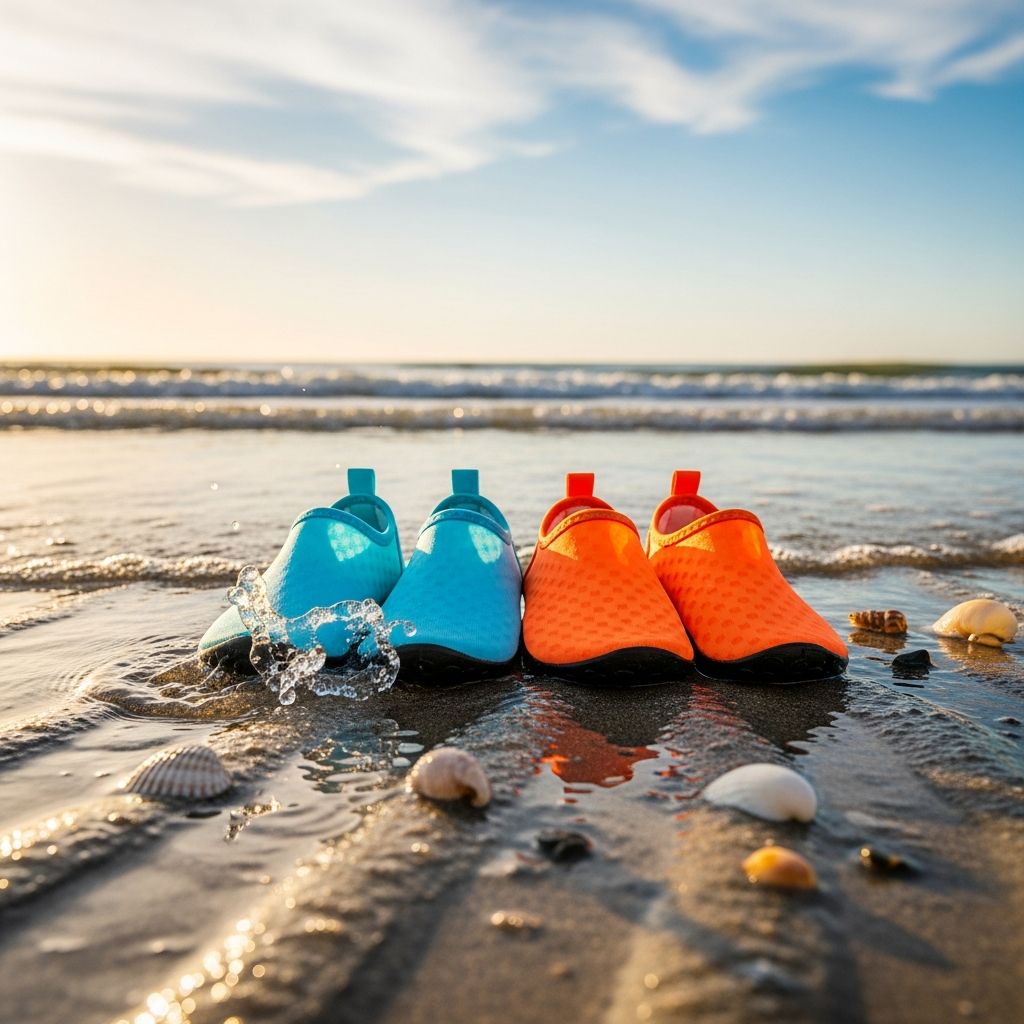
Toddler water shoes are a small purchase that can make a big difference in how safely and confidently your child enjoys water play. From hot sand to slippery pool decks, the right pair of shoes can protect delicate feet and help prevent painful mishaps.
This guide breaks down why toddler water shoes matter, what to look for, and how to choose a pair that keeps your little one happy from the first splash to the last.
Why Toddler Water Shoes Matter
Toddlers are curious explorers, but their feet are still soft, sensitive, and prone to injury. Water shoes add a protective layer between your child and the unpredictable surfaces around pools, lakes, and beaches.
Instead of juggling flip-flops, sandals, and bare feet, one good pair of water shoes can follow your child from the car to the shore and straight into the water.
Common Hazards Around Water
Parents often focus on drowning risks, but foot injuries and slips are some of the most common problems during water play. Recognizing these hazards makes it easier to see why footwear matters.
- Hot surfaces: Pool decks and sand can heat up quickly, causing discomfort or even minor burns on bare feet.
- Sharp objects: Shells, rocks, broken glass, and unseen debris can cut or bruise little toes.
- Slippery ground: Algae on rocks, wet tiles, and splash pads create prime conditions for slips and falls.
- Rough textures: Concrete, gravel, and dock boards can scrape or irritate tender skin.
Water shoes provide a balance of protection and flexibility so toddlers can explore without constant “watch your step!” reminders.
Key Benefits of Toddler Water Shoes
Good water shoes do far more than keep feet dry. They are designed to work with water, not against it, and to keep your toddler comfortable while moving between different environments.
- Protection: Closed toes and sturdy soles shield against heat, sharp edges, and rough ground.
- Traction: Textured, rubber-like soles help reduce slipping on wet, smooth surfaces.
- Comfort in and out of water: Quick-dry fabrics and drainage prevent soggy, heavy shoes.
- Freedom to move: Flexible designs allow natural foot movement, supporting balance and coordination.
Where Toddler Water Shoes Are Most Useful
One of the best things about water shoes is their versatility. They work in places where traditional sandals or sneakers fall short.
- Swimming pools: Great for pool decks, stairs, and shallow areas where surfaces are slick.
- Beaches: Protect against hot sand, shells, and stony shorelines.
- Lakes and rivers: Ideal for uneven, rocky bottoms and slippery docks.
- Splash pads and water parks: Help reduce slips in high-traffic, perpetually wet areas.
- Backyard water play: Useful for kiddie pools, sprinklers, and muddy patches.
Essential Features to Look For
Not all toddler water shoes are created equal. Focusing on a few key features will help you spot high-quality pairs that truly work for your child’s needs.
- Non-slip sole: Look for a grippy pattern on the bottom that feels slightly tacky rather than smooth.
- Quick-dry materials: Mesh, neoprene-style fabrics, or lightweight synthetics dry faster and are more comfortable when wet.
- Flexible construction: Shoes should bend easily at the ball of the foot so toddlers can run, squat, and climb naturally.
- Secure closure: Adjustable straps, elastic cuffs, or bungee toggles help keep shoes from floating off in the water.
- Closed or reinforced toes: Extra coverage at the front helps prevent stubbed or scraped toes.
- Soft interior: Smooth linings and flat seams reduce rubbing and blisters on damp skin.
Types of Toddler Water Shoes
There are several styles of water shoes, each with pros and cons. Choosing the right type depends on where you’ll use them and how your child likes shoes to feel.
| Style | What It Looks Like | Best For | Potential Drawbacks |
|---|---|---|---|
| Water sock | Soft, sock-like upper with thin flexible sole | Pool, splash pad, travel (packs small) | Less protection on very rough or rocky ground |
| Aqua sneaker | Shoe-like design with thicker sole and more structure | Rough beaches, lakes, playgrounds near water | Can be warmer and heavier, takes longer to dry |
| Hybrid sandal | Open areas with straps and a toe bumper | All-day wear from car to water and back | More nooks where sand and small stones can collect |
How to Choose the Right Size
Proper sizing is critical. Shoes that are too big can cause trips or slip off in the water, while shoes that are too small can rub and restrict movement.
- Measure both feet: Have your toddler stand on a piece of paper, trace each foot, and measure heel to longest toe.
- Check brand size charts: Use the measurements rather than guessing from age alone.
- Allow growth room: Aim for about a thumb’s width between the longest toe and the front of the shoe.
- Test the heel fit: The heel should feel snug but not tight; the shoe should not slip when your child walks.
When in doubt between two sizes, most parents prefer the slightly larger option for seasonal items, as long as the straps or closures can be adjusted securely.
Comfort Checks Before the First Water Adventure
A brief at-home test run saves a lot of frustration later. Toddlers are quick to protest if something feels off, and it’s easier to fix issues before you’re standing at the pool edge.
- Have your child wear the shoes indoors with bare feet or swim socks for 10–15 minutes.
- Watch them walk, run, and squat to see if the shoes stay on and flex easily.
- Check for red marks or friction points around the heel, ankle, and toes.
If you see persistent redness, consider adjusting straps, trying a different sock thickness, or swapping styles.
Materials: What’s On Your Toddler’s Feet?
Materials affect everything from drying time to comfort and durability. Understanding the basics makes labels less confusing.
- Mesh fabrics: Very breathable and quick-drying, great for hot weather and frequent water exposure.
- Neoprene-style uppers: Soft and snug, offering a bit of insulation in cooler water.
- Rubber or EVA soles: Lightweight, flexible, and designed to provide grip without absorbing water.
- Velcro straps and elastic: Make on-and-off easier for wiggly toddlers and allow more customized fit.
Parents who prioritize sensitive skin may also prefer shoes labeled as free from certain dyes or chemical treatments, especially for extended wear.
Water Shoes vs. Flip-Flops and Sandals
It can be tempting to rely on simple flip-flops or regular sandals, but they do not offer the same level of security or protection for young children around water.
| Feature | Water Shoes | Flip-Flops | Standard Sandals |
|---|---|---|---|
| Stay on feet in water | Designed to stay secure | Come off easily, float away | Varies, often loosen when wet |
| Traction on wet surfaces | Non-slip soles prioritized | Usually smooth and slick | Designed more for dry ground |
| Toe protection | Often covered or reinforced | Open toe, no protection | Some protection, but not water-specific |
| Comfort when soaked | Built to handle full immersion | Slippery and unstable | Straps may stretch or rub |
Flip-flops may work for short walks on dry ground, but for active play in and around water, dedicated water shoes are generally the safer, more comfortable choice.
Care and Cleaning Tips
Proper care helps water shoes last through a full season—or even long enough to be passed down to a sibling.
- Rinse after use: After beach or lake days, rinse away sand, salt, and dirt to prevent buildup and odor.
- Air-dry thoroughly: Loosen straps and open the shoes up so air can circulate. Avoid leaving them in direct intense heat for long periods.
- Machine wash with care: If the manufacturer allows, use a gentle cycle and a mesh laundry bag. Always air-dry afterward.
- Inspect regularly: Check for worn soles, loose stitching, or straps that no longer grip well.
Rotating between two pairs during heavy use can keep each pair drier and more comfortable for your child.
Travel and Packing Tips
Toddler water shoes are a smart addition to any vacation packing list. They take up little space but can save you from scrambling to buy last-minute replacements in overpriced resort shops.
- Pack shoes in a small mesh bag so they can dry if they go into luggage damp.
- Keep a pair in your beach bag or car trunk during warm months for spontaneous water play.
- For longer trips, consider a backup pair in case one gets lost or takes too long to dry.
Safety Reminders for Parents
Water shoes are a safety tool, not a replacement for close supervision. Toddlers still need constant adult attention around any water source, regardless of how well their feet are protected.
- Always hold hands or stay within arm’s reach near deep or moving water.
- Explain to older toddlers that shoes help them grip but do not make them “slip-proof.”
- Check surfaces with your own foot or hand if you’re unsure about temperature or texture.
Frequently Asked Questions About Toddler Water Shoes
Do toddlers really need water shoes?
While not strictly mandatory, water shoes greatly reduce the risk of cuts, burns, and slips for toddlers who play near or in water. For many families, they quickly become an essential part of the warm-weather gear lineup.
Can my toddler wear water shoes all day?
Yes, many styles are designed for all-day wear from home to the car, to the beach, and back again. Just make sure the shoes fit well, dry reasonably quickly, and do not create pressure points when worn for several hours.
Should my child wear socks with water shoes?
Most water shoes are meant to be worn barefoot, but thin swim socks can help reduce friction for children prone to blisters. If you add socks, recheck the fit to ensure the shoes are not suddenly too tight.
How often should I replace toddler water shoes?
Replace them when your child outgrows the current size, when the soles become smooth and lose traction, or when the shoe no longer stays securely on the foot. With frequent use, this may be once per warm season for fast-growing toddlers.
Are closed-toe or open-toe water shoes better?
Closed-toe styles usually offer better protection for toddlers who run, climb, and play on rough or rocky ground. Open-toe options can be cooler and easier to rinse, but they leave toes more exposed to bumps and scrapes.
What if my toddler hates wearing shoes?
Let them practice with water shoes during bath time or in a dry, familiar space so they can get used to the feel. Choosing a pair in a favorite color or with a fun design can also help turn resistance into excitement.
Wrapping Up: Small Shoes, Big Peace of Mind
A thoughtful pair of toddler water shoes might seem like a minor detail, but it has a major impact on comfort and safety around water. By understanding the benefits, features, and fit, parents can confidently choose footwear that supports every splash, step, and sandy adventure.
With the right shoes on their feet, toddlers are free to focus on what they do best: exploring, playing, and building joyful memories wherever water is involved.