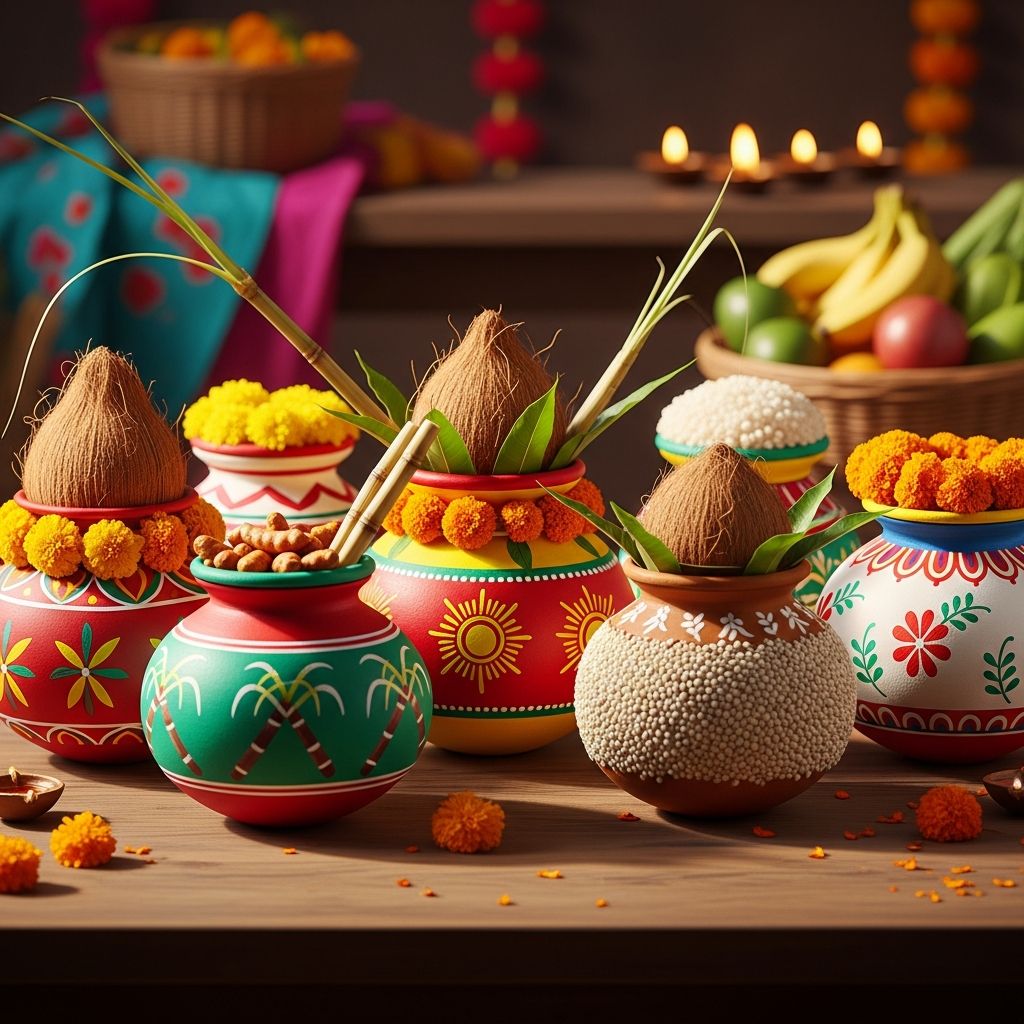
Pongal is a vibrant Tamil harvest festival that honors the sun, the land, and the farmers who grow our food. A beautiful way to bring this celebration into your home is by decorating special clay pots that symbolically overflow with gratitude, abundance, and creativity.
Understanding Pongal in Simple Terms
Pongal is traditionally celebrated in mid-January when the rice harvest is ready, and families thank nature and the Sun for a good crop. The festival gets its name from a rice dish cooked in a pot until it boils over, which represents plenty and good fortune.
During Pongal, homes are cleaned, entrances are decorated with rangoli designs, and new or freshly decorated pots are used to cook the festive dish. Re-creating these pots as a craft project helps children and adults connect with the values of gratitude, family, and respect for nature.
Why Crafting Pongal Pots Matters
Crafting Pongal pots is more than an art activity; it is a gentle way to talk about seasons, agriculture, and thankfulness with children. Each pot becomes a story piece that can spark conversations about where food comes from and how communities celebrate harvest time around the world.
Clay pot projects are also great for sensory learning. The feel of the clay or terracotta, the smell of paint, and the bright colors all invite children to slow down, pay attention, and enjoy the festival with their hands as well as their hearts.
Materials You Will Need
Before starting, gather a small set of simple, affordable materials. Many of these are reusable or already available at home, making this craft accessible for families and classrooms.
- Small terracotta or clay pots (one per child or family member)
- Acrylic or poster paints in bright colors (yellow, orange, red, green, blue, white)
- Paintbrushes in different sizes, including a thin detail brush
- Permanent markers or paint pens for fine outlines
- Palette or paper plate for mixing colors
- Old newspapers or a plastic sheet to protect surfaces
- Cotton buds or the blunt end of a pencil for dot designs
- Optional embellishments: glitter glue, sequins, stick-on gems, ribbons, jute twine
- Optional for sealing: clear craft varnish or a sealant spray (adult use only)
If clay pots are difficult to find, recycled containers such as cleaned yogurt cups or cardboard tubes can be used as a base, although they will not be heat-safe and should be treated as decorative only.
Safety and Setup Tips
Because this is a family-oriented craft, a bit of planning keeps everyone safe and relaxed. Spread out newspapers, keep a small bowl of water for rinsing brushes, and let children wear aprons or old T-shirts.
- Choose non-toxic paints that are safe for children.
- Reserve any spray sealant, hot glue, or cutting tools for adult use only.
- Allow enough drying time between paint layers so colors do not smudge.
- If you plan to use the pots around real candles, keep decorations away from the flame and never leave them unattended.
Designing Your Pongal Pot: Cultural Motifs and Meanings
Traditional Pongal imagery is full of symbols that are both beautiful and meaningful. Incorporating these motifs into your pot designs transforms them from simple containers into story-rich festival pieces.
| Symbol | What It Represents | How to Use It on Pots |
|---|---|---|
| Sun | Energy, warmth, and gratitude to the Sun | Paint a bright yellow circle with rays around the rim or center |
| Overflowing rice | Abundance and prosperity | Draw a pot motif with white or cream dots representing rice spilling out |
| Sugarcane | Harvest, sweetness, and farm life | Paint tall green stalks with purple or brown joints |
| Kolam patterns | Welcoming guests and good luck | Use white paint to add geometric borders or delicate dots and lines |
| Cows and bulls | Respect for animals that support farming | Add simple silhouettes or tiny bell motifs near the base |
Invite children to choose symbols that resonate with them. A child who loves animals may focus on cattle or birds, while another might enjoy repeating sun shapes around the pot.
Step-by-Step: Basic Painted Pongal Pot
This beginner-friendly method suits young children and adults who are new to painting. It focuses on bold colors and simple shapes rather than detailed artwork.
- Clean the pot: Wipe the pot with a dry cloth to remove dust. If it feels damp, let it air dry completely before painting.
- Apply a base coat: Paint the entire pot with one solid color, such as deep red, bright yellow, or royal blue. Let it dry fully; a second coat may be added for a smoother finish.
- Plan the design: Lightly sketch borders or symbols with a pencil, or simply decide where suns, dots, and lines will go.
- Add borders: Use contrasting colors to paint bands and stripes near the rim and base. White or gold works especially well for a festive look.
- Decorate with dots: Dip a cotton bud or the blunt end of a pencil into paint and press gently to create even dots. Arrange them in rows, circles, or flower shapes.
- Incorporate Pongal symbols: Add small suns, sugarcane stalks, or a miniature pot design with rice overflowing.
- Outline details: Once dry, use a thin brush or paint pen to outline shapes and add tiny accents.
- Optional sealing: For long-lasting color, adults can apply a clear varnish, following safety guidelines and using it in a ventilated space.
Encourage children to view small imperfections as part of the charm. Hand-painted pots naturally show personality and creativity.
Layered Pot Towers: Creative Festival Centerpieces
An eye-catching way to celebrate Pongal indoors is by stacking decorated pots into a small tower. This arrangement can become the centerpiece of your dining table, entryway, or learning corner.
- Select sizes: Choose three pots that gradually decrease in diameter so they can rest inside one another or stack stably.
- Paint each level: Assign a theme to each pot. For example, the bottom pot might highlight the land (fields, plants), the middle pot the sun and sky, and the top pot the Pongal dish and symbols of abundance.
- Align motifs: When stacked, check that key elements such as suns or sugarcane stalks line up visually across tiers.
- Secure the tower: For stability, place a small amount of removable adhesive or modeling clay between pots. Avoid permanent glue if you want to reuse them later.
- Finish with a focal point: Top the tower with a small artificial flame made from colored paper, a battery-operated candle, or a bunch of faux grains tied with ribbon.
Layered pot towers are especially useful for classrooms or community centers, where a single vertical display can be seen from different parts of the room.
Kid-Friendly Pongal Pot Ideas
For very young children, simplify the process so they can enjoy the festival without worrying about precision. Focus on large shapes, sponge painting, and tactile materials.
- Sponge dab pots: Cut a kitchen sponge into small squares and let children dab different colors randomly over a white-painted pot. The result is a soft, textured finish.
- Sticker-accent pots: Provide star stickers, circle stickers, and paper shapes (suns, flowers, pots). Children can place them freely, then adults can add a few painted accents around them.
- Fingerprint rice: Use white paint and fingertips to create clusters of tiny ovals near the rim, suggesting grains of rice overflowing from the pot.
- Story pots: Ask children to paint one scene related to the harvest on each side of the pot—fields, animals, family cooking together—and then tell the story in their own words.
Display children’s work at their eye level and include handwritten name tags. This reinforces pride and a sense of belonging in the festival.
Using Pongal Pots in Home Decor
Once the pots are painted and dry, there are many ways to weave them into your Pongal decorations. They can stand alone as art pieces or become practical holders and mini-altars.
- Table accents: Place one pot at each corner of your dining table with a tealight or a small artificial flower inside.
- Entryway welcome: Arrange a row of pots near the front door, accompanied by a simple rangoli or chalk design on the floor.
- Gratitude jars: Invite family members to write short gratitude notes and tuck them inside a shared Pongal pot to be read together.
- Mini planters: After the festival, use the pots as planters for herbs or flowering plants, symbolizing growth and continuity.
Keep the overall color palette warm and festive so the craft blends naturally with traditional textiles, lamps, and other seasonal decor.
Teaching Through Craft: Conversation Starters
While painting or assembling the pots, use the time to talk with children about the deeper themes of Pongal. Hands are busy, minds are open, and stories tend to sink in more deeply in this relaxed setting.
- Ask where rice, sugarcane, and milk come from and how farmers care for their fields.
- Discuss why communities thank the sun and nature during harvest festivals.
- Share stories of how elders in the family celebrated Pongal in their childhood.
- Compare Pongal with other harvest or thanksgiving festivals around the world to highlight common values.
These conversations help children see the festival as a living tradition rather than just a date on the calendar.
Eco-Friendly and Sustainable Craft Choices
Pongal has deep roots in the land and agricultural cycles, so eco-friendly crafting choices fit naturally with its spirit. Choosing sustainable materials reinforces the message of respecting nature.
- Prefer unglazed terracotta or locally made clay pots over plastic containers.
- Use water-based, non-toxic paints and avoid excessive glitter that can shed microplastics.
- Decorate with natural fibers like jute, cotton thread, or dried leaves instead of synthetic ribbons.
- Repurpose the pots after the festival as planters or organizers instead of discarding them.
Small choices like these turn a simple art activity into a gentle lesson in environmental care and mindful celebration.
Sample Pongal Pot Themes for Families and Classrooms
If you are decorating several pots together, assigning a theme to each one can make the activity more organized and visually cohesive. Themes also help children remember different aspects of the festival.
| Pot Theme | Main Colors | Design Ideas |
|---|---|---|
| The Sun’s Blessing | Yellow, orange, gold | Radiating suns, rays, and tiny starbursts |
| Fields and Farmers | Green, brown, blue | Rice stalks, plowed lines, simple farmer silhouettes |
| Sweet Harvest | Pink, purple, cream | Sugarcane, pots of sweet Pongal, small hearts and dots |
| Animals of the Farm | Earth tones and white | Cows, bulls, birds, and little bell motifs |
| Kolam Magic | Bold base colors with white | Geometric borders, swirls, and dotted kolam patterns |
Let each child or family member choose one theme, then display the group of finished pots together for a unified yet varied look.
Frequently Asked Questions About Pongal Pot Crafts
Can these pots be used for real cooking?
Decorated craft pots are usually intended for display, not cooking. Painted surfaces and glued decorations are not food-safe and may be damaged by direct heat. For traditional cooking, use plain, food-safe pots, and keep the decorated ones for symbolic or decorative use.
What type of paint is best for children?
Water-based acrylic or poster paints labeled non-toxic are generally best for children’s crafts. They provide strong color, dry quickly, and adhere well to terracotta. Always supervise younger children and help them wash their hands after painting.
How early should we make the pots before Pongal?
Creating the pots a week or two before the festival can turn them into a countdown activity. This allows enough time for the paint to dry, any sealing to be completed, and for you to arrange the display comfortably before the celebrations begin.
What if our family does not usually celebrate Pongal?
These crafts work wonderfully for multicultural learning at home or at school. Even if your family does not traditionally observe Pongal, you can use the project to explore harvest festivals from different cultures and emphasize gratitude for food and nature.
How can older kids and teens make the project more advanced?
Older children and teens can experiment with finer brushes, shading, and more realistic scenes, such as a village landscape or a detailed kolam band around the pot. They can also take charge of planning the overall display, lighting, and arrangement for the festival area.
Bringing It All Together
Pongal clay pot crafts blend culture, creativity, and hands-on learning in a way that appeals to all ages. Whether you are preparing for a large family celebration or simply introducing children to a new tradition, these pots can serve as colorful reminders to give thanks for the harvest and the everyday miracle of food on the table.
With simple materials and thoughtful conversation, a small painted pot becomes a symbol of warmth, community, and the generous spirit at the heart of the Pongal festival.