Establishing effective toothbrushing habits in toddlers lays the foundation for lifelong oral health. Toddlers between 1-3 years often resist routines due to developing independence and limited motor skills, but consistent, playful approaches yield lasting results. This guide draws from pediatric recommendations to outline practical steps, tools, and strategies for success.
Understanding Toddler Oral Health Basics
Toddler teeth emerge around 6-12 months, with full sets by age 3. Early brushing prevents cavities, as primary teeth influence spacing for permanent ones. The American Academy of Pediatrics recommends starting cleaning at first tooth eruption, using fluoride toothpaste in tiny amounts to strengthen enamel without swallowing risks.
Key milestones include:
- 6-12 months: Wipe gums with damp cloth; introduce soft brush with water.
- 1-2 years: Smear of fluoride paste (rice-grain size); parent-led brushing.
- 2-3 years: Pea-sized paste; supervised child attempts followed by parent finish.
- 3+ years: Child brushes with oversight until age 6-8 for dexterity development.
Daily twice brushing—morning and bedtime—removes plaque, the bacterial film causing decay. Neglect increases cavity risk by 30-50% in preschoolers per health studies.
Selecting the Right Brushing Tools
Choose toddler-specific gear to encourage participation and ensure safety. Oversized adult tools overwhelm small mouths, leading to frustration.
| Age Group | Toothbrush Type | Toothpaste Amount | Key Features |
|---|---|---|---|
| 6-18 months | Infant soft-bristle, small head | Rice grain (0.1g fluoride) | Rounded ends, non-slip grip |
| 18 months-3 years | Toddler soft/extra-soft, character designs | Pea-sized (0.25g fluoride) | Short handle, vibrant colors |
| 3+ years | Child-sized manual or electric | Pea-sized | Timer function, fun flavors like bubblegum |
Electric brushes vibrate gently, improving plaque removal by 21% in young children per clinical reviews. Flavored toothpastes (strawberry, vanilla) boost appeal—let toddlers pick during store trips. Silicone finger brushes aid sensory-sensitive kids as transitional tools.
Step-by-Step Brushing Technique for Parents
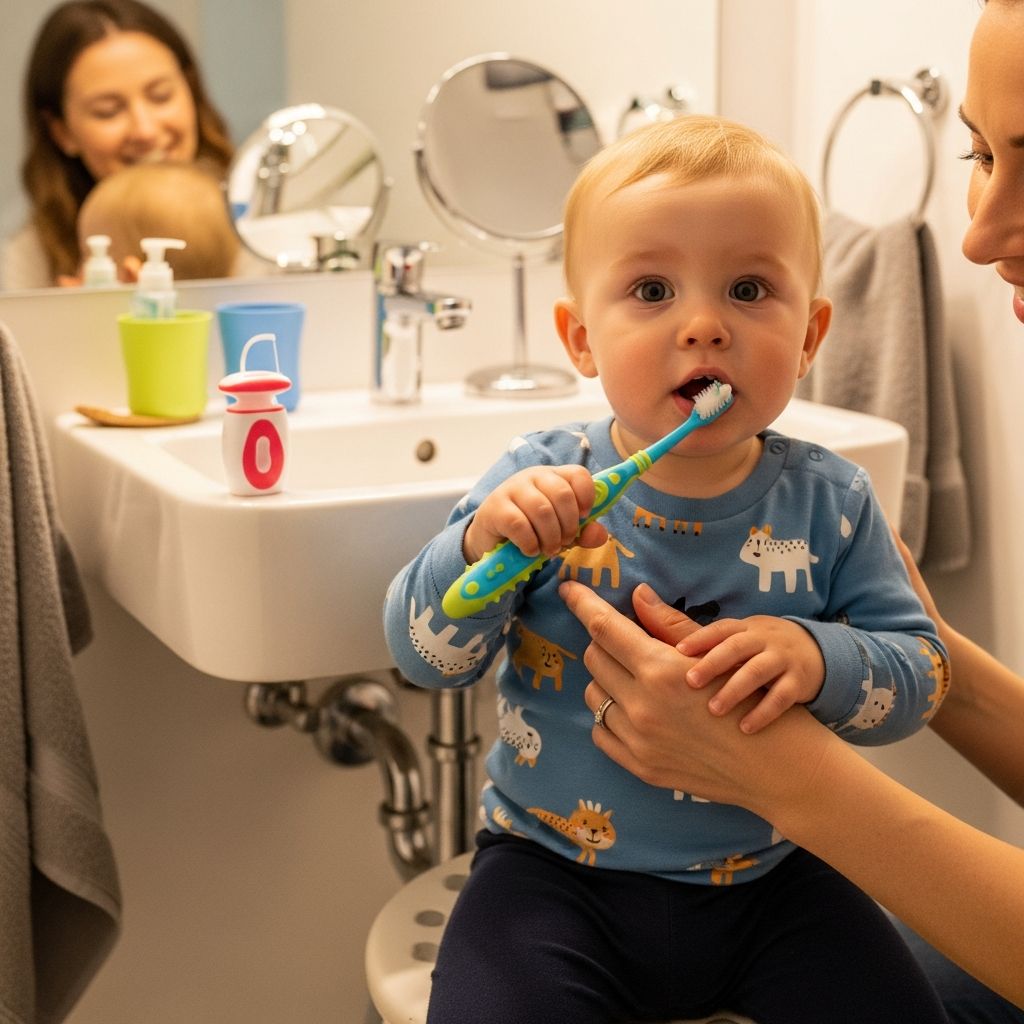
Positioning ensures control: Sit toddler on lap facing away, head tilted back against your chest, or stand behind using a mirror for visibility. Cup chin gently for stability.
- Prep (30 seconds): Wet brush, apply paste. Demonstrate enthusiasm: “Time to chase sugar bugs!”
- Outer surfaces (45 seconds): 45-degree angle to gums, small back-forth strokes from gumline to edge. Cover all quadrants.
- Inner surfaces (45 seconds): Vertical up-down for fronts; side-to-side for molars.
- Chewing tops (20 seconds): Gentle circles or back-forth.
- Tongue and rinse (20 seconds): Back-to-front swipe; spit (no rinse to retain fluoride).
Total: 2 minutes. Follow AAP guidelines—no rinsing post-paste preserves minerals. For resistance, use mirror play: Make silly faces while brushing.
Playful Strategies to Build Enthusiasm
Transform brushing into games leveraging toddler love for play, imitation, and autonomy.
Game-Based Incentives
- Song Timers: Sing “Twinkle Twinkle” or “Happy Birthday” twice—consistent melody signals duration.
- Stuffed Animal Practice: Brush toy’s teeth first; reward with “sticker chart” for participation, not perfection.
- Counting Challenge: “One for top left, two for top right!” Builds focus.
Empowerment Through Choices
Offer 2-3 options: “Blue or green brush? Top or bottom first?” Autonomy reduces battles while securing hygiene.
Modeling and Teamwork
Brush side-by-side: “Look, my teeth sparkle too!” Toddlers mimic 70% more effectively than direct commands. Alternate turns: Child’s 30-second free brush, parent’s thorough clean as “sugar bug hunt.” Praise teamwork: “Super brushing buddies!”.
Addressing Common Challenges
Resistance peaks at 18-24 months amid autonomy pushes. Stay neutral—no bribes, as they undermine intrinsic motivation.
- Sensory Aversions: Test textures (silicone vs. nylon), temperatures; start water-only, add paste gradually.
- Swallowing Paste: Rice-grain size minimizes risk; teach spitting with fun “fire-breathing” game.
- Meltdowns: Visual charts (pictures: wet brush → paste → brush → spit) predict routine; stickers mark completion.
- Travel Disruptions: Portable electric brushes, disposable tips maintain consistency.
Consistency over 2-3 weeks normalizes habits; track via calendar for visual progress.
Integrating Brushing into Family Routines
Link to predictable times: Post-breakfast, pre-bed story. Family sessions foster bonding—siblings demonstrate for peer learning. Use apps with 2-minute cartoons for guided sessions, increasing compliance by 40% in studies.
Storytime tie-ins: Dental books like “The Tooth Book” by Theo LeSieg prime excitement. Nightly: Brush → pajamas → book → bed sequence cues wind-down.
Monitoring Progress and When to Seek Help
Weekly checks: Shiny, plaque-free teeth indicate success. Signs for dentist: White spots, sensitivity, refusal beyond 3 weeks. First visit by age 1 per ADA. Professional cleanings every 6 months from age 3.
Frequently Asked Questions
What if my toddler swallows toothpaste?
A tiny smear is safe; fluoride toxicity requires swallowing adult tube amounts. Supervise spitting; consult poison control if concerned.
Can I use training toothpaste without fluoride?
No—fluoride prevents 25% more cavities. Use minimal amounts under supervision.
How long until my toddler brushes independently?
Full independence around 7-8 years; supervise until then for thoroughness.
Electric vs. manual brushes—which is better?
Electric excels for toddlers (superior plaque removal), but manual works with proper technique.
What about diet’s role in tooth health?
Limit sugars; rinse post-meals. Brushing neutralizes acids.
References
- 8 Tips for Teaching Kids to Brush Their Teeth — Innovative Pediatric Dentistry. 2023. https://www.innovativepediatricdentistry.com/8-tips-kids-brushing-teeth/
- My Toddler Won’t Brush Teeth: 7 Strategies That Work — Love Bee Dentistry. 2024. https://www.lovebeedentistry.com/blog/toddler-wont-brush-teeth-strategies-that-work
- Dental Care for Toddlers — Raising Children Network (Australian Govt-funded). 2025-01-15. https://raisingchildren.net.au/toddlers/health-daily-care/dental-care/dental-care-toddlers
- Teach your Toddler to Brush Teeth: Step-by-Step Guide — YouTube (OT Guide). 2023-06-10. https://www.youtube.com/watch?v=8lEDRv7K_D4
- Toothbrushing – Children 0-6 Years — Better Health Channel (Vic Govt). 2024-03-20. https://www.betterhealth.vic.gov.au/health/conditionsandtreatments/toothbrushing-children
- Teaching Young Children to Brush Their Teeth — Nationwide Children’s Hospital. 2024-02-01. https://www.nationwidechildrens.org/family-resources-education/700childrens/2024/02/how-to-teach-young-children-to-brush-their-teeth