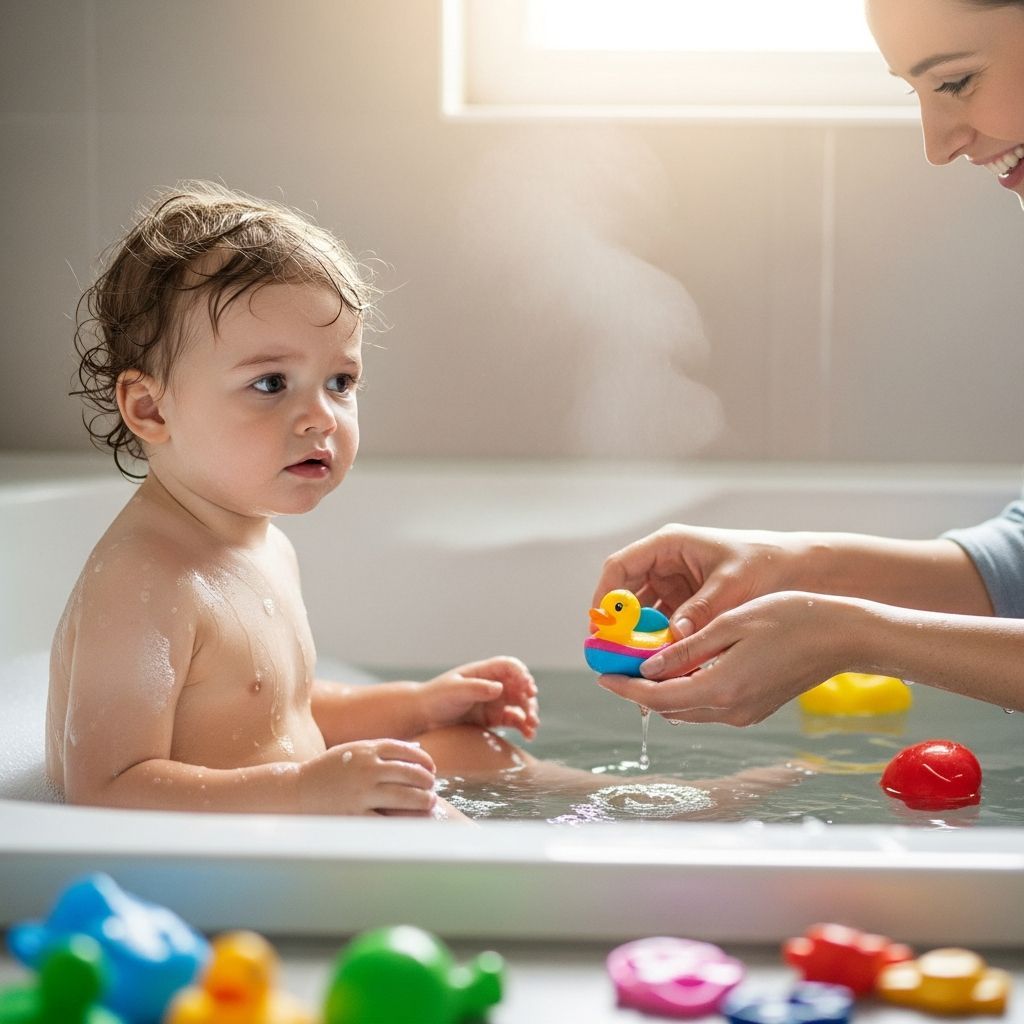
Many parents are surprised when a baby who once splashed happily begins to scream, cling, or refuse to get into the tub. Sudden bath resistance is very common in toddlers, especially between 18 and 24 months, when their awareness, memory, and fears rapidly grow. The good news is that with patience and empathy, most children move through this phase and can come to enjoy water again.
Why a Toddler Might Suddenly Fear the Bath
Understanding why
Common Triggers Behind Bath-Time Battles
Several experiences can turn bath time from fun into frightening:
- Overwhelming sensory input: Loud running water, echoing sounds, slippery surfaces, and strong smells can overload a sensitive toddler.
- A previous scare: A slip, water over the face, getting soap in the eyes, or seeing a clogged or overflowing drain can leave a lasting impression.
- Fear of water on the face: Around 18 months, some children become very aware that water can block breathing, which can lead to resisting rinsing or hair washing.
- Temperature discomfort: Bath water or bathroom air that feels too hot or too cold can create strong negative associations with the bath.
- Timing and tiredness: A hungry, overtired, or overstimulated toddler is more likely to fight any routine, especially one that involves getting undressed and wet.
- Emotional associations: If bath time always signals that bedtime (and separation) is coming, some toddlers resist the bath as a way to delay or avoid bedtime.
- Physical discomfort: Teething, irritated skin, or diaper rash can make the water sting or feel uncomfortable, leading to distress during baths.
Normal Toddler Development and New Fears
Toddlers at this age begin to imagine what might happen, not just what is happening now. This new ability can make ordinary routines suddenly seem scary. Fears of drains, flushing toilets, or the idea of being pulled down with the water are developmentally typical, even if they feel illogical to adults.
Research on early childhood development shows that toddlers often experience intense but short-lived fears around new or powerful sensations, especially when they feel out of control. Treating these fears as real and important—rather than dismissing or mocking them—helps children learn to cope with anxiety in a healthy way.
Is It OK to Skip Baths for a While?
Parents often worry that less frequent bathing will be unhealthy. For most toddlers, daily full-body baths are not medically necessary. Pediatric guidelines suggest that several baths per week are usually enough, especially if you clean the face, hands, and diaper area regularly.
| Concern | What Experts Generally Recommend |
|---|---|
| Hygiene | Short, gentle baths 2–3 times a week are usually sufficient for healthy toddlers, with daily cleaning of hands, face, and diaper area. |
| Skin health | Overbathing or using harsh soaps can dry the skin and worsen eczema or other conditions. |
| Fear and stress | Forcing a fearful child into the bath can increase anxiety and make the phobia last longer. |
This means that you usually have room to slow down, use sponge baths, and gradually rebuild trust without sacrificing your child’s health.
Short-Term Alternatives to Traditional Baths
When emotions are high, it can be wise to step back and keep your child clean in other ways while you gently reintroduce the bath.
Simple Ways to Stay Clean Without a Full Bath
- Quick “top-and-tail” wipes: Use a warm, damp washcloth with a small amount of mild cleanser to clean the face, neck, hands, feet, and diaper area while your child is on a changing mat or towel.
- Washcloth baths on the floor: Lay a thick towel on the bathroom or bedroom floor and wash your toddler with a bowl of warm water, letting them stay dressed in a shirt if this helps them feel secure.
- Parent-and-child showers: Some children feel safer in a parent’s arms under a gentle shower spray. You can keep water away from the face and skip hair washing initially.
- Reduced water “mini-baths”: Use only a very shallow layer of water in the tub, starting with just a small puddle so your toddler can sit or stand without feeling submerged.
- No-soap days: On many days, plain warm water and a soft cloth are enough. This may be easier to tolerate than lather and bubbles, especially for sensitive or irritated skin.
Adjusting the Environment to Feel Safe
Before you even invite your toddler into the bathroom, it can help to change the setting so it feels calmer and more comfortable.
Comfortable Temperatures and Calm Senses
- Check water temperature: Aim for comfortably warm, not hot—many health authorities suggest around 37–38°C (98–100°F) for young children, and always test with your own wrist or elbow.
- Warm the room: Close windows, shut doors, and consider a safe bathroom heater well away from water if the room is chilly.
- Soften the lights: Use softer lighting or a night light instead of bright overhead bulbs if those feel harsh or startling.
- Reduce noise: Fill the tub before your toddler enters the room if the sound of rushing water is frightening. Keep fans and other loud devices off if possible.
Creating a Stable, Non-Slippery Space
- Non-slip surfaces: Place a non-slip mat in the tub and a thick towel on the floor to reduce fear of slipping.
- Secure seating options: Some toddlers dislike bath seats and feel trapped; others feel safer with them. Experiment with either no seat or a different position to see what feels better.
- Keep the drain closed: If your child fears being “sucked down,” avoid letting them see or hear the water draining. Drain the tub after they’ve left the room.
Helping a Fearful Toddler Regain Trust in the Bath
The most important tools you have are patience, empathy, and predictability. When children feel respected and not forced, their fear typically fades more quickly.
Follow Your Child’s Pace
Instead of aiming for a full bath right away, think of a series of tiny steps, each one still within your child’s window of tolerance. You might move slowly through stages such as:
- Standing in the bathroom fully clothed while you calmly talk and play.
- Letting them sit on the closed toilet lid or bathroom rug with no water running.
- Playing with dry bath toys in an empty tub.
- Adding a small bowl of water for toy play, while your child stays outside the tub.
- Sitting on the edge of the tub with feet in shallow water.
- Eventually sitting in a very shallow bath with clothes or a swimsuit on, if that feels safer.
Each step can take days or even weeks. What matters is that your child feels you are listening and not pushing past their limits.
Use Connection and Play as Your Main Tools
Play helps children process fears and turn a scary situation into a manageable one. Child development experts often recommend gentle, child-led play to reduce anxiety.
- Imaginative water games: Give your toddler a cup and a doll or animal figure. Let them wash the toy, narrating the toy’s feelings and your child’s kindness.
- Pour-and-scoop activities: Buckets, cups, and strainers help focus attention on the game instead of the fear.
- Predictable counting: If rinsing hair is hard, agree on a short count—like “One, two, done”—before you gently pour. Stopping exactly when you said builds trust.
- Comfort objects: Allow a plastic-safe lovey or toy in the bath so your toddler doesn’t feel alone.
Use Calm, Empathic Language
Your words help shape how your child understands their fear. Instead of dismissing or joking about it, you can say things like:
- “The water feels scary right now. I’m listening.”
- “You don’t want water on your face. We will keep it away today.”
- “You can say stop, and I will stop pouring.”
This kind of language helps your child feel seen and teaches them that their body signals matter.
Specific Challenges: Hair Washing, Drains, and Toilets
Certain parts of the bath are more likely to trigger strong reactions. Addressing these directly can make the whole routine easier.
When Hair Washing Is the Hardest Part
- Reduce frequency: Unless your child has very oily hair or significant buildup, you can often wash hair less often than the rest of the body.
- Use very mild products: Choose fragrance-free, tear-free cleansers recommended for babies or toddlers, especially if your child has sensitive skin.
- Control the angle: Have your child look up at the ceiling while you pour water from the back, or lay them on a folded towel so you can rinse hair with a small jug behind them.
- Let them participate: Offer a small cloth they can hold over their eyes, or let them pour a tiny amount of water on their own hair first.
Fears of Drains and Flushing
- Separate draining from the child’s presence: Wait until your toddler is out of the room before unplugging the drain or flushing the toilet, if those sights are disturbing.
- Use simple explanations: “Only water goes down the drain. People stay here.” Pair these words with calm body language.
- Demonstrate with objects: Show how a plastic toy stays in the tub even when water drains out, reinforcing that solid bodies are not pulled down the drain.
Staying Gentle While Holding Reasonable Boundaries
Some caregivers wonder whether they should insist on baths to prevent the fear from “winning.” However, forcing a terrified child into the tub can increase stress hormones and may deepen the fear rather than resolve it. A balanced approach usually works best.
Helpful Boundaries Around Hygiene
- Non-negotiable: basic cleanliness: Hands, face, and diaper area need regular cleaning, even if a full bath is on pause.
- Flexible: the method: You can be creative about how cleaning happens—washcloth, sink, shallow water, or occasional shower with a parent.
- Non-negotiable: physical safety: Adults stay in arm’s reach around water, and children do not stand unassisted in slippery tubs.
- Flexible: schedule: If evening baths always end in tears, experiment with earlier or alternate days.
When to Talk With a Pediatrician
Most bath-time fears are a normal part of development and improve with time, but there are moments when it makes sense to seek professional guidance.
Signs You May Want Extra Support
- Persistent, intense panic around all water experiences over many months, with little improvement despite gentle approaches.
- Skin conditions such as eczema, rashes, or open sores that seem irritated by water or cleansers.
- Concerns that your child may be developing a broader anxiety disorder or sensory processing difficulty that affects many areas of life, not just bath time.
Your pediatrician can rule out medical issues (such as painful ear infections, skin problems, or other conditions) and suggest strategies tailored to your child’s needs.
Frequently Asked Questions (FAQs)
Q: How often does my toddler really need a bath?
A: For most healthy toddlers, a full bath 2–3 times per week is usually enough, as long as hands, face, and diaper area are cleaned daily. More frequent baths may be needed after heavy outdoor play, swimming, or illness, but daily baths are not required for hygiene in most cases.
Q: Should I force my child into the tub if they are screaming?
A: Forcing a terrified child into the bath can increase their anxiety and damage trust. It is usually more effective to step back, use sponge baths, and gradually rebuild comfort with water through play, gentle exposure, and empathy.
Q: My toddler only cries when I wash their hair. What can I do?
A: Try washing hair less often, keeping water away from the face, and letting your child hold a cloth over their eyes. Use small cups of warm water, count briefly before each pour, and stop immediately if they say stop. Over time, these respectful routines can make hair washing less frightening.
Q: Can bath fears be a sign of something more serious?
A: Occasional or temporary bath fears are very common in toddlers and usually not a sign of a serious problem. However, if your child shows extreme fear of many everyday situations, has notable sensory sensitivities, or their distress is affecting sleep, eating, or play, consult your pediatrician or a child mental health professional for guidance.
Q: How long will this phase last?
A: The length varies by child. Some toddlers regain comfort with baths in a few weeks; others take several months. Children generally move through fears more quickly when adults respond with calm consistency, flexibility, and empathy instead of pressure or punishment.
References
- Child’s Fear of the Bath & Shower — Berkeley Parents Network. 2007-03-01. https://www.berkeleyparentsnetwork.org/advice/toddler/bathing
- Why Does My Baby Suddenly Hate Bathtime? — Cuddledry. 2022-06-01. https://cuddledryusa.com/blogs/babys-first-bath/why-does-my-baby-suddenly-hate-bathtime-cuddledry-com
- Ablutophobia: The Naked Truth About Bath Time Fears — KinderCare Learning Companies. 2017-02-01. https://www.kindercare.com/content-hub/articles/2017/february/bath-time-fears-the-naked-truth
- Bathing Your Baby — American Academy of Pediatrics / HealthyChildren.org. 2022-07-01. https://www.healthychildren.org/English/ages-stages/baby/bathing-skin-care/Pages/bathing-your-baby.aspx