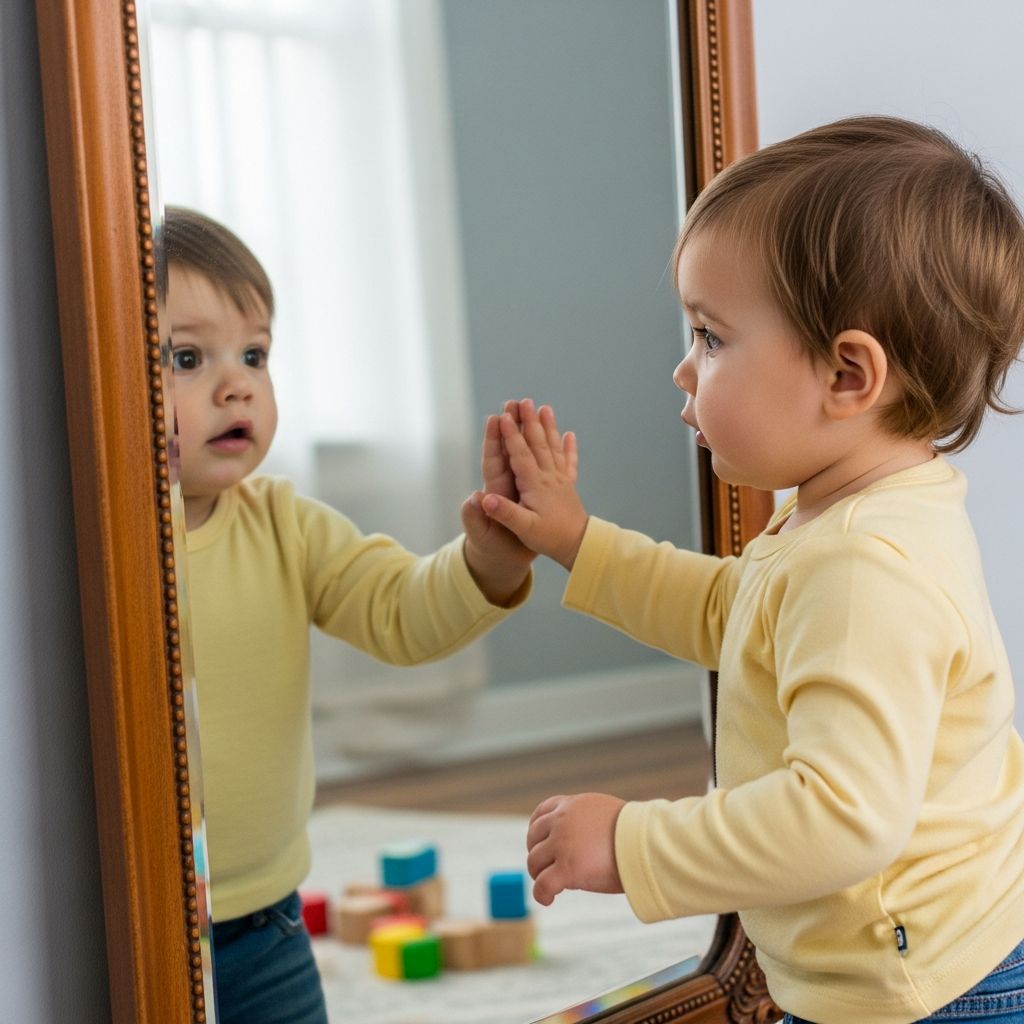
In the vibrant world of early childhood, the period between 15 and 24 months marks a profound cognitive leap: the emergence of **self-awareness**. This is when children begin to grasp that they are distinct individuals with their own thoughts, feelings, and presence in the world. Far from mere curiosity, this milestone lays the groundwork for emotional regulation, social skills, and personal identity.
Understanding Self-Awareness in Young Children
Self-awareness refers to a child’s ability to recognize themselves as separate from others and the environment. It evolves through stages, with the 15-24 month window spotlighting **identification**—the realization that one’s mirror image is oneself. Research by developmental psychologist Philippe Rochat outlines five levels, from basic differentiation at birth to meta-self-awareness around age 4. During toddlerhood, children transition from situational awareness to true self-identification.
This development integrates visual perception, memory, and social cues. Toddlers must compare their known appearance with the reflection, a process demanding advanced cognition. Social interactions amplify this, as caregivers’ responses reinforce the child’s sense of self.
Key Stages Leading to the 15-24 Month Breakthrough
Self-awareness builds progressively. Here’s a breakdown of foundational stages:
- Birth to 2 Months (Differentiation): Infants distinguish their body from surroundings, reaching for objects or enjoying tummy time mirrors without understanding the reflection.
- 2-6 Months (Situational Awareness): Babies mimic facial expressions, grasping their position relative to the environment. Smiles and coos at mirrors treat it as a playmate.
- 6-12 Months (Exploration): More interaction with the mirror—touching, looking behind—signals growing interest, though no self-recognition yet.
- 12-18 Months (Partial Recognition): Children use mirrors to inspect hidden body parts, hinting at an emerging connection between image and self.
By 15-24 months, full recognition dawns, transforming mirror play into a self-discovery tool.
The Mirror Recognition Milestone: What to Expect
Between 15 and 24 months, toddlers pass the classic **rouge test** (or mark test), developed by Gordon Gallup and adapted for children. A mark is placed on the child’s face (e.g., a sticker or dot); if they touch their own face upon seeing it in the mirror rather than the glass, they recognize the reflection as themselves. Studies show most children achieve this by 18-24 months.
Signs include:
- Pointing to or naming themselves in mirrors (e.g., “baby!” or their name).
- Emotional reactions like surprise or delight at their image.
- Using mirrors to check appearance or make faces intentionally.
Cross-cultural variations exist; some studies note delays in certain groups, but 18-24 months remains the norm.
| Age Range | Behavior | Developmental Level (Rochat) |
|---|---|---|
| 15-18 Months | Curious inspection, occasional self-touch | Level 3: Identification emerging |
| 18-24 Months | Clear self-touch in rouge test, self-naming | Level 3: Full identification |
| 24+ Months | Oscillates between “me” and third-person | Transition to Level 4: Permanence |
This table summarizes observable behaviors aligned with Rochat’s framework.
Why Self-Awareness Matters for Toddler Growth
Beyond mirrors, self-awareness fuels broader development. It enables **emotional awareness**, where toddlers label feelings (“happy,” “sad”), aiding regulation. Socially, it fosters empathy—understanding others have separate minds.
Cognitively, it supports language bursts, as children reference themselves (“mine,” “me do it”). Physically, body self-awareness emerges, with toddlers saying “so big” while lifting arms, coordinating self-perception with action.
Long-term, early self-awareness correlates with better peer interactions and resilience. Delays may signal needs for stimulation or evaluation.
Practical Activities to Nurture Self-Recognition
Parents can actively support this milestone with simple, engaging play:
- Mirror Games: Set up a safe, full-length mirror for dancing, waving, or peek-a-boo. Narrate: “There’s you! Look at your smile!”
- Body Part Identification: Point to eyes, nose in mirror and on face. Use songs like “Head, Shoulders, Knees, and Toes.”
- Gentle Mark Test at Home: Apply washable paint dot; observe reactions without pressure.
- Photo Albums: Show baby photos, asking “Who’s this?” to bridge past and present self.
- Dress-Up Play: Hats, scarves in mirror encourage experimentation with identity.
Incorporate these daily for 10-15 minutes. Montessori-inspired tools like tummy time mirrors aid earlier stages.
Common Challenges and Variations
Not all toddlers hit milestones simultaneously. Some shy away from mirrors due to novelty; others oscillate, calling their reflection by name. Factors include temperament, exposure, and culture—collectivist societies may delay verbal self-reference.
If no recognition by 24 months, consult pediatricians. It rarely indicates issues but ensures holistic check-ups.
Emotional and Social Ripples of Self-Discovery
As self-awareness blooms, toddlers assert independence (“no!” phase), testing boundaries. This is healthy, building autonomy. Parents should validate feelings: “You feel mad; it’s okay to feel that.”
Socially, they engage more selectively, preferring familiar faces, precursor to friendships. Self-recognition enhances turn-taking and sharing comprehension.
Expert Insights from Developmental Science
Philippe Rochat’s model, echoed in peer-reviewed work, emphasizes gradualism. A PMC study on toddlers highlights body self-awareness via gestures like “so big,” aligning with reflective self-awareness in the second year.
UConn research notes cultural nuances, urging inclusive assessments.
Frequently Asked Questions (FAQs)
What if my 20-month-old doesn’t recognize themselves in the mirror?
Variations are normal; increase mirror play. Monitor other milestones; consult if concerned by 24-30 months.
How does self-awareness link to potty training?
Body awareness aids toilet independence, as toddlers connect sensations to actions.
Can too much mirror time be overwhelming?
Keep sessions short and fun; watch for overstimulation signs like fussiness.
Does gender affect self-awareness timing?
No significant differences; individual pace prevails.
How to encourage shy toddlers?
Gently introduce with parent-child mirror play to build comfort.
Supporting Long-Term Development
Foster self-awareness through responsive parenting: label emotions, encourage choices, model self-talk. This scaffolds advanced stages like permanence (2-4 years) and self-consciousness (4+).
By nurturing this 15-24 month window, parents equip toddlers for confident, empathetic futures.
References
- How children develop self-awareness — Busy Brains Activity Packs. 2023. https://www.busybrainsactivitypacks.co.uk/post/how-children-develop-self-awareness
- When do babies recognize themselves in the mirror — GrowGo Kids. 2023. https://growgokids.com/blogs/the-montessori-blog/when-do-babies-recognize-themselves-in-the-mirror
- The 5 Stages Of Self-Awareness Explain What Babies See — Fatherly. 2023. https://www.fatherly.com/health/children-five-stages-self-awareness-mirror-tests
- Reflecting on babies and mirror play — First Things First. 2023. https://www.firstthingsfirst.org/first-things/reflecting-on-babies-and-mirror-play/
- When do Infants Develop a Sense of Self? — UConn KIDS (.edu). 2023-10-23. https://kids.uconn.edu/2023/10/23/when-do-infants-develop-a-sense-of-self/
- “So Big”: The Development of Body Self-awareness in Toddlers — PMC (NIH.gov). 2012. https://pmc.ncbi.nlm.nih.gov/articles/PMC3351035/