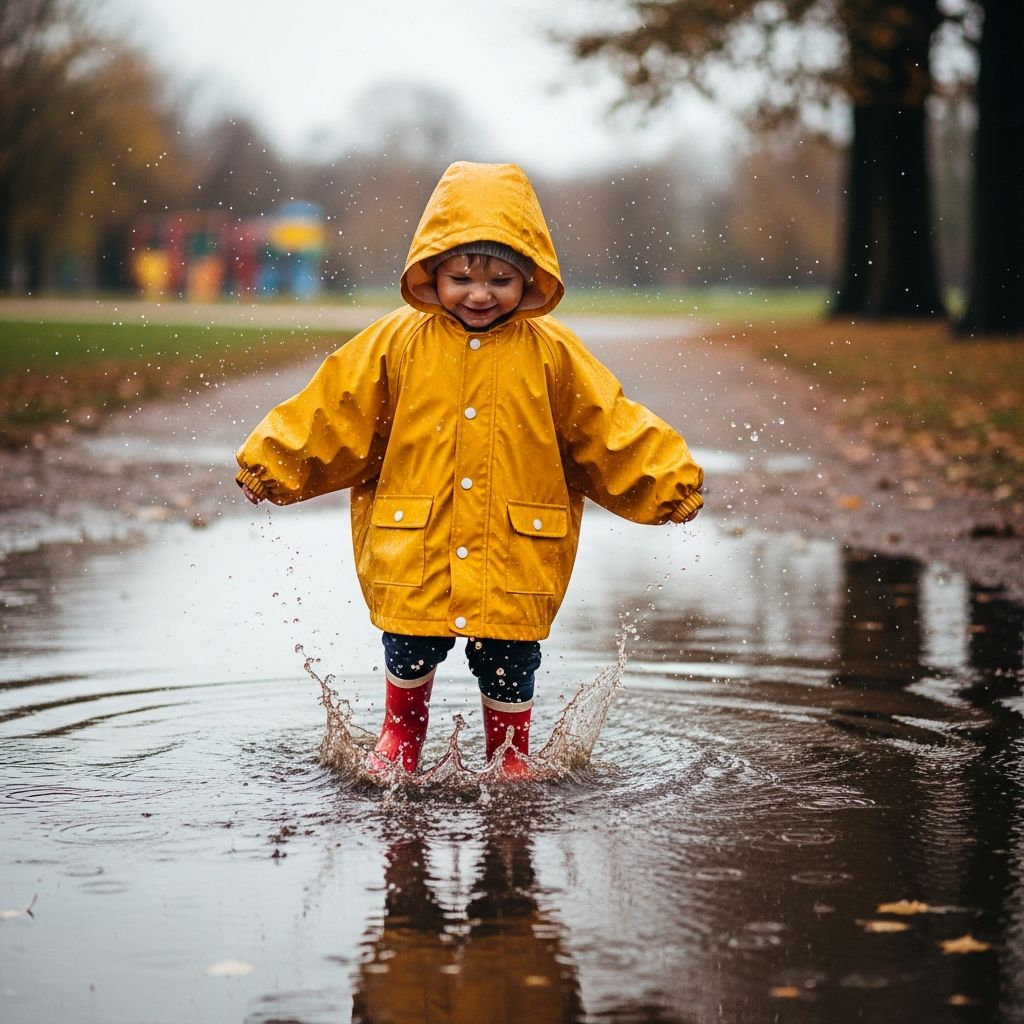
Rainy weather does not have to cancel your toddler’s fun or leave you wrestling with soggy clothes and tears. With the right raincoat and a bit of planning, wet days can become some of your family’s most memorable adventures.
Why Toddlers Need a Real Raincoat (Not Just a Cute Jacket)
Toddlers experience weather with their whole body. When they jump in puddles or chase raindrops, a normal light jacket quickly soaks through, leaving them cold, wet, and cranky. A well-designed raincoat does more than look adorable—it keeps your child warm, dry, and able to play longer.
Unlike basic windbreakers, true raincoats for toddlers use waterproof or highly water-resistant fabrics, taped seams, and secure closures to block out rain from shoulders, zipper seams, and hood openings. These small details add up to a big difference in comfort and safety.
Key Features to Look For in a Toddler Raincoat
Before you fall in love with a pattern or character design, it helps to understand the functional details that actually matter. Use the checklist below as a quick reference when comparing options online or in-store.
1. Waterproof vs. Water-Resistant: Know the Difference
The most confusing part of buying rain gear is often the language on the tags. Knowing a few simple terms will help you avoid disappointment after the first heavy shower.
- Water-resistant: Sheds light rain for short periods but may soak through in steady or heavy rain.
- Waterproof: Designed to keep water out even in longer or heavier rainfall, often with sealed or taped seams.
- Breathable: Allows sweat vapor to escape so your child does not get clammy or overheated while running around.
2. Fabrics and Construction Details
Fabric choice affects everything from comfort to durability. Toddlers test clothing hard, so it pays to understand what you are buying.
- Polyurethane (PU) coated fabric: Often used in classic slicker-style coats, highly waterproof but usually less breathable.
- Lightweight technical fabrics: Common in outdoor brands, offer a blend of water protection and breathability.
- Fully taped seams: Thin waterproof tape applied to interior seams to stop water creeping through stitching.
- Storm flaps: Extra fabric that covers zippers or snaps to block wind and water entry.
3. Hood Design That Actually Stays On
Many toddlers hate hoods that slip into their eyes or blow off in the wind. Thoughtful design can make a big difference in whether your child keeps the hood up.
- Shaped or brimmed hood: Helps keep rain off the face without blocking vision.
- Elastic edges or adjustable tabs: Allow the hood to hug the head without being tight.
- Soft lining around the chin: Prevents irritation from zippers and seams.
4. Closures Little Hands Can Manage
Independence is a big deal for toddlers, and easy closures support both their confidence and your morning routine.
- Large snaps or chunky zippers: Easier for small fingers to grip.
- Zipper with fabric pull tab: Gives toddlers something substantial to hold.
- Inside zipper guard: Prevents pinched skin and catches on clothing.
5. Safety and Visibility in Low Light
Rain often arrives with grey skies and early dusk, making it harder for drivers and cyclists to see small children. Built-in safety details add peace of mind.
- Reflective piping or patches: Helps your toddler stand out in dim or rainy conditions.
- Bright or high-contrast colors: Increase visibility on busy sidewalks or playgrounds.
- Secure fit around wrists and hem: Prevents loose fabric that can catch on playground equipment.
Finding the Right Fit for a Growing Toddler
Toddlers grow at astonishing speed, and it is tempting to size up several years to get more wear. However, a coat that is far too large can ride up, expose wrists to rain, and make walking or climbing stairs unsafe.
Simple Fit Guidelines
- Allow enough room for a light sweater or hoodie underneath without pulling at the shoulders.
- Check that sleeves end at the wrist bone, not halfway over the hand.
- Make sure your child can raise both arms comfortably without the hem flying up to the waist.
- Test walking, squatting, and climbing up one step while wearing the coat.
Size-Up Strategy That Works
If you plan to buy slightly large, aim for no more than one size up from your child’s current size and rely on adjustable details to fine-tune the fit.
- Look for elastic cuffs to keep sleeves from sliding over the hands.
- Opt for drawcord or elastic at the hem on older toddlers to reduce tripping risk.
- Choose a coat with a straight rather than extra-long cut for easier active play.
| Area | What to Check | Signs It’s Too Big |
|---|---|---|
| Shoulders | Seams should sit near the edge of the shoulders. | Seams droop halfway down the upper arm. |
| Sleeves | End at wrist with arms relaxed. | Covers most of the hand even when arms are bent. |
| Length | Hits between mid-hip and mid-thigh. | So long that your child steps on the hem when walking. |
| Movement | Child can run, squat, and climb comfortably. | Coat twists, rides up, or restricts arm movement. |
Warmth, Layers, and What to Wear Underneath
No two rainy days are the same. Some are warm and muggy, others cold and blustery. Instead of relying on a single very heavy coat, think in terms of layers that can be added or removed.
Lined vs. Unlined Raincoats
Both lined and unlined coats can work well if paired correctly with base layers. The best choice depends on your climate and how active your child is outdoors.
- Lined raincoats: Often feature fleece or soft knit lining for extra warmth in cool to cold conditions.
- Unlined shells: Lightweight and flexible, ideal for mild temperatures and easy to wear over sweatshirts or light jackets.
Smart Layering Formula
Use a simple three-step formula to keep your toddler comfortable:
- Base layer: Soft cotton or moisture-wicking top and leggings that feel good against the skin.
- Warm layer: Thin fleece or sweatshirt for chilly days.
- Rain layer: Waterproof or water-resistant raincoat to block wind and rain.
Design Details Toddlers Love (So They Actually Wear the Coat)
Even the most technically impressive raincoat fails if your toddler refuses to put it on. Fun design details can turn a practical item into a beloved part of their rainy-day outfit.
- Playful prints and characters: Animals, vehicles, and bold patterns often motivate kids to dress themselves.
- Pockets for treasures: Deep, easy-to-open pockets give toddlers a place to stash rocks, leaves, and tiny toys.
- Matching pieces: Coordinated boots or an umbrella create a sense of excitement around rainy weather.
- Soft linings: Fleece-lined hoods and collars feel cozy and reduce complaints about scratchiness.
Rainy-Day Safety Tips for Little Adventurers
Once your toddler is properly dressed, it is easier to focus on safety. Wet sidewalks and deep puddles introduce hazards that may not exist on dry days.
- Teach your child to avoid large street-side puddles where cars pass.
- Choose non-slip soles on rain boots to limit sliding on wet playground surfaces.
- Remind toddlers to walk slowly on metal grates, painted lines, and wooden bridges, which become slick when wet.
- For stroller rides, use both a stroller rain cover and your child’s raincoat to keep them warm and visible.
Caring for a Toddler Raincoat So It Lasts
Between mud, grass, and snack spills, toddler coats go through a lot. With a bit of simple care, you can keep the fabric performing well and maintain bright colors for hand-me-downs or resale.
Basic Care Routine
- Shake off loose dirt and hang to dry after each wet outing.
- Check the care label before washing; many raincoats prefer gentle cycles and mild detergents.
- Avoid fabric softener, which can interfere with water-repellent finishes.
- Store on a hanger rather than stuffed into a bin to protect the shape of the hood and seams.
Turning Rainy Days Into Play Days
Once your toddler is warm and dry, rain becomes another invitation to explore rather than a reason to stay inside. Planning a few simple activities can turn a dull afternoon into a sensory-rich adventure.
- Puddle patrol: Walk around your neighborhood rating puddles by splash size.
- Leaf boats: Float leaves or small sticks down gutters or along the edges of safe, shallow streams.
- Rain listening game: Find sheltered spots and notice how rain sounds on different surfaces: umbrellas, metal railings, or tree leaves.
- Color hunt: Challenge your toddler to find bright colors hidden in a grey day, like flowers, signs, or other raincoats.
Quick Buying Checklist for Parents in a Hurry
If you are shopping with a tab open and a toddler climbing your lap, use this shortened list to make a fast, confident choice.
- Waterproof or at least highly water-resistant material.
- Hood that stays put, with comfortable lining around the face.
- Easy-to-use zipper or snaps with protective flap.
- Reflective details or bright colors for visibility.
- Room for one warm layer underneath without looking oversized.
- Fun color or pattern your child gets excited about.
FAQs About Toddler Raincoats
How many raincoats does my toddler really need?
Most families do well with one reliable everyday raincoat that works across seasons and a lighter backup jacket or packable shell, especially if daycare or preschool involves outdoor play in all weather.
Should I buy a size bigger so the coat lasts longer?
Buying one size up is usually fine as long as your child can still walk, climb, and play safely without tripping or having sleeves completely covering their hands. Excessively oversized coats can be uncomfortable and may not protect well because openings gape and let rain in.
Is a lined raincoat too warm for my climate?
In mild or warm climates, a fully fleece-lined coat may feel too hot, especially for very active toddlers. Consider an unlined shell paired with layers, which offers more flexibility across different temperatures.
What if my toddler hates wearing a hood?
Look for a softer, better-shaped hood and involve your child in choosing colors or patterns. Practice wearing the hood indoors for short periods and play pretend games—such as being a superhero or explorer—to help them get used to the feeling.
Can a raincoat replace a winter jacket?
A raincoat with warm lining may work in cool, damp weather but is usually not enough for very cold temperatures without additional insulation. For true winter conditions, pair the rain shell with warm layers or use a dedicated insulated coat when it is very cold and dry.
With the right toddler raincoat, you gain more than protection from the weather—you gain freedom. You are no longer stuck staring out the window; instead, you and your child can step into the drizzle, splash a little, and enjoy the simple magic of rainy days together.