Protein is vital for children’s growth, supporting muscle development, immune function, and overall health. However, misconceptions about needing high amounts can lead parents to overfeed protein-rich foods, potentially causing health issues. This article explores evidence-based protein requirements, risks of excess, and strategies for balanced nutrition.
Why Protein Matters for Growing Children
During childhood, bodies undergo rapid changes requiring adequate protein for tissue repair, hormone production, and enzyme activity. Unlike adults, kids’ needs are higher relative to body weight to fuel growth spurts. Health experts emphasize that while protein is essential, most children easily meet needs through varied diets without supplements.
The body efficiently uses protein from everyday foods like dairy, eggs, beans, and lean meats. Overemphasis on protein can crowd out other nutrients like fiber and vitamins from fruits and vegetables.
Age-Specific Protein Recommendations
Protein needs vary by age, weight, and activity level. Guidelines from authoritative sources provide clear benchmarks in grams per kilogram of body weight or total daily grams.
| Age Group | RDA (g/kg/day) | Example Daily Grams (for avg. weight) |
|---|---|---|
| 1-3 years | 1.05 | 13g (13kg child) |
| 4-8 years | 0.95 | 19g (20kg child) |
| 9-13 years | 0.95 | 34g (36kg child) |
| 14-18 years (girls) | 0.85 | 46g |
| 14-18 years (boys) | 0.85 | 52g |
These figures represent the Recommended Dietary Allowance (RDA), set to meet 97-98% of healthy children’s needs. Newer research using indicator amino acid oxidation (IAAO) suggests slightly higher needs, around 1.55 g/kg/day for some school-age kids, but classic nitrogen balance methods underpin current standards.
Protein from Common Foods: A Practical Guide
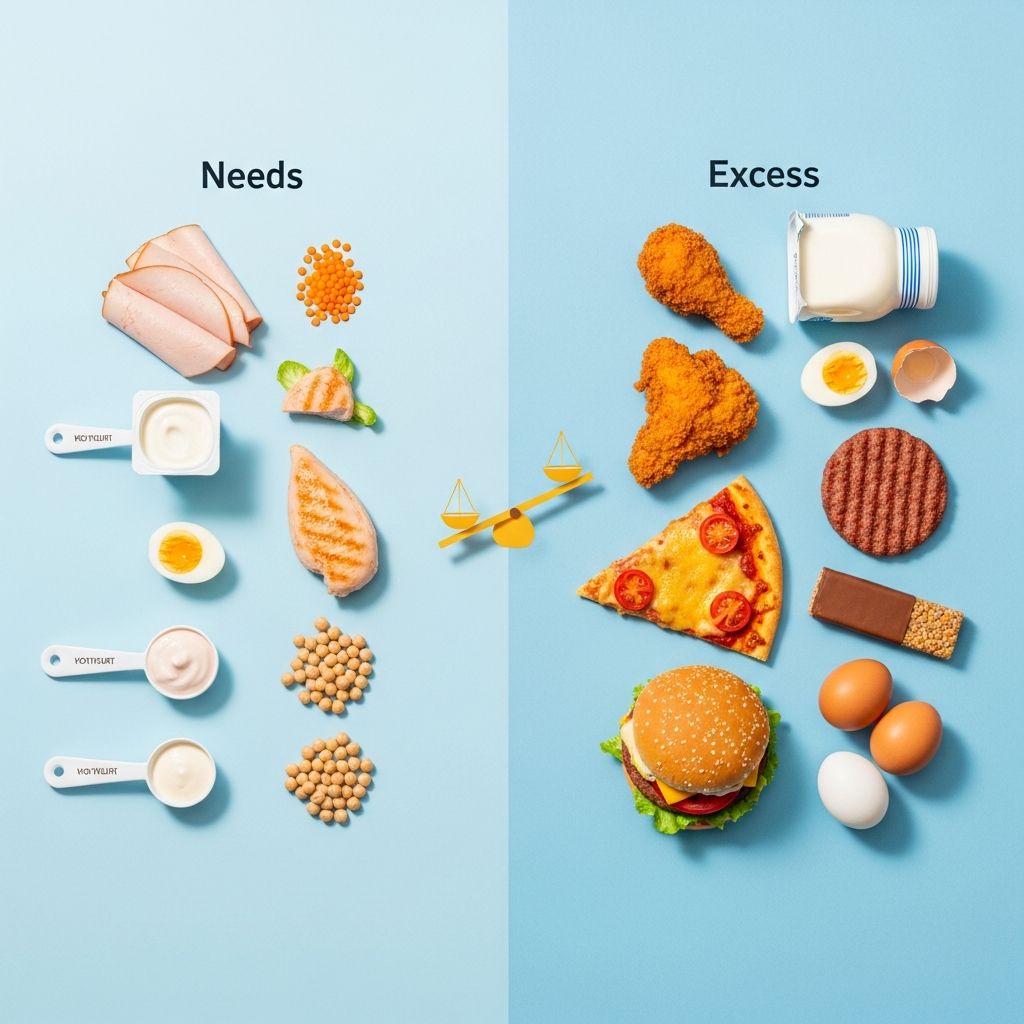
Children rarely lack protein in developed countries; excess is more common. Here’s how protein adds up in typical servings:
- 1 cup milk: 8g
- 1 oz cheese: 6-8g
- 1 cup yogurt: 8g; Greek yogurt: up to 18g
- 2 tbsp nut butter: 7g
- ½ cup tofu: 20g
- ½ cup cooked veggies: 1-3g
- 1 slice bread or ½ cup pasta: 2-4g
A single glass of milk provides nearly two-thirds of a toddler’s daily needs. Combine with meals, and totals quickly exceed minimums.
Dangers of Excessive Protein Intake
While moderate excess is usually harmless, chronic overconsumption poses risks, especially from animal sources or supplements.
Kidney and Organ Strain
High protein loads force kidneys to work harder filtering byproducts like urea. In children with undiagnosed kidney issues, this can exacerbate problems. Even healthy kids may face long-term strain if diets skew heavily protein-focused.
Weight Gain and Obesity Risk
Protein-rich foods are calorie-dense. Excess calories from shakes or bars contribute to obesity, a growing concern as childhood BMI rates rise. Protein supplements often add unnecessary sugars and fats.
Nutrient Imbalances
Over-relying on protein sources like milk limits variety. Toddlers drinking over 24 oz daily risk iron-deficiency anemia, constipation, and poor veggie intake. Dairy crowds out iron-rich foods, stunting development.
Bone Health Concerns
Some studies link very high animal protein to calcium leaching from bones, though evidence in kids is limited. Balanced intake supports, not harms, skeletal growth.
Signs Your Child Might Be Getting Too Much
- Frequent constipation or hard stools from low fiber.
- Unexplained weight gain despite activity.
- Refusal of fruits/veggies, leading to picky eating.
- Reliance on shakes, bars, or excess meat/dairy.
- Dehydration symptoms if water intake lags protein.
Track intake via food diaries or apps. Consult pediatricians if concerns arise.
Building Balanced Meals Without Protein Overload
Aim for MyPlate guidelines: half plate fruits/veggies, quarter grains, quarter protein, plus dairy.
| Age | Daily Protein (oz-equiv) | Example Meal Plan |
|---|---|---|
| 2-4 years | 2-5 oz | Breakfast: Oatmeal + yogurt (3oz eq); Lunch: PB sandwich (2oz); Dinner: Chicken + veggies (2oz). |
| 5-8 years | 3-5.5 oz | Snack: Cheese stick (1oz); Focus on beans/lentils for variety. |
| 9-13 years | 4-6.5 oz | Include fish twice weekly for omega-3s. |
| 14-18 years | 5-7 oz | Athletes may need slight uptick, but whole foods first. |
Incorporate plant proteins like lentils (18g/cup cooked), eggs (6g each), and quinoa for diversity and fiber.
Special Cases: Active Kids and Picky Eaters
Athletes or growing teens may require 1.2-1.5g/kg, but rarely exceed via diet alone. Avoid supplements unless medically advised.
For picky eaters, hide protein in smoothies, muffins, or sauces. Beyond nuggets, try bean dips, cheese quesadillas, or nutty pancakes.
Role of Dairy in Protein Balance
Dairy provides high-quality protein but limit to age-appropriate ounces: 16-24 oz/day. Pair with vitamin C foods to boost iron absorption, countering anemia risks.
Expert Advice from Pediatric Nutritionists
Focus on whole foods over fads. RDA covers nearly all kids; excess offers no growth edge and may harm. Regular check-ups monitor via growth charts and bloodwork.
Frequently Asked Questions
Can too much protein stunt growth?
No direct evidence, but imbalances disrupt nutrition, indirectly affecting development.
Do vegetarian kids get enough protein?
Yes, via beans, nuts, dairy/eggs, tofu. Variety ensures complete amino acids.
When to worry about low protein?
Rare; signs include fatigue, slow growth. Consult doctor for personalized assessment.
Are protein shakes safe for kids?
Often unnecessary and risky due to additives; prioritize food sources.
How to calculate child’s exact needs?
Multiply body weight (kg) by age-specific g/kg from RDA tables.
References
- How Much Is Too Much Protein for Your Child? — Orlando Health. 2023. https://www.orlandohealth.com/content-hub/how-much-is-too-much-protein-for-your-child/
- Dietary Protein Requirements in Children: Methods for Consideration — PMC (NCBI). 2021-05-25. https://pmc.ncbi.nlm.nih.gov/articles/PMC8147948/
- Nutrition Note: How Much Protein for Kids — Responsive Feeding Pro. Accessed 2026. https://responsivefeedingpro.com/protein/
- Nutrition for kids: Guidelines for a healthy diet — Mayo Clinic. 2023-10-06. https://www.mayoclinic.org/healthy-lifestyle/childrens-health/in-depth/nutrition-for-kids/art-20049335
- Protein for Kids: Is Too Much Protein Bad? — Cleveland Clinic. 2022-08-11. https://health.clevelandclinic.org/why-extra-protein-for-your-child-is-unnecessary-and-possibly-dangerous
- Protein Foods Group – One of the Five Food Groups — MyPlate.gov (USDA). Accessed 2026. https://www.myplate.gov/eat-healthy/protein-foods