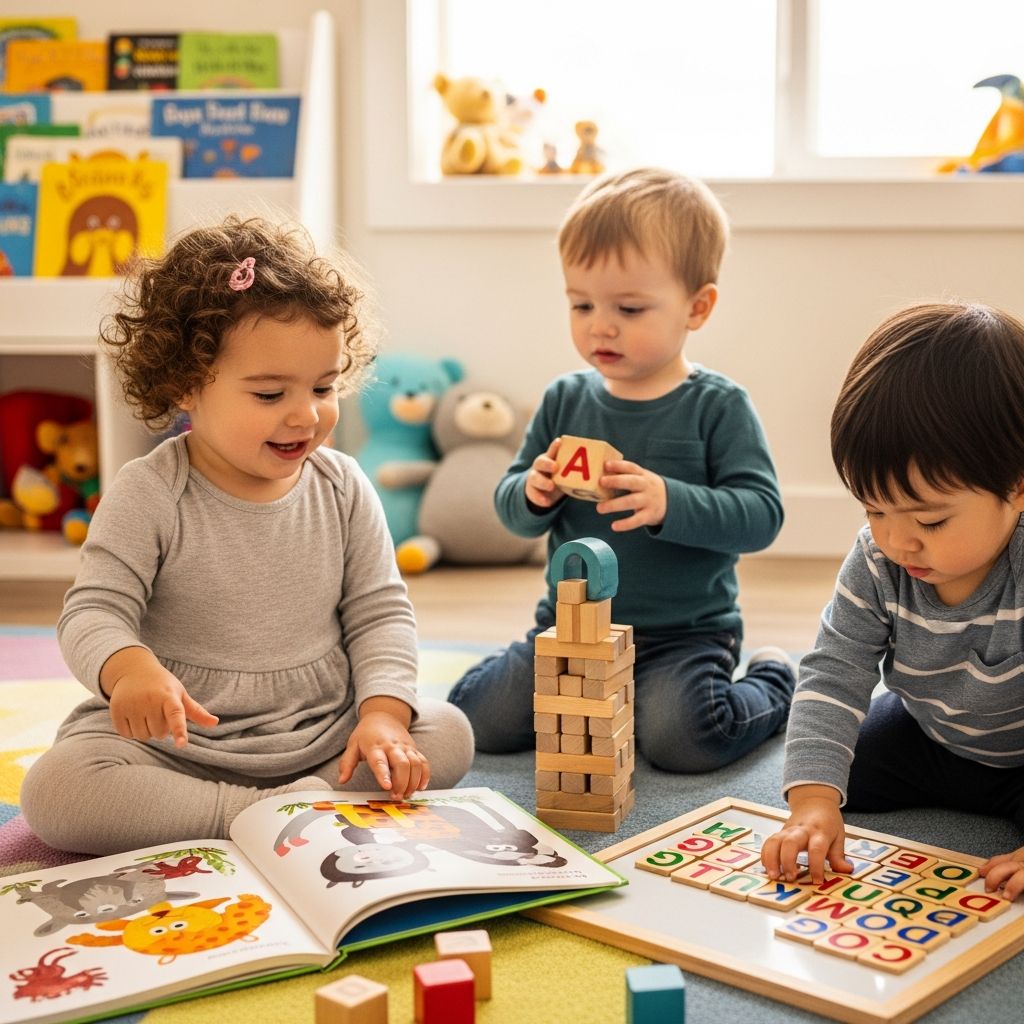
Between 32 and 39 months, toddlers experience a remarkable surge in language abilities, often reaching a vocabulary of around 1000 words. This period marks a transition from basic phrases to more sophisticated expressions, enabling children to articulate thoughts, emotions, and needs with greater clarity.
Understanding the Vocabulary Explosion
The leap to 1000 words reflects rapid neural development in brain areas responsible for language processing. Toddlers at this stage comprehend far more words than they produce, absorbing new terms daily through everyday interactions. Nouns dominate early, naming objects like ‘dog’ or ‘ball,’ but verbs (‘run,’ ‘eat’), adjectives (‘big,’ ‘soft’), and pronouns (‘mine,’ ‘yours’) quickly follow.
By 36 months, many children use question words such as ‘what,’ ‘where,’ and ‘why,’ signaling deeper curiosity and cognitive growth. This expansion isn’t uniform; bilingual households may see divided vocabularies across languages, yet total word count remains comparable.
Key Language Milestones by Age
| Age Range | Vocabulary Size | Sentence Length | Key Skills |
|---|---|---|---|
| 32-34 Months | 400-600 words | 3-4 words | Uses plurals (‘dogs’), simple past tense (‘walked’), follows 2-step directions |
| 35-36 Months | 600-800 words | 4-5 words | Spatial concepts (‘in,’ ‘on’), descriptive words (‘happy,’ ‘wet’), group objects |
| 37-39 Months | 800-1000+ words | 5+ words | Complex sentences, tells stories, 75% intelligible to strangers |
This table summarizes typical progress, though individual variation is normal. Strangers understand about 75% of speech by 39 months.
Grammar and Sentence Building Progress
Toddlers shift from telegraphic speech (‘me go’) to structured sentences (‘I’m going to the park’). They experiment with plurals (‘foots’ instead of ‘feet’) and past tenses (‘goed’ for ‘went’), refining rules through trial and error. By late in this period, possessives (‘my toy’) and comparatives (‘bigger’) emerge, laying groundwork for school-ready language.
- Pronoun mastery: Distinguishes ‘I/me,’ ‘you/her,’ enhancing social exchanges.
- Question formation: ‘Where is the ball?’ shows inflection and intent.
- Prepositions: ‘Put it under the table’ demonstrates spatial awareness.
How Play Fuels Language Growth
Play is the cornerstone of language development during these months. Pretend play with toys involves narrating actions (‘The doll is sleeping’), building narrative skills. Group play teaches turn-taking and sharing vocabulary, while rhyming games and songs expand phonemic awareness.
Daily reading exposes children to 1000+ words indirectly. Pointing to pictures and asking ‘What’s this?’ encourages labeling and description. Singing nursery rhymes like ‘Wheels on the Bus’ reinforces rhythm and repetition, aiding memory.
Parenting Strategies to Boost Vocabulary
Parents play a pivotal role by creating language-rich environments. Narrate routines (‘We’re washing hands now’) to model new words. Expand utterances: If a child says ‘big dog,’ respond ‘Yes, that’s a big, fluffy dog!’.
- Daily reading rituals: Choose interactive books with textures or flaps.
- Conversational turns: Pause for responses, avoiding interruptions.
- Label everything: Name emotions, colors, and actions during play.
- Sing and rhyme: Repetition solidifies sounds and words.
- Limit screens: Prioritize human interaction for nuanced learning.
These techniques can accelerate vocabulary to 1000 words by 39 months.
Recognizing and Addressing Delays
Monitor for red flags. At 32 months, children should combine 2+ words and follow simple instructions. By 39 months, expect 3+ word sentences and stranger intelligibility. Concerns include:
- No 2-word combos by 32 months.
- Limited vocabulary (<200 words) at 36 months.
- Difficulty with pronouns or directions.
If delays appear, consult pediatricians early. Speech therapy yields excellent outcomes, especially before age 3. Bilingualism doesn’t cause delays; exposure to both languages supports overall growth.
Bilingual Language Development Insights
In multilingual homes, toddlers track separate vocabularies per language, reaching milestones similarly to monolinguals. Encourage both by reading in native tongues and mixing playmates. Code-switching (‘I want agua’) is normal and fades naturally.
Long-Term Benefits of Early Language Mastery
A robust 1000-word vocabulary at 39 months predicts stronger reading, math, and social skills in school. Early communicators excel in problem-solving and empathy, as language shapes thought. Investing now yields lifelong cognitive advantages.
Frequently Asked Questions (FAQs)
What if my 36-month-old has fewer than 500 words?
Variation is common; track progress over months. If stagnant, seek evaluation from a speech-language pathologist.
How can I help my toddler speak more clearly?
Model slow, clear speech, exaggerate sounds in play, and avoid correcting harshly—focus on expansion.
Is screen time okay for language learning?
Limit to interactive, educational content under 1 hour daily; live talk trumps passive viewing.
Should I worry about grammar errors like ‘goed’?
No, these are developmental; gentle modeling corrects over time without frustration.
Can reading too much overwhelm a toddler?
Never—short, frequent sessions match attention spans and spark joy in discovery.
Daily Language Activity Planner
| Time of Day | Activity | Target Skills | Expected Words Gained |
|---|---|---|---|
| Morning | Breakfast narration | Nouns, verbs | 5-10 new |
| Midday | Book reading + questions | Descriptions, questions | 10-15 |
| Afternoon | Pretend play with toys | Sentences, storytelling | 8-12 |
| Evening | Songs and rhymes | Sounds, memory | 5-10 |
Use this planner to systematically build vocabulary toward the 1000-word goal.
From 32 to 39 months, language becomes a bridge to independence. Consistent engagement turns everyday moments into learning opportunities, empowering toddlers to express their vibrant worlds.
References
- Language development: 2-3 years — Raising Children Network. 2023. https://raisingchildren.net.au/toddlers/development/language-development/language-2-3-years
- Age-Appropriate Speech and Language Milestones — Children’s Hospital of Philadelphia (CHOP). 2024-10-01. https://www.chop.edu/health-resources/age-appropriate-speech-and-language-milestones
- Language Development: 1-3 Years — KidCentral TN. 2023. https://www.kidcentraltn.com/development/1-3-years/language-development-1-3-years.html
- Speech and Language Developmental Milestones for 2-Year-Olds — TherapyWorks. 2024. https://therapyworks.com/blog/developmental-milestones/speech-and-language-developmental-milestones-two-year-olds/
- Speech and language development (from 12 to 24 months) — Great Ormond Street Hospital (GOSH). 2023. https://www.gosh.nhs.uk/conditions-and-treatments/procedures-and-treatments/speech-and-language-development-12-24-months/
- Language and Speech Skills for Children Ages 2–3 Years — St. Jude Children’s Research Hospital. 2022-08-01. https://together.stjude.org/en-us/emotional-support-daily-life/early-childhood-development/language-development-2-to-3-years.html
- Communication Milestones: 2 to 3 Years — American Speech-Language-Hearing Association (ASHA). 2024. https://www.asha.org/public/developmental-milestones/communication-milestones-2-to-3-years/