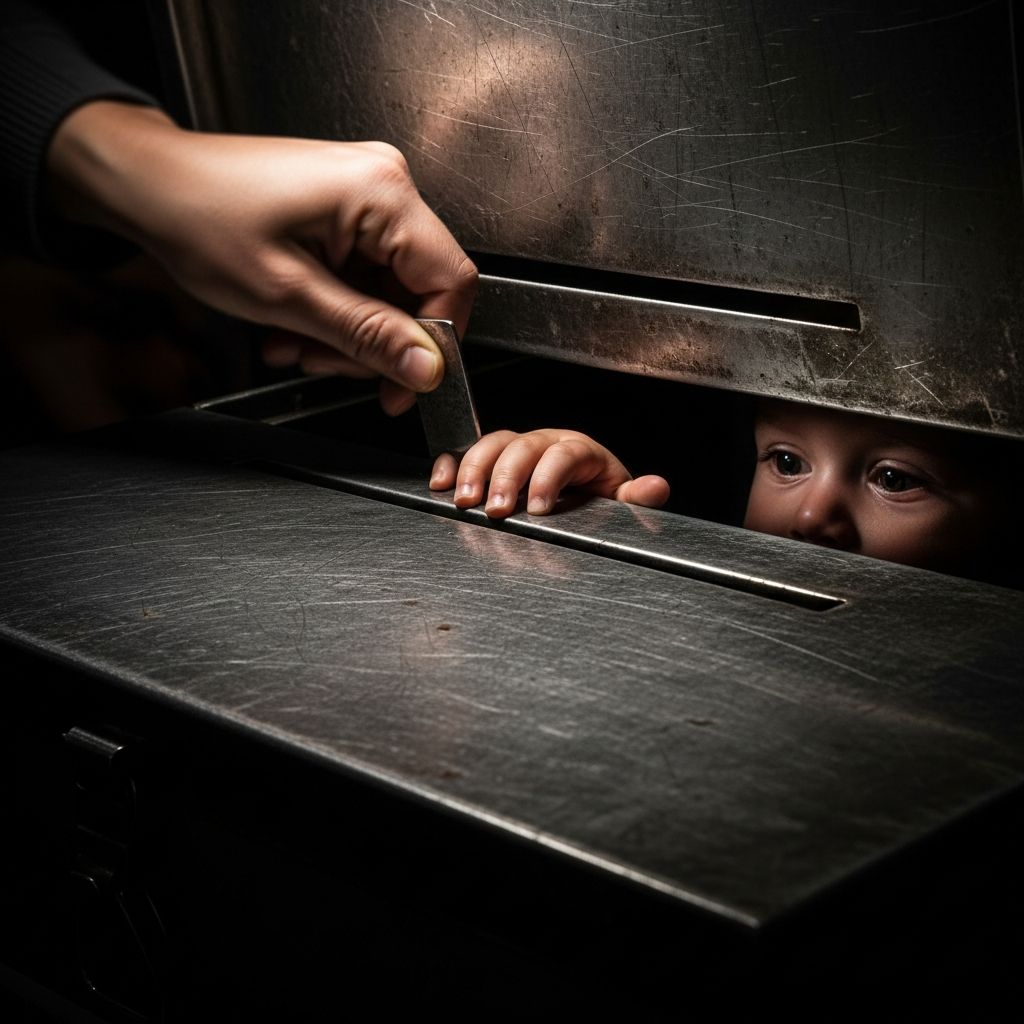
In an ordinary home setting, an everyday object like a ballot box became the site of an unexpected adventure for a curious 20-month-old. What started as playful exploration quickly turned into a moment of panic when the child couldn’t free himself. This incident sheds light on the unpredictable nature of toddler behavior and the importance of swift parental action.
The Moment Curiosity Took Over
Toddlers at 20 months are bundles of energy and discovery. Their world is one giant playground, where even mundane items spark fascination. In this case, a simple ballot box—perhaps used for family votes on dinner choices or game nights—caught the little one’s eye. With small hands and boundless determination, he climbed in, only to find the sides too high to escape.
Parents often describe this age as a whirlwind of ‘why’ and ‘what if.’ Motor skills are developing rapidly, allowing kids to climb, pull, and squeeze into tight spaces. Yet, their judgment lags behind, leading to situations like this. The ballot box, with its sturdy frame and enclosed design, mimicked a toy fort but proved inescapable without help.
Recognizing the Signs of Trouble
When the child’s mother noticed his absence briefly, then heard muffled cries from the living room corner, alarm set in. Initial attempts to lift him out failed due to the awkward angle and his wedged position. Key signs included distressed vocalizations, flushed skin from exertion, and immobility—classic indicators that a child needs immediate assistance.
- Crying patterns: From playful giggles to urgent wails signals escalation.
- Body language: Struggling movements turning to stillness indicate fatigue.
- Environmental clues: Overturned toys or displaced furniture near the incident spot.
Understanding these cues can mean the difference between a quick fix and a call for professionals. Parents equipped with this knowledge act faster, minimizing stress for everyone involved.
Step-by-Step Home Rescue Techniques
Before dialing emergency services, many parents try safe extraction methods. Here’s how this situation unfolded:
- Stay calm: Reassure the child with a soothing voice to prevent panic-induced tightening of muscles.
- Assess position: Gently check limbs and head for pressure points without forcing movement.
- Use leverage: Slide a soft towel or cloth under to create slip, then lift steadily.
- Enlist help: A second adult provides stability while pulling upward.
In this instance, after several tries, the mother succeeded by tilting the box slightly and guiding her son’s arms upward. Success came within minutes, avoiding injury. However, if resistance persists or the child shows signs of distress like breathing difficulty, professionals are essential.
Why Ballot Boxes and Similar Items Pose Hidden Risks
Common household containers like ballot boxes, laundry hampers, or storage bins are deceptively inviting. Their open tops and solid bases create perfect ‘traps’ for little bodies. Statistics from child safety organizations reveal thousands of entrapment cases annually, often in overlooked spots.
| Item Type | Common Age Affected | Risk Level | Prevention Tip |
|---|---|---|---|
| Ballot/Storage Boxes | 18-24 months | Medium | Secure lids or relocate to high shelves |
| Laundry Baskets | 12-30 months | High | Use mesh sides for visibility |
| Toy Chests | 2-4 years | High | Install hinge stops and ventilation |
| Dressers/Cabinets | 1-3 years | Critical | Anchor to walls firmly |
This table outlines prevalent hazards, emphasizing proactive measures. Data underscores that most incidents occur in living areas, where supervision seems constant but lapses happen.
Childproofing Your Home: Essential Strategies
Prevention trumps reaction every time. For families with active toddlers, transforming the home into a safe haven is crucial. Start with a room-by-room audit:
Living Room Safeguards: Anchor heavy furniture, cover outlets, and gate off tempting enclosures. Ballot boxes should either have removable lids or be placed out of reach.
Kitchen Defenses: Cabinet locks and appliance guards prevent access to drawers that could serve as climbing aids.
Bedroom Basics: Crib safety standards from the Consumer Product Safety Commission mandate no drop sides and firm mattresses to avoid entrapment analogs.
Invest in soft-edged bumpers for sharp corners and visibility nets for larger containers. Regular drills, like mock rescues, build parental confidence.
When to Call for Professional Help
Not all entrapments resolve at home. Red flags include:
- Visible injury or bruising.
- Prolonged crying exceeding 5 minutes.
- Inability to move any limb.
- Signs of circulatory issues like cold extremities.
Fire departments excel at such rescues, equipped with tools like hydraulic spreaders for delicate extractions. In urban areas, response times average under 10 minutes, per national fire data. Post-rescue, always consult a pediatrician to rule out subtle harms like joint strains.
Developmental Insights: Why Toddlers Love Tight Spaces
At 20 months, children enter a phase of spatial exploration. Piaget’s sensorimotor stage evolves into preoperational thinking, where object permanence fuels hide-and-seek instincts. Tight spaces offer sensory feedback—pressure on skin, muffled sounds—that delights their developing senses.
However, poor spatial awareness means they underestimate escape challenges. Encouraging safe play, like tunnel toys or padded playpens, channels this urge constructively.
Parental Reflections and Community Lessons
Mothers sharing similar stories online foster solidarity. This ballot box event, while minor, reminds us of vulnerability. Forums buzz with tips: “Label risky items,” or “Toddler cams for split-second monitoring.” Building a network amplifies safety smarts.
One parent noted, “It took seconds for curiosity to win; vigilance is our superpower.” Such anecdotes humanize stats, urging collective vigilance.
Frequently Asked Questions
What should I do if my toddler gets stuck in furniture?
Remain calm, try gentle lifting with lubrication like lotion on skin, and call 911 if unresolved within minutes. Comfort the child throughout.
How can I toddler-proof storage boxes?
Opt for low-sided designs, add handles inside, or store them elevated. Regular checks prevent complacency.
Is 20 months a peak age for entrapment risks?
Yes, as mobility surges while caution develops slowly. Peak incidents occur between 18-24 months per safety reports.
Do these incidents cause long-term harm?
Rarely, if addressed promptly. Monitor for bruising or fear responses post-event.
What toys mimic safe enclosure play?
Pop-up tents, foam tunnels, and playhouses with easy exits satisfy the instinct without danger.
Building Resilience Through Play
Turn scares into teachable moments. Post-rescue, narrate the event simply: “You were brave in the box! Next time, we play outside it.” Positive reinforcement builds problem-solving skills.
Enroll in parent-child safety classes offered by Red Cross or local health departments. They simulate scenarios, boosting preparedness.
Ultimately, this tale celebrates toddler tenacity and parental prowess. Homes will always host mini-adventures; equipping ourselves ensures happy endings.
References
- Child Entrapment in Household Furniture — U.S. Consumer Product Safety Commission. 2023-06-15. https://www.cpsc.gov/s3fs-public/EntrapmentHazards.pdf
- Toddler Safety Guidelines for Indoor Play — American Academy of Pediatrics. 2024-02-10. https://publications.aap.org/pediatrics/article/153/2/e2023063791/196112
- National Fire Department Response Times — National Fire Protection Association. 2025-01-20. https://www.nfpa.org/News-and-Research/Data-research-and-tools/Emergency-Responders/US-fire-department-profile
- Developmental Milestones: 18-24 Months — Centers for Disease Control and Prevention. 2024-11-05. https://www.cdc.gov/ncbddd/actearly/milestones/milestones-2yr.html
- Hoax Awareness in Child Safety Social Media — Better Business Bureau. 2016-10-12. https://wsbt.com/news/local/child-shot-by-nail-gun-facebook-post-is-a-hoax