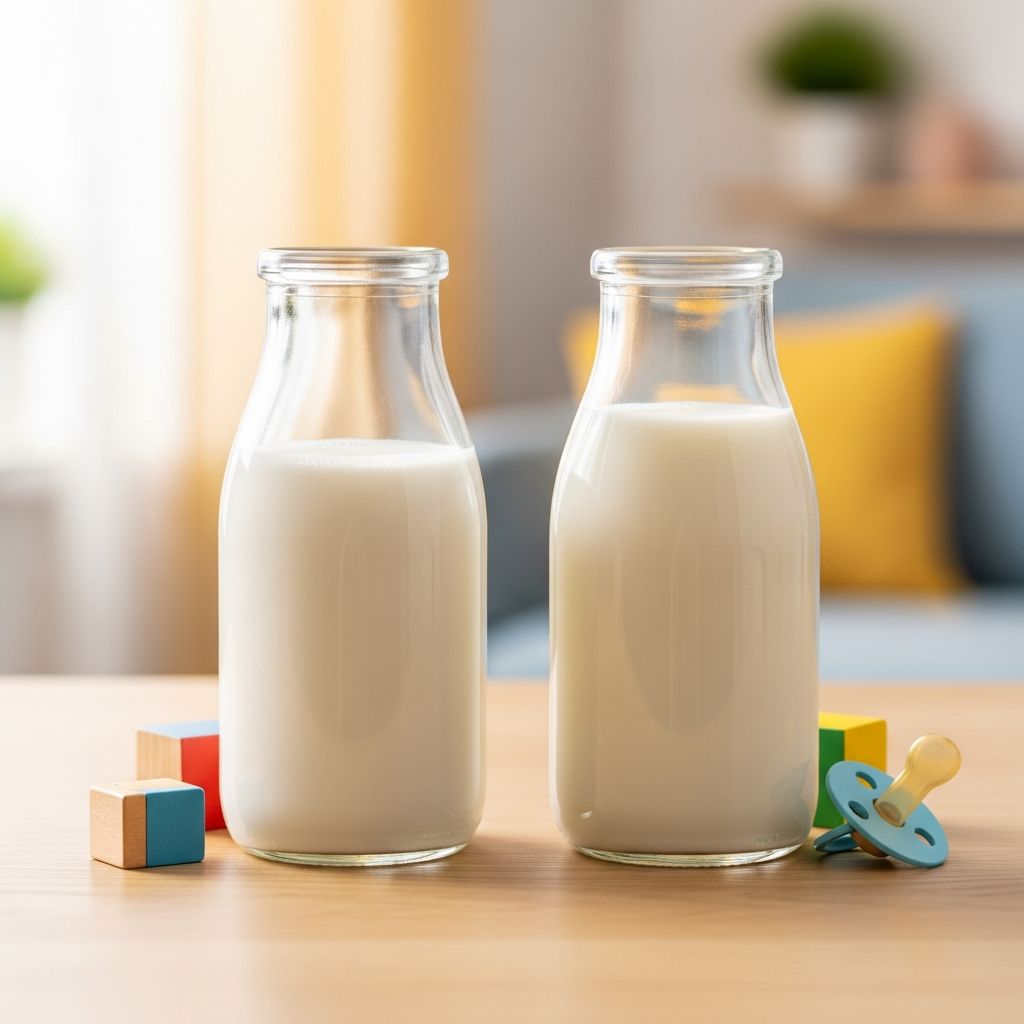
When a child turns one, many parents suddenly face a new and confusing question: should that bedtime bottle or cup hold toddler formula or milk? This stage can feel like stepping into a gray area between babyhood and childhood, with strong opinions, persuasive marketing, and very real worries about nutrition and growth.
Why This Transition Matters
The first three years of life are a time of rapid brain development, growth, and learning. What a toddler drinks during this period can support healthy development, fill nutritional gaps from a picky diet, or, if chosen without guidance, pile on unnecessary sugar and cost.
Understanding the role of toddler formula compared with milk, breast milk, and solid foods can make this transition calmer, more practical, and better aligned with your child’s actual needs.
What Exactly Is Toddler Formula?
Toddler formula is a powdered or ready-to-drink beverage marketed for children usually between 12 and 36 months. It is designed to be more nutrient-dense than ordinary milk and is often promoted as a way to “bridge the gap” between infant formula and a full table-food diet.
- Typically based on cow’s milk, goat’s milk, or plant proteins, with added fats, vitamins, and minerals.
- Often sweetened and flavored to taste pleasant and encourage enthusiastic drinking.
- Sold as a supplement to solid foods, not as a sole source of nutrition.
How Toddler Formula Differs from Infant Formula
Infant formula is tightly regulated to provide almost everything a baby under 12 months needs when breast milk is not available. It aims to be the primary milk source and is carefully balanced in calories, protein, and micronutrients for that age group.
Toddler formula, in contrast, is intended for children who are also eating a variety of solid foods. It may have different amounts of protein and fat than infant formula and can sometimes contain more added sugars or flavorings, since it is not intended to be the only source of nutrition.
| Feature | Infant Formula | Toddler Formula |
|---|---|---|
| Intended age range | Birth to 12 months | 12 to 36 months (varies by brand) |
| Main purpose | Primary source of nutrition | Supplement to a toddler’s diet |
| Regulation | Strict composition standards | Less tightly regulated; often treated as a supplement or beverage |
| Typical sugar content | Generally controlled and clearly labeled | May contain more added sugars or sweeteners |
| Marketing focus | Basic nutrition and medical need | Brain support, immunity, picky eater solutions, and convenience |
Milk Options After the First Birthday
After the first birthday, the liquid side of a child’s diet opens up. Most healthy toddlers no longer rely on a single milk source and are expected to get a significant portion of calories from solid foods.
Parents commonly consider several options, each with benefits and drawbacks depending on the child’s health, family habits, and cultural or ethical values.
- Whole cow’s milk: A widely used choice, offering fat, protein, and calcium for bone development.
- Fortified plant milks: Soy, pea, or other plant-based drinks with added calcium and vitamins for families avoiding dairy.
- Continued breastfeeding: Often used alongside solid foods, providing immune and comfort benefits as long as parent and child wish to continue.
- Specialized medical formulas: Prescribed when allergies, metabolic conditions, or growth concerns exist.
Nutritional Needs of Toddlers in Simple Terms
Between 1 and 3 years of age, growth begins to slow compared with infancy, but the brain is still developing rapidly. Toddlers need enough calories to support movement and play, plus steady supplies of iron, calcium, vitamin D, healthy fats, and protein.
A typical healthy toddler can meet these needs through a diet that includes fruits, vegetables, proteins, whole grains, and a source of milk or fortified drink, without necessarily relying on toddler formula. The emphasis shifts from a single “perfect” drink to the overall pattern of daily meals and snacks.
When Toddler Formula May Be Helpful
Although many children do not need toddler formula at all, there are specific situations where a fortified drink can serve as a helpful backup. The key is to see it as a tool, not a requirement or a replacement for balanced meals.
- Poor growth or medical conditions: Some children with low weight gain or particular diagnoses may benefit from an energy-dense drink recommended by a health professional.
- Very selective eating: During short-term phases of extreme pickiness, a toddler formula can bridge small nutrient gaps while a family works on expanding food variety.
- Limited access to varied foods: In circumstances where family diets lack diversity, a fortified beverage may provide additional vitamins and minerals.
In these contexts, using toddler formula under medical guidance can be reassuring while also keeping the focus on gradually improving the solid-food diet.
When Toddler Formula May Be Unnecessary
For a healthy child who eats at least some variety of foods, drinks milk or a suitable alternative, and grows along a stable curve, toddler formula often adds more cost than benefit. In such cases, it may simply displace regular foods without significantly improving nutrition.
- If your child enjoys yogurt, cheese, beans, eggs, meats, fruits, and grains, the main nutritional boxes are likely being checked already.
- If the diet includes a reliable source of calcium and vitamin D, such as fortified milk or plant drinks, there may be little added value in buying toddler-specific products.
- If the formula is being used primarily because of persuasive packaging, stepping back to reconsider your child’s actual needs can be helpful.
Comparing Toddler Formula and Milk
Both toddler formula and milk can play a role in a toddler’s diet, but they do so in slightly different ways. One is marketed as a targeted nutritional solution, the other as a more straightforward, everyday food.
| Aspect | Toddler Formula | Whole Cow’s Milk | Fortified Plant Milk (e.g., soy) |
|---|---|---|---|
| Primary role | Supplement or snack drink | Everyday beverage with meals and snacks | Alternative to dairy for families avoiding cow’s milk |
| Typical nutrient profile | Fortified; may emphasize iron, DHA, and other nutrients | Rich in fat, protein, and calcium but not usually iron-fortified | Varies by brand; better choices are unsweetened and calcium/vitamin D-fortified |
| Added sugars | Sometimes present; flavors can increase sugar content | Generally contains natural milk sugar (lactose), not added sugars | Some varieties are sweetened; labels need checking |
| Cost | Often significantly higher per serving | Usually more affordable and widely available | Can be higher than cow’s milk but often cheaper than specialized toddler drinks |
| Ideal for | Targeted use for picky eaters or medical concerns with professional guidance | Most healthy toddlers with varied diets | Families needing dairy-free options and willing to choose carefully fortified brands |
The Marketing Trap: What Labels Don’t Tell You
Toddler formulas are often packaged with bold claims about brain power, immune support, or perfect nutrition for picky eaters. These phrases can make parents feel that their child is missing out if they do not buy a specialized beverage.
However, those impressive claims usually sit on top of a simple reality: for most children, a balanced, food-focused diet supported by milk or a suitable alternative can meet nutritional needs without relying on expensive, sweetened drinks. Scrutinizing ingredient lists, sugar content, and serving suggestions can reveal whether the product truly matches your goals.
Signs Your Toddler Is Ready to Move On
Transitioning away from infant formula or exclusive breastfeeding can feel emotional and uncertain. Looking for specific developmental and nutritional signs can help you decide whether to lean on toddler formula or move directly to milk and solid foods.
- Your child is eating at least three times a day, with snacks, and shows interest in different textures and flavors.
- Growth checks show consistent progress, even if your child is naturally smaller or larger than peers.
- Mealtimes include a mix of proteins, grains, fruits, vegetables, and some form of calcium-rich food or drink.
- The bottle or breast is more of a comfort anchor than the main source of calories.
Practical Steps for Transitioning
Changing what a toddler drinks rarely happens in a single day. A gradual, gentle approach gives a child time to adjust to new flavors and routines while giving caregivers a chance to monitor tolerance and preferences.
- Start small: Replace one daily feeding of infant formula with milk, toddler formula, or breast milk in a cup, depending on your plan.
- Mix and adjust: For children hesitant about flavor changes, begin with a mixture (for example, part infant formula with part milk) and slowly shift the balance.
- Focus on the cup: Introduce cups or straw cups and gradually reduce bottle use to protect teeth and encourage self-feeding skills.
- Pair with food: Offer the new drink alongside a small, familiar snack to provide context and comfort.
- Watch for reactions: Monitor for rashes, digestive discomfort, or major changes in bowel habits that might signal sensitivity.
Common Myths About Toddler Formula
The toddler formula aisle can sow doubts even in confident parents. Separating myths from realistic expectations helps you choose from a place of information rather than fear.
- “Every child needs toddler formula.” Many toddlers thrive on food plus milk or fortified plant drinks without any specialized beverage.
- “It guarantees perfect nutrition.” No single product can compensate for a chronically unbalanced diet, lack of variety, or persistent mealtime tension.
- “More fortified drink equals better growth.” Overusing calorie-dense drinks can sometimes reduce appetite for solid foods and does not automatically translate to healthier development.
- “If my toddler refuses milk, formula is the only answer.” Some children accept yogurt, cheese, tofu, or fortified foods more readily; formula is one option, not the only one.
Safety, Sugar, and Teeth
Beyond nutrition, parents also need to consider long-term health habits. Drinks that are sweet, even if they are marketed as nutritious, can shape a child’s taste preferences and affect dental health.
- Check the label: Look for words indicating added sugars and compare them across brands if you decide to use a toddler formula.
- Avoid constant sipping: Offering bottles or cups of sweetened drinks throughout the day can bathe teeth in sugar and increase the risk of cavities.
- Rinse and brush: Establish tooth-brushing routines and consider offering plain water after milk or formula, especially before sleep.
Cost and Convenience in Real Life
Even if a product seems nutritionally sound, the real-world realities of cost, preparation, and availability matter. Toddler formulas are usually more expensive per serving than regular milk or fortified plant beverages, and they require ongoing purchase.
Families juggling multiple children, work, and tight budgets may find that investing time in simple, varied meals and affordable milk options yields equal or better benefits than committing to a long-term toddler formula habit. Convenience can still be honored through strategies like batch cooking, snack prep, and keeping easy, nutrient-dense foods on hand.
Putting It All Together: How to Decide
Choosing between toddler formula and milk is ultimately about matching products to your child’s specific situation, not about following one-size-fits-all rules. Consider your child’s growth patterns, medical history, eating behavior, and your family’s cultural practices and budget.
- For most healthy toddlers with access to varied foods, whole milk or an appropriate fortified plant drink, plus balanced meals, is usually sufficient.
- For toddlers with feeding challenges, medical conditions, or restricted diets, toddler formulas or specialized medical drinks can play a strategic, time-limited role.
- For families unsure where their child falls, discussing growth charts, dietary patterns, and realistic options with a health professional can bring welcome clarity.
Frequently Asked Questions
Is toddler formula safer than milk?
Safety depends on how each is used. Both toddler formula and milk can be safe when stored, prepared, and served correctly. For a typical healthy toddler, properly handled milk is considered a safe, appropriate choice, while toddler formula is not generally safer but may be useful in special cases.
Can I skip toddler formula altogether?
Yes. Many families move directly from infant formula or exclusive breastfeeding to a pattern of regular meals, snacks, and milk or fortified plant beverages without ever using toddler formula. As long as growth is on track and the overall diet is balanced, this approach is usually acceptable.
What if my child hates the taste of milk?
Some toddlers need time to accept new flavors. You can try serving milk very cold, offering it in different cups, using it in smoothies, or serving calcium-rich foods like yogurt, cheese, or fortified alternatives. If concerns about intake or growth persist, talk with a health professional about whether a fortified drink, including toddler formula, might be helpful for a period of time.
How much milk or formula does a toddler need each day?
Most toddlers do well with a modest amount of milk or fortified beverage spread across the day, rather than constant access. Too much liquid nutrition, whether from milk or formula, can reduce appetite for solids. An individualized recommendation from a health professional can consider age, weight, and eating patterns.
Does using toddler formula guarantee my child will get all needed vitamins?
No drink can compensate for a consistently unbalanced diet or lack of food variety. Toddler formulas can help cover mild gaps when used appropriately, but they should not be seen as a replacement for exposing children to a broad range of whole foods and building positive mealtime habits.