The transition from infancy to early childhood marks a critical period for establishing eating behaviors that can influence long-term health outcomes. Between ages one and three, toddlers begin developing preferences, independence, and autonomy around food choices. Parents and caregivers play a crucial role during this developmental window by creating environments and implementing practices that normalize healthy eating while preventing problematic feeding behaviors from taking root. Understanding the physiological needs, behavioral patterns, and psychological factors that influence toddler eating can help caregivers make informed decisions that support both nutritional adequacy and positive food relationships.
Understanding Toddler Eating Patterns and Appetite Variations
One of the most challenging aspects of feeding toddlers involves understanding that their eating patterns differ significantly from adult models. Rather than consuming three substantial meals daily, toddlers naturally gravitate toward frequent, smaller eating occasions throughout the day. This grazing pattern reflects their physiological reality: toddlers have considerably smaller stomach capacities than older children and adults, yet require consistent energy intake to fuel rapid growth, development, and physical activity. Parents frequently express concern when their toddler consumes minimal amounts at dinner or refuses traditionally expected portion sizes, but this variation in appetite and intake across meals and days represents normal developmental behavior rather than a feeding problem.
Daily fluctuations in appetite occur naturally as toddlers experience growth spurts, varying activity levels, developmental milestones, and changing food preferences. Rather than viewing these variations as problematic, caregivers benefit from adopting a flexible perspective that allows children to self-regulate their food intake based on internal hunger and fullness cues. When toddlers are permitted to respond to their body’s signals without pressure to finish predetermined portions, they develop the capacity to recognize and honor their nutritional needs throughout life—a protective factor against disordered eating patterns.
Creating Structured Meal and Snack Schedules
While toddlers require frequent eating opportunities, establishing a consistent framework prevents constant grazing that might interfere with appetite at mealtimes or create excessive snacking on less nutritious options. A predictable schedule of planned meals and snacks—typically three meals and two to three snacks—provides toddlers with clear expectations while allowing adequate time for hunger to develop between eating occasions. This structure proves particularly beneficial when introducing new foods, as toddlers arrive at meals with genuine appetite rather than diminished interest from recent snacking.
Scheduling also supports family participation in meals, a key protective factor for developing healthy eating habits. When mealtimes occur at consistent times, family members can gather around the table together, allowing toddlers to observe and imitate positive eating behaviors modeled by parents and older siblings. The social and relational aspects of shared meals extend beyond nutrition; they provide opportunities for connection, conversation, and the development of mealtime skills.
Introducing Foods Safely and Strategically
As toddlers expand their diet beyond infant foods, caregivers must balance the introduction of variety with careful attention to developmental readiness and safety considerations. New foods require specific preparation and presentation approaches to ensure both physical safety and psychological receptiveness.
Texture and Safety Considerations
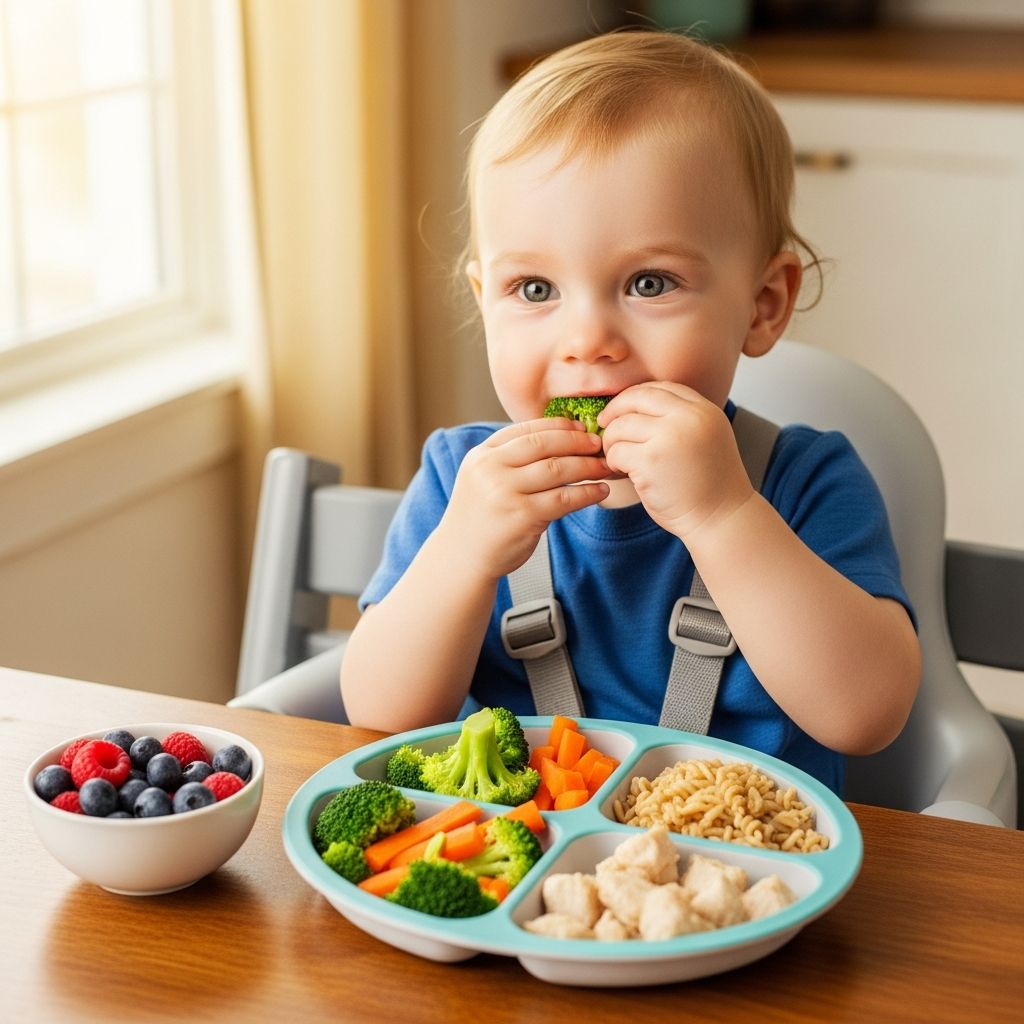
Toddlers in the early stages still benefit from foods that are appropriately modified for their developing chewing and swallowing abilities. Hard, tough, sticky, or overly chewy foods present choking hazards and should be avoided or modified. Raw vegetables like carrots and nuts, hard candies, popcorn, and whole grapes pose particular risks. Instead, offering lightly steamed vegetable sticks, small soft pieces, and foods cut into age-appropriate sizes supports safe exploration while maintaining nutritional value. Constant supervision during eating times, encouraging children to remain seated while consuming food, and teaching children to chew thoroughly before swallowing establish safety practices that become habitual.
Portion Sizes and Presentation
The visual impact of food on a plate influences toddler receptiveness to eating. Large portions can feel overwhelming and may discourage toddlers from attempting new foods or finishing nutritious meals. Offering small initial amounts—sometimes just a few bites—makes the eating experience feel manageable while reducing food waste. If a toddler enjoys the offering, additional servings can be provided. This approach demonstrates respect for the child’s autonomy while preventing the common pattern of parents forcing consumption or using pressure tactics that undermine healthy self-regulation.
Presentation also matters significantly. Toddlers show increased receptiveness to foods arranged creatively, in colorful combinations, or in recognizable shapes. Involving children in the visual presentation of their own meals—allowing them to participate in arranging foods on their plate or helping with simple preparation—increases engagement with eating and willingness to try unfamiliar options.
Strategic Approaches to Expanding Food Acceptance
Many parents worry that their toddler eats too narrow a range of foods. While some food preferences are developmentally typical, caregivers can employ evidence-based strategies to gradually expand acceptance and encourage nutritional variety.
The Principle of Repeated Exposure
Research demonstrates that repeated exposure represents the single most effective strategy for increasing children’s acceptance of new foods. A toddler may require ten or more exposures to a novel food before displaying genuine acceptance, yet many parents abandon foods after only one or two rejections. Consistency in offering a variety of foods—including vegetables, fruits, proteins, and whole grains—alongside familiar favorites gradually normalizes these options in the child’s eating experience. When foods appear regularly on family plates and parents demonstrate enjoyment of these same foods, children gradually develop familiarity and comfort that often precedes acceptance.
Food Pairing and Flavor Bridges
Strategic pairing of unfamiliar foods with flavors toddlers naturally prefer increases willingness to try new options. Combining bitter-flavored vegetables like broccoli with familiar, slightly salty or savory elements—such as grated cheese or a preferred dip—creates combinations that appeal to toddler taste preferences while introducing nutritional diversity. Similarly, “food bridges” leverage accepted foods to introduce others with similar sensory characteristics, gradually expanding the toddler’s culinary repertoire.
Involvement in Food Selection and Preparation
Toddlers who participate in selecting foods at grocery stores, farmers markets, or home gardens, and who engage in simple food preparation tasks, develop greater investment in and enthusiasm for eating. Even young toddlers can participate in washing vegetables, stirring ingredients, selecting fresh herbs, or arranging foods on plates. This hands-on involvement transforms eating from a passive activity into an interactive, exploratory process that satisfies toddlers’ emerging autonomy while normalizing a variety of foods.
Establishing a Positive Mealtime Environment
The physical and emotional environment surrounding meals significantly influences toddler eating behaviors and attitudes toward food. Creating pleasant, distraction-minimal spaces supports both the eating experience and the development of healthy food relationships.
Physical Setup and Accessibility
Ensuring toddlers can comfortably reach their plates and utensils, using child-sized or plastic dishware that prevents injury from breakage, and accepting that messiness is an inevitable and valuable part of learning to eat independently all contribute to positive mealtime experiences. Placing protective coverings beneath tables or chairs accommodates the cleanup demands of toddler eating without creating stress or negative associations with mealtimes. Adjusting seating heights so toddlers participate at eye level with the family table enhances their sense of inclusion and ability to observe family members’ eating behaviors.
Minimizing Distractions and Media
Television, tablets, and other media devices distract from the sensory and social experience of eating, interfering with children’s ability to recognize hunger and fullness cues while preventing meaningful family interaction during meals. Establishing a clear expectation that media remains off during eating occasions creates space for conversation, observation of food-related modeling, and development of the mealtime skills that support lifelong healthy eating.
Emotional Tone and Discipline
Mealtimes should represent a break from discipline and correction. Using eating occasions to address behavioral issues, punish children, or create stress transforms meals into negative experiences rather than pleasurable, nourishing activities. Pleasant conversation, encouragement of self-feeding, and positive attention to the eating process itself foster positive associations with food and family meals that extend into adulthood.
Preventing Common Feeding Challenges and Problematic Patterns
Certain parenting practices, though well-intentioned, can inadvertently create or reinforce problematic eating behaviors. Understanding which approaches to avoid helps prevent feeding difficulties from developing.
Avoiding Pressure and Coercion
Pressuring toddlers to finish foods, eat amounts that exceed their appetite signals, or consume specific foods teaches children to override their internal hunger and fullness cues in favor of external demands. This pattern undermines the development of healthy self-regulation and can contribute to long-term difficulties with intuitive eating and body awareness. Instead, caregivers determine what foods are offered, when meals and snacks occur, and where eating happens, while children retain autonomy regarding whether and how much to eat from the available options.
Limiting Food-Based Rewards and Punishments
Using desserts, treats, or preferred foods as rewards for eating vegetables or “cleaning their plate” sends problematic messages about food hierarchy that elevate less nutritious foods and create unhealthy associations. Similarly, restricting access to foods or using food removal as punishment can fuel excessive interest in restricted items and create negative emotional associations with eating. Instead, caregivers benefit from presenting all foods—including sweets and treats—in a neutral manner that allows children to develop their own relationship with various foods based on taste and satisfaction rather than external rewards.
Managing Family Food Commentary
Parents’ and family members’ expressions of their own food preferences, dislikes, and dietary restrictions significantly influence toddlers’ developing food attitudes and choices. When caregivers frequently comment on disliking certain vegetables, avoiding specific foods, or expressing dietary restrictions, toddlers internalize these preferences and often adopt similar patterns. Conversely, when family members demonstrate enjoyment of a variety of nutritious foods and refrain from negative commentary about specific foods, toddlers receive implicit permission to develop their own diverse preferences.
Beverages and Nutritional Considerations
The beverages toddlers consume substantially impact both their nutritional intake and appetite patterns. Strategic beverage choices support healthy eating habits while preventing nutritional gaps.
Milk provides important calcium and other nutrients, yet excessive milk consumption can interfere with appetite for other nutritious foods. Limiting milk to approximately three small cups daily (no more than 500 milliliters total), with water offered for thirst at other times, maintains nutritional benefits while ensuring toddlers remain hungry for varied foods. Full-fat milk is recommended through age two, after which reduced-fat options become appropriate.
Fruit juice and sweetened beverages are unnecessary additions to toddler diets and frequently contribute to excessive calorie consumption without corresponding satiety. Water serves as the ideal beverage for thirst and hydration between meals and snacks, supporting proper nutrition and preventing the common pattern of toddlers filling up on beverages rather than consuming nutrient-dense foods.
Modeling and Family Participation
Perhaps the most powerful tool caregivers possess for preventing toddler eating problems involves modeling healthy eating behaviors themselves. Toddlers are astute observers who learn enormously from watching family members, particularly their primary caregivers, interact with food.
When parents demonstrate genuine enjoyment of fruits, vegetables, whole grains, and proteins; consume meals seated at the table with children; and refrain from negative commentary about their own bodies or food choices, toddlers internalize these patterns as normal. Conversely, when caregivers restrict foods, express dissatisfaction with their bodies, or model disordered eating patterns, toddlers absorb these problematic attitudes even when direct instruction emphasizes different values.
Encouraging toddlers to participate in family meals using the same foods prepared for all family members—rather than creating separate toddler meals—normalizes variety and supports the development of diverse food acceptance. This approach requires patience as toddlers gradually sample family foods, but it prevents the common dynamic of short-order cooking that reinforces limited food preferences.
Supporting Physical Activity and Appetite
Regular outdoor activity and physical play support both appetite development and the absorption of nutrients, particularly calcium utilized for bone development. Toddlers engaged in active play arrive at mealtimes with genuine hunger that increases receptiveness to foods and supports adequate nutritional intake. Additionally, establishing patterns of regular physical activity during toddler years creates habits that benefit lifelong health and reduce risk for weight-related health concerns.
Frequently Asked Questions
Q: How many times should I offer a new food before concluding my toddler dislikes it?
A: Research indicates toddlers may require ten or more exposures to a novel food before accepting it. Rather than assuming rejection after one or two offerings, continue presenting new foods regularly alongside familiar favorites over several weeks or months. Pairing unfamiliar foods with preferred flavors can accelerate acceptance.
Q: What should I do if my toddler eats very little at dinner but snacks frequently throughout the day?
A: Establishing a structured schedule with consistent meal and snack times, spaced several hours apart, allows hunger to develop between eating occasions. Limiting snacking, particularly within two hours before meals, supports better appetite at mealtimes while maintaining overall adequate nutrition throughout the day.
Q: Is it acceptable to use dessert as a reward for eating vegetables?
A: No. Using food as rewards creates unhealthy associations where vegetables become negative “obligation” foods and desserts become highly valued prizes. Instead, serve all foods neutrally, allowing children to develop authentic preferences based on taste and satisfaction rather than external incentives.
Q: How can I prevent my toddler from becoming a picky eater?
A: Offer a variety of nutritious foods regularly, involve your toddler in meal planning and preparation, model enjoyment of diverse foods yourself, avoid pressure around eating, allow self-feeding, and maintain realistic expectations about toddler food acceptance. Consistency and patience over months and years gradually expand food acceptance.
Q: What beverages are appropriate for toddlers?
A: Water and milk are the primary beverages for toddlers. Limit milk to approximately three small cups daily (up to 500 milliliters), and offer water for thirst at other times. Avoid juice and sweetened beverages, which provide minimal nutritional value while contributing to excess calorie intake and reduced appetite for nutrient-dense foods.
References
- Teaching Toddlers Good Food Habits — UCSF Benioff Children’s Hospital. Accessed January 2026. https://www.ucsfbenioffchildrens.org/education/teaching-toddlers-good-food-habits
- Eating Tips for Young Toddlers — Better Health Channel, State Government of Victoria. Accessed January 2026. https://www.betterhealth.vic.gov.au/health/healthyliving/eating-tips-for-young-toddlers
- 10 Tips for Parents of Picky Eaters — American Academy of Pediatrics HealthyChildren.org. Accessed January 2026. https://www.healthychildren.org/English/ages-stages/toddler/nutrition/Pages/Picky-Eaters.aspx
- Ages 2-8 Feeding Recommendations — Healthy Eating Research. Accessed January 2026. https://healthyeatingresearch.org/tips-for-families/ages-2-8-feeding-recommendations/