Why Toddlers Need Help with Emotions
Between the ages of one and three, children are rapidly developing physically, cognitively, and socially, but their emotional world is still very new and often overwhelming. They feel deeply, react strongly, and lack the language and brain maturity to manage big feelings like frustration, fear, or disappointment. This is completely normal, but it means that toddlers rely heavily on adults to help them make sense of their inner experiences.
At this stage, the prefrontal cortex—the part of the brain responsible for impulse control, decision-making, and emotional regulation—is still in early development. It won’t be fully mature until young adulthood. This explains why a toddler might burst into tears over a broken cracker or throw themselves on the floor when told it’s time to leave the playground. Their emotions are real, intense, and often disproportionate to the situation, not because they are being difficult, but because their brain simply isn’t equipped yet to calm itself down.
How Toddlers Experience Emotions
From around 12 to 18 months, toddlers begin to show a wider emotional range. They still feel basic emotions like joy, sadness, and anger, but they also start to experience more complex feelings such as fear, embarrassment, pride, and even early forms of empathy. They may look concerned when another child cries or feel proud when they manage to stack blocks on their own.
Because their language skills are still limited, toddlers often communicate their emotions through behavior rather than words. Crying, hitting, screaming, clinging, or withdrawing are all ways they express what they cannot yet say. These behaviors are not defiance; they are signals that the child is overwhelmed and needs help.
The Role of Adults in Emotional Learning
Adults are not just caregivers; they are emotional coaches. When a toddler is upset, the adult’s response shapes how the child learns to understand and handle emotions. A calm, supportive reaction teaches the child that feelings are acceptable, that they can be named, and that they don’t have to be scary or out of control.
Children learn emotional regulation through repeated, predictable interactions. When a parent or caregiver:
- Notices and names the child’s feelings
- Responds with empathy and patience
- Offers comfort and co-regulation
- Models healthy emotional expression
…they are laying the foundation for emotional intelligence that will serve the child for life.
Building Emotional Awareness in Toddlers
One of the first steps in helping toddlers with emotions is helping them become aware of what they are feeling. This doesn’t mean expecting them to analyze their emotions like adults, but rather giving them simple, concrete labels for their experiences.
Use Simple, Clear Language
Instead of asking, “How do you feel?” which can be too abstract, describe what you see:
- “You’re crying. Are you sad because your toy fell?”
- “You’re stomping your feet. Are you mad that it’s time to put the toys away?”
- “You’re smiling and clapping! Are you happy that Grandma is here?”
Over time, these simple statements help the child connect their physical reactions (crying, smiling, yelling) with emotional labels (sad, mad, happy).
Introduce Emotion Words Early and Often
Even before toddlers can speak in full sentences, they can begin to understand emotion words. Use them in everyday moments:
- “The baby is crying. She might be hungry or sad.”
- “You’re laughing! That’s so much fun!”
- “I feel tired after a long day. I need a quiet moment.”
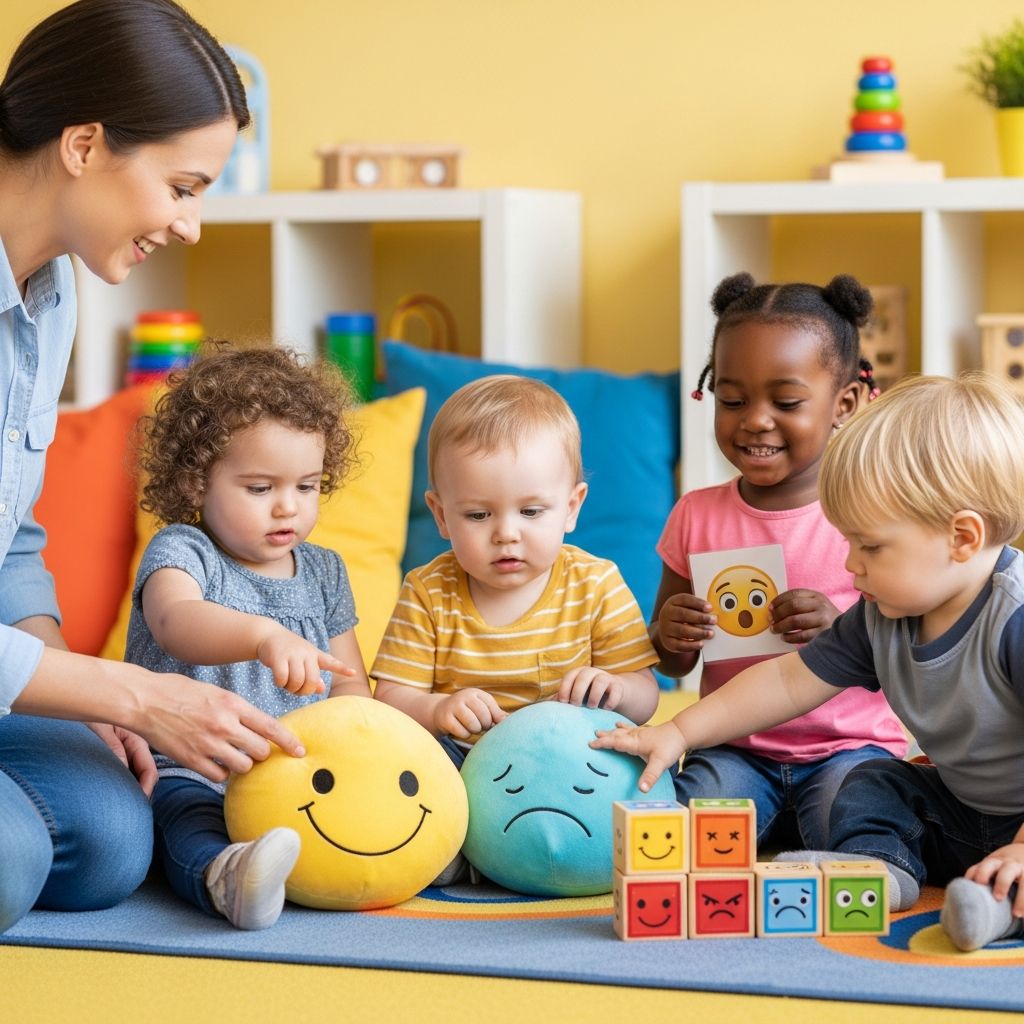
Reading books about feelings, looking at pictures of faces, and playing games that involve matching emotions to expressions can also reinforce this vocabulary.
Teaching Toddlers to Express Emotions Constructively
Once toddlers begin to recognize their emotions, the next step is helping them express those feelings in ways that are safe and respectful. This is where many parents struggle, especially when faced with tantrums, hitting, or screaming.
Set Clear, Consistent Boundaries
It’s important to separate the feeling from the behavior. A toddler is allowed to feel angry, but they are not allowed to hit, kick, or throw things. A helpful way to communicate this is:
- “I see you’re mad. It’s okay to be mad. It’s not okay to hit.”
- “You’re really upset. I won’t let you throw toys. Let’s find a safe way to show that you’re angry.”
Consistency is key. If hitting is sometimes allowed and sometimes not, the child becomes confused and may escalate their behavior to test limits.
Offer Acceptable Alternatives
Instead of just saying “no,” give toddlers tools they can use:
- “If you’re mad, you can stomp your feet, squeeze a pillow, or tell me ‘I’m mad!’”
- “If you’re sad, you can cry, hug me, or sit in the cozy corner.”
- “If you’re excited, you can jump, clap, or tell me ‘I’m so happy!’”
These alternatives give the child a sense of control and teach them that emotions can be expressed without hurting themselves or others.
Co-Regulation: Calming Together
Young toddlers cannot regulate their emotions on their own. They need adults to help them calm down. This process is called co-regulation, and it’s one of the most powerful tools for emotional development.
Stay Calm and Present
When a toddler is having a meltdown, the adult’s calm presence is more important than any words. Take a deep breath, lower your voice, and stay close (if the child allows it). Avoid lecturing, shaming, or trying to reason during the peak of the storm.
Use Soothing Techniques
Different children respond to different calming strategies. Some helpful approaches include:
- Gentle touch (a hand on the back, a hug if welcomed)
- Soft, simple words (“I’m here,” “You’re safe,” “We’ll figure this out”)
- Deep breathing together (blowing bubbles, pretending to blow out a candle)
- Offering a comfort object (blanket, stuffed animal)
- Creating a quiet, low-stimulation space
Over time, these repeated experiences of being soothed by a trusted adult help the child’s nervous system learn how to calm itself.
Modeling Emotional Intelligence
Children learn more from what adults do than from what they say. When parents and caregivers model healthy emotional expression, they give toddlers a powerful example to follow.
Label Your Own Emotions
When appropriate, share your feelings in simple, age-appropriate language:
- “I’m feeling frustrated because the traffic is slow. I’m going to take a deep breath.”
- “I’m so happy to see you after work! I’m going to give you a big hug.”
- “I feel sad that it’s raining. I was looking forward to going to the park.”
This shows the child that adults have feelings too, and that it’s normal and okay to talk about them.
Handle Your Own Reactions Calmly
When adults lose their temper, yell, or shut down, it can be frightening for a toddler. While it’s normal to feel overwhelmed, it’s helpful to:
- Pause before reacting (take a breath, step away if needed)
- Apologize when appropriate (“I’m sorry I yelled. I was feeling stressed, but I shouldn’t have raised my voice.”)
- Repair the relationship after a conflict
These actions teach the child that mistakes happen, but relationships can be repaired with kindness and honesty.
Using Play and Routines to Support Emotional Growth
Play and predictable routines are powerful tools for emotional development. They provide a safe space for toddlers to explore feelings, practice new skills, and build confidence.
Emotion-Focused Play
Simple play activities can help toddlers process emotions:
- Pretend play with dolls or action figures (e.g., “The baby is crying. What does she need?”)
- Reading books about feelings and discussing the characters’ emotions
- Using emotion cards or faces to match how they feel
- Playing games like “Simon Says” with emotion actions (e.g., “Simon says show a happy face”)
Consistent Routines
Toddlers thrive on predictability. Regular routines for meals, naps, play, and bedtime reduce anxiety and help them feel secure. When changes are necessary, prepare the child in advance:
- “Tomorrow we’re going to Grandma’s. We’ll leave after breakfast.”
- “After lunch, it will be time to clean up toys and then take a bath.”
When toddlers know what to expect, they are less likely to become overwhelmed by transitions.
Responding to Tantrums and Big Reactions
Tantrums are a normal part of toddlerhood. They are not a sign of bad parenting or a “spoiled” child, but rather a reflection of a developing brain that is still learning to manage intense emotions.
Understand the Triggers
Common triggers for tantrums include:
- Hunger, tiredness, or overstimulation
- Transitions (leaving the park, ending playtime)
- Feeling powerless or misunderstood
- Difficulty communicating needs
By noticing patterns, adults can often anticipate and prevent some meltdowns by adjusting the environment or timing.
Respond with Empathy, Not Punishment
During a tantrum, the goal is not to “win” or force compliance, but to help the child feel safe and supported. Effective responses include:
- Staying calm and nearby (if the child allows it)
- Using simple, reassuring words (“I’m here. You’re safe.”)
- Setting limits on unsafe behavior (“I won’t let you hit. I’ll keep us safe.”)
- Waiting for the storm to pass before problem-solving
After the child has calmed down, a brief conversation can help them process what happened: “You were really mad when we had to leave the park. That was hard. Next time, we can count to three before we go.”
Supporting Emotional Development at Different Ages
Emotional needs and abilities change as toddlers grow. Here’s a general guide to what to expect and how to support them:
| Age Range | Emotional Milestones | Supportive Strategies |
|---|---|---|
| 12–18 months | Strong attachment to caregivers, fear of strangers, simple emotions (happy, sad, angry) | Respond promptly to needs, use simple emotion words, provide comfort during separations |
| 18–24 months | Increased independence, frustration with limits, beginning of empathy and pride | Offer choices, set clear limits, name feelings, model calm responses |
| 2–3 years | Wider emotional range, fear of the dark, early guilt/shame, desire for autonomy | Encourage expression, validate feelings, teach problem-solving, maintain routines |
When to Seek Additional Support
Most emotional challenges in toddlers are part of normal development. However, it’s important to seek professional guidance if:
- Tantrums are extremely frequent, long, or violent (e.g., frequent head-banging, self-injury)
- The child seems persistently sad, withdrawn, or anxious
- There are significant delays in language or social interaction
- Behavior is putting the child or others at risk
A pediatrician, child psychologist, or early childhood specialist can help assess whether additional support is needed.
Frequently Asked Questions
How can I help my toddler calm down when they’re having a meltdown?
Stay calm, stay close (if welcome), use simple soothing words, and offer physical comfort if the child accepts it. Avoid reasoning or lecturing during the peak of the meltdown. Focus on safety and co-regulation first, then talk about what happened once they are calm.
What if my toddler doesn’t seem to understand emotion words yet?
That’s completely normal. Keep using simple emotion words in context, and pair them with facial expressions and tone of voice. Over time, with repeated exposure, the child will begin to connect the words with their experiences.
Is it okay to let my toddler cry when they’re upset?
It’s okay for toddlers to cry as a way to release strong emotions. The key is to be present and responsive, not to leave them alone in distress. Letting them cry while you stay nearby and offer comfort teaches that emotions are acceptable and that they are not alone.
How do I handle tantrums in public?
Focus on safety and co-regulation. If possible, move to a quieter space. Stay calm, use simple words, and set limits on unsafe behavior. Afterward, reflect on what might have triggered the tantrum and how to adjust routines or expectations in the future.
Can too much screen time affect my toddler’s emotional development?
Excessive screen time can reduce opportunities for face-to-face interaction, play, and emotional coaching. The American Academy of Pediatrics recommends limiting screen time for toddlers and prioritizing interactive, real-world experiences that support emotional and social growth.
References
- Understanding Emotional Development in Toddlers — Bright Horizons. Accessed 2025. https://www.brighthorizons.com/resources/article/toddler-social-emotional-development
- Developmental Stages of Social Emotional Development in Children — StatPearls, NCBI Bookshelf. 2023. https://www.ncbi.nlm.nih.gov/books/NBK534819/
- Emotional Development: 2 Year Olds — HealthyChildren.org, American Academy of Pediatrics. 2023. https://www.healthychildren.org/English/ages-stages/toddler/Pages/emotional-development-2-year-olds.aspx