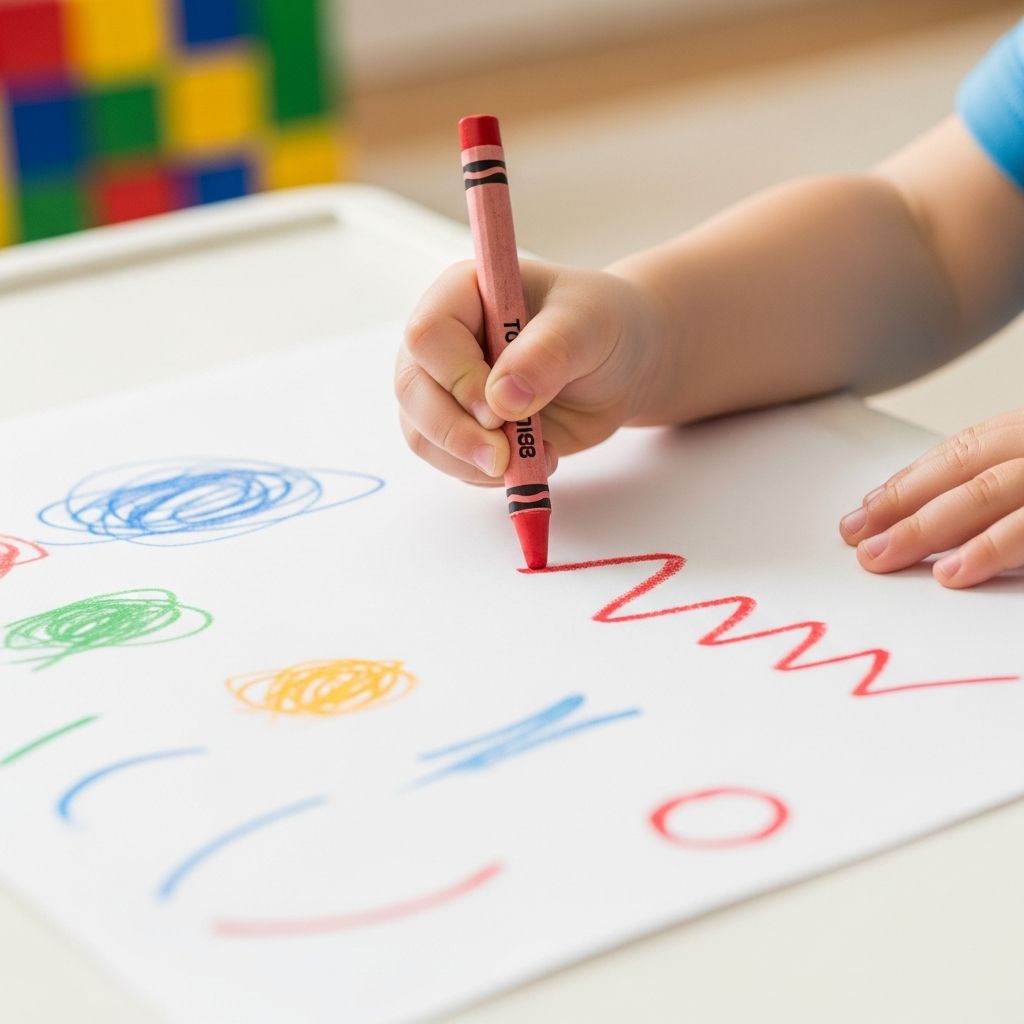
Between ages 2 and 3, children transition from random scribbles to intentional marks, producing vertical, horizontal, and circular strokes with crayons or pens. This milestone reflects rapid advancements in fine motor control and cognitive awareness, laying foundational skills for writing and artistic expression.
Understanding the Drawing Progression in Early Childhood
Drawing evolves systematically during toddlerhood, starting with uncontrolled marks and progressing to purposeful lines. At 18 months, spontaneous scribbling emerges as children grasp tools and explore cause-and-effect by watching colors appear on paper. By 2 years, controlled movements allow imitation of basic shapes, marking a shift from sensory play to skill-building.
This progression aligns with neurological development, where brain areas responsible for hand-eye coordination mature. Toddlers at this stage use whole-arm motions, gradually refining to wrist and finger control, which supports future tasks like buttoning clothes or using utensils.
Key Milestones: Vertical, Horizontal, and Circular Strokes
- Vertical Strokes (18-24 Months): Children imitate straight down lines after demonstration, using elbow-driven movements. These marks, though wobbly, show emerging directionality.
- Horizontal Strokes (Around 2 Years): With cues like “across the page,” toddlers draw left-to-right lines, introducing spatial concepts vital for reading and writing.
- Circular Strokes (20-24 Months): Round loops appear as children mimic circular motions, representing a leap in wrist flexibility and shape recognition.
By 2.5-3 years, these strokes combine into patterns, with improved pincer grasp—holding crayons between thumb and index finger—enhancing precision. Children may still alternate to fist grips for bold lines, a normal variation in grasp development.
The Role of Fine Motor Skills in Drawing Mastery
Fine motor skills involve small muscle groups in hands and fingers, crucial for grasping and manipulating tools. At 2-3 years, toddlers refine these through drawing, developing strength for sustained control and dexterity for varied pressures on paper.
Hand-eye coordination strengthens as visual input guides arm movements, while tactile feedback from crayons builds sensory processing. These skills interconnect with gross motor advances, like walking steadily, creating a holistic developmental boost.
| Age Range | Motor Skill | Drawing Example | Developmental Benefit |
|---|---|---|---|
| 18-24 Months | Whole-arm control | Vertical lines | Basic directionality |
| 2 Years | Emerging pincer grasp | Horizontal strokes | Spatial awareness |
| 2-3 Years | Wrist rotation | Circular loops | Shape formation |
This table summarizes how specific skills map to stroke types, highlighting progressive gains.
Cognitive and Emotional Benefits of Early Drawing
Beyond motors, drawing fosters cognition by encouraging planning—deciding stroke direction—and problem-solving, like staying on paper. Toddlers name their marks (“This is a sun!”), building language and symbolic thinking, precursors to storytelling.
Emotionally, creative freedom reduces frustration from verbal limits, boosting confidence. Repetitive strokes provide calming rhythm, aiding self-regulation during tantrum-prone years.
Practical Activities to Encourage Stroke Development
Parents can nurture these skills with simple, engaging setups:
- Model strokes verbally: Say “up and down” while drawing verticals, then let child imitate on large paper.
- Use thick crayons or washable markers on easels to promote horizontal sweeps without boundary stress.
- Introduce circles via games: Trace around plates, narrating “round and round.”
- Set up sensory bins with chalk on blackboards for varied textures, enhancing grip experimentation.
- Praise effort: Focus on process (“Great job making lines!”) to build persistence.
Incorporate daily 10-15 minute sessions, rotating tools like fat pencils or finger paints to match grasp stages. Avoid over-correction; gentle guidance suffices.
Grasp Evolution: From Fist to Precision
Initially, toddlers use palmar grasps (whole hand), suiting broad scribbles. By 23-25 months, thumb-forefinger pincer emerges, pointing crayon tips downward for control. This variability persists; heavy marking reverts to fists.
Strengthen via play: Squeezing playdough, threading beads, or picking up small objects. These parallel drawing, accelerating precision for 3-year patterns like crosses.
Signs of Typical vs. Atypical Development
Most 2-3 year olds achieve basic strokes independently. Red flags include persistent fist-only grasp past 3 years, inability to imitate lines after modeling, or disinterest in mark-making despite exposure.
Consult pediatricians if motor delays appear alongside speech or coordination issues. Early intervention, like occupational therapy, addresses root causes effectively.
Linking Drawing to Pre-Writing and Literacy
Vertical, horizontal, and circular strokes form pre-writing shapes. By 3, children copy these from models, progressing to plus signs and squares by 4—essential for letter formation.
Directionality (left-to-right horizontals) mirrors reading flow. Shape memory builds via repetition, preparing for phonetic awareness. Integrate with books: Draw story elements post-reading.
Creating an Optimal Drawing Environment
Stock child-safe spaces with accessible supplies: Roll paper on floors for full-body involvement, or clipboards for portability. Natural light aids visibility; varied surfaces (sandpaper, foil) stimulate senses.
Group activities spark imitation; solos allow focus. Display artwork at eye level to validate efforts, fostering pride.
Frequently Asked Questions (FAQs)
At what age should my toddler draw vertical lines?
Typically between 18-24 months, after imitating a parent’s model. Lines may be curved initially but straighten with practice.
How can I help my 2-year-old make horizontal strokes?
Demonstrate across large paper with cues like “side to side,” using thick tools. Repeat short sessions daily for muscle memory.
Is it normal if my child still scribbles at 2.5 years?
Yes, controlled scribbles with lines emerge variably up to 3 years. Focus on encouragement over perfection.
What grasp should a 3-year-old use for crayons?
A tripod or pincer grasp with thumb and fingers; occasional fist use is fine for emphasis.
Does drawing improve handwriting later?
Absolutely—these strokes build foundational control for letters and numbers by school age.
Long-Term Impact on Creativity and Learning
Early drawing cultivates lifelong creativity, enhancing problem-solving and emotional expression. Children who master strokes early show stronger academic readiness, as motor proficiency correlates with literacy and math skills.
By investing now, parents equip toddlers for complex tasks, from journaling thoughts to STEM innovations. Celebrate each mark as a step toward independence.
References
- Stages of Your Toddler Drawing — MonkiBox. 2023. https://monkibox.com/blogs/community/stages-of-toddler-drawing
- What should my toddler’s art look like right now? — Lovevery Blog. 2023. https://blog.lovevery.com/child-development/what-should-my-toddlers-art-look-like-right-now/
- Drawing Milestones — The OT Toolbox. 2024. https://www.theottoolbox.com/drawing-milestones/
- Can Make Vertical, Horizontal, and Circular Strokes — Parenting Counts (American Academy of Pediatrics reference). 2004 (revised relevance for core milestones). https://www.parentingcounts.org/can-make-on-own-vertical-horizontal-and-circular-strokes-with-pen-or-crayon-2-3-years/
- Pre-Writing Shapes — OT Holly. 2023. https://otholly.com/pre-writing-shapes/
- Learning to Write and Draw — ZERO TO THREE. 2023. https://www.zerotothree.org/resource/distillation/learning-to-write-and-draw/