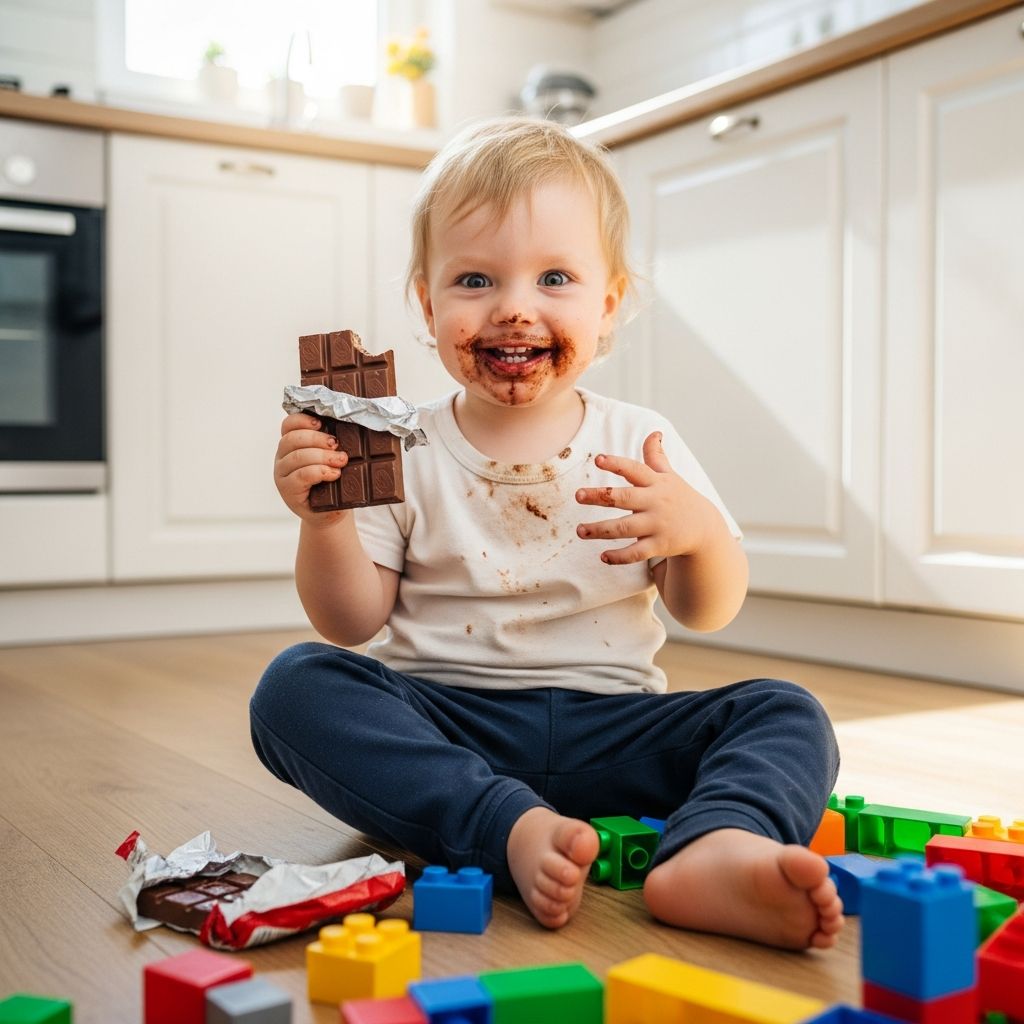
If you have ever turned your back for two seconds and come back to find a toddler mysteriously covered in chocolate, this story will feel very familiar. A now-viral video of a little girl caught red-handed with her mom’s chocolate perfectly captures the funny, frustrating, and strangely heartwarming chaos of parenting a toddler.
In the clip, Mom calmly asks her daughter about the missing chocolate, even though the evidence is literally smeared all over the child’s face and hands. The toddler tries to deny everything, then pivots to dramatic emotion, and finally settles into a kind of proud defiance that only a chocolate-loving toddler can pull off. The moment is hilarious—but it also says a lot about how young children think, feel, and test boundaries.
The Viral Chocolate Heist: What Happens in the Video
The core of the story is simple: a mom has some chocolate set aside, and her toddler decides that waiting is not on the menu. When Mom discovers that her treat is gone, she also discovers something else: a small child with a very guilty face and an even guiltier mouth.
- The toddler has clear, visible chocolate all over her cheeks, chin, and sometimes even clothing.
- Mom asks very reasonable questions like “Did you eat my chocolate?” or “Where did the chocolate go?”
- Instead of confessing, the toddler immediately denies any involvement, tries to change the subject, or uses dramatic gestures and expressions.
- Despite the overwhelming evidence, she clings to her story—for a while, at least.
The humor comes from the mismatch between what everyone can see and what the toddler is willing to admit. This gap is exactly where toddler development and comedy collide.
Why Kids Love Chocolate So Much
At a basic level, chocolate is sweet, rich, and extremely rewarding to a child’s brain. Young children are naturally drawn to sweet flavors because they signal energy and safety, and modern treats like chocolate take that instinct and supercharge it.
- Strong sensory reward: The taste, smell, and texture of chocolate activate pleasure centers and make a powerful impression.
- Association with special moments: Many families use chocolate for birthdays, holidays, or rewards, so kids link it with excitement and love.
- Scarcity effect: Because parents often limit candy, it can feel even more valuable and worth sneaking.
From the toddler’s perspective, the chocolate is not just food; it is treasure. When that treasure is close by and not immediately supervised, a curious and impulsive child may see it as an irresistible opportunity.
“I Didn’t Do It!” – Toddler Denial Explained
One of the most memorable parts of the video is the little girl’s attempt to deny what clearly happened. She might shake her head, say “No,” look away, or suddenly act very busy with something else. Sometimes toddlers will even blame a sibling, the dog, or a completely imaginary character.
This kind of denial is not usually a sign that a child is becoming dishonest in a serious, long-term way. Instead, it reflects how toddlers are just beginning to understand rules, consequences, and the concept of truth.
- Fear of getting in trouble: The child may worry that telling the truth will lead to punishment, so she tries to avoid the outcome.
- Magical thinking: Young children sometimes act as if saying something out loud can make it true or untrue.
- Testing boundaries: Denial is one more way to see how far they can push before a parent reacts strongly.
What This Tells Us About Toddler Development
Mom’s calm questioning and the toddler’s dramatic reactions offer a tiny window into some big developmental tasks happening in early childhood. Around this age, children are learning about cause and effect, rules, and their own independence.
| Development Area | What You See in the Video | What It Means |
|---|---|---|
| Impulse control | She grabs and eats the chocolate before asking. | Her brain is still learning to pause and think before acting. |
| Understanding rules | She seems to know she “shouldn’t” but does it anyway. | She recognizes expectations but has trouble following them consistently. |
| Emotional expression | She cycles through denial, big emotion, and maybe even a little pride. | She is practicing how to manage guilt, frustration, and desire. |
| Early lying | She says she didn’t do it despite obvious evidence. | She is experimenting with language to change outcomes, not planning a long-term deception. |
Mom’s gentle response helps turn this into a learning moment instead of a power struggle, which is often the healthiest way to handle these small acts of mischief.
Parent Reactions: Why Viewers Relate So Strongly
One reason this kind of clip spreads so quickly is that nearly every parent or caregiver has lived some version of this moment. The comments on similar videos often include people laughing about their own children sneaking cookies, licking frosting, or quietly devouring candy behind the couch.
- Many adults remember their own childhood candy heists and see the humor repeating with the next generation.
- Parents appreciate seeing someone else handle a mess with patience and humor; it offers a feeling of solidarity.
- These small, silly conflicts are a reminder that parenting is not just about schedules and rules, but also about stories that families will retell for years.
How to Respond When Your Toddler Steals Treats
Mom’s reaction in the video stays mostly calm, curious, and a little amused. That approach can be very effective in real life, too. When faced with your own chocolate bandit, you can use the moment to teach honesty and self-control without shaming or scaring your child.
Stay Calm and Keep Perspective
- Remember that this is a developmentally normal mistake, not a sign of a serious character flaw.
- Take a breath before responding; anger usually shuts down communication and learning.
- Use a neutral tone, even if you are secretly annoyed about losing your favorite snack.
Label the Behavior Clearly
- Describe what you see: “I see chocolate on your face, and the chocolate is gone.”
- Explain the rule simply: “We don’t take treats without asking.”
- Separate the behavior from the child: emphasize that the choice was not okay, but your love has not changed.
Encourage Honesty
- Give your child a safe path to confession, such as “It’s better to tell the truth. I will be less upset if you are honest.”
- When they eventually admit the truth, praise the honesty: “Thank you for telling me. That was brave.”
- Avoid harsh punishment for telling the truth; otherwise, they may learn that honesty is too risky.
Offer a Logical Consequence
- If they ate something without permission, a reasonable consequence might be fewer treats later or helping clean up.
- Keep consequences short and connected to the behavior rather than unrelated punishments.
- Explain briefly: “You took the chocolate without asking, so there won’t be dessert tonight. Next time you can ask first.”
Turning Mischief Into a Teaching Moment
While the video is mainly funny, it also shows how powerful a parent’s response can be. A calm, curious approach turns an almost-argument into a moment of bonding and learning. The child is still accountable, but she also feels seen, heard, and safe.
Over time, these tiny interactions add up. A pattern of gentle but firm responses can help children learn that:
- Rules matter, and they are there for a reason.
- Honesty is valued and appreciated.
- Mistakes are part of growing up, not reasons to feel unloved.
Setting Up Your Home to Prevent Treat Heists
Of course, even the calmest parent would prefer to keep their own chocolate stash safe. A few simple strategies can reduce the number of candy-related battles in your home, especially when you live with a determined toddler.
Practical Strategies
- Keep adult treats out of reach: High cabinets, closed containers, or pantry organizers can make a big difference.
- Use clear routines: Let your child know when treats are usually allowed, such as after dinner or on special days.
- Offer healthy snacks regularly: When children are less hungry, they are less likely to go on a sugar mission.
- Model asking first: You can demonstrate by asking your partner or older child before taking something that isn’t yours.
When Toddler Lies Become a Pattern
Is it a problem if your child lies more than once about snacks, toys, or small accidents? For most toddlers, the answer is no: a phase of denial, blame-shifting, and tall tales is expected. Still, it helps to stay consistent.
Parents can watch for patterns, such as repeated lying about serious safety issues or hurting others. In those cases, it may help to talk with a pediatrician or child development specialist. For everyday treat-related fibs, though, the best response is usually a combination of calm correction, clear rules, and warmth.
Frequently Asked Questions
1. Is it normal for a toddler to lie about eating chocolate?
Yes. Early lying is a common developmental stage. Toddlers experiment with language and quickly learn that words can sometimes change what happens to them. That does not mean they are becoming dishonest in a deep or permanent way; it simply reflects their growing awareness of rules and consequences.
2. Should I punish my child for sneaking treats?
It usually works better to think in terms of teaching rather than punishing. Logical, short-term consequences—like losing dessert that evening or helping clean up—send a clear message without overwhelming your child. Overly harsh punishment can encourage more sneaking and lying, because the risk feels too high to be honest.
3. How can I encourage my toddler to tell the truth?
Create an environment where honesty is safer than lying. Stay as calm as possible, acknowledge the truth positively when it comes, and keep consequences reasonable. Reminding your child that you love them no matter what also helps reduce the fear that drives many toddler lies.
4. Are funny videos of misbehaving toddlers harmful?
Parents differ in how comfortable they are sharing family moments online. In general, short, lighthearted clips that do not reveal private information or humiliate a child long-term are less concerning. Families should consider the child’s future privacy, think about who can see the video, and stay away from shaming language or labels.
5. What does this kind of clip teach other parents?
Many viewers take away a sense of relief and connection. Seeing another parent handle a messy, imperfect situation with patience offers a gentle reminder: it is possible to correct behavior firmly while still laughing, still loving, and still enjoying the ridiculous side of raising small humans.
Key Takeaways for Parents
- Toddlers are drawn to chocolate and other treats because of strong taste rewards and emotional associations.
- Early lying and denial are developmentally normal; they reflect experimentation, not deep moral failure.
- Calm, curious questions and logical consequences teach more than shouting or severe punishment.
- Moments of mischief—like a chocolate-covered face and bold denials—can become cherished family stories and powerful teaching opportunities.
In the end, the viral chocolate theft is more than just a laugh. It is a snapshot of early childhood: messy, impulsive, dramatic, and incredibly endearing. For every parent watching with chocolate-craving toddlers at home, it offers reassurance that this wild, sticky, hilarious phase is both temporary and deeply human.