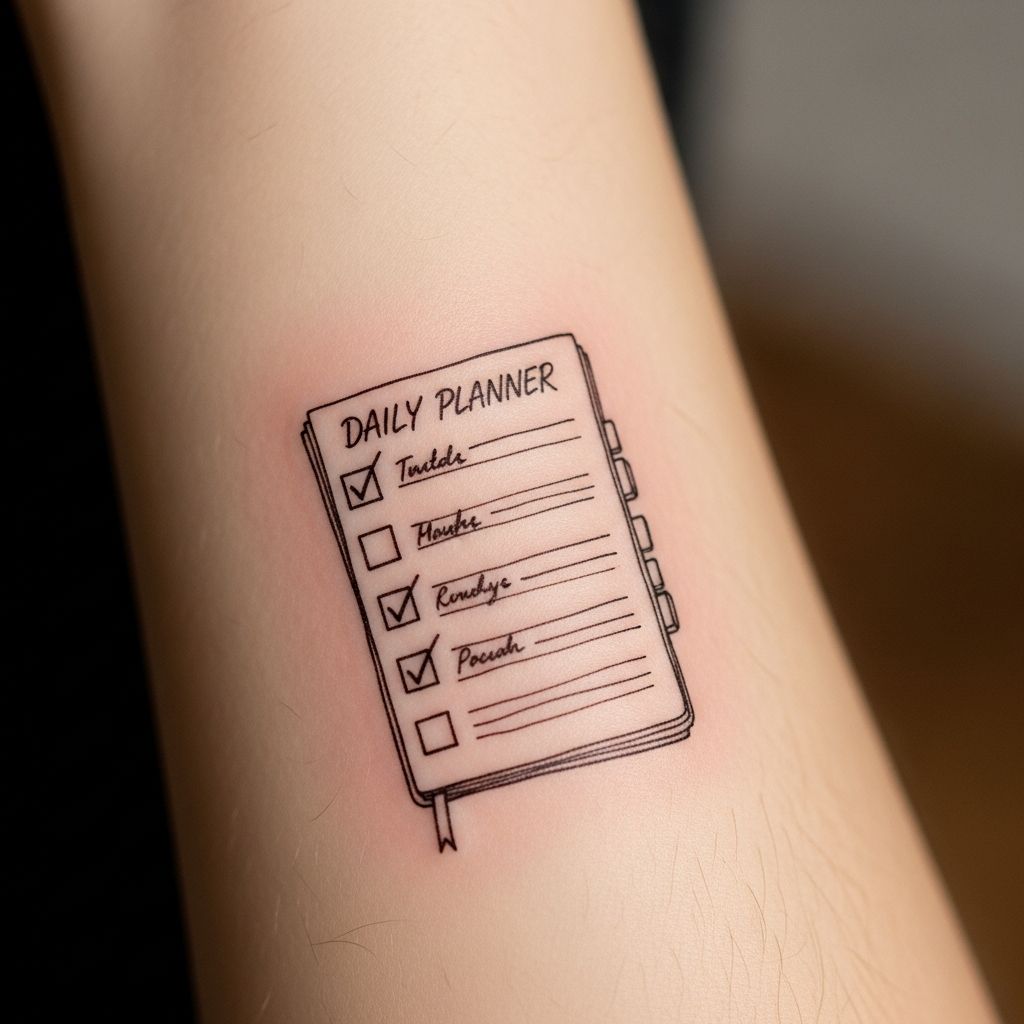
Your to-do list can be more than a pile of obligations. It can be a visible, daily mark of what you value most—almost like a tattoo you redraw every day, evolving as your life changes.
From Endless Tasks to Intentional Marks
Most people treat their to-do list like a never-ending conveyor belt: tasks pile on, a few fall off, and most of it feels reactive instead of intentional. The result is a constant sense of being behind, even on days when a lot gets done. The idea of a “to-do tattoo” is to reverse that dynamic by treating tasks less like random debris and more like deliberate marks of identity and purpose.
Instead of focusing on how much you can squeeze into a day, this approach asks a different question: What is worth etching into today? That shift turns your list from a guilt generator into a daily ritual that reflects who you are and what you are building long term.
The Mindset Behind a “To-Do Tattoo”
A real tattoo is permanent and chosen carefully. Borrowing that mindset for your schedule helps you pause before you commit. You start weighing tasks not just by urgency but by alignment with your values and long-term goals. When something makes it onto your intentional list, it has meaning beyond simply being due soon.
This doesn’t mean your day becomes rigid or ceremonial. It simply means you treat your attention as something you mark thoughtfully, not something you scatter on every incoming request. Over time, that perspective reduces overcommitment, resentment, and burnout because each day feels more like a designed pattern than a random scribble.
Design Principles for a Meaningful To-Do System
To build a system that feels as deliberate as a tattoo, it helps to apply a few design principles. Think of your day as a canvas: limited space, visible results, and trade-offs that matter. Instead of trying to fit everything, you compose a pattern that works from a distance and up close.
Below is a simple table of design-inspired principles you can apply to your to-do list, no ink required.
| Principle | What It Means for Your List | Practical Question to Ask |
|---|---|---|
| Intentional Placement | Each task has a specific time, context, or reason for being there. | “Why does this belong on today instead of someday?” |
| Limited Space | You restrict how many important tasks can fit on a given day. | “If I could only pick three, which three matter most?” |
| Clear Lines | Tasks are written clearly and specifically, with no vague edges. | “Can I tell, at a glance, exactly what doing this looks like?” |
| Personal Meaning | Items reflect values, goals, or relationships that matter. | “What does this task protect, create, or strengthen in my life?” |
| Longevity | Your system is sustainable over months, not just a single intense week. | “Could I keep using this approach for a year without resenting it?” |
Creating Your Daily “Ink Palette” of Priorities
If every task is treated as equally urgent, your list becomes a blur. A simple way to bring structure is to organize your day into a small number of priority “zones”—like colors on a palette—so you know what you’re painting with before you start.
Choose three to five categories that genuinely matter to you right now and use them as anchors for your daily list. These categories should reflect your real life, not an idealized version of it.
Example Priority Zones
- Core Work: Projects or tasks that drive your main job or business forward.
- Relationships: Time or actions that nurture family, friends, or your partner.
- Health & Energy: Sleep, movement, meals, and mental health habits.
- Home & Logistics: Chores, errands, finances, and life maintenance.
- Growth & Play: Learning, hobbies, creative experiments, and fun.
Your daily list then becomes less of a random brain dump and more of a balanced composition. Instead of asking, “What else can I shove into this day?” you ask, “What belongs in each zone so that today feels well-designed?”
Designing a Visible, Tactile To-Do Layout
Digital tools are convenient, but the physical act of writing and seeing tasks can give them a sense of weight. Think of your daily page like a small poster you create each morning. It doesn’t need to be artistic; it just needs to be intentional and visible.
One simple layout uses three sections: anchors, support tasks, and optional extras. You can adapt this to any notebook, whiteboard, or digital template that allows for clear separation.
Three-Part Daily Layout
- Anchors (1–3 items): The irreplaceable tasks that define a successful day if nothing else happens.
- Support Tasks (3–7 items): Helpful but secondary items that support your anchors or keep life running.
- Optional Extras (list freely): Low-stakes tasks you can tackle if time and energy allow.
By visually separating these sections, you avoid the common trap of finishing ten easy items while ignoring the one anchor task that actually matters. At the end of the day, your sense of progress is tied to having honored your anchors, not having emptied the entire list.
Symbol Systems: Turning Tasks into Icons
Another way to give your to-do list a tattoo-like feel is to use a small set of symbols that repeat every day. Over time, they become instantly recognizable, like a personal language for your life. This also keeps your list quick to scan and more visually engaging.
You can borrow from bullet journaling or invent your own legend. The key is to use the same symbols consistently so that they become automatic cues instead of something you have to remember.
Simple Symbol Legend
- ● = New task
- ◐ = Started / in progress
- ✔ = Completed
- ↷ = Rescheduled to another day
- ✖ = Canceled or declared non-essential
- ★ = Anchor task (critical for the day)
These symbols are like small, repeatable tattoos on your page—marks that tell the story of how the day unfolded. They also reduce the shame around changing your mind; moving a task to tomorrow simply becomes a quick ↷ instead of a failure.
Rituals That Make Your List Stick
Even a beautifully designed to-do system won’t help if it lives only in your head or gets checked once in the morning and forgotten. What makes it “stick” is a set of simple rituals that create rhythm and repetition, similar to how a tattoo gains meaning from the story behind it.
Think of these rituals as the before, during, and after of your day. They don’t need to be elaborate; they just need to happen regularly enough that they become automatic.
Three Essential To-Do Rituals
- Morning Markup (5–10 minutes): Review your calendar, choose 1–3 anchors, and fill in a few support tasks. This is where you decide what’s worth marking into the day.
- Midday Checkpoint (3–5 minutes): Pause to update symbols, migrate anything unrealistic, and adjust based on what has changed.
- Evening Reflection (5–10 minutes): Mark completions, note what helped or hindered progress, and write tomorrow’s first anchor while today’s context is still fresh.
These rituals keep your list alive and responsive instead of static and overwhelming. Over time, the repeated pattern becomes a comforting structure rather than another demand on your attention.
Balancing Permanent Priorities with Changing Seasons
Tattoos last; seasons change. Your core priorities—health, relationships, meaningful work—tend to be fairly stable. But the specific forms they take shift depending on your stage of life, career demands, and personal circumstances.
Your to-do system should acknowledge both: the steady core and the evolving context. One practical way to do this is to keep a short list of “standing priorities” that rarely change, combined with rotating seasonal focuses that shape what goes on the list each week.
Standing vs. Seasonal Priorities
| Standing Priority | Seasonal Expression |
|---|---|
| Health | Spring: build a walking habit; Winter: focus on sleep and indoor movement. |
| Relationships | Busy work season: one intentional check-in text per day; Summer: weekly in-person dinners. |
| Career | Quarter 1: certification exam; Quarter 3: portfolio update and networking. |
| Personal Growth | One season might focus on reading; another on creative practice or skill-building. |
When planning your week, you pull from both columns. This keeps your list aligned with what endures while still respecting what is temporary, like big deadlines, caregiving seasons, or major life changes.
Editing Your List Like an Artist
Artists spend as much time removing lines as adding them. A powerful, underused skill in productivity is learning to delete, downgrade, or defer tasks without guilt. Editing your list is not failure; it is design.
Instead of asking, “How can I squeeze this in?” practice asking, “What happens if I cut this out?” In many cases, the honest answer is “not much.” That realization frees attention for what truly matters and keeps your daily “tattoo” from becoming a cluttered mess.
Questions for Ruthless but Kind Editing
- “If this disappeared from my list, what would actually break?”
- “Is this task serving my ego, my fear, or my values?”
- “Can this be simplified, delegated, or bundled with something else?”
- “Does this belong today, this week, this month, or not at all?”
Regular editing creates white space on your list, which functions like negative space in design—it makes the important lines stand out and gives your mind room to breathe.
Building Habits that Re-Draw Themselves
Tasks that repeat daily or weekly are like recurring motifs in a design. Writing them out every time can be helpful at first, but eventually you want them to live in a simple habit loop instead of relying on constant decision-making.
The goal is not to automate your entire life, but to stabilize enough of it that your limited decision energy can go to creative or complex work. A good habit system reduces the friction of starting and the temptation to procrastinate.
Ways to Automate Repeating Tasks
- Create a small habit tracker for non-negotiables like sleep, movement, and deep work sessions.
- Use fixed time blocks (for example, “Admin Hour” three afternoons a week) so related tasks have a recurring home.
- Group similar tasks into “batches”—emails, calls, errands—so you can move through them with one focused energy state.
Once a habit is truly stable, it may not need to appear on your daily list at all. It becomes part of the background pattern, freeing the page for new intentional marks.
FAQs About Creating a “To-Do Tattoo” System
What if my days are unpredictable?
If your schedule changes constantly, keep your anchors extremely small and flexible. Instead of a two-hour block of deep work, your anchor could be “15 minutes of focused progress” on one important project. Design your list to survive interruption by choosing tasks that can be done in small chunks and using symbols to track where you left off.
Isn’t this just another form of procrastination?
It becomes procrastination only if you spend more time decorating than doing. The purpose of the “to-do tattoo” idea is not to create a beautiful page; it is to make decisions about what matters, when it will happen, and how you will recognize progress. Limit your planning ritual to a set time and move to action as soon as anchors are defined.
How many tasks should I aim for each day?
There is no universal number, but many people benefit from 1–3 anchors and no more than 7–10 additional tasks. The true test is this: can you realistically see yourself completing the anchor items on a normal day, not a perfect one? If the answer is no, your list needs editing, not more willpower.
What if I never finish my anchors?
Consistently unfinished anchors can signal three things: you are overestimating your capacity, underestimating how long tasks take, or choosing anchors that depend too heavily on other people. Try breaking anchors into smaller actions, choosing pieces you can fully control, and tracking how long common tasks actually require so your estimates get more accurate.
Can I use digital tools with this approach?
Absolutely. The “tattoo” metaphor is about intention, not medium. You can keep a master task list in an app while using a daily handwritten page as your visible canvas, or you can build a digital template that mirrors the anchors, support tasks, and optional extras layout. The key is clear structure, limited daily commitments, and consistent rituals.
Making Your Mark, One Day at a Time
Your to-do list does not have to be a source of constant self-criticism. By approaching it as a daily tattoo of intention—a visible, chosen mark of what matters now—you reclaim it as a creative tool instead of a judgmental scoreboard. You may not be able to control everything that enters your day, but you can choose what you deliberately etch into it.
Start small: define tomorrow’s anchors, pick a simple symbol system, and commit to a short morning and evening ritual for just one week. As you refine the pattern, your days will begin to look less like scattered scribbles and more like a design you recognize as your own.