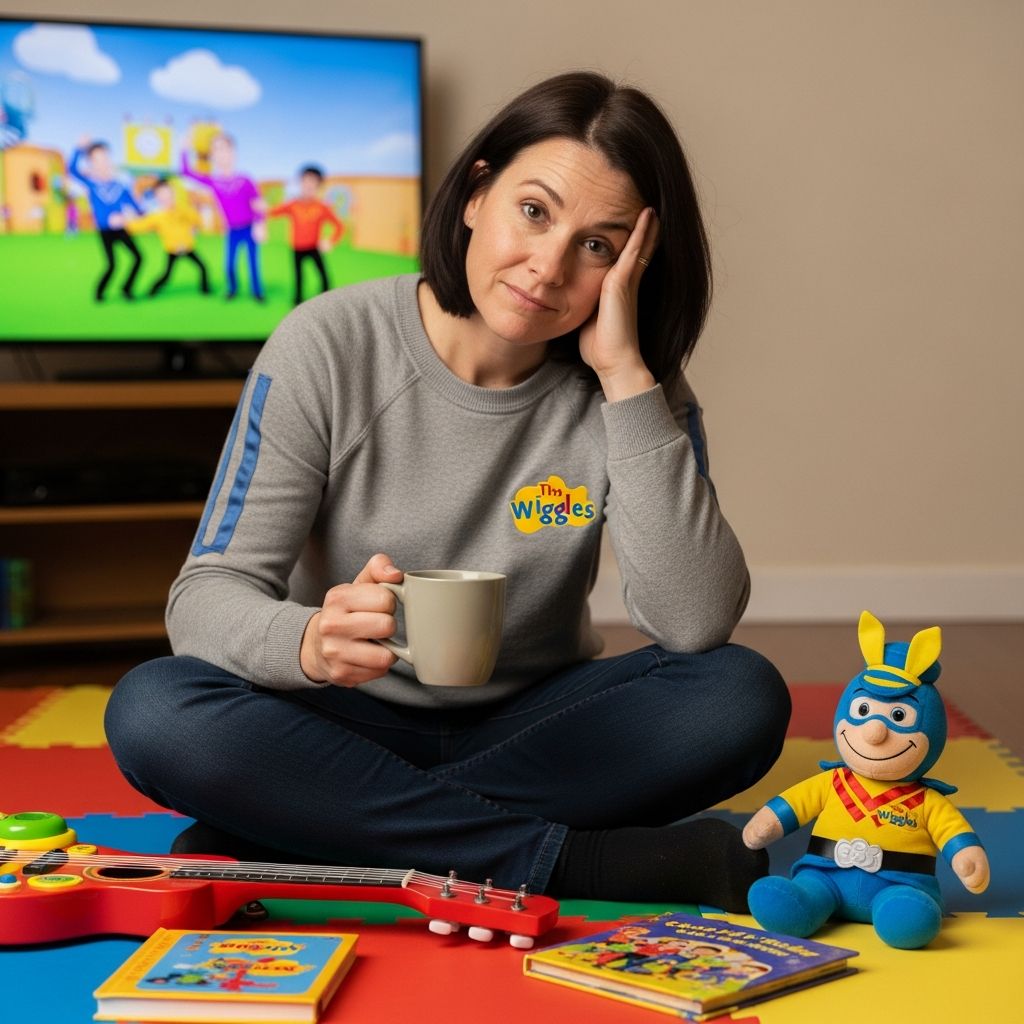
If you live with a preschooler, there is a good chance that The Wiggles are already blasting from your TV, your car, or your brain at 3 a.m. Whether you find them endearing or mildly mortifying, they are almost impossible to avoid—and oddly effective at keeping kids happy.
This article is a tongue-in-cheek yet practical guide for parents who suddenly find themselves in a long-term relationship with four color-blocked Australian entertainers and their many friendly sidekicks.
Who Are The Wiggles, Really?
The Wiggles are an Australian children’s music and entertainment group formed in 1991 by Anthony Field, Murray Cook, Greg Page, and Jeff Fatt, all with backgrounds in early childhood education or performance. They started out playing in preschools and shopping centers and grew into a global kids’ entertainment empire with TV shows, arena tours, and a rotating lineup of performers.
The secret to their staying power is surprisingly straightforward:
- Simple, repetitive songs that toddlers can quickly learn and copy.
- Bright costumes and characters that make it easy for kids to recognize and follow who is who.
- Short, predictable segments that match young children’s limited attention spans.
- Interactive elements like clapping, dancing, and call-and-response, which support early learning.
The Parent Embarrassment Spectrum
Different parts of The Wiggles universe hit parents in different ways. Some things are charming, others are easy to tolerate in public, and a few feel like you might need to explain yourself to another adult if they catch you singing along.
Think of it as an embarrassment spectrum:
| Zone | What It Feels Like | Parent Reaction |
|---|---|---|
| Low Embarrassment | Background kids’ music, mild dancing, cute characters | “Fine. This is harmless.” |
| Medium Embarrassment | Full choreography, props, singing in public | “Please don’t let my coworkers walk by right now.” |
| High Embarrassment | Alone in the car singing every word, attending shows without kids | “I can explain. Probably.” |
Low-Embarrassment Wiggles Moments (Secretly Tolerable)
Some Wiggles content is surprisingly easy for adults to live with—and may even be helpful.
1. Background Music That Actually Calms Your Toddler
Many of their songs use repetitive structure, clear melody, and a steady rhythm, which are all elements that support early language and memory. Playlists of gentle Wiggles songs in the background can:
- Buy you 10–15 extra minutes to cook dinner.
- Help with transitions (clean-up, bath time, bedtime).
- Teach simple concepts like counting, colors, and body parts in a low-key way.
Embarrassment level: low. As long as you’re not belting out the chorus in the office, you’re fine.
2. Using Wiggles Clips as a Parenting Tool
The Wiggles built their style around short, focused segments, which aligns with how preschoolers best process new information and routines. Showing a specific clip can help when you need to:
- Demonstrate brushing teeth, washing hands, or getting dressed.
- Encourage movement breaks on rainy days.
- Guide kids through social skills like sharing and taking turns.
Embarrassment level: nearly zero. You’re basically outsourcing the hard part of gentle parenting to a man in a blue skivvy.
Medium-Embarrassment Wiggles Moments (Proceed With Caution)
Then there are the situations where you start to worry another adult might overhear or walk in at the wrong time.
3. Full-Body Dance Participation
There is a big difference between tapping your foot on the couch and fully committing to every move of the “Big Red Car” or similar songs. At some point, you catch your reflection and realize you know the choreography better than your kid.
Here’s why this level of participation isn’t as ridiculous as it feels:
- Physical activity: Movement-based songs support gross motor skills and coordination.
- Bonding: Shared silly routines reinforce secure attachment and positive parent-child interactions.
- Modeling: When adults are willing to be goofy, kids learn that play is safe and acceptable.
Embarrassment management tip: Shut the curtains, lean in, and tell yourself this is cheaper than a gym membership.
4. Knowing the Entire Wiggles Lineup History
Once you have watched enough episodes, you inevitably start piecing together the lore: original members, new members, spin-off groups, and international versions. You know far more than you ever wanted about who wears which color and when they joined.
This is mildly embarrassing to explain to someone who doesn’t have kids, but there is a silver lining:
- It helps you navigate streaming platforms and find episodes your child prefers.
- You can spot changes in style and pacing that match your child’s age better.
- You gain a weird, specific trivia skill that impresses absolutely no one, but may one day amuse your grown child.
Embarrassment level: medium. Only dangerous if you start Googling tour dates for nostalgic reasons.
High-Embarrassment Wiggles Moments (You Have Become One of Them)
These are the situations you might only admit to other parents, preferably late at night over group text.
5. Singing Wiggles Songs Alone in the Car
The Wiggles use simple, catchy, and highly repetitive melodies, a design that makes music especially memorable for young kids—but also extremely sticky for adults. Before long, you may find yourself:
- Driving to work with no children present and still listening to the playlist.
- Silently finishing a verse in your head long after the song has ended.
- Recognizing a Wiggles tune from the first two notes in a store.
Is it embarrassing? Yes. Is it avoidable? Not really. This is simply the price of having a child under five.
6. Attending a Wiggles Concert and Having… Too Much Fun
The Wiggles are known for touring heavily, sometimes performing hundreds of shows a year across multiple continents. Their concerts are designed for short attention spans: fast pacing, familiar songs, bright costumes, and audience interaction. Under those conditions, parents often find themselves:
- Participating louder than their own child.
- Knowing every character and dance move.
- Leaving hoarse, with phone photos that are suspiciously focused on the stage, not the kid.
Embarrassment level: high if you attend without children. With children, you’re simply “being supportive” and “facilitating joy.” That’s the official story.
7. Having Strong, Well-Reasoned Opinions About Your Favorite Wiggle
At some point, many parents begin ranking Wiggles eras the way other adults rank prestige TV seasons. You develop takes like:
- “The earlier lineups had a different energy.”
- “This character is more engaging for shy kids.”
- “The newer songs are better for dancing; the older ones were more educational.”
Embarrassment level: maximum. You now have a favorite Wiggle and can defend your position with evidence. You have crossed over.
Why Kids Love The Wiggles (And Why That Matters)
Embarrassment aside, there are good reasons your child is obsessed. The Wiggles accidentally sit at the intersection of entertainment and early childhood pedagogy.
- Repetition builds learning: Repeated lyrics and actions help children practice language, rhythm, and recall.
- Music supports development: Research links musical exposure in early childhood with benefits in language, social skills, and self-regulation.
- Predictable structure feels safe: Short, familiar segments help children anticipate what comes next, which can reduce anxiety.
- Physical engagement burns energy: Dance and movement songs help kids work through restlessness in a structured way.
In other words, while you are quietly dying inside after the fourth replay, your child may actually be getting real developmental benefits.
How To Cope With Wiggles Overload
If you’re in too deep, here are realistic coping strategies that respect your child’s enthusiasm while preserving a tiny piece of your adult soul.
Set Reasonable Screen and Music Limits
Professional organizations often recommend consistent, age-appropriate limits on screen time and encourage parents to prioritize interactive, high-quality content. For Wiggles-heavy households, that can look like:
- Creating specific Wiggles windows, like morning and pre-dinner, rather than all-day access.
- Rotating Wiggles with non-screen activities such as drawing, blocks, or outdoor play.
- Using audio-only music for car rides to reduce total screen exposure while keeping kids entertained.
Use The Wiggles Strategically
You can intentionally weaponize their appeal for the greater good of the household:
- Pick specific songs as transition cues (clean-up, bath, bedtime).
- Save new or favorite episodes for high-stress moments like nail trimming or long waits.
- Encourage kids to dance along while you tackle quick chores so you can keep them in sight and moving.
Protect a Little Adult Brain Space
To avoid feeling like your mind is permanently scored by preschool pop, try:
- Building a post-bedtime adult playlist to reset your brain.
- Switching to podcasts or radio the second the car is kid-free.
- Agreeing with your partner on no-Wiggles zones (like the bedroom or workspace).
When Parents Secretly Start to Like The Wiggles
Once the initial shock wears off, some parents develop a grudging respect for the group. They tour relentlessly, invest in stagecraft, and take kids’ entertainment seriously in a way that adults do not always expect. There is a certain comfort in:
- Recognizing their commitment to positive, non-scary content.
- Seeing your child light up instantly when the intro music starts.
- Realizing there are far, far worse things your child could be watching.
It may never become your favorite music, but you might eventually understand why so many kids around the world latch onto it.
Frequently Asked Questions (FAQs)
Is it normal to be this annoyed by children’s music?
Yes. Children’s songs are intentionally repetitive and simple to support learning and memory, which makes them effective for kids and irritating for adults. Your reaction is completely typical.
Does letting my child watch The Wiggles count as educational?
It can. Many segments involve counting, movement, turn-taking, and following directions, which support early cognitive and social skills. It is most beneficial when paired with interaction—singing, talking, or dancing along with your child.
How much Wiggles is too much?
Instead of counting only Wiggles time, look at your child’s overall day: a healthy mix of sleep, active play, social interaction, and limited, high-quality screen time is the goal. If Wiggles content is crowding out sleep, play, or mealtime, it is time to set firmer limits.
My child only wants The Wiggles. Should I force variety?
Preschoolers often go through intense, narrow interests. You can gently offer variety—other music, books, and shows—without turning it into a power struggle. Use Wiggles as the anchor and introduce new options alongside it.
Is it weird that I have a favorite Wiggle?
Not at all. You are consuming this content daily; it is natural to form preferences. Just remember your favorite is not a personality type you need to put in your social bios.
References
- The Wiggles Facts for Kids — Kiddle Encyclopedia. 2023-06-01. https://kids.kiddle.co/The_Wiggles
- The Wiggles – Students — Britannica Kids. 2024-01-10. https://kids.britannica.com/students/article/The-Wiggles/438136
- History – The Wiggles — The Wiggles Official Site. 2023-11-15. https://thewiggles.com/pages/history
- Music and Early Childhood Development — National Association for the Education of Young Children (NAEYC). 2020-05-12. https://www.naeyc.org/resources/pubs/tyc/apr2017/music-early-childhood-classroom
- Media and Young Minds — American Academy of Pediatrics. 2016-11-01. https://publications.aap.org/pediatrics/article/138/5/e20162591/60325/Media-and-Young-Minds