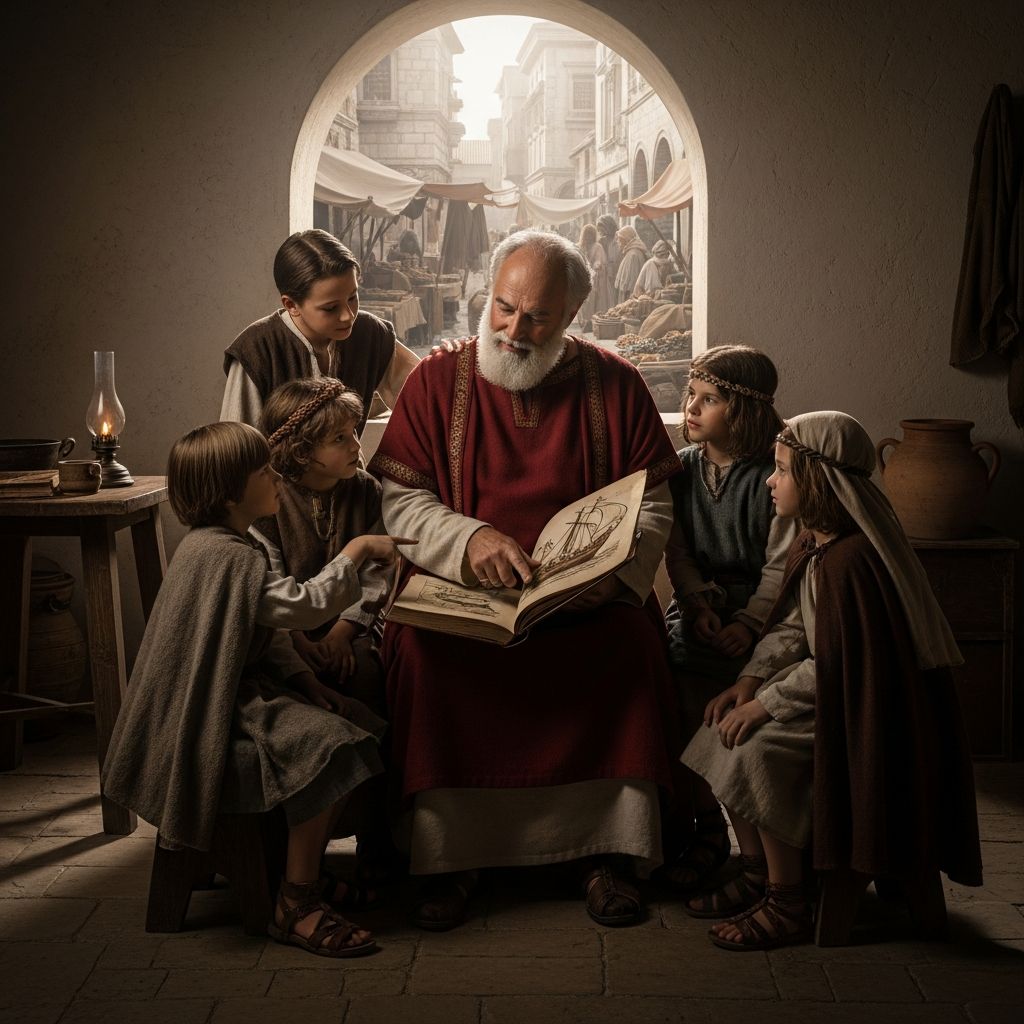
Moving Beyond the Modern Santa Myth to Embrace Historical Truth
Parents today face countless decisions about how to shape their children’s understanding of the world, and the Christmas season presents a unique opportunity to introduce them to authentic history wrapped in wonder. Rather than perpetuating the commercialized version of Santa Claus, many families are choosing to teach their children about the remarkable historical figure who inspired the legend: Saint Nicholas of Myra. This fourth-century Christian bishop lived a life of extraordinary compassion and generosity that, when presented thoughtfully, can offer children meaningful lessons about character, faith, and genuine kindness that extend far beyond the holiday season.
Who Was the Real Saint Nicholas?
Saint Nicholas was born during the third century in Patara, a prosperous seaport city in Lycia, located in what is now southern Turkey. His family was wealthy and devoutly Christian, though their faith was practiced during an era when Christianity faced severe persecution under Roman rule. When Nicholas’s parents died from an epidemic while he was still a young man, he inherited a substantial fortune that would become the foundation for his legacy of generosity.
Rather than using his inheritance to pursue a life of luxury and personal advancement, Nicholas made the deliberate choice to distribute his wealth to those in desperate need. This decision to prioritize the suffering of others over his own comfort would define his entire life. He eventually became the Bishop of Myra, earning recognition as a pastoral leader known for his unwavering faith, his powerful spiritual devotion, and his courageous defense of Christian doctrine during times of intense religious persecution. He died on December 6, AD 343, and was buried in his cathedral church in Myra.
The Historical Acts of Generosity That Inspired a Legend
Among the most compelling aspects of Nicholas’s life are the documented stories of his secret acts of mercy. One of the earliest and most famous accounts describes how Nicholas learned of a devout man who had fallen into severe poverty, his family now facing impossible circumstances. The man had three daughters but lacked the financial resources to provide dowries, which were essential for their marriage prospects in that era. Without dowries, the daughters faced a bleak future, with the very real possibility of being forced into situations of exploitation and trafficking.
Moved by their predicament, Nicholas took action in a manner that demonstrated both his generosity and his humility. Over three consecutive nights, he secretly tossed bags of gold coins through the window of their home, where the gifts landed in stockings hanging by the fireplace. This covert act of charity provided each daughter with the dowry necessary to marry respectably and build secure lives. On the third night, according to tradition, the father finally caught Nicholas in the act. The saint requested that the father keep his identity secret, preferring that his charitable work remain anonymous.
This story, documented in historical accounts centuries after Nicholas’s life, reveals profound truths about genuine generosity: it operates without seeking recognition, it addresses real human suffering rather than superficial desires, and it empowers recipients to build better futures for themselves. When parents share this narrative with their children, they introduce a model of kindness fundamentally different from commercial gift-giving.
Why Parents Choose Historical Authenticity Over Modern Mythology
The decision to teach children the real story of Saint Nicholas rather than the modern Santa Claus narrative reflects a growing parental desire to instill values rooted in authenticity and substance. The commercialized Santa tradition, while entertaining, often centers on reward systems, materialistic desires, and the idea that goodness is motivated by receiving gifts. In contrast, the historical Saint Nicholas embodies virtues that transcend material gain: genuine compassion for those suffering, wisdom in addressing real needs, and the courage to act according to one’s values regardless of social status or personal cost.
By introducing children to the true story of Saint Nicholas, parents offer their children a hero whose legacy connects to real historical events and whose actions demonstrate lasting principles. Children learn that one person’s commitment to generosity can echo through centuries, influencing cultures across the globe. They discover that the most meaningful impact often comes from meeting others’ genuine needs rather than satisfying wants. Furthermore, they encounter a figure whose life provides a bridge between historical education and contemporary moral lessons.
Connecting Ancient History to Modern Values
Teaching the Saint Nicholas story creates an opportunity for families to discuss how historical figures continue to shape our world. When Nicholas died in 343 AD, his reputation for miracles, protection, and generosity had already spread throughout the Mediterranean world. Over centuries, his legend traveled westward through Europe, becoming integrated into various cultural traditions and evolving into the Santa Claus figure recognized today.
This historical journey itself teaches valuable lessons. Children can understand how stories transform across cultures, how a real person’s actions inspire lasting traditions, and how historical facts often prove more fascinating than fictional embellishments. The realization that Santa Claus originated from a genuine historical saint often impresses children more profoundly than the fantasy version, particularly when they learn the specific, courageous details of Nicholas’s life.
The Documented Historical Record and Saint Nicholas
While scholars acknowledge that some stories about Saint Nicholas have been embellished or elaborated over the centuries, substantial historical evidence confirms his existence and his role as a significant religious figure. Interestingly, the name Nicholas was virtually absent from historical records before the fourth century, but after the era in which Saint Nicholas of Myra lived, the name appeared repeatedly in documents connected to the Myra region, suggesting that parents were naming their children after this influential bishop.
Historians note that the earliest written accounts of his life were composed centuries after his death and likely contain legendary elaborations blended with historical fact. However, this reality does not diminish the educational value of sharing his story with children. Rather, it presents an opportunity to teach critical thinking about sources, the difference between historical evidence and legendary embellishment, and how we distinguish reliable information from speculation.
Key Virtues Embodied in the Saint Nicholas Legacy
- Selfless Generosity: Nicholas used his inherited wealth not for personal enrichment but to address others’ fundamental needs and suffering.
- Humble Action: He performed his charitable acts secretly, seeking no recognition or gratitude, demonstrating that genuine kindness operates without expectation of reward.
- Courage in Conviction: Nicholas maintained his faith and defended Christian principles even during times of severe persecution.
- Practical Compassion: Rather than offering abstract sympathy, Nicholas identified specific problems and implemented concrete solutions to help people rebuild their lives.
- Protection of the Vulnerable: His focus on helping those most at risk—poor women facing exploitation, innocent prisoners, and children—demonstrates a commitment to protecting society’s most vulnerable members.
How Families Can Present the Real Story Effectively
Parents introducing the Saint Nicholas narrative to their children should consider their child’s age and comprehension level while maintaining honesty about both the historical facts and the legendary elements. For younger children, focusing on the core story of his secret generosity toward the three daughters provides an engaging narrative with clear moral lessons. Older children can appreciate the historical context, the transformation of the story across cultures, and the distinction between documented history and legendary elaboration.
Many families find that presenting the Saint Nicholas story during the Christmas season provides a natural entry point for deeper conversations about what the holiday represents. Rather than positioning the real story as replacing something false, parents can frame it as revealing something even more remarkable than fiction: the true story of a historical person whose genuine actions inspired a global legacy.
Creative approaches might include reading age-appropriate biographies of Saint Nicholas, visiting cultural celebrations of Saint Nicholas Day on December 6, or researching how different countries honor this historical figure through distinct traditions. These activities transform the education into an engaging exploration rather than a simple correction.
The Broader Educational Benefits
Teaching children the authentic story of Saint Nicholas contributes to their overall historical literacy and critical thinking skills. Children learn to question sources, to appreciate that real history often contains complexities that fiction cannot capture, and to recognize how historical events continue influencing contemporary culture. They develop an understanding that many of our most cherished traditions have roots in real people and real events, making those traditions more meaningful rather than less.
Furthermore, learning the true story of Saint Nicholas provides children with an alternative model of heroism. Rather than heroes defined primarily by supernatural powers or extraordinary possessions, Nicholas emerges as heroic because of his moral choices, his commitment to helping others despite personal cost, and his courage during dangerous times. This model can be more inspiring and more replicable for children considering how they might embody similar virtues in their own lives.
Addressing Questions and Concerns
Will teaching children the real story of Saint Nicholas disappoint them?
Generally, when presented thoughtfully, children find the true story equally or more captivating than the fictional version. The historical Saint Nicholas lived a genuinely remarkable life, and many children are impressed to learn that the Christmas tradition has roots in real history rather than pure imagination.
How can I handle the transition from believing in Santa to learning about Saint Nicholas?
This can be framed as a natural progression to more mature understanding. Parents can explain that just as they graduated from picture books to chapter books, children are now ready to appreciate the more complex and historically fascinating true story that inspired the Santa tradition.
What if other families still practice the Santa tradition?
Parents can teach children to respect different family traditions while explaining their own family’s choice. This demonstrates that meaningful traditions can vary and that understanding different approaches helps us appreciate diverse perspectives.
Are there age-appropriate resources for learning about Saint Nicholas?
Yes, numerous children’s books and age-appropriate historical accounts present the Saint Nicholas story in engaging ways suitable for different developmental stages.
Conclusion: Creating Traditions Rooted in Truth and Meaning
Choosing to teach children the authentic story of Saint Nicholas reflects a parental commitment to combining education with tradition, history with wonder, and commercial celebration with meaningful values. This choice honors the remarkable historical figure whose genuine compassion inspired centuries of legend while providing children with hero models rooted in documented reality. The true story of Saint Nicholas offers far more than an alternative to Santa Claus; it provides an entry point into historical thinking, moral reflection, and an appreciation for how individual virtue can create lasting cultural impact.
References
- Meet the Saints: St. Nicholas — FOCUS.org. Accessed April 2026. https://focus.org/posts/meet-the-saints-st-nicholas/
- Saint Nicholas — Wikipedia. Accessed April 2026. https://en.wikipedia.org/wiki/Saint_Nicholas
- Saint Nicholas: The Original Santa Claus — Franciscan Media. Accessed April 2026. https://www.franciscanmedia.org/st-anthony-messenger/saint-nicholas-the-original-santa-claus/
- Who was St. Nicholas? — News, Campbell University. Accessed April 2026. https://news.campbell.edu/articles/who-was-st-nicholas/
- Who is St. Nicholas? — St. Nicholas Center. Accessed April 2026. https://www.stnicholascenter.org/who-is-st-nicholas