Breastfeeding challenges like **mastitis** and **thrush** commonly affect new mothers, causing pain that can disrupt nursing. Mastitis involves bacterial infection leading to inflammation, while thrush stems from fungal overgrowth, often Candida albicans. Accurate identification ensures proper treatment to maintain lactation.
Defining Mastitis in Breastfeeding Mothers
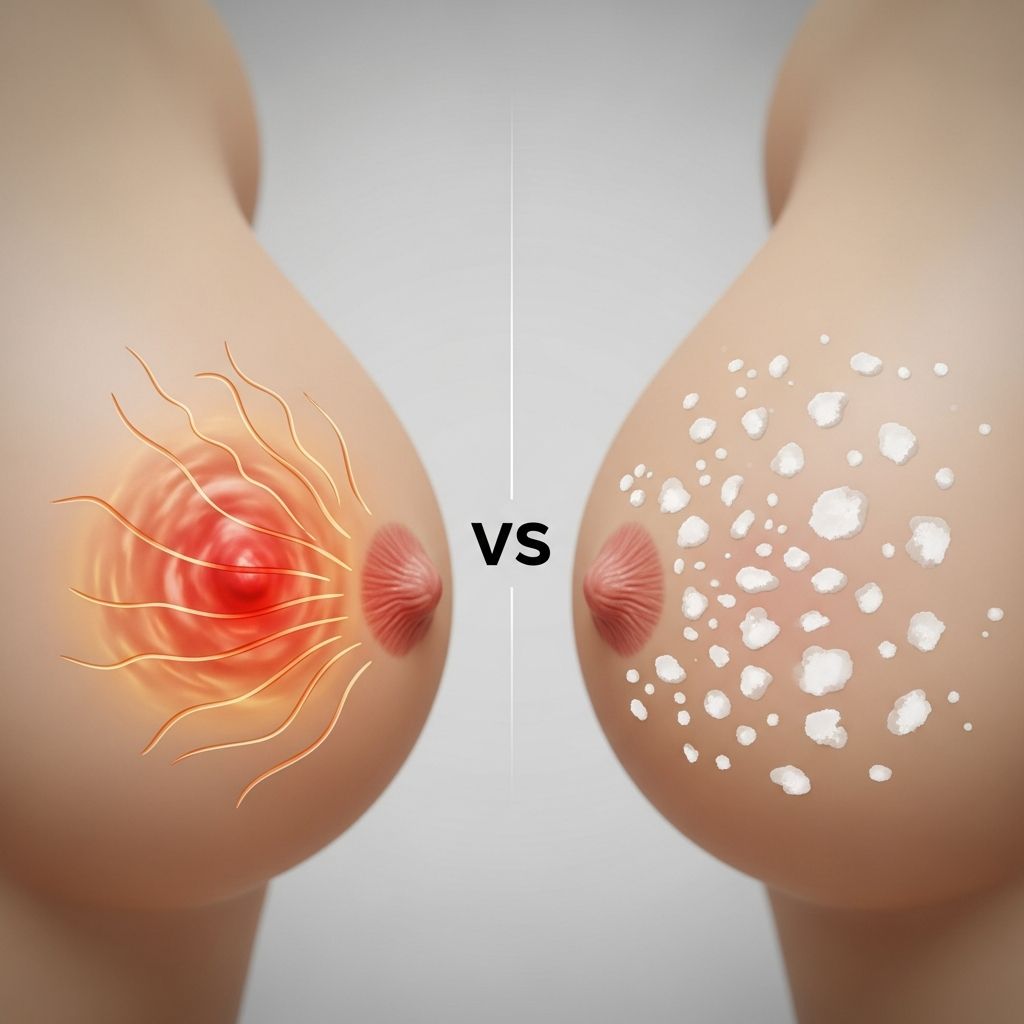
Mastitis is an inflammatory condition of the breast tissue, frequently bacterial in lactating women. It typically occurs within the first three months postpartum, presenting with localized tenderness, swelling, and systemic symptoms like fever over 101.3°F (38.5°C), chills, and fatigue. Unlike general engorgement, mastitis demands prompt intervention to prevent abscess formation.
During breastfeeding, milk stasis from incomplete emptying or blocked ducts contributes to bacterial entry through cracked nipples. Staphylococcus aureus is a primary culprit, thriving in milk-rich environments. Symptoms are usually unilateral, affecting one breast with warmth, redness, and pain during feeds.
Key Characteristics of Thrush Infections
**Thrush**, or nipple candidiasis, arises from Candida albicans overgrowth, common in moist breastfeeding areas. It causes burning or stabbing nipple pain persisting post-feed, often bilateral, with itchy, flaky, or shiny skin. Unlike mastitis, thrush rarely causes fever but may coincide with infant oral thrush—white patches on the tongue or cheeks that don’t wipe away.
Risk escalates after antibiotics disrupt beneficial bacteria, allowing Candida to proliferate. Vaginal thrush, with itching and discharge, can also signal systemic yeast issues safe to treat while nursing. Recent studies question overdiagnosis, noting symptoms overlap with bacterial inflammation termed ‘subacute mastitis’.
Symptom Comparison: Spotting the Differences
| Feature | Mastitis | Thrush |
|---|---|---|
| Pain Type | Tenderness, aching during feed | Burning, shooting post-feed |
| Location | Unilateral breast | Bilateral nipples/breasts |
| Skin Changes | Red, warm wedge-shaped area | Shiny, flaky, itchy |
| Systemic Signs | Fever, chills, flu-like | Rare; no fever |
| Baby Symptoms | None specific | Oral white patches, fussiness |
This table highlights distinctions: mastitis mimics flu with focal inflammation, while thrush yields persistent nipple discomfort. Pain timing aids differentiation—mastitis worsens with let-down, thrush lingers after.
Risk Factors and Prevention Strategies
Both conditions share risks like poor latch causing nipple damage, but diverge in triggers. Mastitis links to oversupply, fatigue, and stress impeding drainage; prior episodes heighten recurrence. Thrush follows antibiotics or steroid use, thriving in damp pads or unwashed bras.
- Maintain proper latch to avoid cracks.
- Feed frequently to prevent stasis.
- Change breast pads often; air-dry nipples.
- Handwash before/after feeds and diaper changes.
- Avoid unnecessary antibiotics; probiotics may help balance flora.
Proactive hygiene curbs Candida spread family-wide, treating infant rash or parental foot fungus concurrently.
Diagnostic Approaches for Accurate Identification
Diagnosis relies on history and exam; cultures confirm pathogens. Mastitis shows leukocytosis, elevated CRP; ultrasound detects abscesses. Thrush warrants milk/swab tests via PCR for Candida, as cultures underdetect (36-54% prevalence in pained vs. asymptomatic mothers).
Rule out differentials: bacterial ‘subacute mastitis’ without fever presents like thrush but responds to antibiotics. Consult lactation experts; avoid empirical antifungals if symptoms misalign.
Treatment Protocols for Mastitis
Continue breastfeeding or pumping to drain affected breast, easing symptoms and preventing worsening. First-line: dicloxacillin or cephalexin for 10-14 days; if MRSA suspected, clindamycin or TMP-SMX. Support with ibuprofen for pain/inflammation, rest, hydration.
Recurrent cases may need ductal lavage or imaging. Abscesses require drainage. Improvement expected in 48 hours; persistent fever signals complications.
Managing Thrush in Mothers and Babies
Treat both dyads simultaneously. Mothers apply miconazole or clotrimazole cream post-feed, washing off before next; fluconazole orally if severe. Babies receive nystatin oral suspension 4x daily.
- Sterilize pacifiers/pump parts weekly.
- Launder bras/towels in hot water.
- Discard expressed milk during acute phase; safe later if treated.
Relief in 2-3 days; full clearance longer. Vaginal thrush uses clotrimazole pessaries, safe for nursing. Overuse of antifungals concerns experts given diagnostic doubts.
Potential Complications and Long-Term Impacts
Untreated mastitis risks abscess (5-11%), recurrent infection, or weaning. Thrush causes early cessation if pain severe; misdiagnosis delays bacterial treatment. Both elevate stress, impacting milk supply via oxytocin inhibition.
Long-term, chronic pain links to low supply; prompt care preserves breastfeeding.
Lifestyle Tips for Breast Health Recovery
- Warm compresses pre-feed, cold post for mastitis.
- Cabbage leaves soothe engorgement.
- Probiotics (Lactobacillus) post-antibiotics.
- Balanced diet, 3000+ calories daily for lactation.
- Seek IBCLC support early.
These bolster immunity, aiding resolution.
Frequently Asked Questions
Can I breastfeed with mastitis?
Yes, it’s encouraged; milk is safe, drainage promotes healing.
Is thrush contagious to my baby?
Yeast transfers bidirectionally; treat both to eradicate.
How long until pain subsides?
Mastitis: 24-48 hours with antibiotics; thrush: 2-3 days.
Does pumping help mastitis?
Yes, maintains supply and clears ducts.
Prevent thrush after antibiotics?
Use probiotics, maintain hygiene.
Expert Insights and Emerging Research
Recent PMC review notes Candida detection via PCR in pained mothers, urging precise diagnostics. La Leche League cautions against thrush overdiagnosis, favoring bacterial checks. NHS emphasizes hygiene in management.
References
- Vaginal Thrush and Breastfeeding Factsheet — Breastfeeding Network. 2023. https://www.breastfeedingnetwork.org.uk/factsheet/vaginal-thrush/
- Breastfeeding and Thrush — NHS. 2023-10-12. https://www.nhs.uk/baby/breastfeeding-and-bottle-feeding/breastfeeding-problems/thrush/
- Thrush and Breastfeeding — La Leche League GB. 2024. https://laleche.org.uk/thrush/
- Lactation and Non-puerperal Mastitis, Nipple Candidiasis — North Dakota Department of Health & Human Services. 2022. https://www.hhs.nd.gov/sites/www/files/documents/DHS%20Legacy/GYN_9_Lactating_Mastitis_Breast_Engorgement_or_Breast_Abscess_5.pdf
- Breast and Nipple Thrush — The Royal Women’s Hospital. 2023. https://www.thewomens.org.au/health-information/breastfeeding/breastfeeding-problems/breast-and-nipple-thrush
- Nipple Candidiasis and Painful Lactation: Updated Overview — PMC (NCBI). 2022-09-09. https://pmc.ncbi.nlm.nih.gov/articles/PMC9454364/