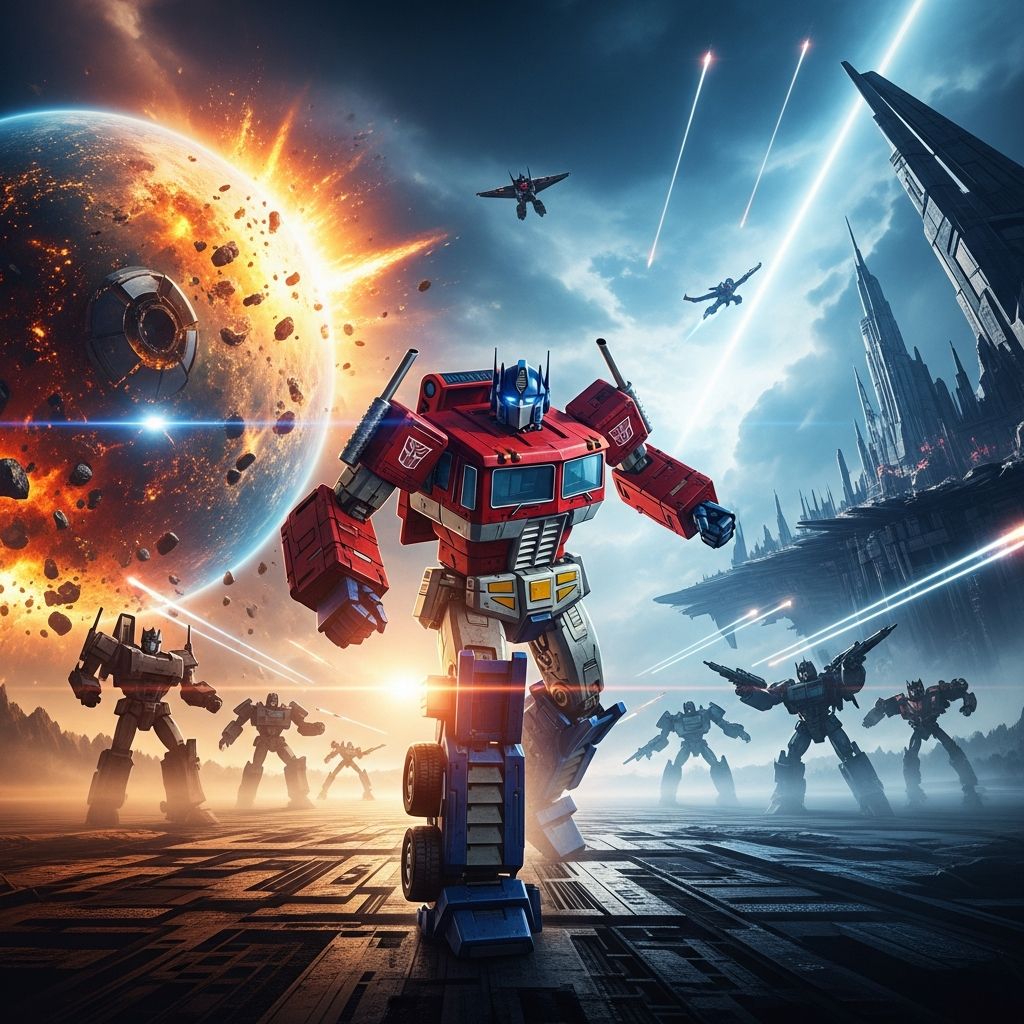
In 1986, an animated feature built to sell toys unexpectedly delivered one of the most startling, emotional experiences a generation of kids had ever seen. The Transformers: The Movie turned a colorful Saturday morning cartoon into a loud, neon opera about loss, change, and cosmic-scale destruction.
Decades later, the film that once traumatized children has become a cult classic, celebrated for its bold decisions, heavy metal soundtrack, and unapologetically weird storytelling. It was a commercial disappointment on release, yet its influence still echoes through modern blockbusters, franchise storytelling, and nostalgia culture.
From Toy Shelf To Big Screen Experiment
To understand why the 1986 film feels so strange and intense, you have to start with its origins as a toy commercial with a budget.
- Hasbro had achieved major success with the original Transformers cartoon, launched in 1984 to promote its toy line.
- Animated shows like Transformers and G.I. Joe were part of a broader shift in the 1980s toward children’s programming built explicitly around merchandise.
- The feature film was conceived as a way to refresh the toy line: retire older characters and introduce a new wave of robots kids could buy.
The movie was produced by Sunbow Productions and Marvel Productions, directed by Nelson Shin, who had worked on the TV series. The story was set 20 years after the show’s first seasons, immediately raising the stakes and making the film feel more like a dramatic time jump than just a longer episode.
Why The Movie Felt So Different From The TV Show
For kids who knew Transformers as a bright, formulaic TV series, the movie’s tone and style were a shock. Instead of simple skirmishes over energy resources, the film opens with planetary annihilation and quickly escalates into an all-out war.
| TV Series (1984–1986) | The 1986 Movie |
|---|---|
| Villains and heroes usually survive to fight another day. | Major characters are killed on screen and do not return in the film. |
| Episodic plots focused on energon and simple conflicts. | Galaxy-spanning story featuring a planet-eating entity and regime change. |
| Animation designed for television budgets. | More fluid and detailed theatrical animation with elaborate action scenes. |
| Mostly kid-friendly tone with mild peril. | Darker themes, intense violence, and even brief coarse language in some cuts. |
The result was a movie that felt, to many young viewers, like stepping into an alternate universe where the rules of Saturday morning no longer applied.
“One Shall Fall”: The Death That Shook A Generation
The single most infamous creative decision in the film is the death of Optimus Prime, the noble Autobot leader. On television, Optimus was the dependable father figure of the show. In the movie, he charges into a climactic battle and suffers a devastating defeat.
For many kids in 1986, this was their first encounter with a beloved hero dying and staying dead—at least within the movie itself. Accounts from the period describe children sobbing in theaters, blindsided by a loss they had never imagined in what they assumed was a safe, predictable universe.
The decision was not made purely for drama. Hasbro wanted to remove older toy models from shelves to make room for new characters, and killing them on screen was seen as an efficient narrative solution. The film obligingly wipes out numerous familiar heroes and villains in rapid succession, making its opening act feel like a massacre.
Introducing A New Generation Of Heroes (Whether Fans Wanted Them Or Not)
With Optimus Prime gone, the film pushes new Autobots to the foreground. Characters like Hot Rod, Ultra Magnus, Kup, and Arcee are clearly designed to represent a generational shift.
- Hot Rod/Rodimus Prime – A brash young Autobot who ultimately inherits leadership, symbolizing reluctant maturity and the burden of responsibility.
- Arcee – One of the first prominent female Autobots, a late but important step in diversifying a previously all-male-coded cast.
- Galvatron – A reborn Megatron, voiced by Leonard Nimoy, representing both continuity and frightening escalation in villainy.
On the corporate side, this was smart merchandising. Creatively, the transition was far rougher. Many kids rejected Rodimus Prime as an unworthy replacement for Optimus. According to later reporting and interviews, the fan backlash and ratings response were so strong that Optimus was resurrected in the TV series within months.
Cosmic Horror, Synth Guitars, And 80s Excess
Part of the movie’s enduring appeal is its commitment to going all in on 1980s style. The film layers its story of war and succession over:
- A galaxy-devouring villain, Unicron, giving the film the structure of a cosmic disaster movie.
- An aggressively 80s soundtrack filled with hard rock and synth-driven tracks, foregrounding music in a way TV episodes rarely did.
- Surreal, almost psychedelic locations—from junk worlds to mechanical planets—that feel closer to European sci-fi comics than American kids’ TV.
The result is an animated feature that plays like a mash-up of toy commercial, rock opera, and space war film. On first viewing, the story can feel chaotic and overloaded. Over time, that same density has become part of the film’s cult charm, rewarding repeat watches and frame-by-frame nostalgia.
Box Office Failure, Home Video Resurrection
Despite its ambition, The Transformers: The Movie underperformed theatrically. In the United States, it earned under $6 million at the box office and ranked near the bottom of the year’s releases. Hasbro’s partnership with its distributor was financially disappointing, and the company reportedly lost money on this and another toy-based film released around the same time.
Yet the movie’s fate changed once it hit home video:
- VHS and later DVD releases made the film widely accessible, especially to kids who had missed its short theatrical run.
- Repeated rentals and home viewings turned traumatic childhood memories into nostalgic rituals.
- Later remasters and anniversary screenings reintroduced it to adult fans and new audiences.
By the 2000s, the film was firmly established as a cult favorite, often cited in retrospectives as both a cautionary tale in franchise management and an icon of daring storytelling in children’s media.
Transformers 1986 vs. Modern Franchise Filmmaking
Looking back from the era of sprawling cinematic universes, the 1986 movie feels oddly ahead of its time. It tries to do many of the things later live-action films and franchise tentpoles would attempt—sometimes clumsily, sometimes brilliantly.
| Aspect | 1986 Movie | Modern Blockbusters |
|---|---|---|
| Shared Universe | Bridges TV continuity with a time jump and new status quo. | Films often sit between seasons/spin-offs, resetting or expanding canon. |
| Character Turnover | Eliminates legacy characters quickly to introduce new ones. | Franchises retire or recast heroes, often more gradually. |
| Tone | Swings from slapstick to grief and mass death. | Many blockbusters now mix humor with high-stakes trauma. |
| Merchandising | Story beats explicitly tied to toy lines. | Still merchandise-driven, but often more subtly integrated. |
The movie’s willingness to follow through on consequences—even if driven by toy strategy—set it apart from many contemporaries. Children’s entertainment had not often confronted its audience with permanent-seeming loss on this scale.
How It Rewired Kids’ Expectations Of Cartoons
For children who watched the film in 1986 and then returned to the TV series, the experience could be disorienting. The show had to live in the shadow of a movie that had leapt forward chronologically, changed the roster of characters, and introduced new stakes.
Some implications of that shift:
- Kids suddenly understood that main characters could die. This changed how they watched not only Transformers, but other shows as well.
- The film modeled a kind of serialized storytelling where events had long-term consequences, a key ingredient in many later animated series and genre shows.
- Parents and studios alike saw just how far you could push emotional content in a PG-rated animated movie—and how fiercely audiences might react.
The backlash to Optimus Prime’s death also indirectly influenced studio caution. Subsequent toy-based features, such as the companion G.I. Joe animated film, leaned away from permanently killing their most recognizable heroes after seeing how children responded to Transformers.
Nostalgia, Reappraisal, And Lasting Legacy
Today, the 1986 movie lives a double life: it is both a memorial to childhood heartbreak and a beloved piece of pop culture.
Adult fans now praise aspects that confused them as kids:
- The unapologetically stylized visuals and action-heavy animation, which stand out in comparison to many TV episodes.
- The emotional ambition of depicting grief, failure, and reluctant leadership in a film ostensibly aimed at selling plastic robots.
- The sheer audacity of introducing a cosmic villain, killing the flagship hero, and expecting young viewers to roll with it.
This reevaluation has helped keep the film in circulation through anniversary re-releases, special screenings, and high-definition restorations. It also serves as a reference point whenever debates arise about how dark or serious children’s media should be allowed to get.
What Parents And Fans Can Take From The Movie Now
Rewatching The Transformers: The Movie with modern eyes, especially alongside children, opens up surprisingly rich conversations:
- About loss: Optimus Prime’s death can be a starting point for talking about grief, permanence, and the idea that heroes can fail yet still matter.
- About change: The shift from Optimus to Rodimus mirrors real-world transitions—graduation, new family roles, or changing friendships.
- About media and marketing: It’s an accessible case study in how storytelling can be shaped—sometimes distorted—by commercial motives.
In a media landscape where kids are surrounded by slick, interconnected franchises, the rough edges and raw choices of the 1986 film can feel strangely honest. It is a reminder that even calculated products can accidentally tap into deeper emotional truths.
Frequently Asked Questions
Was the 1986 Transformers movie meant for kids or adults?
The film was produced as a children’s movie tied to a toy line, but its dark tone, character deaths, and intense action made it feel far more mature than typical kids’ fare of the era.
Why did they kill Optimus Prime in the movie?
According to later interviews and reporting, Hasbro wanted to retire older toys and introduce new characters, and the filmmakers used permanent-seeming deaths—especially Optimus Prime’s—to clear space in the story and toy catalog.
Did the movie succeed at the box office?
No. It performed poorly in theaters, earning under $6 million in the United States and contributing to financial losses for its distributor. Its reputation grew later through home video and re-releases.
How does the 1986 film connect to the Transformers TV show?
The movie is set about 20 years after the early seasons of the cartoon, depicts a large-scale war and leadership change, and then feeds back into the television continuity, which later brings Optimus Prime back.
Is it still worth watching today?
Yes, especially for fans of animation, 80s nostalgia, and franchise storytelling. Its bold choices, distinctive visuals, and emotional swings make it fascinating both as entertainment and as a historical artifact of toy-driven cinema.
References
- The Transformers: The Movie — Wikipedia (summary of production, release, and reception). 2024-03-01. https://en.wikipedia.org/wiki/The_Transformers:_The_Movie
- The Hatred for ‘Transformers’ Movies Started Back in 1986 — MEL Magazine (interviews and retrospective on Optimus Prime’s death and fan reaction). 2018-07-10. https://melmagazine.com/en-us/story/transformers-movie-1986
- The Incredible Transformers Movie That Ruined Plenty of Childhoods Back In 1986 — Nightmarenostalgia.com (firsthand-style retrospective on the film’s impact). 2022-11-23. https://nightmarenostalgia.com/2022/11/23/the-incredible-transformers-movie-that-ruined-plenty-of-childhoods-back-in-1986/
- Schlock & Awe: TRANSFORMERS: THE MOVIE Was Seriously Made for Kids?! — Nerdist (analysis of the film’s tone and intended audience). 2016-09-13. https://archive.nerdist.com/schlock-awe-transformers-the-movie-was-seriously-made-for-kids/
- The Transformers: The Movie — Teletraan I: The Transformers Wiki (continuity placement and plot details). n.d. https://transformers.fandom.com/wiki/The_Transformers:_The_Movie
- ‘The Transformers: The Movie’ Was the Film That Made Death Seem Real — VICE (discussion of the film’s treatment of death and impact on viewers). 2016-12-07. https://www.vice.com/en/article/the-transformers-the-movie-death-mike-diver/
- The Transformers: The Movie (1986) — IMDb (general reception and cult status). n.d. https://www.imdb.com/title/tt0092106/