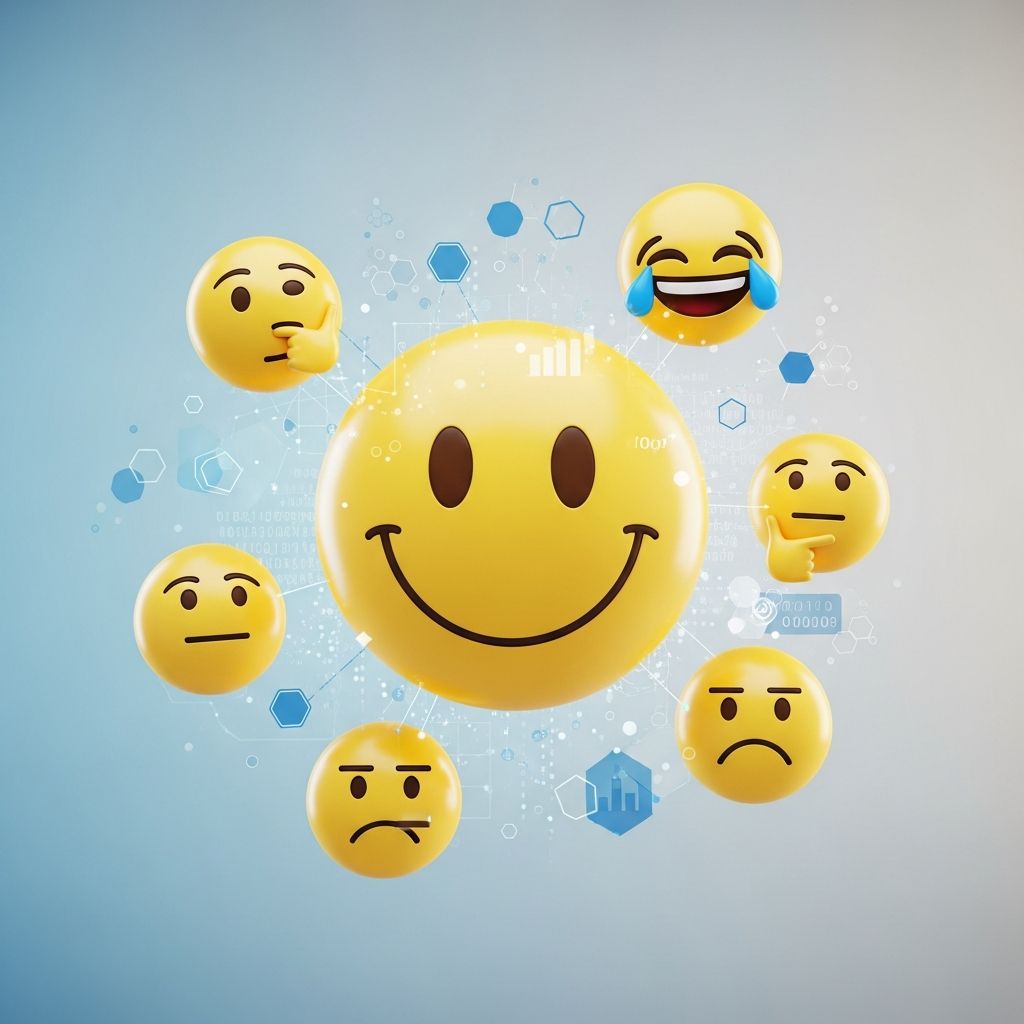
The smiley face emoji, a simple yellow circle with curved eyes and mouth, has become one of the most universally recognized digital symbols. Representing joy, agreement, or sarcasm depending on context, it transcends language barriers in online conversations. This article traces its journey from a corporate doodle to a cornerstone of global communication, examining its creation, commercialization, digital transformation, and interpretive layers.
Roots in Mid-20th Century Graphic Design
The modern smiley face emerged in 1963 when American graphic artist Harvey Ball designed it for the State Mutual Life Assurance Company in Worcester, Massachusetts. Following a merger that dampened employee spirits, Ball crafted the iconic yellow face in just 10 minutes for $45 to boost morale via pins and buttons. Initially produced in small quantities, its popularity exploded, leading to thousands more without Ball securing a trademark, allowing widespread adoption.
Ball’s design featured an asymmetrical grin and bold eyes on a sunny yellow background, chosen for its cheerful vibe. Though he never profited greatly, his creation laid the foundation for a cultural phenomenon that would evolve across decades. This origin story highlights how a simple graphic can capture universal positivity amid workplace challenges.
Commercial Explosion and Global Licensing
By the 1970s, entrepreneurs capitalized on Ball’s untapped design. Brothers Bernard and Murray Spain refined it for Hallmark cards, adding ‘Have a Happy Day’ and mass-producing merchandise, turning it into a commercial hit. Simultaneously, French journalist Franklin Loufrani trademarked a version in 1971, founding the Smiley Company. He distributed millions of free stickers, plastering the image on everyday surfaces and securing licenses with brands like Mars and Levi’s.
Loufrani’s aggressive marketing propelled the smiley into youth culture, associating it with 1970s counterculture movements. Through the 1980s, it featured on rave flyers, album covers, and synth-pop merchandise, adapting to electronic music scenes. The Smiley Company’s pivot to digital in the 1990s, licensing early pictograms to Alcatel in 1996, predated broader emoji adoption and positioned them as pioneers.
| Decade | Key Developments | Major Figures |
|---|---|---|
| 1960s | Morale booster pins; initial popularity | Harvey Ball |
| 1970s | Merchandise boom; ‘Have a Happy Day’; French trademark | Spain brothers, Franklin Loufrani |
| 1980s | Rave culture integration; youth licensing | Smiley Company |
| 1990s-2000s | Digital emoticons for mobiles | Nicolas Loufrani |
This timeline illustrates the smiley’s shift from office novelty to international brand, driven by opportunistic licensing rather than a single inventor.
From Text Emoticons to Graphical Emoji
Pre-digital precursors appeared in 1982 when Carnegie Mellon professor Scott Fahlman proposed :-) for jokes on bulletin boards, evolving ASCII art to convey tone in text-only spaces. A possible 1862 winking face in Lincoln’s speech transcript hints at even earlier symbolic whimsy.
Graphical emojis crystallized in the late 1990s. Japan’s NTT Docomo released 12×12 pixel icons in 1999, including smileys, inspiring global standards. Loufrani’s Smiley Company launched 470 emoticons that year for Nokia and Samsung, branding it a ‘new universal language’. Apple’s and Microsoft’s sets followed, embedding them in texting apps. Today, Unicode maintains over 3,600 emojis, with the classic smiley (😀) as a staple.
Emojis mutated creatively: users combined them into complex expressions, spreading billions daily across platforms. This evolution from punctuation hacks to vivid graphics revolutionized how nuances like irony or affection are shared online.
Cultural Adaptations Across the Globe
While the yellow smiley is Western-rooted, its global reach sparked variations. In Japan, kaomoji like (^_^) prefigured emojis, emphasizing subtlety. European rave scenes in the 1980s adopted acid-house smileys with psychedelic twists, symbolizing euphoria.
- United States: Hippie-era peace symbol, later ironic Gen-Z usage.
- France: Loufrani’s empire made it a licensing juggernaut.
- Asia: Integrated into mobile tech, influencing kaomoji hybrids.
- UK: Acid house raves featured it on pills and posters.
Studies note emojis bridge linguistic gaps, with smileys enhancing empathy in cross-cultural chats. However, interpretations vary: what signals friendliness in one context might read as passive-aggressive elsewhere.
Interpreting the Basic Smiley in Conversations
The classic 😀 or :) conveys uncomplicated happiness, like celebrating good news. In professional emails, it softens requests, fostering rapport without words.
Context is crucial:
- Positive reinforcement: ‘Great job! 😀’ amplifies praise.
- Acknowledgment: ‘Got it 😀’ signals understanding.
- Sarcasm indicator: Paired with dry text, e.g., ‘Sure, that’s fine 😀’ implies irony.
Research shows frequent smiley use correlates with warmer perceptions in digital exchanges, though overuse risks seeming insincere.
Variations and Their Distinct Nuances
Unicode offers dozens of smileys for precision:
| Emoji | Primary Meaning | Common Use Cases |
|---|---|---|
| 😊 | Gentle smile | Shy affection, appreciation |
| 😂 | Tears of joy | Hilarious situations |
| 😉 | Winking | Flirting, joking |
| 🙂 | Slightly smiling | Polite agreement, mild sarcasm |
| 😏 | Smirking | Smugness, teasing |
These allow fine-tuned emotions: 😍 for adoration versus 😒 for annoyance. Selection impacts message tone, with data indicating women use more expressive variants.
Psychological Role in Digital Interactions
Emojis mimic facial cues absent in text, reducing misunderstandings. A Cornell study found smileys boost likability in professional emails. They also serve as ’emotional prosody,’ clarifying intent in ambiguous scenarios.
Yet pitfalls exist: generational gaps mean boomers see 😀 as pure joy, while Gen Z deploys it ironically. Over-reliance can dilute impact, prompting ’emoji fatigue.’
Modern Usage Trends and Future Outlook
Billions of emojis are sent daily on platforms like WhatsApp and Instagram. AI chatbots increasingly incorporate them for naturalness. As VR/AR advances, 3D smileys may enhance metaverse expressions.
Customization trends, like skin tone modifiers, promote inclusivity. The smiley’s endurance stems from its adaptability—from Ball’s pin to AI-generated variants.
Frequently Asked Questions
What is the origin of the smiley face emoji?
Harvey Ball created the graphic smiley in 1963 for an insurance company; it evolved into digital emojis via Loufrani’s Smiley Company and Japanese pioneers.
Who really invented the emoji?
Shigetaka Kurita designed early graphical emojis for NTT Docomo in 1999, building on Loufrani’s 1990s emoticons and Fahlman’s 1982 text smiley.
How has the meaning of the smiley changed over time?
Originally pure positivity, it now conveys sarcasm, irony, or politeness based on context and generation.
Are there cultural differences in smiley usage?
Yes, Western users favor bold joy; East Asians prefer subtle kaomoji; globally, it softens tone universally.
Can smileys improve communication?
They clarify emotions, enhance empathy, and reduce misinterpretation in text-based interactions.
References
- The Evolution of the Smiley Face Graphic Through Time — ThriftCon. 2023. https://thriftcon.co/blogs/education/the-evolution-of-the-smiley-face-graphic
- History of Emoji — Teaching Channel. 2023. https://www.teachingchannel.com/k12-hub/blog/emojis-history/
- Who Invented The Emojis? Exploring the Evolution of Digital Icons — Smiley Company. 2024. https://smiley.com/pages/who-invented-the-emojis
- Who Invented the Smiley Face? — Artsy. 2023. https://www.artsy.net/article/artsy-editorial-staying-power-smiley-face
- The Birth, Spread, and Evolution of the Smiley Emoticon — Intelligent Collector. 2023. https://intelligentcollector.com/the-birth-spread-and-evolution-of-the-smiley-emoticon/
- Smiley Lore :-) — Carnegie Mellon University School of Computer Science. 2023. https://www.cs.cmu.edu/~sef/sefSmiley.htm