Understanding the Role of Digital Tools in Modern Education
The contemporary classroom has undergone a fundamental transformation over the past decade. Where chalkboards and textbooks once dominated instructional methods, interactive displays, educational software, and personalized learning platforms now shape how educators deliver content and how students absorb information. This shift represents more than a simple upgrade in tools; it reflects a philosophical change in how we approach teaching and learning. The integration of digital resources into educational settings has created both remarkable opportunities and noteworthy challenges that educators, administrators, and parents must carefully evaluate.
The decision to incorporate technology into classrooms is not merely about staying current with trends. Rather, it requires a thoughtful examination of how these tools affect student outcomes, learning behaviors, and long-term educational success. Understanding both the advantages and limitations of classroom technology enables stakeholders to make informed decisions about implementation strategies and resource allocation.
Cognitive and Academic Advantages of Digital Integration
Research indicates that appropriately implemented educational technology can enhance students’ academic achievement, self-confidence, and classroom motivation. When digital tools are thoughtfully selected and integrated into lessons, they create opportunities for deeper engagement with subject matter and improved retention of concepts.
Enhanced Information Processing and Accessibility
One of the most significant advantages of classroom technology is its ability to democratize access to information. Traditional educational models positioned teachers as primary knowledge gatekeepers, controlling which information students could access. Digital tools have fundamentally altered this dynamic by placing vast repositories of current, multimedia-rich content directly in students’ hands. Students can now explore topics beyond textbook limitations, access real-time information, and conduct independent research with unprecedented ease.
Interactive e-books and online resources replace static textbooks with dynamic, multimedia-enriched materials that can be continuously updated as new information emerges. This accessibility means students encounter current events, recent scientific discoveries, and evolving perspectives rather than information locked into printing cycles.
Application of Knowledge to Real-World Contexts
Digital platforms enable educators to bridge the gap between theoretical learning and practical application. Through simulations, virtual experiments, and project-based learning activities, students transform abstract concepts into concrete understanding. Technology facilitates students’ transition from passive listening to active, hands-on learning experiences where they develop and test solutions to authentic problems. This shift toward experiential learning strengthens the neural pathways associated with critical thinking and problem-solving abilities.
Building Interpersonal and Collaborative Competencies
Expanded Communication Networks
Technology fundamentally restructures how students interact with peers and educators within and beyond classroom boundaries. Rather than limiting collaboration to face-to-face group work, digital platforms enable students to work simultaneously on projects, share ideas asynchronously, and develop teamwork skills across geographic distances. Web-conferencing tools, collaborative documents, and discussion forums create multiple channels through which students can contribute their thoughts and receive feedback.
These expanded communication networks serve multiple purposes. Students develop articulation skills by expressing ideas in written form, cultivate listening skills through virtual discussions, and learn to navigate diverse communication styles and preferences among team members. The global connectivity enabled by technology means students can collaborate with peers from different cultural backgrounds, exposing them to varied perspectives and preparing them for increasingly diverse workplaces.
Personalized Interaction and Support
While some worry that technology distances students from educators, properly implemented systems actually facilitate more individualized teacher-student relationships. Rather than limiting teacher attention to whole-class instruction, technology enables teachers to allocate more time for one-on-one support with students who need additional assistance. Students can submit assignments digitally, receive targeted feedback, and ask clarifying questions without the time constraints of traditional office hours.
Customization and Differentiated Learning Pathways
Perhaps one of technology’s most transformative capabilities is its ability to accommodate diverse learning preferences and paces simultaneously. Whereas traditional instruction often employs a single pedagogical approach, adaptive learning platforms analyze each student’s performance, identify knowledge gaps, and adjust content difficulty and presentation style in real time. Some students learn most effectively through visual presentations, others through auditory input, and still others through kinesthetic activities. Technology can deliver all three modalities simultaneously, allowing each student to engage with material through their preferred learning style.
This customization extends beyond content delivery. Students can progress through material at individualized rates rather than being constrained by cohort-wide pacing. A student who quickly grasps foundational concepts can advance to enrichment activities while classmates receive additional practice and scaffolding. This differentiation reduces both boredom for advanced learners and frustration for students requiring additional support.
Digital Skills and Workforce Readiness
Integrating technology into education serves an essential preparation function. Regardless of career path, students entering the modern workforce will encounter digital tools, remote communication, data analysis, and collaborative software. Classroom technology exposure develops digital literacy and familiarity with tools they will later use professionally. Students learn to navigate multiple applications, troubleshoot technical issues, manage digital information, and adapt to evolving software interfaces—all valuable competencies in knowledge-based economies.
Considerations and Potential Drawbacks
Implementation Quality and Instructional Design
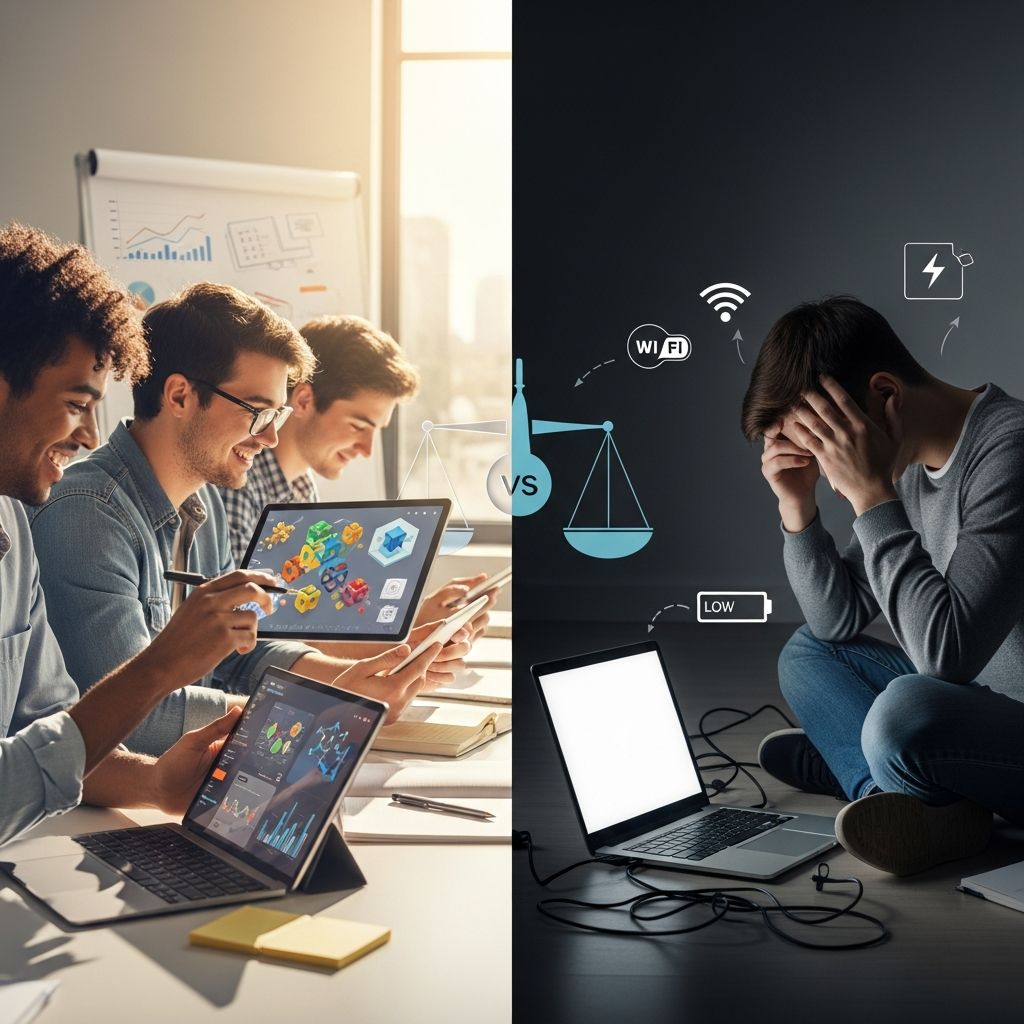
The benefits of classroom technology are not automatic or universal. Quality of implementation significantly influences outcomes. Technology poorly integrated into lessons—such as using interactive whiteboards simply to display static content or assigning digital busywork—produces minimal learning gains and may actually distract from instruction. Effective technology integration requires educators to fundamentally redesign lessons, align digital tools with specific learning objectives, and maintain rigorous pedagogical standards.
Teachers need professional development, curriculum resources, and implementation support to maximize technology’s educational potential. Without these supports, teachers may resort to surface-level technology use that fails to leverage interactive and adaptive capabilities. The success of classroom technology therefore depends substantially on institutional commitment to teacher training and ongoing professional learning.
Attention and Cognitive Load Considerations
While technology can enhance engagement, it simultaneously creates distractions and cognitive overload risks. The interactive nature that makes digital tools engaging can also fragment student attention. Notifications, multiple windows, and multimedia stimulation can overwhelm cognitive processing capacity, particularly for younger students or those with attention challenges. The novelty of technology may initially increase engagement, but sustained learning requires students to focus deeply on content, which multitasking environments may hinder.
Equity and Access Disparities
Not all students have equal access to technology outside school. The “digital divide” means some students have home computers and internet connectivity while others do not. When classroom instruction assumes home technology access for homework completion or independent learning, it disadvantages students from under-resourced families. Schools must provide equitable access during instructional time and thoughtfully consider homework assignments that require technology beyond school premises.
Screen Time and Physical Health Considerations
Excessive screen time raises documented concerns about eye strain, posture problems, sleep disruption, and reduced physical activity. Classroom technology increases overall screen exposure, and when combined with personal device use outside school, daily screen time can exceed recommended limits. Educational institutions must balance technology use with movement breaks, outdoor learning experiences, and traditional hands-on activities that engage different sensory systems.
Optimizing Technology Implementation
Strategic Integration Rather Than Wholesale Adoption
Effective classroom technology use requires deliberate decision-making about which tools serve specific learning objectives. Rather than adopting technology for its own sake, educators should ask: “Does this tool help students achieve this learning goal more effectively than alternatives?” Selective, purposeful integration produces better outcomes than comprehensive technology saturation.
Teacher Professional Development and Support
Technology effectiveness depends critically on educator expertise. Schools should invest in comprehensive professional development that helps teachers understand both technical functionality and pedagogical applications. Teachers need time to experiment with tools, troubleshoot problems, and collaborate with colleagues about implementation strategies.
Balanced Instructional Approaches
Optimal learning environments blend digital and traditional instructional methods. Technology works best when complementing, rather than replacing, direct instruction, hands-on manipulation of physical materials, and face-to-face collaboration. A balanced approach maintains the cognitive benefits of digital tools while preserving interpersonal connection and concrete learning experiences.
Comparative Overview: Technology Integration Dimensions
| Implementation Dimension | Potential Benefits | Implementation Considerations |
|---|---|---|
| Content Delivery | Multimedia presentations, updated materials, multiple modality options | Requires instructional design; risk of passive consumption if not interactive |
| Student Collaboration | Enhanced communication, expanded networks, peer feedback systems | Requires clear protocols; digital divides may marginalize some students |
| Personalized Pathways | Individualized pacing, targeted support, differentiated challenge levels | Requires robust data systems; teacher training essential |
| Assessment Methods | Real-time feedback, varied assessment formats, data-informed instruction | Risk of over-reliance on quantitative metrics; equity concerns with digital assessments |
| Skill Development | Digital literacy, problem-solving, collaborative competencies | Must align with broader educational goals; ongoing skill building required |
Frequently Asked Questions
Q: How much classroom technology is optimal for student learning?
A: There is no universal answer, as optimal technology integration depends on subject matter, grade level, learning objectives, and student needs. Research suggests technology works best when used intentionally for specific instructional purposes rather than as the primary instructional modality. A balanced approach that blends digital and traditional methods typically produces the strongest outcomes.
Q: Does technology help all students equally, or do some benefit more than others?
A: Student benefits vary significantly based on how technology is implemented and individual learning profiles. Students with certain learning disabilities may benefit substantially from adaptive technologies and assistive tools, while others may find extensive screen time overstimulating. Equitable technology integration requires attention to diverse student needs and intentional design to ensure all learners benefit.
Q: Can classroom technology replace teachers?
A: No. Technology functions most effectively as a tool that enhances teaching and learning rather than replacing teacher expertise. Teachers design lessons, interpret data, provide personalized support, and create the classroom culture that makes learning meaningful. Technology amplifies teacher effectiveness but cannot replicate the mentoring, motivation, and human connection that educators provide.
Q: What is the best way to address the digital divide in schools?
A: Schools should ensure all students have access to technology during instructional time, avoid assigning technology-dependent homework that assumes home access, provide devices for students to take home when possible, and build digital literacy explicitly into curriculum so all students develop necessary skills regardless of home resources.
Q: How can educators manage distractions from classroom technology?
A: Effective strategies include establishing clear technology use expectations, using monitoring tools during digital work, incorporating movement and offline activities regularly, teaching digital citizenship and responsible technology use, and designing lessons that structure technology use around specific learning tasks rather than open-ended browsing.
References
- How Does Technology Impact Student Learning? — Boston University School of Education. 2024. https://bau.edu/blog/technology-impact-on-learning/
- The Impact of Technology on Education — eSchool News. December 11, 2023. https://www.eschoolnews.com/it-leadership/2023/12/11/the-impact-of-technology-on-education/
- Benefits of Integrating Technology in the Classroom — Southeast Missouri State University. 2024. https://semo.edu/blog/blog-posts/integrating-technology-in-the-classroom
- Technology in the Classroom: Insights for Optimization — EdElements. 2024. https://www.edelements.com/technology-in-classroom
- How Has Technology Changed Education? — Purdue University College of Education. January 2024. https://education.purdue.edu/news/2024/01/01/how-has-technology-changed-education/